




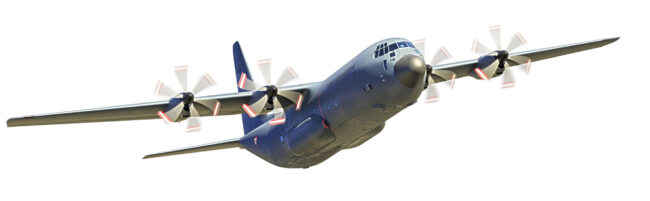
Lockheed Martin Corporation has confirmed the delivery of its first C-130J-30 Super Hercules to the Fuerza Aérea Mexicana, marking Mexico as the first Latin American nation to operate the next-generation tactical airlifter. The move not only extends the company’s global C-130J fleet to 25 countries but also signals a strategic modernization pivot in Mexico’s defense aviation priorities.
While the financial terms remain undisclosed, this transfer closes one of two international C-130J contracts finalised at the end of 2025. The second, for a yet-unnamed buyer, underscores continued overseas appetite for the multi-role platform amid shifting regional airlift needs and broader fleet recapitalization trends.
Why does Mexico’s adoption of the C-130J-30 matter strategically for Latin America’s military airlift posture?
Mexico’s decision to upgrade from its legacy C-130 fleet to the C-130J-30 Super Hercules places it at the forefront of regional airlift modernization. The stretched J-30 variant delivers a significant payload, fuel efficiency, and range upgrade over older models. This move extends Mexico’s ability to execute diverse mission sets including humanitarian aid, disaster response, and regional security deployments, with the platform now certified for 20 operational mission types.
Crucially, the acquisition does not represent a clean-sheet fleet introduction. Mexico has operated the C-130 platform for decades, enabling smoother logistical and maintenance transitions. By standardizing on an evolved platform within its comfort zone, the Fuerza Aérea Mexicana gains a faster runway to full operational deployment, and more importantly, interoperability with global C-130J operators from NATO to the Indo-Pacific.
From a regional lens, the deal implicitly challenges Brazil’s KC-390 platform — developed by Embraer S.A. — which had previously gained traction as a Latin America-made alternative to the C-130J for tactical airlift. Mexico’s buy, therefore, signals confidence in Lockheed Martin’s global sustainment network and proven operational reliability over an indigenous but newer peer.
How does this align with Lockheed Martin’s broader military aviation sales strategy?
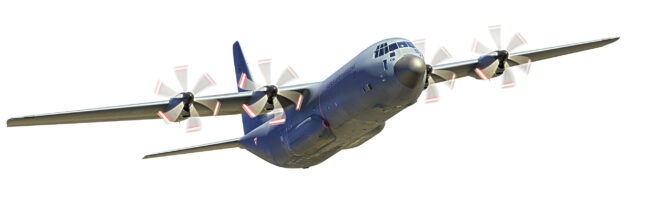
Lockheed Martin Corporation has aggressively repositioned its mobility and tactical airlift platforms to align with defense ministries seeking operational versatility with constrained budgets. The C-130J program remains a cornerstone of that strategy, with 560+ units now fielded globally.
Mexico’s selection reinforces the narrative Lockheed Martin has cultivated: that the C-130J is not merely a transport aircraft but a modular backbone for mission agility. From ISR to firefighting, medevac to special operations, the aircraft’s certified profile across 20 use-cases adds value that fixed-role platforms cannot match.
Additionally, the Mexican order strengthens Lockheed Martin’s foothold in Latin America, where U.S. foreign military sales have occasionally lost ground to Russian and Chinese OEMs offering attractive financing and rapid deliveries. While this sale appears to be a direct commercial transaction rather than routed through the U.S. Department of Defense’s Foreign Military Sales program, it may still offer long-term soft power returns.
What are the operational and geopolitical implications of Mexico’s C-130J deployment?
Operationally, the C-130J-30’s extended range and cargo capacity enable Mexico to deploy across its own diverse terrain — from mountainous southern borders to disaster-prone coastal areas — with far greater logistical efficiency. The upgraded platform also provides extended reach into Central America and the Caribbean, regions often reliant on Mexican assistance during climate disasters or regional crises.
Geopolitically, the move solidifies Mexico’s posture as a regional first responder and reinforces bilateral U.S.-Mexico security cooperation. While the aircraft itself is non-lethal, its ability to support special forces, emergency medevac, and secure airdrops enables new mission profiles that support homeland security, counter-narcotics, and humanitarian diplomacy.
The selection may also influence procurement behavior in neighboring nations. Colombia, Chile, and Argentina — each operating older-generation tactical lift platforms — are potential future customers watching how Mexico’s transition unfolds. Should the C-130J prove its logistical and operational value in the Mexican context, regional defense ministries may follow suit.
Could this procurement reignite interest in platform standardization across North and Central America?
Interoperability remains a central doctrine within U.S. hemispheric defense cooperation strategy. Mexico’s move to adopt the same platform used by the United States Air Force, Royal Canadian Air Force, and various NATO partners simplifies joint exercise planning, logistics training, and spare parts interoperability.
Lockheed Martin’s positioning of the C-130J as a plug-and-play platform for coalition operations benefits from exactly this type of cross-border standardization. With tensions rising in regions like the Caribbean and continued instability in Central America, the ability to coordinate airlift missions using compatible platforms has both operational and diplomatic upside.
Moreover, Mexico’s use of Lockheed Martin’s enterprise-wide support infrastructure allows the country to upgrade without overhauling its existing maintenance and pilot training pipelines — a key consideration for countries avoiding the cost burden of adopting entirely new aircraft ecosystems.
What risks or limitations should defense observers consider around this development?
While the delivery itself is straightforward, several factors could complicate the full value realization of the C-130J in Mexico’s operational theater. Budgetary constraints remain a constant concern for the Mexican military. Though the cost-per-flying-hour on the C-130J has improved over earlier variants, the full lifecycle cost of the platform — including upgrades, missionization kits, and sustainment contracts — remains non-trivial.
Second, platform capability only yields mission value if paired with trained personnel and operational doctrine suited to high-tempo deployment. If Mexico underinvests in C-130J crew training or lags in integrating its new aircraft into real-world operations, the tactical advantage risks being underutilized.
Finally, broader Latin American procurement trends remain fragmented. While Mexico’s decision could nudge peers toward U.S. airlift platforms, regional geopolitics, budget diversity, and local defense industrial policies may steer others toward alternative suppliers.
What are the key takeaways from Mexico’s strategic shift to the C-130J Super Hercules?
- Mexico becomes the first Latin American country to operate the Lockheed Martin C-130J-30 Super Hercules.
- The acquisition modernizes Mexico’s aging C-130 fleet and leverages five decades of operational experience with the platform.
- Lockheed Martin gains a critical strategic foothold in Latin America amid growing competition from Embraer and Chinese defense exporters.
- The deal boosts Mexico’s airlift capacity for disaster response, homeland security, and regional missions.
- Platform commonality with U.S. and NATO C-130J operators improves interoperability and training alignment.
- Lockheed Martin reinforces its pitch that the C-130J is a multi-mission air mobility asset, not just a transport aircraft.
- The move may influence future procurement decisions in Colombia, Chile, and other nations monitoring Mexico’s defense strategy.
- Long-term success depends on budget commitment, pilot and crew training, and integration into real-world missions.
- Lockheed Martin continues to close new international sales, with a second undisclosed buyer also confirmed in late 2025.
- This development reaffirms the enduring relevance of tactical airlift platforms in non-combat, dual-use defense applications.
Discover more from Business-News-Today.com
Subscribe to get the latest posts sent to your email.