


Portugal’s Air and Rail Accident Investigations Bureau (GPIAAF) has confirmed that a fatal mechanical failure in Lisbon’s iconic Glória funicular was caused by a snapped connecting cable that could not have been visually inspected through routine checks. The findings, released on September 6, 2025, reveal that the derailment occurred just six meters into the vehicle’s descent, leading to a high-speed crash that killed 16 people and injured at least 20 others, including five in critical condition.
The funicular’s emergency braking systems—both pneumatic and manual—failed to stop the descending carriage in time, as the vehicle accelerated uncontrollably and crashed into a building at a speed of nearly 60 kilometers per hour. The disaster has raised sharp questions about the adequacy of maintenance protocols for heritage public transport systems and the limits of visual inspections on critical moving parts.
What did investigators say about the cable that snapped before the Glória crash in Lisbon?
According to GPIAAF, the cable in question had been operational for only 337 days—well within the manufacturer’s designated lifespan of 600 days. It was visually checked earlier that same day as part of standard routine maintenance. However, the specific section of the cable that ultimately snapped was located in a position inaccessible without partial dismantling, making it impossible for operators to visually detect signs of wear or damage.
This technical limitation has now become the focal point of the investigation. While the cable complied with its replacement cycle and maintenance procedures at the time, authorities have concluded that the existing inspection regime was not robust enough to prevent this specific mode of failure. The investigators’ report implies that while the system may have technically followed the rules, the rules themselves may now need to be rewritten.
What makes the Elevador da Glória so iconic—and how has the crash affected Lisbon?
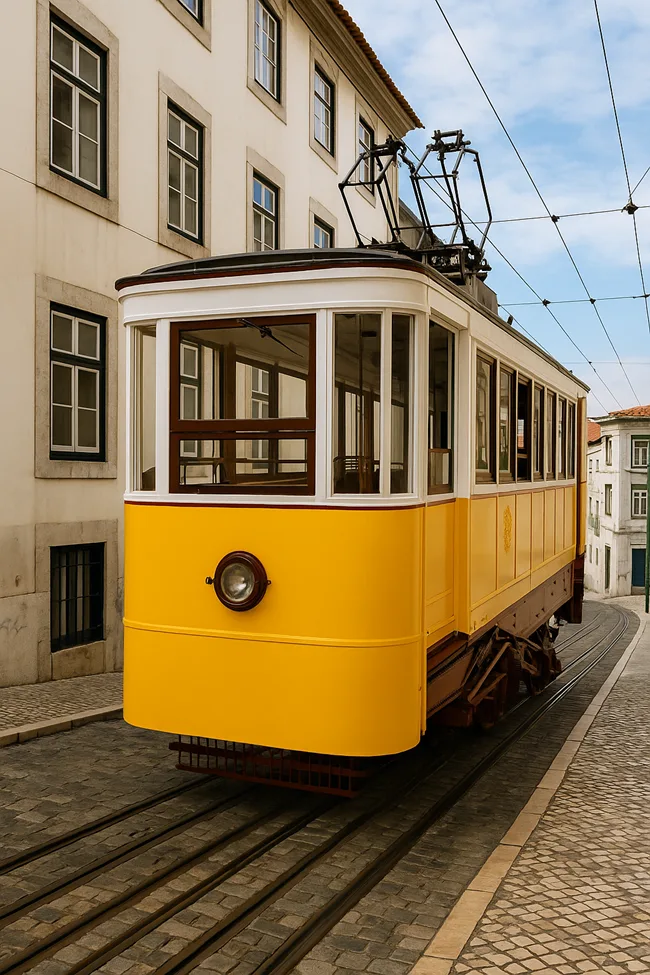
The Elevador da Glória, operational since 1885, is one of Lisbon’s most beloved historical transport systems. It connects downtown Restauradores Square to the Bairro Alto neighborhood, serving both daily commuters and thousands of tourists each week. Operated by Carris, the municipal public transport company, the funicular is a vital piece of the city’s architectural and cultural identity—its yellow-and-white trams long considered a postcard symbol of Lisbon.
That sense of heritage only magnified the public shock. Among the 16 victims were 11 foreign nationals, including British citizens Kayleigh Smith and William Nelson. Tributes from family members have flooded social media and news outlets, describing the couple as joyful, creative, and generous. In the aftermath, Lisbon’s city leadership announced a temporary suspension of all inclined tram operations pending further safety reviews.
Why was the cable fault missed, and what changes could follow for urban rail maintenance?
The GPIAAF report has cast a spotlight on the fundamental inadequacy of purely visual inspections in high-load mechanical systems. It noted that the snapped cable segment had deteriorated internally and externally at a location not easily visible—an outcome that underscores the risk of relying exclusively on surface-level observation without employing diagnostic tools like non-destructive testing (NDT) or partial disassembly.
In response to the findings, Lisbon’s mayor has ordered a full independent review of the city’s cable-operated transit infrastructure, including both inclined trams and elevator systems. Transportation analysts suggest that periodic ultrasonic testing or magnetic rope inspection technologies—already common in elevators and cable cars—could now be mandated for heritage trams as well.
While a detailed final or interim report is expected in the coming months, prosecutors are conducting a parallel criminal investigation to determine if negligence or regulatory non-compliance played a role in the tragedy.
Could this trigger global scrutiny of heritage transport systems in urban cities?
Infrastructure safety experts say the Lisbon crash may serve as a wake-up call for cities worldwide that operate historic transportation systems—many of which blend modern safety retrofits with legacy engineering. Similar funiculars and trams in San Francisco, Istanbul, Valparaíso, and Prague may now come under increased regulatory scrutiny, particularly in cases where tourism intersects with aging mechanical infrastructure.
Public confidence in heritage transit is also at stake. While visually restored systems evoke nostalgia and architectural charm, they often mask deeper engineering constraints that require 21st-century diagnostics and proactive intervention. The Lisbon crash has shattered the illusion that routine checks alone are sufficient for systems operating under constant mechanical tension.
Why visual inspection regimes are no longer enough for critical infrastructure safety
Transportation risk analysts argue that the Glória crash illustrates a common gap in heritage system maintenance: the assumption that what can’t be seen doesn’t pose a threat. Experts now advocate for shifting inspection protocols toward predictive maintenance models that integrate sensor telemetry, digital twin simulations, and periodic teardown audits.
Professor Inês Carvalho, a civil engineering academic at the University of Porto, told Portuguese media that “routine visual checks must be considered the bare minimum—not a comprehensive strategy—when human lives are at stake.” She added that future inspections will likely have to “blend manual inspection with technology-based early warning systems, especially for legacy equipment operating in high-risk urban zones.”
What are the next steps in the Lisbon funicular investigation—and could it reshape public transport safety protocols?
The next major milestone in the Lisbon funicular crash investigation will be the submission of the 45-day preliminary findings report by the Air and Rail Accident Investigations Bureau (GPIAAF). This initial document is expected to reconstruct a detailed timeline of the incident, including the precise moment of mechanical failure, the condition of the cable before the rupture, and how the braking systems responded—or failed to respond—in real time. Investigators will likely include a forensic breakdown of the structural integrity of the cable, factors contributing to the snap, and any deviations from manufacturer guidelines or standard operating procedures.
Crucially, the report is also anticipated to deliver early policy recommendations that may inform both national safety reforms and potential updates to European Union-level urban rail standards. These could include changes to inspection intervals, mandates for non-visual diagnostic tools such as ultrasonic or magnetic rope testing, and minimum thresholds for mechanical redundancy in heritage transport systems like inclined trams and funiculars.
In parallel, Portugal’s public prosecutor’s office is conducting its own criminal inquiry, which will examine whether Carris—the city-owned transit operator—or its contracted maintenance providers failed to comply with legal or technical safety obligations. Prosecutors will assess if negligence, regulatory oversights, or cost-cutting decisions contributed to the fatal malfunction. If systemic lapses are uncovered, charges could be filed, and civil liability claims may follow from affected families.
For Lisbon’s grieving families and shocked residents, however, the demand for accountability runs deeper than any technical report. Public confidence has been severely shaken, particularly as the Glória funicular was considered both a safe mode of transport and a symbol of the city’s cultural identity. The need for swift action, transparent communication, and tangible reforms is now paramount—not just to restore trust in Lisbon’s public transit, but to prevent similar tragedies in other cities with heritage transport networks.
As urban centers across Europe, Asia, and the Americas increasingly seek to balance historical preservation with operational safety, the Elevador da Glória disaster may mark a turning point. Cities from San Francisco to Istanbul operate similar systems that carry thousands of tourists and commuters daily—often relying on century-old mechanical foundations. The Lisbon crash has triggered a broader reckoning over whether legacy inspection regimes and risk assessments are fit for purpose in a world of aging infrastructure and rising public expectations.
In that sense, the derailment of the Glória funicular could become more than just a tragic chapter in Lisbon’s history. It may serve as a catalyst for cities worldwide to rethink how they maintain, monitor, and modernize their most beloved—but often vulnerable—public transport assets.
Discover more from Business-News-Today.com
Subscribe to get the latest posts sent to your email.