




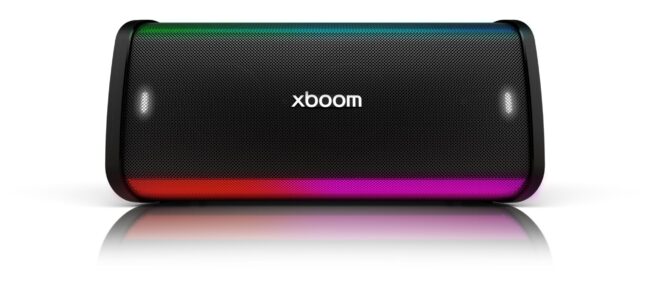
LG Electronics (KRX: 066570) and global entertainer–entrepreneur will.i.am have unveiled a major expansion of the XBOOM by will.i.am speaker line at CES 2026, introducing four new AI-powered models tailored for diverse listening environments. The strategic refresh signals LG’s intention to turn lifestyle audio into a personalized, intelligent experience, doubling down on portable consumer tech as a growth lever.
The new XBOOM speaker range, which comprises the Stage 501, Blast, Mini, and Rock, features AI-driven sound calibration, two-way conversational AI DJs, and dynamic lighting tailored to users’ environments and preferences. With a growing focus on merging consumer electronics with generative intelligence, LG Electronics is betting that audio personalization, contextual awareness, and design modularity can anchor its leadership in the portable sound category as competition intensifies from Apple Inc., Sonos, Inc., and Chinese manufacturers chasing the same crossover market.
The collection builds on the momentum of earlier XBOOM models like the Stage 301, but with a deeper integration of will.i.am’s FYI.RAiDiO assistant and a push toward ruggedized, battery-heavy designs that reflect contemporary lifestyle needs—from backyard karaoke to off-grid camping trips.

How is LG Electronics using AI to personalize portable audio—and will consumers care?
At the heart of the new XBOOM lineup is the idea that smart speakers must evolve beyond passive output devices. LG Electronics is leveraging FYI.RAiDiO, a proprietary platform developed in collaboration with will.i.am, to power ten interactive AI Personas that function as DJs, curators, and even mood-adaptive assistants. With real-time, location-aware personalization delivered through a dedicated “MY Button” and mobile app, these models aim to make portable sound more adaptive and intimate.
But beyond voice-driven personalization, LG is also embedding signal-processing intelligence via “AI Sound” and “AI Lighting.” The former optimizes EQ dynamically for vocals, rhythm, or melody depending on content, while the latter syncs multicolored LED bar lights to the tempo and intensity of the track. LG’s Space Calibration Pro further optimizes speaker output for environmental acoustics—a carryover from its home AV systems now miniaturized for mobility.
It is an aggressive convergence of features traditionally split between smart home hubs, party speakers, and outdoor audio gear. LG’s play here is not just about competing on hardware, but creating a new category: AI-native lifestyle sound.
What differentiates each XBOOM speaker, and where does LG see growth coming from?
Each model in the 2026 XBOOM range reflects a different consumer use case, pointing to LG’s segmentation strategy.
Stage 501 is clearly the centerpiece, designed for high-decibel social environments. Its AI Karaoke Master, trained on over 10,000 songs, offers real-time vocal suppression, pitch adjustment, and duet capabilities—without subscriptions or custom files. With 220W of plug-in power (160W on battery), dual woofers, and a 99Wh swappable battery providing up to 25 hours of playback, this model is aimed squarely at the home party and event circuit.
Blast targets the outdoor adventurer. Its 220W output, three passive radiators, and 35-hour battery life make it the highest-endurance option in the lineup. Built to U.S. military durability standards, with edge bumpers and rubberized casing, it joins the likes of JBL’s Boombox series and Sonos Move in the premium rugged speaker race. Portable carrying options, like rope and top handles, hint at real-world usability considerations often overlooked in larger units.
Mini is the compact option, offering a 10-hour battery life and IP67 dust and water resistance. Its cube form, Magic Strap, and tripod mount suggest LG is targeting kitchen counters, patios, and portable daily use where aesthetics and size matter more than volume. It’s an obvious competitor to Apple’s HomePod mini in terms of footprint, but with a stronger push toward outdoor durability.
Rock is the entry-tier rugged speaker, upgraded from the earlier XG2 platform. Its 6W output and Sound Field Enhance technology prioritize clarity across open spaces rather than volume. LE Audio Auracast enables shared listening across multiple units, a clear nod to communal music-sharing and event-based synchronization. The model is also built to seven military standards and optimized for hiking and camping markets.
This diversity in SKUs reflects a broader bet: LG is not just selling devices—it’s building an AI-powered ecosystem adaptable to multiple micro-lifestyles.
Why this partnership with will.i.am keeps evolving—and what it says about LG’s brand strategy
The collaboration between LG Electronics and will.i.am began as a marketing play, but it is now clearly evolving into a co-developed product and platform strategy. FYI.RAiDiO, the interactive AI layer embedded across the lineup, serves not only as a voice assistant but as a musical identity layer, infused with cultural capital from will.i.am’s global music influence.
For LG, the value here is twofold: credibility in youth and culture-driven markets, and a clear differentiator in a sea of functionally similar portable speakers. For will.i.am, it positions FYI.RAiDiO as a scalable AI entertainment interface that could expand into other hardware categories.
The AI angle also gives LG a strong narrative to compete in higher-margin segments, especially as the audio market commoditizes. Unlike Sonos or Bose, which have focused on fidelity and form factor, LG is pushing interaction, longevity, and multifunctionality—potentially appealing to younger buyers less concerned with hi-fi purity and more interested in adaptable tech.
How does this align with LG Electronics’ broader strategy for consumer growth in 2026?
LG has flagged portable entertainment as a key growth vertical heading into 2026. With smartphone-driven listening plateauing and home systems still premium niche plays, the company is pursuing multi-environment sound devices that scale with user movement.
Jeong-seok Lee, head of LG’s Audio Business, hinted at this broader ambition in the official release, noting that portable audio remains a “key growth driver” and a showcase for AI innovation. The XBOOM refresh follows a series of CES cycles where LG focused on appliance automation, home robotics, and screen intelligence. This year, however, the emphasis has tilted toward sensory augmentation—AI that “feels” and “responds,” not just displays or automates.
The full XBOOM by will.i.am lineup will be showcased at CES 2026 in Las Vegas, indicating LG’s intent to frame this expansion as a flagship announcement alongside major TV and appliance reveals.
Can AI speakers like XBOOM by will.i.am carve out a durable category beyond gimmicks?
The biggest risk in LG’s strategy is differentiation fatigue. Consumers have already been trained by Alexa, Siri, and Google Assistant. FYI.RAiDiO’s multi-persona interaction and music-focused curation will have to demonstrate more than novelty—especially if AI personalization fails to materially enhance perceived listening quality.
Moreover, as generative AI becomes ubiquitous, hardware that cannot evolve via software updates may face obsolescence. LG’s use of swappable batteries and modular handles hints at future-proofing, but the long-term viability of AI audio ecosystems will depend on content partnerships, seamless updates, and continued UX refinement.
Still, by anchoring the experience in music rather than general search or productivity, LG Electronics and will.i.am may have found a niche that avoids direct collision with Big Tech’s virtual assistants while building its own cultural cachet.
What the expanded XBOOM by will.i.am speaker range means for LG Electronics and the portable audio sector
- LG Electronics is positioning portable AI-native speakers as a strategic growth category heading into 2026.
- The new XBOOM speaker lineup—Stage 501, Blast, Mini, and Rock—caters to distinct lifestyle segments, from home karaoke to rugged outdoor use.
- FYI.RAiDiO integration with AI personas and real-time music curation differentiates XBOOM from generic smart speakers.
- Battery innovation, modular design, and military-grade durability signal a hardware strategy built around mobility and resilience.
- The will.i.am partnership elevates cultural relevance while embedding a proprietary AI assistant that could expand beyond audio.
- CES 2026 marks the formal debut of the refreshed lineup, underscoring LG’s push to own the lifestyle audio narrative.
- Execution risks include user fatigue with AI features and the challenge of maintaining perceived differentiation in a crowded speaker market.
- If successful, XBOOM by will.i.am could lay the foundation for a broader AI-enabled consumer electronics ecosystem under LG’s banner.
Discover more from Business-News-Today.com
Subscribe to get the latest posts sent to your email.


