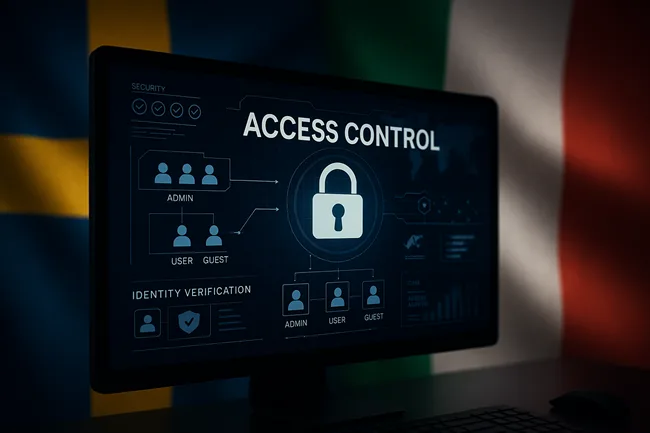
As global cybersecurity threats evolve in scale and sophistication, Europe’s industrial giants are increasingly redefining digital defense through sovereign innovation. On July 9, 2025, Leonardo S.p.A. took another strategic step toward becoming the continent’s most influential player in Zero Trust security architecture, announcing its acquisition of Stockholm-based Axiomatics AB. The Swedish firm is widely recognized for its attribute-based access control (ABAC) platform that enables mission-critical authorization in dynamic, multi-domain environments.
The 100% buyout of Axiomatics AB is more than an isolated M&A move. It is the third cybersecurity deal Leonardo has executed in a few months—demonstrating a coordinated pivot toward building a full-stack European cyber defense ecosystem. As Zero Trust evolves from a niche architecture into a foundational standard for digital sovereignty, Leonardo is positioning itself to lead this transformation, not just in Italy but across NATO-aligned markets.
What does the Axiomatics deal add to Leonardo’s cybersecurity strategy and Zero Trust platform architecture?
At its core, Axiomatics offers advanced policy enforcement tools grounded in the ABAC model. Unlike traditional role-based access control systems, ABAC evaluates multiple dynamic variables—such as user identity, environmental conditions, and data sensitivity—to decide who can access what, when, and under which circumstances. This technology is central to implementing the Zero Trust paradigm, where no user or device is implicitly trusted, and every interaction is verified in real time.
By integrating Axiomatics with its Global Cybersecurity Centre (GCC) Platform, Leonardo now brings a dynamic authorization layer into its existing capabilities, which already include cyber observability, threat intelligence, endpoint detection, and managed SOC services. For governments, defense agencies, and critical infrastructure operators increasingly under regulatory pressure to comply with EU directives like NIS2 and the Cyber Resilience Act (CRA), the Axiomatics layer helps ensure both compliance and resilience.
Founded in 2006 and headquartered in Stockholm, Axiomatics is the only European firm offering a platform that meets these advanced access control needs across hybrid and multicloud environments. The company also has a presence in North America, giving Leonardo an entry point into U.S. federal security contracts and defense-adjacent industries where ABAC is increasingly mandated.
How does this acquisition fit into Leonardo’s broader Nordic and European cybersecurity playbook?
The Axiomatics deal is the latest in a string of cybersecurity initiatives that show Leonardo’s deliberate effort to control core layers of the cyber stack—especially in Europe’s most digitally advanced regions.
Just weeks earlier, Leonardo acquired a 24.55% equity stake in SSH Communications Security Corporation, the Finnish cybersecurity firm best known for developing the original SSH protocol. This €20 million transaction gave Leonardo access to SSH’s next-generation PAM solution, PrivX, and its NQX quantum-ready encryption suite. These tools are already being integrated into Leonardo’s network protection and endpoint cybersecurity platforms, according to internal rollout plans.
Earlier in 2025, Leonardo inked a strategic partnership with Arbit, a Danish firm that specializes in secure and fast data transfer for multi-domain operations. Arbit’s solutions are critical in military and defense scenarios where real-time communication between domains—land, air, cyber, and space—can determine operational success.
In Sweden, Leonardo also secured a minority stake in CanaryBit, a confidential computing and AI security startup known for its “Trust Zones” framework. This investment complements Leonardo’s efforts in data-centric security and secure AI deployment, especially in classified mission environments.
Together, these Nordic deals reflect a concentrated strategy: Leonardo isn’t just purchasing cybersecurity tools—it’s assembling an interoperable, sovereign security stack that aligns with EU policy and defense priorities.
What role does regulatory scrutiny and European digital sovereignty play in this transaction?
The acquisition of Axiomatics remains subject to regulatory review, particularly by Swedish authorities under foreign direct investment (FDI) rules for defense-sensitive firms. Sweden, like other EU member states, has tightened screening of non-domestic takeovers involving national security technologies.
Yet Leonardo, being an EU-based defense industrial group, benefits from strategic alignment with European digital sovereignty goals. Its growing cybersecurity portfolio is designed to reduce reliance on non-European technologies in critical sectors like aerospace, defense, and public infrastructure.
This makes Leonardo a politically favorable consolidator—one that European governments may prefer over U.S. or Chinese bidders. Its inclusion in major multilateral programs such as GCAP, Eurofighter, and Eurodrone further reinforces its reputation as a systems integrator with long-term strategic reliability.
How are financial markets and institutional investors responding to Leonardo’s cybersecurity expansion?
Following the Axiomatics announcement, shares of Leonardo S.p.A. (BIT: LDO) edged up by around 3.1%, closing near €47.29. Analysts interpret this upward movement as investor validation of Leonardo’s digital pivot—especially as legacy platforms like helicopters and aerospace face cyclic pressures from defense procurement budgets.
Many institutional investors are recalibrating their valuation models to account for the higher-margin nature of cybersecurity versus traditional defense manufacturing. With consolidated revenues of €17.8 billion in 2024 and an order book exceeding €44 billion, Leonardo’s incremental exposure to cybersecurity—still less than 5% of total revenue—has room to grow rapidly, potentially reaching double-digit contribution by 2027 if the current pace of acquisition and integration continues.
What makes Leonardo’s Zero Trust approach unique compared to other European defense firms?
Unlike many of its peers that depend on U.S.-based cybersecurity vendors or narrowly scoped internal IT divisions, Leonardo is building a vertically integrated cyber stack. Leonardo’s approach to Zero Trust cybersecurity is built on a multi-layered foundation that integrates both technological capabilities and strategic acquisitions. At the core lies cyber observability, delivered through the Global Cybersecurity Centre (GCC Platform), which enables comprehensive visibility across complex digital ecosystems. This is reinforced by policy-based enforcement mechanisms introduced through the acquisition of Axiomatics AB, allowing for dynamic, fine-grained access control in sensitive environments.
Complementing this is encryption and privileged access management via SSH Communications Security Corporation, whose solutions are being embedded into Leonardo’s secure communication infrastructure. The company’s partnership with Arbit provides real-time, high-assurance data movement capabilities between operational domains, a critical requirement for military and civil applications. Finally, Leonardo’s minority stake in CanaryBit adds confidential computing and AI security to the stack, ensuring that sensitive data remains protected even during processing in untrusted environments.
This is not just a technological expansion but a geopolitical one. As AI-enabled warfare, cyber sabotage, and hybrid threats become more pervasive, control over digital tools is as critical as control over airspace or satellites.
Leonardo is betting that future NATO missions, critical EU infrastructure programs, and national defense contracts will demand locally sourced, tightly integrated cybersecurity solutions. With its latest acquisition, the Italian group now has the policy enforcement tools to back that ambition.
Will we see further cybersecurity consolidation from Leonardo—and who might be next?
Industry observers expect Leonardo to continue its consolidation streak. One potential candidate is Telsy, an Italian cybersecurity firm in which Leonardo already holds a significant stake and which specializes in encryption and secure communication for classified defense systems. Bringing Telsy fully in-house could allow Leonardo to extend its footprint into end-to-end secure comms, reinforcing its dominance in the European cyber sovereignty space.
Other potential expansion areas include threat intelligence platforms, AI-enhanced SOCs, and EU-based red-teaming-as-a-service startups. Leonardo’s existing cyber training infrastructure—developed through its Davinci initiative—could serve as a force multiplier, integrating acquired tech with human expertise.
Why Leonardo’s acquisition of Axiomatics could be a turning point for European cybersecurity leadership
The acquisition of Axiomatics AB is more than an extension of Leonardo’s cybersecurity portfolio—it is the cornerstone of a fully European, interoperable, and mission-ready Zero Trust architecture. In combining strategic Nordic assets with sovereign technology investments, Leonardo S.p.A. is not just competing in the cybersecurity market—it is shaping the battlefield for digital sovereignty across Europe and beyond.
Discover more from Business-News-Today.com
Subscribe to get the latest posts sent to your email.