




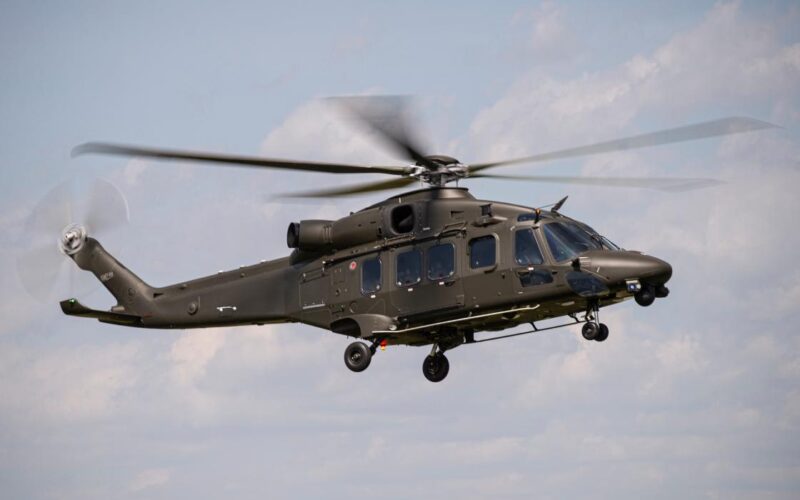
Leonardo S.p.A. (BIT: LDO), the Italian-owned aerospace and defence group, has been awarded a £1 billion ($1.34 billion) contract by the United Kingdom Ministry of Defence to manufacture and deliver 23 AW149 medium-lift military helicopters under the New Medium Helicopter programme. The award, confirmed on 2 March 2026, ends more than a year of procurement uncertainty and preserves the Yeovil facility in Somerset as the UK’s sole military helicopter production site. The deal restructures Leonardo’s production footprint by shifting future AW149 export manufacturing from Vergiate, Italy, to Yeovil, a strategic shift that the MOD estimates could unlock over £15 billion in international orders over the next decade. Leonardo shares rose approximately 3.2 percent to EUR 58.62 on the day of the announcement, reflecting investor relief that a contract whose outcome had been in serious doubt was finally confirmed.
How did a last-minute Treasury intervention save Britain’s only military helicopter factory?
The contract was secured under circumstances that reveal as much about UK government procurement dysfunction as it does about Leonardo’s industrial leverage. The MOD had quietly deprioritised the New Medium Helicopter programme during internal budget negotiations, prompting Chancellor Rachel Reeves to intervene directly and approve the deal, overriding the ministry’s position. The procurement concluded one day before Leonardo’s best-and-final offer expired on 1 March 2026, leaving almost no room for further delay. Airbus Helicopters and Lockheed Martin Sikorsky had both withdrawn from the competition more than a year prior, leaving Leonardo as the sole bidder. That combination of competitive vacuum, industrial leverage, and a chancellor willing to step over a reluctant ministry produced an outcome that was politically convenient for London but commercially favourable for Leonardo.
The Yeovil facility has operated for over 80 years, with helicopter manufacturing tracing back to the Second World War. Leonardo’s chief executive Roberto Cingolani signalled last year that the company could not sustain Yeovil indefinitely without new contracts, a statement that functioned as both a warning and a negotiating signal. The MOD understood the consequences of losing the UK’s only domestic military helicopter manufacturer, and the Treasury ultimately reached the same conclusion.
What does the AW149 actually replace and why does fleet consolidation matter operationally?
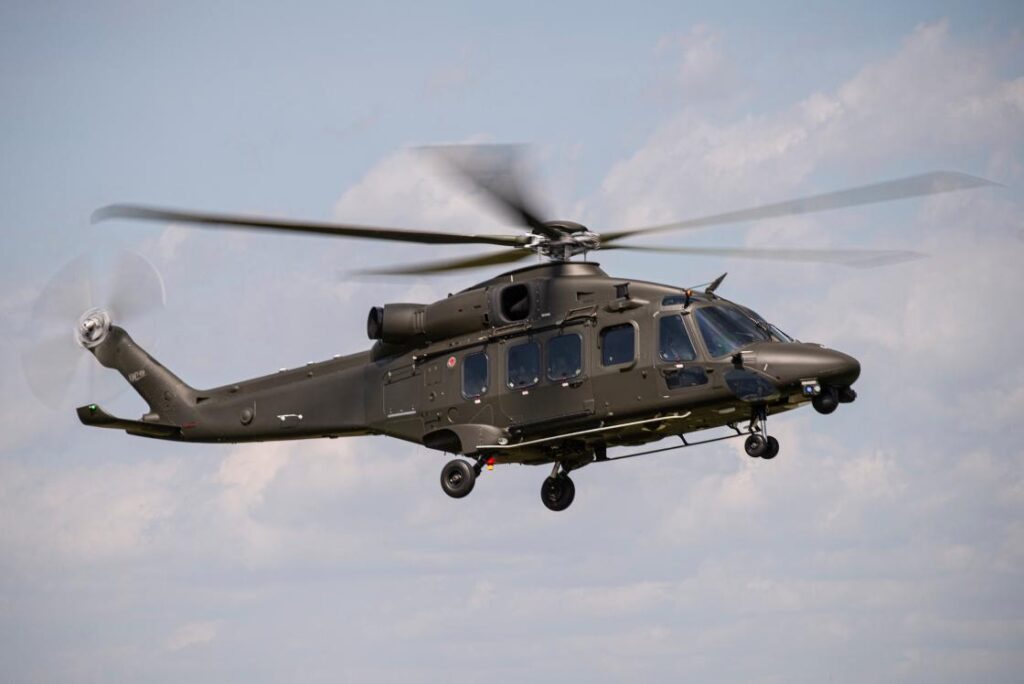
The AW149 will replace the Royal Air Force’s Puma HC2 fleet, which was retired in March 2025, creating a capability gap that the MOD has been managing for nearly a year. Beyond the Puma replacement, the programme consolidates missions previously distributed across multiple platforms, including Bell 212, Bell 412, and Airbus AS365 Dauphin variants, into a single aircraft type. Replacing three distinct fleets with one standardised platform carries genuine operational and logistical benefits: it reduces training requirements, simplifies maintenance supply chains, and eliminates the complexity of managing multiple support contracts across different original equipment manufacturers.
The AW149 is configured for a maximum take-off weight of 8,600 kilograms, with a cabin volume capable of carrying up to 16 fully equipped troops or 19 lightly equipped personnel, and supports battlefield transport, logistics, search and rescue, and medical evacuation roles. Its open systems architecture is designed to accommodate technology upgrades without requiring airframe redesign, an increasingly important feature as military aviation becomes more networked and software-dependent. The Ukraine conflict has reinforced the continued relevance of medium-lift rotorcraft in contested environments, where the flexibility to transport personnel, equipment, and supplies under threat remains operationally critical.
Why is the export production shift from Vergiate to Yeovil the strategically significant element of this deal?
The domestic order for 23 airframes is consequential but not transformative on its own. What gives this contract long-term strategic weight is the repositioning of Yeovil as the production hub for future AW149 export orders. Approximately 20 countries currently have identified requirements for new medium-lift helicopters, and the MOD estimates that international orders for military helicopters assembled in Yeovil, combined with Leonardo’s other rotorcraft programmes, could exceed £15 billion over the next decade. Leonardo’s existing international AW149 customers include Poland, Egypt, and Thailand, providing a base of operational reference for future procurement campaigns.
The UK workshare on the aircraft rises to over 40 percent under the new arrangement, and the supply chain spans nearly 70 UK companies. If projected export demand materialises, employment at Yeovil could increase by around 20 percent, rising to approximately 3,900 positions from the current 3,300. The embedded logic here is that by anchoring export production in the UK, the MOD creates a durable economic rationale for sustaining Yeovil well beyond the domestic order, reducing the risk of the factory becoming financially marginal again once the 23-airframe build is complete.
The competitive dynamics also favour this repositioning. With Airbus and Lockheed Martin having exited the NMH competition, Leonardo faces no active rival for a UK-built medium-lift export proposition in the near term. Whether that competitive advantage persists through the decade depends on how aggressively Leonardo converts the Yeovil platform story into concrete export wins.
How does the Proteus autonomous system investment expand the strategic scope of this contract?
The MOD’s commitment to further investment in Proteus, Leonardo’s autonomous rotary-wing demonstrator, is the element of this deal most likely to generate long-term value beyond what can be priced into a 23-helicopter order. Proteus is a three-tonne uncrewed aircraft developed with the Royal Navy that completed its first flight in late January 2026 at Predannack Airfield in Cornwall. The system is being developed to conduct anti-submarine warfare tasks, among other missions, in a configuration that can operate alongside crewed helicopters rather than replacing them.
The MOD’s stated ambition is to make Yeovil the centre of excellence for military helicopter autonomy. The AW149 is explicitly positioned as a platform that could become optionally crewed over time, depending on how the Proteus development programme matures. This is not a near-term capability claim; it is a long-range programme ambition. However, it aligns with a broader shift in military aviation doctrine accelerated by drone warfare lessons from Ukraine and the Middle East. The UK Defence Industrial Strategy identifies uncrewed and autonomous systems as a key frontier technology, and embedding that development at Yeovil gives the site relevance in a future force structure that may look materially different from the one that justified the NMH requirement in the first place.
No funding figure for the Proteus investment increment was disclosed alongside the contract announcement, which limits the ability to assess whether the autonomous systems commitment is substantive or principally a narrative element designed to broaden the political appeal of the deal.
What are the execution risks and what could limit the contract’s strategic payoff?
The most immediate execution risk is delivery timeline. The MOD has not published a schedule for AW149 delivery, which is notable given that the Puma retirement created a live capability gap in March 2025. The procurement concluded a day before Leonardo’s best-and-final offer expired, suggesting the negotiations were significantly compressed. Complex defence programmes that close under deadline pressure carry integration and contracting risks that can surface in early programme phases.
The export thesis, while commercially compelling, carries its own uncertainties. Leonardo must convert pipeline interest from approximately 20 countries into signed contracts, a process that involves governmental relationships, export licensing, and competitive pricing in markets where competitors may offer alternative platforms even if they opted out of the UK competition. The £15 billion export projection is a 10-year outlook that represents an optimistic upper bound, not a guaranteed order book.
The supply chain dependency on nearly 70 UK companies introduces execution complexity, particularly in a period when defence industrial capacity is being stretched across multiple programmes following Europe-wide increases in defence spending commitments. The MOD’s broader procurement budget is also under pressure. The £270 billion defence allocation this Parliament, the largest sustained increase since the Cold War, will generate competing demands across many programmes, and any slippage in the NMH timeline could be exacerbated if resources are redirected elsewhere.
How did investors read the Leonardo contract announcement?
Leonardo shares were trading up approximately 3.2 percent at EUR 58.62 on the day of the announcement. For Leonardo DRS, the US-listed subsidiary, shares cooled after an initial jump to around $45.43, up approximately 4.7 percent from the previous close. The market reaction reflects relief at the removal of a strategic uncertainty rather than a repricing of Leonardo’s growth outlook. The contract was widely anticipated in defence circles once Airbus and Lockheed Martin exited the competition, so the announcement resolved risk rather than created new upside.
The broader defence sector traded positively in the same period, supported by investor interest driven by escalating geopolitical tensions. Leonardo’s share performance was consistent with sector trends rather than dramatically outperforming, which is appropriate given that the NMH contract, though strategically significant, represents a single programme within Leonardo’s global revenue base.
Key takeaways: What the £1 billion NMH contract means for Leonardo, UK defence industry, and allied helicopter markets
- The £1 billion AW149 contract ended a procurement process that had been deprioritised by the MOD and rescued by a direct Treasury intervention, underscoring how political and economic considerations can override ministry budget decisions in strategically sensitive industrial programmes.
- Leonardo was the sole remaining bidder after Airbus Helicopters and Lockheed Martin Sikorsky withdrew in 2024, fundamentally altering the negotiating dynamics and raising questions about whether the MOD achieved best value under competitive duress.
- The repositioning of AW149 export production from Vergiate to Yeovil is the most strategically significant element of the deal, transforming a 23-helicopter domestic order into the foundation for a potential decade-long export campaign targeting approximately 20 countries.
- The UK workshare increase to over 40 percent, and the expansion of the domestic supply chain across nearly 70 companies, creates economic depth that makes Yeovil more resilient to individual programme cycles than it has been historically.
- Fleet consolidation, replacing three distinct rotorcraft types with a single AW149 platform, offers genuine operational efficiency benefits in training, maintenance, and logistics, but introduces single-point-of-failure risk if the platform encounters a systemic airworthiness issue.
- The Proteus autonomous system investment extends Yeovil’s strategic mandate beyond crewed helicopter production into the uncrewed and optionally-crewed rotorcraft segment, where longer-term military aviation investment is likely to concentrate.
- The £15 billion export projection is a ceiling estimate, not a contracted order book. Leonardo must convert pipeline interest into signed agreements in competitive international markets where alternative platforms exist even if no rival competed in the UK procurement.
- The capability gap created by the Puma HC2 retirement in March 2025 remains live until AW149 deliveries commence. The MOD has not disclosed a delivery schedule, which represents an unresolved operational risk.
- Leonardo’s 3.2 percent share price increase on announcement reflects relief at removing procurement uncertainty rather than a fundamental re-rating, consistent with market expectations that the contract would eventually be awarded.
- The deal’s political architecture, spanning the Strategic Defence Review, the Defence Industrial Strategy, and Rachel Reeves’ direct intervention, signals that UK sovereign industrial capability in defence will be protected even at a cost premium over open-market procurement.
Discover more from Business-News-Today.com
Subscribe to get the latest posts sent to your email.
