




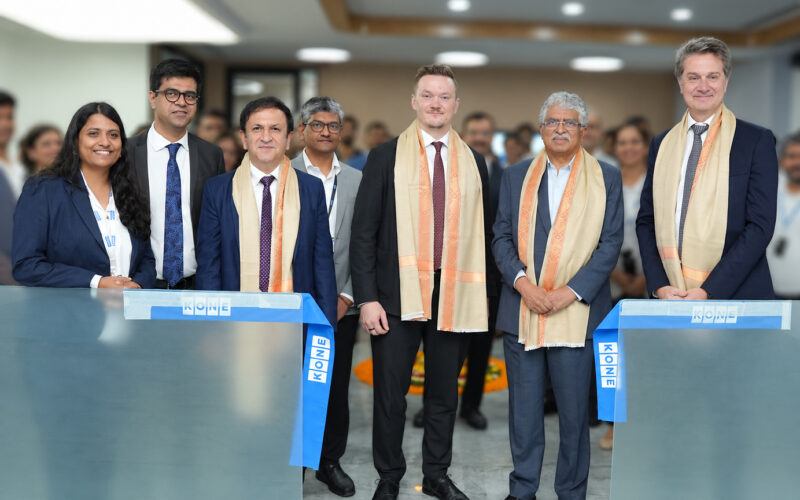
KONE Corporation (Nasdaq Helsinki: KNEBV), the Finnish elevator and escalator manufacturer, has opened its first Digital Experience Centre in India, positioning Pune as a customer-facing showcase for connected elevators, artificial intelligence-enabled maintenance and digital building management. Inaugurated on October 9, 2026, the facility brings together KONE Studio, MyKONE, E-Link and service analytics tools to demonstrate how digital technologies can improve equipment visibility and management across a building’s lifecycle. The launch coincides with a more ambitious operating objective, with KONE planning to double its approximately 50,000 connected elevators in India over the next year, according to comments by Chief Executive Officer Philippe Delorme reported by The Times of India. The expansion aligns with the company’s strategy of increasing service and modernisation activity as India’s construction market grows and its installed elevator base matures. However, the centre’s financial significance will depend on converting demonstrations and connected-equipment installations into measurable maintenance improvements, customer retention and profitable service contracts.
How will KONE’s Pune Digital Experience Centre change elevator purchasing and building management decisions?
The new Pune facility is designed to allow building developers, property owners and facility managers to experience KONE’s digital technologies before making equipment and service decisions. Rather than functioning primarily as a conventional product showroom, the centre combines digital design, equipment configuration, project visibility and maintenance information within an interactive customer environment. Visitors can examine how information moves between different stages of a building’s lifecycle, from initial elevator selection to installation and ongoing operation. The approach could help customers evaluate the operating implications of equipment choices rather than concentrating exclusively on specifications and initial purchase costs.
KONE Studio provides a digital environment for exploring and configuring elevator solutions. This can help project teams understand equipment choices and communicate requirements before procurement and installation decisions are finalised. For commercial buildings, residential developments and mixed-use properties, early coordination can be valuable because elevator capacity, travel requirements and building layouts influence both construction design and subsequent passenger movement. Digital configuration can support those decisions, although the facility’s launch does not establish that design approval or equipment procurement processes will become fully automated.
MyKONE extends the customer-facing proposition beyond the original equipment purchase. The platform provides visibility into projects, equipment and services, supporting the management of installed assets and associated customer activities. E-Link offers real-time information about equipment status and operations, while the Service Dashboard consolidates performance and maintenance-related information. These tools are intended to give customers a more consistent view of their vertical transportation infrastructure, potentially reducing the fragmentation between equipment ownership, building management and maintenance providers.
The centre’s commercial value will depend on how effectively KONE demonstrates operational benefits relevant to individual customers. A property developer may prioritise design flexibility and installation coordination, while a hospital or commercial office building may place greater emphasis on reliability, service responsiveness and equipment availability. Showing these different capabilities through a single environment could support more informed purchasing discussions and create opportunities to introduce digital maintenance services earlier in the customer relationship. Nevertheless, KONE has not disclosed the centre’s construction or technology investment, visitor targets or anticipated order conversion rates.
Why does KONE’s plan to double connected elevators in India represent a bigger commercial opportunity?
The more consequential development is KONE’s ambition to expand the number of digitally connected elevators across its Indian operations. Philippe Delorme told The Times of India in an interview reported on October 10 that approximately 50,000 elevators, representing around 30% of the company’s Indian portfolio, were connected. KONE intends to double the number within approximately one year, implying an ambition to approach 100,000 connected units if the existing estimate is used as the starting point. This is a management target rather than an achieved installation milestone, and the company has not disclosed a detailed conversion timetable or associated revenue forecast.
The expansion would potentially add connectivity to approximately 50,000 more elevators, assuming the targeted doubling is achieved. Such growth could substantially increase the volume of operating information available for maintenance analysis, allowing KONE to monitor a broader equipment base and identify recurring performance issues. The resulting data may help improve service scheduling and technical response, although higher connectivity does not automatically establish better maintenance performance. The economic impact will depend on the reliability of monitoring systems, the relevance of generated alerts and the ability of field technicians to respond effectively.
KONE’s Indian operations have an established physical network that could support this expansion. The company has operated in India since 1984 and reports more than 50 branches and over 6,000 employees. Its Chennai-headquartered business includes a manufacturing facility in Sriperumbudur serving India and neighbouring markets, alongside technology, engineering and training capabilities in Chennai and Pune. This combination of local manufacturing, engineering and service infrastructure provides a foundation for expanding digital maintenance coverage without depending entirely on remote technology support.
There is also an important difference between connected-equipment growth and maintenance market share. Installing connectivity does not necessarily mean that KONE has secured a new service contract or increased the price of an existing one. Some connected elevators may already be covered by maintenance arrangements, meaning the principal benefit could come through greater operating efficiency or customer retention rather than additional equipment under contract. Future disclosures separating connectivity rates, maintenance portfolio growth and service profitability would provide a clearer assessment of the expansion.
Can predictive maintenance and artificial intelligence reduce elevator downtime and improve service profitability?
KONE’s digital maintenance strategy uses connected equipment information to identify developing technical problems before they cause an operational interruption. Traditional scheduled maintenance relies heavily on periodic inspections and reported faults, while connected systems can monitor operating conditions continuously and generate alerts when equipment behaviour changes. Analysing those signals can help technicians prioritise inspections, prepare necessary replacement parts and identify problems that may otherwise remain undetected until a breakdown occurs. The effectiveness of this approach depends on the accuracy of the monitoring data and whether maintenance teams can translate alerts into timely interventions.
KONE has published global performance indicators for its digitally enabled predictive maintenance offering, including 55% fewer passenger entrapments, proactive identification of 80% of equipment faults and remote resolution of 25% of issues within two minutes. These are company-reported performance measures for its wider connected maintenance services, not independently established outcomes from the newly opened Pune centre or the entire Indian installation base. They nonetheless indicate the operational benefits KONE is seeking to extend through greater connectivity. The actual results achieved in India may differ because equipment age, operating conditions, customer requirements and service coverage vary between installations.
The commercial implications extend to field-service productivity. Better fault identification can potentially reduce unnecessary site visits, improve the allocation of technicians and increase the proportion of maintenance work completed during planned service windows. Remote diagnostics may also help determine whether a fault requires an immediate visit or can be resolved without dispatching personnel. These improvements could lower the cost of maintaining an individual unit, although investment in sensors, communications infrastructure, software and technical training must also be recovered.
For customers, the financial benefits are closely linked to equipment availability. Lift breakdowns in high-rise residential buildings, hospitals, transport facilities and commercial towers can disrupt building operations and generate complaints or additional management costs. A measurable reduction in downtime could strengthen the value proposition for digitally enabled maintenance contracts, particularly where equipment reliability is a significant purchasing consideration. However, predictive monitoring does not eliminate mechanical failures or remove the need for scheduled inspections, physical maintenance and established passenger safety procedures.
Why is India becoming increasingly important to KONE as China’s new-building market weakens?
KONE’s geographical exposure makes India’s growth relevant beyond the opening of a customer demonstration facility. In its first-half 2026 financial report, the company identified strong activity in India, Australia and the Middle East as contributors to significant growth across the Asia-Pacific, Middle East and Africa new-building market. This contrasted with China, where new construction activity continued to decline substantially and competition remained intense. The difference between these markets creates an incentive for equipment manufacturers to expand their presence in regions where urban development and building investment remain supportive.
India presents opportunities across residential towers, commercial developments, hospitals, hotels, offices and public infrastructure. Each segment has different elevator and escalator requirements, but all can generate demand for new installations followed by long-term maintenance activity. As the installed equipment base expands and ages, additional opportunities may emerge for component upgrades, accessibility improvements and full or partial modernisation. These lifecycle opportunities can provide a different demand profile from new construction, although their development depends on customers’ willingness and ability to fund upgrades.
Local manufacturing also influences KONE’s competitive position. Its Sriperumbudur facility gives the company production capabilities within India, while engineering and service teams provide support throughout equipment installation and operation. Combining this industrial presence with digital customer tools could help KONE coordinate design, equipment delivery and maintenance discussions across the same commercial relationship. The Pune centre is therefore a complementary investment in customer engagement rather than a substitute for manufacturing capacity or field-service coverage.
Competition remains substantial, with international manufacturers including Otis Worldwide Corporation and Schindler Holding AG competing alongside other equipment and service providers. Digital monitoring and predictive maintenance are not exclusive to KONE, meaning the company cannot rely solely on offering connected technology as a lasting differentiator. Customers are likely to compare equipment reliability, maintenance responsiveness, pricing, technical support and lifecycle costs. KONE’s competitive advantage will depend on whether its digital services produce demonstrably better operating results and justify their commercial terms.
How does the Pune facility strengthen KONE’s existing digital technology partnership with Infosys?
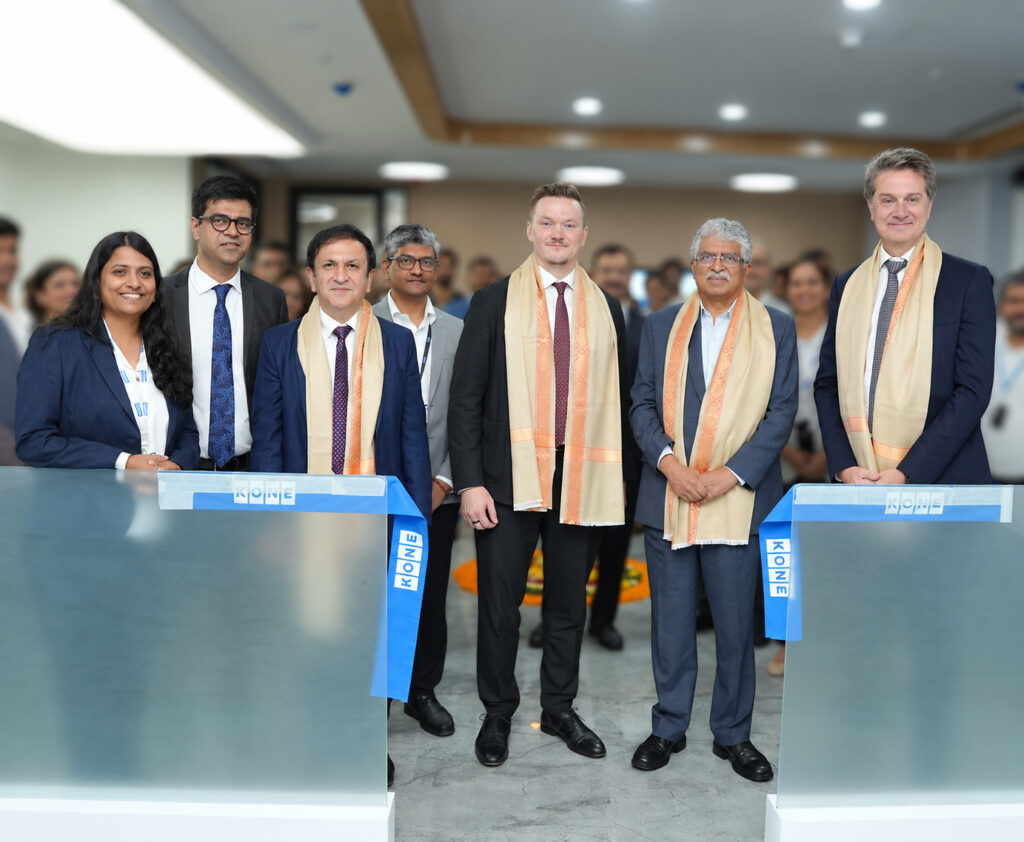
The inauguration also brought attention to KONE’s longstanding technology relationship with Infosys Limited. Nandan Nilekani, Co-founder and Chairman of the Board of Infosys, participated in the opening alongside KONE Executive Vice Chair Jussi Herlin, President and Chief Executive Officer Philippe Delorme and KONE India Managing Director Amit Gossain. Their participation reflects an established collaboration rather than a newly announced equity investment or joint venture associated with the Pune facility. The launch disclosure does not identify a new financial agreement between KONE and Infosys specifically for operating the centre.
Infosys has previously worked with KONE on its cloud-based digital technology infrastructure. The collaboration has included developing a cloud-native platform using Amazon Web Services, application programming interfaces and systems designed to connect physical equipment with digital applications. These capabilities support functions such as equipment monitoring, customer interfaces and the management of information generated by connected elevators. They provide technological context for the solutions being demonstrated in Pune, although the precise development responsibilities for each exhibit have not been disclosed.
The partnership has also extended into enterprise technology modernisation and artificial intelligence-related initiatives. Infosys received a KONE supplier collaboration award in 2025 in recognition of its role in supporting technology transformation and operational improvements. More broadly, the relationship illustrates how industrial manufacturers increasingly depend on software engineering partners to develop services that extend beyond their traditional physical products. For KONE, maintaining control over equipment engineering while collaborating on digital infrastructure may provide flexibility as connectivity and software requirements continue to evolve.
Pune is also an established engineering and technology location for KONE’s Indian operations. Locating a customer-facing digital experience centre there creates an opportunity to connect commercial demonstrations with existing technical capabilities and local industry relationships. However, the announcement should not be interpreted as the opening of a new manufacturing plant, an independently announced research and development campus or a quantified increase in software engineering employment. Its confirmed role is to demonstrate existing and emerging digital capabilities to customers.
How do KONE’s latest financial results support its strategy of growing service and modernisation revenue?
KONE’s operating performance provides the financial context for its increasing emphasis on connected services. During the first half of 2026, the company reported sales of €5.646 billion, up 2.2% from €5.522 billion a year earlier. Orders received increased 4.2% to €4.894 billion, while the order book stood at €9.631 billion at the end of June. The figures indicate continued commercial activity despite uneven construction demand across international markets.
Profitability presents a more nuanced picture. First-half adjusted earnings before interest and taxes increased 5.9% to €663.5 million, with the adjusted EBIT margin improving to 11.8% from 11.3%. Reported operating income, however, declined slightly to €605.2 million, partly reflecting items affecting comparability, including expenses associated with KONE’s proposed TK Elevator transaction. The distinction between adjusted and reported profitability is relevant because strategic investments, transaction expenses and restructuring costs can affect actual financial results even where underlying operating performance improves.
KONE’s Rise strategy for 2025 to 2030 identifies digital services, modernisation, residential equipment and sustainability as major priorities. Within that framework, the company intends to use digital technology to change how maintenance services are delivered, including improved operating visibility and more efficient field activities. Its 2025 financial disclosures indicated that service had become its largest business and that connectivity exceeded 40% across its relevant global equipment base. The Pune centre and the planned increase in connected Indian elevators fit directly within this established strategy rather than representing a completely new business direction.
The group’s 2026 outlook calls for comparable-currency sales growth of 3% to 6% and an adjusted EBIT margin of 12.3% to 13.0%. Management has identified service and modernisation growth, alongside internal performance initiatives, as important drivers of margin improvement. At the same time, weak Chinese new-building demand, wage inflation and geopolitical pressures remain potential constraints on group profitability. Digital investments in India may support these longer-term ambitions, but the company has not separately quantified their expected earnings contribution.
What does KONE’s proposed TK Elevator acquisition mean for its digital competition strategy?
KONE’s wider competitive position could also change substantially through its proposed acquisition of TK Elevator. The companies announced a transaction agreement in April 2026, with KONE subsequently obtaining the necessary shareholder authorisations in June. The proposed combination remains subject to regulatory approvals and other completion conditions, with closing expected no earlier than the second quarter of 2027. Until completion, TK Elevator remains a separate business, and its operations should not be treated as part of KONE’s existing equipment or service portfolio.
The proposed combination is relevant because the elevator industry depends heavily on installed equipment networks, maintenance contracts, modernisation capabilities and customer relationships. A larger operating footprint could potentially offer opportunities to share technology development costs and expand access to digital services. However, the potential transaction also raises competition and integration considerations, particularly in markets where major equipment manufacturers already hold significant positions. The United Kingdom’s Competition and Markets Authority opened an invitation for public comments in September 2026, illustrating the regulatory scrutiny facing the proposed acquisition.
The Pune Digital Experience Centre is not disclosed as part of a TK Elevator integration programme, and any future technology integration would depend on the transaction’s completion and subsequent operating decisions. Its immediate relevance is to KONE’s existing Indian customer relationships and service strategy. Nevertheless, the company’s larger corporate ambitions place additional importance on developing digital capabilities that can be deployed consistently across geographical markets. Software scalability, interoperability and customer adoption could become increasingly valuable as the industry evolves.
How did KONE shares perform after the Pune launch, and what does the market valuation reflect?
KONE’s class B shares closed at €52.96 on Nasdaq Helsinki on October 9, 2026, gaining 2% from the previous closing price of €51.92. The stock also advanced approximately 4.5% over the five trading sessions from October 5 to October 9. Its latest closing price remained approximately 17.8% below the reported 52-week high of €64.42, while trading above the corresponding low of €46.22. These figures demonstrate a positive short-term market movement, but they do not establish that the Pune Digital Experience Centre caused the share-price increase.
KONE’s valuation reflects a considerably broader set of financial and strategic developments. These include changes in construction demand, service and modernisation growth, operating margins and the pending TK Elevator transaction. The proposed acquisition introduces additional considerations involving regulatory approvals, integration costs, financing and future synergies. The Pune launch is strategically consistent with management’s digital priorities, but it does not include a disclosed investment value, material sales contract or quantified earnings guidance that would independently establish a new valuation catalyst.
The next scheduled financial reporting milestone is October 28, 2026, when KONE is due to publish its interim report for January to September. That update should provide a clearer view of sales growth, order intake, profitability and regional demand conditions. The reporting timetable does not guarantee a separate disclosure concerning India’s connected elevator target or the Pune facility. Over a longer horizon, information about connected-equipment growth, maintenance portfolio expansion and service efficiency would be more useful for evaluating the commercial performance of the digital strategy.
What will demonstrate whether KONE’s Pune Digital Experience Centre delivers sustainable business value?
The most direct indicator will be progress toward connecting approximately 100,000 elevators in India within the period described by management. Achieving that target would expand the company’s digital monitoring footprint, but the number of connected units should be considered alongside the quality and reliability of the services delivered. Useful operating measures would include equipment availability, fault detection accuracy, maintenance response times and customer retention. Improvements in these areas could provide a basis for stronger service relationships and potentially better operating efficiency.
Commercial conversion will provide another test. The centre is designed to make KONE’s technologies more accessible to customers, but the company has not published visitor expectations, conversion targets or customer contract values associated with the facility. Its effectiveness could eventually be demonstrated through increased adoption of digital service packages, improved maintenance renewal rates or additional modernisation orders linked to customer engagement. Measuring such outcomes separately from general market growth would help establish whether the centre is adding commercial value rather than merely supporting brand visibility.
The financial opportunity extends beyond selling more elevators in a growing construction market. KONE already has a substantial installed equipment base in India, and expanding connected maintenance capabilities may allow it to serve that base more efficiently over time. The Pune facility provides a platform for demonstrating those capabilities, while the company’s service network and technology infrastructure will determine whether the promised operational improvements are delivered consistently. The decisive evidence will be the combination of higher connected-equipment penetration, measurable reliability gains and stronger service economics without disproportionate increases in technology and operating costs.
Key takeaways from KONE’s Pune Digital Experience Centre and connected elevator expansion strategy
- KONE inaugurated its first Digital Experience Centre in India on October 9, 2026, bringing digital product configuration and equipment management demonstrations to Pune.
- The facility features KONE Studio, MyKONE, E-Link and service analytics to demonstrate connected building management.
- KONE’s chief executive has identified approximately 50,000 connected elevators in India and a goal of doubling that figure within about a year.
- The potential expansion to approximately 100,000 connected units offers opportunities to improve maintenance visibility and customer service.
- The company operates more than 50 branches and employs over 6,000 people in India, supported by local manufacturing and engineering capabilities.
- KONE’s global service and modernisation businesses are central to its strategy of improving long-term growth and profitability.
- First-half 2026 group sales reached €5.646 billion, while the adjusted EBIT margin improved to 11.8%.
- The inauguration also reflects KONE’s longstanding digital technology collaboration with Infosys.
- KONE shares closed at €52.96 on October 9, gaining 2% during the session, although no direct market reaction to the centre can be established.
- Future evidence of success will depend on connectivity expansion, equipment reliability, service contract adoption and measurable operating efficiency.
Discover more from Business-News-Today.com
Subscribe to get the latest posts sent to your email.

