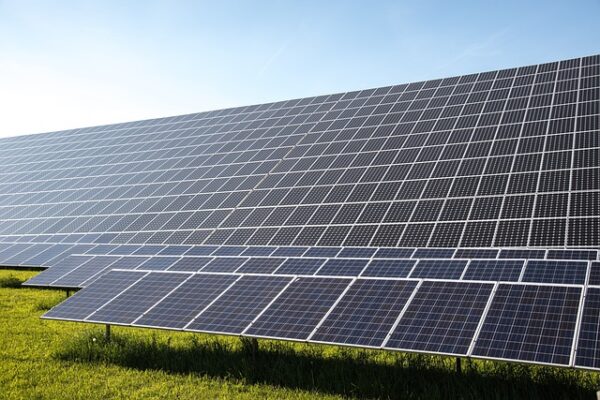




Kodiak Gas Services, Inc. (NYSE: KGS) has completed its acquisition of Distributed Power Solutions, LLC (DPS), a privately held provider of turnkey distributed power generation, finalising a transaction that marks the most significant strategic pivot in the company’s history. The acquired business has been rebranded as Kodiak Power Solutions, a new division of Kodiak Gas Services. The total cash consideration at closing came to $587 million, up from the original $575 million cash component announced in February, reflecting adjustments for additional power generation assets acquired ahead of closing, assumed indebtedness, and working capital. Sellers also received approximately 2.4 million shares of Kodiak common stock, bringing the full consideration above the initially announced $675 million headline figure. The completion adds approximately 395 megawatts of distributed generation capacity to Kodiak’s platform and formally opens the company to data center, microgrid, manufacturing, and broader energy infrastructure customers for the first time.
Why did Kodiak Gas Services acquire Distributed Power Solutions and what does the Kodiak Power Solutions division signal about the company’s long-term strategy?
Kodiak Gas Services has spent the past decade building one of the United States’ largest contract compression platforms, operating heavy-horsepower Caterpillar engine infrastructure for oil and gas producers and midstream operators. The acquisition of Distributed Power Solutions is a lateral extension of that core competency rather than a departure from it. The mechanical and operational profile of distributed power generation using reciprocating engines and gas turbines closely mirrors compression: same engine families, same maintenance demands, same field service requirements. Kodiak already employs more than 700 Caterpillar-certified technicians and has developed AI-driven fleet monitoring systems tuned to large-horsepower Caterpillar assets. That installed operational capability, not just financial firepower, is what makes the strategic logic of this transaction compelling.
The acquired DPS fleet of approximately 395 megawatts at closing, up from the 384 megawatts at announcement as Kodiak absorbed additional assets mid-transaction, consists of Caterpillar reciprocating engines and turbines. Roughly 364 megawatts was already under contract at announcement, with the contracted book weighted towards data center operators at around 67 percent, microgrids at 21 percent, and manufacturing at 12 percent. The flagship contract in the portfolio is a multi-year primary power agreement with a large data center customer, delivering 99.9 percent reliability for nearly two years. That record matters far more than the megawatt count: it demonstrates that DPS was already operating in a tier where reliability standards approach those of utility-grade infrastructure, not temporary backup power.
The creation of Kodiak Power Solutions as a named division rather than a quietly absorbed business line signals that Kodiak intends to compete in distributed power as a distinct market identity, not merely an extension of its compression services catalogue. That branding decision has commercial logic: data center developers, microgrid operators, and industrial manufacturers think of distributed generation as a product vertical in its own right, and having a dedicated division name makes it easier to approach those customers without leading with Kodiak’s oil and gas identity.
How does the data center power demand surge and bring-your-own-power trend drive the investment case for Kodiak Power Solutions?
The structural demand thesis behind this acquisition is straightforward. Data center electricity consumption in the United States is expected to roughly double by 2035, with digital infrastructure accounting for more than half of incremental US power demand growth over that period. Grid connection timelines have stretched materially in most major US data center markets, with interconnection queues now running three to five years in many regions. The result is a fast-growing cohort of hyperscaler and colocation developers who are no longer content to wait for utility connections and are instead procuring their own generation capacity, contracting directly with distributed power providers for primary, behind-the-meter supply.
This is the structural opening that DPS had already positioned itself to capture before the Kodiak transaction. The 100-megawatt data center contract in its portfolio is evidence that the model works at meaningful scale. Kodiak’s commercial team has described distributed generation as increasingly the preferred primary power solution rather than a grid-backup afterthought, a framing that implies contract durations and asset utilisation profiles closer to Kodiak’s compressed natural gas infrastructure than to the short-cycle spot rental market. For a company whose investment proposition is built around contracted, inflation-linked, long-duration cash flows, that is the right kind of business to be buying.
Caterpillar’s December 2023 strategic partnership with DPS is worth noting in this context. Under that arrangement, DPS became a preferred channel for Caterpillar’s large-scale natural gas generator sets, controls, and power generation technologies. That relationship gives the newly formed Kodiak Power Solutions preferential access to equipment supply and product development roadmaps at a moment when natural gas generator sets for data centers are in structurally constrained supply. Equipment availability, not capital or expertise, is increasingly the rate-limiting factor for new distributed power deployments.
What are the financial terms of the Kodiak Gas Services and Distributed Power Solutions deal and how does the closing price compare to the original announcement?
The original transaction announced in February 2026 was structured at approximately $675 million, comprising $575 million in cash and approximately $100 million in Kodiak shares representing about 2.4 million shares, or just under three percent of the post-close share count. The closing consideration of $587 million in cash reflects a $12 million upward adjustment against the original cash component, attributable to additional power generation assets that DPS acquired between announcement and closing, indebtedness assumed by Kodiak, and customary working capital movements. The equity component remained at approximately 2.4 million shares. The deal was valued at roughly 7.4 times DPS’s estimated 2026 adjusted EBITDA at announcement.
Kodiak financed the cash portion primarily through its existing asset-based lending facility, drawing approximately $590 million. Management has indicated that while the balance sheet will carry higher leverage in the near term, the accretion profile of the acquisition is expected to absorb that relatively quickly. The company has guided for 2026 full-year adjusted EBITDA of $750 million to $780 million, which incorporates the DPS contribution for the portion of the year following close. Kodiak expects the acquisition to be immediately accretive to both earnings per share and discretionary cash flow per share, a credible claim given the contracted revenue base of the acquired assets and the absence of a long integration ramp before cash flows begin consolidating.
The 7.4 times EBITDA entry multiple sits at the lower end of where comparable digital infrastructure and power generation assets have transacted recently, which partially reflects DPS’s private company status and the absence of a competitive auction. For Kodiak, the accretion maths at that multiple are reasonably straightforward given the company’s existing cost of debt. The more nuanced question is whether the power business grows into a meaningfully higher EBITDA multiple over time as the data center demand curve steepens, or whether execution challenges in a new vertical absorb the apparent valuation discount.
How does the Kodiak Power Solutions acquisition change the competitive landscape for contract compression and distributed power providers in the United States?
Kodiak Gas Services’ move into distributed power puts it on a converging trajectory with Archrock, Inc. (NYSE: AROC), its closest pure-play compression peer, which has also been evaluating exposure to power generation and digital infrastructure demand. The compression industry has watched the distributed power market develop with interest for several years, but few compression operators have had the balance sheet, the field workforce, or the equipment relationship to make the leap credible. Kodiak’s scale, its Caterpillar technician base, and its fleet monitoring technology made it a more plausible acquirer than most.
The transaction also shifts the competitive dynamics within the distributed power sector itself. DPS was among the larger independent distributed power platforms in the US, and its absorption into a publicly listed, investment-grade-adjacent operator changes the counterparty profile for data center developers and industrial customers. A division of a NYSE-listed company with over $1.3 billion in annual revenue and nearly full compression fleet utilisation is a more durable contract counterparty than a private operator of similar size. That balance sheet backing may allow Kodiak Power Solutions to compete for longer-duration, higher-commitment contracts that smaller independents cannot credibly pursue.
The competitive risk for Kodiak runs in the other direction as well. Hyperscalers and large colocation operators are increasingly large enough to contract directly with equipment manufacturers, bypassing operators altogether. And the turbine supply chain for the largest data center deployments, typically multi-hundred-megawatt programmes, remains concentrated in a small number of manufacturers with limited production capacity. Kodiak’s current 395-megawatt platform is meaningful for primary power in smaller and mid-scale data center deployments, but it is not yet at the scale where it would be the default partner for the largest hyperscaler programmes. Management has acknowledged that reciprocating engines are the near-term growth vehicle, with turbines becoming a larger share of the mix as larger infrastructure-style deals develop from 2028 onwards.
What does the KGS stock price performance and analyst positioning tell investors about the market’s view of the Kodiak Power Solutions growth story?
Kodiak Gas Services shares were trading around $56.48 as of mid-March 2026, near the upper end of the stock’s 52-week trading range and above the 200-day moving average, suggesting the market had been pricing in positive newsflow ahead of the acquisition close. The seven analysts covering the stock carried an average rating of Strong Buy as of that date, with consensus price targets that have been revised upward multiple times since the DPS deal was announced. Barclays lifted its target to $60 from $49 in early March 2026, and Goldman Sachs raised its target to $60 from $46 around the same period, both citing the improved growth profile that the distributed power expansion creates.
The stock’s positioning near its 52-week high at the time of closing completion, rather than a post-announcement fade, is an encouraging signal that institutional investors view the power expansion as a durable growth driver rather than a one-time financial engineering event. That said, Kodiak’s Q4 2025 adjusted earnings per share came in below consensus, which is a reminder that the core compression business is not immune to quarterly execution variability even as the strategic direction of the company is viewed positively. The 2026 adjusted EBITDA guidance range of $750 million to $780 million will be the primary yardstick against which the DPS contribution is assessed in the first full year of consolidation.
The Morningstar quantitative rating flags the stock as trading at a substantial premium to its modelled fair value, which reflects a tension between the contracted, infrastructure-style cash flow quality of the business and the growth expectations now embedded in the share price. That premium is defensible if Kodiak can grow the power division rapidly while sustaining near-full utilisation in compression, where the company says it is already fully sold out through 2026 and taking orders into 2028. It becomes harder to justify if power segment integration consumes management bandwidth and compresses margins in the legacy compression business during a transition period.
What are the execution risks and integration challenges Kodiak faces as it builds out the Kodiak Power Solutions distributed generation platform?
The operational case for integration is more coherent than in many diversification acquisitions precisely because the equipment overlap is real. DPS operated Caterpillar reciprocating engines and turbines, which share components, maintenance schedules, and calibration requirements with the compression engines Kodiak has operated for years. The ability to cross-deploy Caterpillar-certified technicians, share parts inventory, and extend fleet monitoring systems to the generation assets reduces both cost and ramp-up risk relative to entering a genuinely different industrial business. Management has characterised expected synergies as modest given DPS’s small private company structure, framing organic growth rather than cost extraction as the primary investment thesis.
The more substantive integration risk lies in customer-facing execution in a new market vertical. Data center operators and microgrid developers have different procurement cycles, technical requirements, and contract structures than oil and gas producers. Power purchase agreements and behind-the-meter service contracts typically carry more demanding reliability and performance penalty provisions than compression services contracts. Kodiak will need to build commercial and contractual expertise in digital infrastructure quickly, and the DPS management team, which is joining the combined organisation, carries much of that institutional knowledge. Retaining that team through what is typically the most disrupted phase of a post-acquisition transition is a material execution dependency.
Capital allocation discipline will also be tested over the next 18 months. Kodiak financed the acquisition with ABL drawdown and has indicated it expects to maintain its dividend and shareholder return commitments. However, the power business is capital-intensive for growth: adding meaningful megawatts requires equipment orders placed well ahead of deployment, and the Caterpillar supply chain for large-format units is constrained. Management has suggested future growth financing for the power segment may involve a more creative mix of structures, including partnerships, equipment financing arrangements, or incremental debt market activity. How Kodiak navigates that capital structure question while continuing to invest in compression growth will define the financial profile of the company through 2027 and into 2028.
Key takeaways: What the Kodiak Gas Services and Distributed Power Solutions deal means for investors, competitors, and the distributed power industry
- Kodiak Gas Services has formally exited pure-play compression status with the close of the DPS acquisition, now operating as a contract compression and distributed power infrastructure company with approximately 395 MW of generation capacity under the new Kodiak Power Solutions division.
- The final cash consideration of $587 million exceeded the announced $575 million cash component, reflecting additional assets acquired mid-transaction, a sign that Kodiak was actively growing the DPS fleet even before closing.
- The 7.4 times 2026 EBITDA entry multiple is disciplined by infrastructure acquisition standards, though it becomes less compelling if organic growth in the power segment disappoints or integration proves more disruptive than modelled.
- The data center power demand thesis is structurally credible, with US data center electricity demand projected to double by 2035. The DPS portfolio’s demonstrated 99.9 percent reliability record with a large hyperscaler strengthens Kodiak Power Solutions’ competitive position in primary power procurement.
- Kodiak’s 700-plus Caterpillar-certified technicians and existing fleet monitoring technology reduce operational integration risk materially compared with a company entering distributed power without that equipment and workforce overlap.
- The DPS management team joining Kodiak is a critical retention risk. Their digital infrastructure and distributed power commercial relationships represent embedded goodwill that is not easily rebuilt if key personnel depart during integration.
- Compression demand remains the financial foundation, with Kodiak reporting it is fully sold out through 2026 and already taking 2027 to 2028 orders. The power acquisition is growth optionality layered on top of a still-tightening core business.
- Wall Street has revised price targets materially upward since the DPS announcement, with Goldman Sachs and Barclays both moving to $60 targets in early March 2026, reflecting growing confidence in the combined growth profile.
- Peers including Archrock, Inc. will be watching whether Kodiak’s distributed power pivot generates sustainable margin expansion or becomes a capital sink, as the sector considers its own responses to the digital infrastructure demand wave.
- Kodiak’s 2026 adjusted EBITDA guidance of $750 million to $780 million will serve as the first real financial test of whether the power division contribution justifies the acquisition premium in the eyes of institutional investors.
Discover more from Business-News-Today.com
Subscribe to get the latest posts sent to your email.