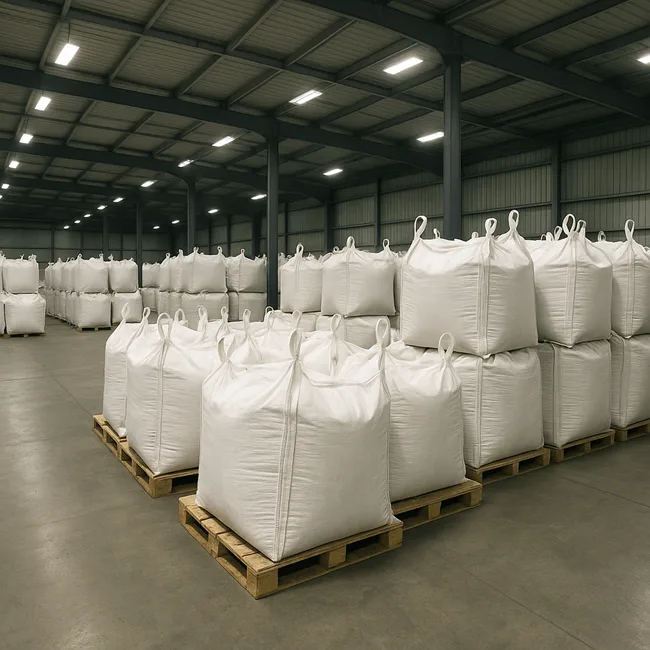
Kanpur Plastipack Limited (NSE: KANPRPLA), the Kanpur-headquartered manufacturer of flexible intermediate bulk containers (FIBCs) and woven polypropylene packaging solutions, has kicked off fiscal 2026 with its strongest quarterly performance in years. On 16 August 2025, the industrial packaging specialist reported that its standalone total income jumped 34 percent year-on-year to ₹18,223.90 lakh (₹182.24 crore), reflecting surging demand across domestic and export markets.
Earnings before interest, taxes, depreciation and amortisation (Ebitda) surged 119 percent to ₹1,554 lakh (₹15.54 crore), lifting operating margins to 8.5 percent from 5 percent a year earlier. Profit before tax reached ₹930.43 lakh, reversing a ₹154.84 lakh loss in the comparable quarter, while net profit stood at ₹572.60 lakh against a loss of ₹116.64 lakh in Q1 FY25. Earnings per share moved into positive territory at ₹2.49, compared to a negative ₹0.54 last year.
The turnaround underscores the success of Kanpur Plastipack’s dual strategy of improving operating efficiency and aggressively expanding into higher-margin export markets, culminating in its first international acquisition this quarter.
How does Kanpur Plastipack’s Q1 FY26 financial performance highlight its turnaround story and margin expansion?
The Q1 FY26 earnings performance signaled a major inflection point for Kanpur Plastipack. The 34 percent jump in revenue was driven by stronger volumes of FIBC bags, polypropylene multifilament yarn, and UV master batches. More importantly, the company’s Ebitda margin expanded by 350 basis points year-on-year, a result of disciplined cost control, improved capacity utilisation, and favorable pricing for export-linked sales.
The movement from a loss-making quarter in FY25 to a net profit of ₹572.60 lakh highlights improved operating leverage. Management has consistently targeted margins closer to 10 percent, and the current quarter places the company on that trajectory. Analysts suggested that higher exports of premium FIBCs and food-grade packaging products will be the key driver for sustaining margins above 8 percent in upcoming quarters.
With interest costs stable and a stronger balance sheet following a preferential issue of equity warrants, the company is positioning itself for continued profitability rather than the volatility of past years.
Why is the acquisition of UK-based Valex Ventures strategically important for Kanpur Plastipack’s global ambitions?
The most transformative development this quarter was Kanpur Plastipack’s acquisition of a 76.19 percent stake in UK-based Valex Ventures Ltd. This deal provides direct access to Europe’s premium food-grade and UN-certified FIBC markets, which demand higher quality standards and offer superior margins compared to standard bulk bag sales.
The transaction represents Kanpur Plastipack’s first overseas acquisition and signals a broader ambition to evolve from a domestic exporter into a global packaging solutions provider. The timing is particularly favorable, with the UK–India Free Trade Agreement reducing tariffs on technical textiles and packaging materials, providing a cost advantage for Indian exporters.
Institutional investors noted that this acquisition reduces the company’s dependence on intermediaries, enabling direct engagement with European clients and capturing greater value in the supply chain. Analysts also pointed to the synergies in distribution and compliance, as Valex already caters to multinational food and chemical companies with stringent regulatory requirements.
How do industry trends in global packaging demand strengthen Kanpur Plastipack’s growth outlook?
The industrial packaging industry, particularly the FIBC segment, has been experiencing sustained global growth. These bulk containers—often called big bags—are critical for transporting agricultural products, fertilizers, chemicals, and resins. Global demand is being fueled by agricultural exports, expanding petrochemical capacity, and stricter international logistics requirements for safe and traceable packaging.
In India, policy initiatives supporting exports, combined with rapid growth in construction and infrastructure, are increasing demand for woven polypropylene bags. Internationally, trade agreements like the UK–India Free Trade Agreement have lowered barriers for Indian manufacturers.
Kanpur Plastipack’s move into premium food-grade and UN-certified FIBCs via Valex Ventures positions it to capture the higher-value end of this market. Competitors such as Rishi FIBC Solutions, Big Bags International, Greif, and Berry Global dominate different parts of the supply chain, but Kanpur Plastipack’s five-decade track record and diversified product portfolio—ranging from conductive FIBCs to UV-stabilised master batches—provide a strong base for competing internationally.
Sustainability is another growing theme. Kanpur Plastipack has already invested in recyclable and recycled polypropylene bags, while exploring biodegradable alternatives. This aligns with stricter European sustainability mandates, which could further bolster export demand.
What do Kanpur Plastipack’s credit rating upgrade and capital raising indicate about its financial positioning?
To fund growth and reduce leverage, Kanpur Plastipack raised ₹13.15 crore through a preferential issue of 1,012,000 warrants. This injection strengthens liquidity and signals promoter confidence. Following this issue, promoter shareholding will rise slightly, which may be interpreted as a vote of confidence in the company’s expansion strategy.
Credit rating agency CRISIL upgraded Kanpur Plastipack’s long-term rating to BBB+ / Stable and assigned an A2 rating for short-term borrowings, acknowledging the improved financial profile. This upgrade is expected to lower borrowing costs and improve access to credit.
Additionally, the board engaged Grant Thornton to conduct a comprehensive risk audit. This review, aimed at identifying revenue leakages, process automation, and operational efficiency improvements, indicates a deliberate effort to professionalise governance and strengthen internal controls ahead of a larger international push.
How are investors reacting to Kanpur Plastipack’s Q1 results and what does stock market sentiment suggest?
On 14 August 2025, Kanpur Plastipack’s shares traded at around ₹212.00, representing a market capitalisation of ₹492.41 crore. The stock had seen a 52-week high of ₹249.45 and a low of ₹102.05. While recent sessions showed a 4.2 percent decline, this is partly attributed to profit-taking after a strong run-up in anticipation of Q1 results.
At a trailing twelve-month price-to-earnings ratio of 21.7 and a modest dividend yield of 0.41 percent, the stock reflects optimism about improved profitability but remains sensitive to leverage and sectoral cyclicality. The debt-to-equity ratio stood at 0.70, which, while manageable, indicates that deleveraging through warrant proceeds will be key to unlocking investor confidence.
Institutional flows remain limited, with foreign institutional investors showing negligible exposure to the stock, largely due to its small-cap status. Domestic institutions hold a minor stake, while promoters control over 51 percent. This concentrated structure makes the stock volatile, but also means that any incremental institutional buying could trigger outsized price moves.
Analyst consensus on the stock remains cautiously optimistic. Growth-oriented investors may view the international acquisition and improved financials as reasons to adopt a “buy” stance. More conservative investors are likely to prefer a “hold” until evidence of consistent profitability and successful integration of Valex Ventures emerges.
What are the key risks and opportunities for Kanpur Plastipack as it expands internationally?
Looking forward, Kanpur Plastipack’s growth hinges on effectively leveraging Valex Ventures’ European distribution and technical expertise. Management has identified premium food-grade FIBCs and hazardous material-certified bags as future growth segments. Success in these categories could meaningfully expand margins and export revenues.
Domestically, sustained demand for FIBCs, driven by agriculture, infrastructure, and food processing, should keep order books healthy. Expansion of capacity utilisation at its Panki plant and automation investments will be crucial to scaling operations efficiently.
Key risks include currency volatility, fluctuations in polypropylene raw material costs, and regulatory hurdles in European markets. The Grant Thornton risk audit is expected to provide actionable improvements, particularly around procurement and digitalisation, which could mitigate some of these risks.
The push towards sustainable packaging represents both a challenge and an opportunity. If Kanpur Plastipack can successfully develop biodegradable or fully recyclable alternatives, it could secure a competitive advantage in markets increasingly shaped by ESG-conscious buyers.
Is Kanpur Plastipack entering a new growth phase with its UK acquisition and Q1 performance?
Kanpur Plastipack’s Q1 FY26 results mark a decisive shift from past volatility to a more stable and growth-oriented trajectory. A record profit, improved margins, a strengthened balance sheet, and an international acquisition all point toward a company preparing for a new phase of expansion.
For investors, the stock offers exposure to structural growth in industrial packaging and global trade flows. While valuation is not inexpensive, the improving fundamentals and global ambitions make it a compelling story for those willing to tolerate small-cap volatility. If execution on the Valex Ventures integration and risk audit initiatives proves successful, Kanpur Plastipack could solidify its status as an emerging global player in premium packaging solutions.
Discover more from Business-News-Today.com
Subscribe to get the latest posts sent to your email.