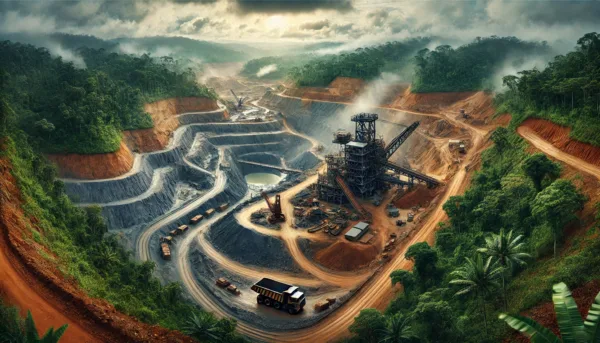


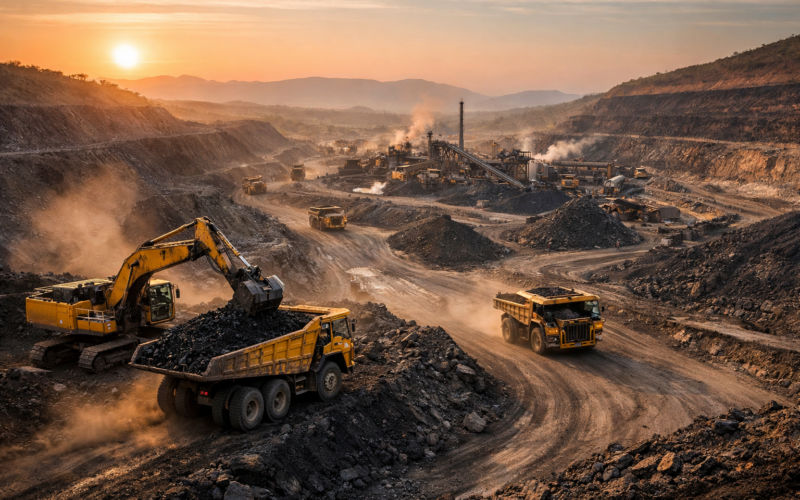
JSW Steel Limited (NSE: JSWSTEEL | BSE: 500228), India’s largest integrated steelmaker by capacity, formally announced the launch of its coking coal mining project Minas de Revuboe (MdR) in Mozambique’s Tete Province on 13 March 2026, with the country’s president Daniel Francisco Chapo presiding over the ceremony in Moatize. The development marks a significant resolution to a multi-year saga that included a mining lease revocation in 2024, international arbitration, and a parallel contest involving a rival Jindal family-linked entity. With the concession apparently now secured, JSW Steel is moving from acquisition mode into development mode on a project that holds 850 million tonnes of reserves and could yield 250 million tonnes of usable premium hard coking coal. For JSW Steel, which is targeting 50 million tonnes per annum of steelmaking capacity by 2030 and remains heavily import-dependent for coking coal, the MdR asset represents the most consequential backward integration move in the company’s recent history.
Why does JSW Steel’s push into captive coking coal matter for India’s steel capacity ambitions?
Coking coal is the single most expensive and strategically sensitive input in blast furnace steelmaking, accounting for a substantial portion of total production costs. India has negligible domestic reserves of premium-grade coking coal, leaving steelmakers almost entirely dependent on seaborne imports from Australia, the United States, and Canada. That concentration of supply creates dual exposure: to commodity price cycles, which have historically been violent, and to logistical or geopolitical disruption.
JSW Steel’s Q4 FY24 profit fell 64 percent year-on-year, with elevated coking coal costs identified as a primary driver. That single data point illustrates the operational vulnerability of running a 35.7 million tonne per annum steel business without meaningful captive coal supply. The company has been building out a diversified sourcing architecture that includes domestic mines in Jharkhand, an increased stake in Australia’s Illawarra asset from 20 percent to 30 percent, and now the MdR project in Mozambique. Each asset targets a different grade or geography, and together they represent a deliberate effort to reduce dependence on spot and indexed seaborne purchases.
MdR’s premium hard coking coal, also described in the company’s communications as a premium low-volatile grade, sits at the higher end of the quality spectrum and commands a price premium over standard grades. Access to captive supply of this quality, once the mine is operational, would directly reduce JSW Steel’s average coking coal procurement cost and compress the commodity-driven earnings volatility that has periodically punished its margins.
How does the Mozambique mine fit into JSW Steel’s 50 mtpa capacity roadmap and cost structure?
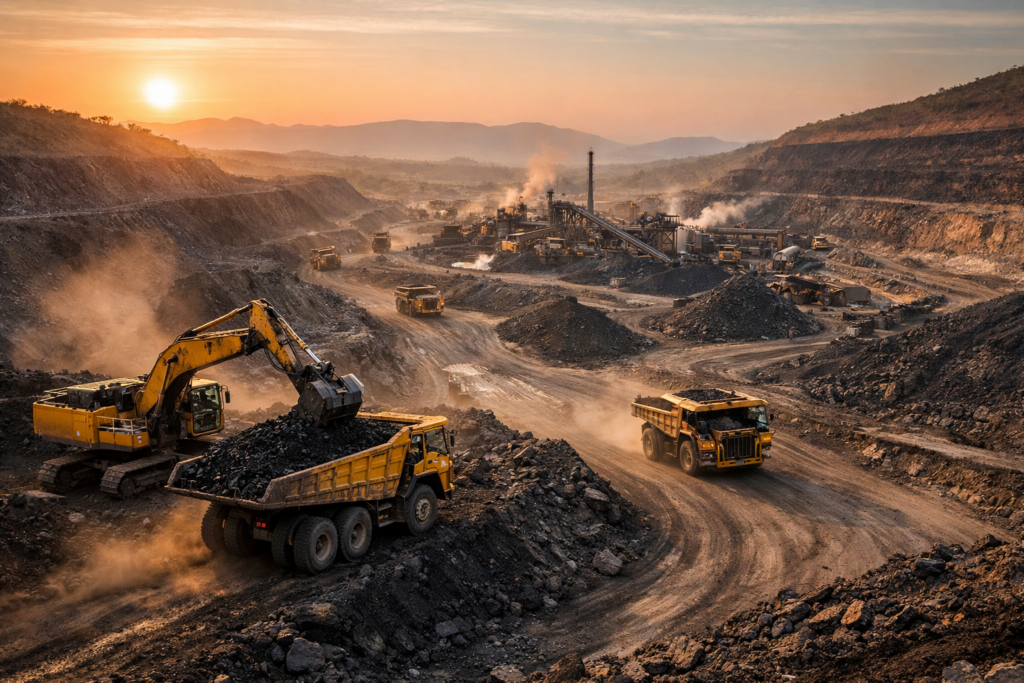
Phase one of the MdR project is targeted to produce 2.4 million tonnes per annum of prime hard coking coal, with development scheduled over the next two and a half years. Given JSW Steel’s current consolidated crude steel capacity of 35.7 million tonnes per annum, Phase 1 output would cover a meaningful but partial share of the coking coal requirement at current capacity levels. However, in the context of the company’s expansion to 43.4 million tonnes per annum over the next three years and then to 50 million tonnes per annum by 2030-31, the Mozambique asset becomes proportionally more significant as a percentage of total coking coal demand.
The logistics case for MdR is genuinely differentiated. The mine sits approximately 450 kilometres north of Beira Port and 900 kilometres from Nacala Port, both of which serve as export gateways to the Indian Ocean. The geographic proximity to India, relative to Australian and American origins, translates into lower freight costs per tonne and shorter supply chain transit times. For a company planning to operate at 50 million tonnes per annum of steel capacity, freight differentials on coking coal accumulate to material numbers over time.
The first phase output of 2.4 million tonnes per annum also needs to be read against JSW Steel’s Jharkhand domestic coking coal mines, which are expected to contribute between 3.2 and 3.5 million tonnes of usable coking coal progressively. Together these captive sources, once operational, begin to shift the structural input cost base in a direction that would have been impossible through spot procurement alone.
What is the backstory behind the Mozambique mining lease dispute and how was it resolved?
The MdR project’s path to formal launch has been anything but straightforward. JSW Steel first agreed terms to acquire MdR from the estate of Australian mining entrepreneur Ken Talbot, who died in 2010, and announced a final deal in May 2024 to purchase a 92.19 percent equity stake for USD 73.75 million. That price, a fraction of the USD 555 million Anglo American once proposed for a smaller stake in the same asset before walking away in 2013, reflected the pre-development status of the mine and the jurisdictional risks of operating in Mozambique.
Before the acquisition could close, the Mozambican government revoked MdR’s mining lease. The Ministry of Mineral Resources and Energy subsequently issued a notice in August 2024 indicating that the concession might be awarded to Stonecoal SA, a company whose directors were primarily employed at Jindal Steel and Power Limited, the rival steelmaking group headed by Naveen Jindal, Sajjan Jindal’s younger brother. The Talbot estate, on behalf of MdR, filed legal proceedings in Mozambican courts and initiated arbitration at the International Centre for Settlement of Investment Disputes in Geneva seeking reinstatement of the original lease.
The March 2026 ceremony in Moatize, presided over by President Daniel Francisco Chapo and attended by Parth Jindal representing the JSW Group, signals that the legal standoff has been resolved in JSW Steel’s favour, with the concession reinstated and the project formally greenlit. The Mozambican government’s endorsement at presidential level is a notable show of confidence in the investment, particularly given the political volatility that has accompanied contested elections and civil unrest in Mozambique over the past year.
What does the Mozambique project signal about geopolitical and sustainability dimensions of Indian steel?
The presence of the Indian High Commissioner to Mozambique at the launch ceremony positions MdR explicitly within the India-Africa economic partnership framework. India has been seeking to deepen resource and infrastructure ties with sub-Saharan Africa as a counterweight to China’s dominant position in the continent’s mining and infrastructure sectors. A captive Indian steel company coal mine in Mozambique, developed and operated under the oversight of a presidential ceremony, carries diplomatic weight beyond the immediate commercial rationale.
JSW Steel has also embedded a sustainability narrative into the MdR announcement. The company’s argument is that high-grade premium hard coking coal produces better coke yield and quality, which in turn improves blast furnace efficiency and reduces carbon intensity per tonne of steel produced. This positions captive high-quality coal supply not only as a cost move but as a marginal contributor to JSW Steel’s stated target of reducing carbon dioxide emissions by 42 percent from steelmaking operations by 2030, with a net zero commitment for directly controlled operations by 2050. The argument is credible in operational terms but investors should note that coking coal dependency in the blast furnace route will remain intact until green hydrogen-based or electric arc furnace technology is deployed at scale.
For Mozambique, the project carries development significance. The Tete Province, particularly the Moatize basin, is one of the world’s largest untapped coking coal deposits but has a troubled history with international investors, most notably Vale SA and Rio Tinto, both of which entered and exited large-scale coal projects in the region having significantly written down their investments. JSW Steel’s entry, at a fraction of those earlier valuations and with presidential-level ceremonial backing, is framed by the Mozambican government as a signal to other potential investors about the country’s investment climate.
How has JSWSTEEL performed on markets and what does the stock trajectory signal ahead of this announcement?
JSW Steel’s shares closed at approximately INR 1,119 on the NSE on 13 March 2026, down around 4.6 percent on the day against a backdrop of broader market weakness. The stock’s 52-week range runs from INR 905.20 to INR 1,284.70, placing the current price roughly in the lower half of that range. At current levels, the stock trades on a price-to-earnings multiple of around 44 times and a price-to-book of approximately 3.4 times based on trailing figures.
The market’s tepid initial response to the Mozambique launch is not surprising. This is a pre-development asset with Phase 1 production roughly two and a half years away, and the investment community has been tracking the MdR saga since the original May 2024 acquisition announcement. The value accretion from MdR will not show up in JSW Steel’s consolidated financials for several years. Analysts’ consensus price targets for JSWSTEEL range from approximately INR 930 to INR 1,420 based on available estimates, reflecting meaningful divergence in views on the pace of capacity expansion, the trajectory of Indian steel demand, and the contribution of raw material self-sufficiency to earnings quality. The Mozambique project, when it reaches production, is a medium-term margin improvement story rather than an immediate earnings catalyst.
What execution risks should investors weigh against JSW Steel’s Mozambique ambitions?
Several risk dimensions warrant close attention. First, the legal history of the MdR concession introduces a continuing jurisdictional risk. Even with presidential-level endorsement at the launch ceremony, Mozambique’s institutional stability has been tested by recent elections, civil unrest, and the contestation of resource rights that played out in this very project. A change in government posture, a new legal challenge, or regulatory friction during the development phase could delay the timeline or increase costs materially.
Second, mining infrastructure in the Tete Province is constrained. The rail corridors connecting the Moatize basin to Beira and Nacala ports have historically been a bottleneck for coal exporters. Vale and Rio Tinto both encountered significant infrastructure challenges in their Mozambican coal ventures. JSW Steel’s Phase 1 target of 2.4 million tonnes per annum is modest relative to the reserve base, but even at that scale, consistent rail and port access will be a critical dependency.
Third, the two-and-a-half-year development timeline for Phase 1 is an internal estimate made at the announcement stage. Mining projects in frontier markets routinely run behind schedule, particularly during the ramp-up phase. JSW Steel’s capital expenditure guidance of INR 200 billion for FY25 signals strong investment appetite, but MdR will compete for capital allocation alongside domestic iron ore mine expansions, steelmaking capacity additions, and potential further acquisitions.
Finally, coking coal price dynamics are a double-edged consideration. If global coking coal prices fall materially from current levels over the MdR development period, the financial urgency of captive supply diminishes. Conversely, if prices spike, the strategic case for the asset becomes dramatically clearer. JSW Steel is betting that structural demand from Indian infrastructure spending and limited growth in premium hard coking coal supply from major exporters will keep the long-term price environment supportive.
Key takeaways: what JSW Steel’s Mozambique coking coal project means for the company, competitors, and the Indian steel sector
- JSW Steel has formally launched the Minas de Revuboe coking coal project in Mozambique after resolving a prolonged legal dispute over the mining concession that involved competing interests from within the Jindal family’s broader corporate network.
- The MdR project targets Phase 1 output of 2.4 million tonnes per annum of premium hard coking coal within two and a half years, with an 850 million tonne reserve base and 250 million tonnes of usable coal potential representing one of the more significant captive raw material assets an Indian steelmaker has secured offshore.
- India has negligible domestic premium coking coal, making overseas captive sourcing a structural necessity for steelmakers expanding capacity. JSW Steel’s multi-pronged approach, covering Jharkhand domestic mines, an increased stake in Australia’s Illawarra asset, and now MdR, is the most comprehensive raw material integration strategy among Indian integrated steel producers.
- The USD 73.75 million acquisition price for a 92.19 percent stake in MdR is strikingly low relative to the earlier USD 555 million Anglo American proposal for a smaller stake in 2012, reflecting pre-development risk, jurisdictional uncertainty, and the intervening lease revocation episode.
- JSW Steel’s Q4 FY24 profit decline of 64 percent attributed in part to coking coal cost spikes illustrates the direct earnings vulnerability that captive supply of this quality grade is designed to address.
- The ceremony’s attendance by the Mozambican president and the Indian High Commissioner gives the project a diplomatic dimension, positioning MdR as part of India’s broader resource-security engagement with sub-Saharan Africa.
- Execution risks are material and should not be dismissed. Mozambique’s contested political environment, historical infrastructure constraints on the Moatize-to-port rail corridor, and the inherent timeline uncertainty of frontier mine development all represent genuine variables that could delay or inflate the cost of Phase 1.
- Competitors including Tata Steel, Steel Authority of India, and JSW Steel’s own scale rival JSPL are also pursuing raw material diversification, but none has yet announced a comparable greenfield coking coal mining project in Africa at this stage of development.
- For JSWSTEEL shareholders, MdR is a medium-term margin improvement and earnings quality story rather than a near-term earnings catalyst. The stock’s current position in the lower half of its 52-week range means the market has already priced in some degree of uncertainty around raw material strategy execution.
- The sustainability argument for high-grade captive coal, centred on improved blast furnace efficiency and lower carbon intensity per tonne of steel, is operationally coherent but should not obscure the fact that JSW Steel’s decarbonisation pathway ultimately requires a transition away from the blast furnace route entirely, a development MdR coal will not support beyond 2040 under most credible green steel scenarios.
Discover more from Business-News-Today.com
Subscribe to get the latest posts sent to your email.