





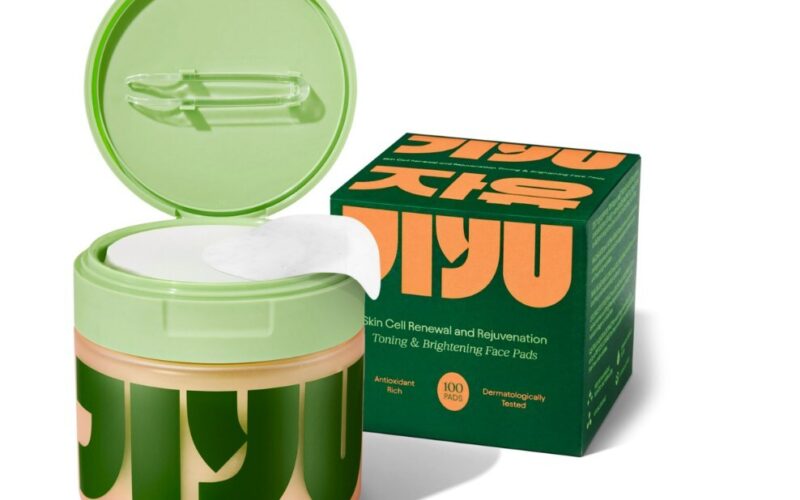
JiYu Skin, a Korean skincare brand founded by American entrepreneurs and manufactured in South Korea, has announced a push into longevity-focused skincare as it tries to carve out a larger position in the United States beauty market. The company says it is combining Korean formulation capabilities with a science-led focus on cellular skin health, while also projecting that it is tracking toward $100 million in revenue in 2026. That matters because the announcement is not just a product story. It is a category-positioning move in a market where beauty brands are increasingly trying to repackage anti-aging, preventative care, and wellness language into something that sounds more durable, more premium, and frankly more investable.
Why is JiYu Skin trying to position longevity skincare as the next phase of Korean beauty growth in the U.S. market?
JiYu Skin’s announcement lands at a moment when the beauty industry is searching for its next high-conviction narrative. “Clean beauty” became crowded. “Anti-aging” began to sound dated, and in some corners, culturally clumsy. “Wellness” turned into a giant umbrella that now covers everything from supplements to sleep apps to infrared saunas that cost as much as a used hatchback. Longevity, by contrast, offers beauty brands a fresher vocabulary. It sounds scientific, preventative, and premium all at once. For a company like JiYu Skin, which wants to blend Korean skincare credibility with broader consumer health trends, the term creates room to reposition skincare as part of a longer-term investment in skin function rather than a short-term cosmetic fix.
That strategic framing matters because Korean beauty has already won significant mindshare in the United States through ingredient-led storytelling, multi-step routines, and formulation speed. But the segment is now crowded, and brands need sharper differentiation than simply saying a product contains snail mucin, niacinamide, or peptides. JiYu Skin appears to understand that problem. Its move is less about inventing an entirely new science and more about wrapping existing Korean skincare strengths in a theme that better matches how higher-spending consumers now talk about health, prevention, and ageing.

How does JiYu Skin’s longevity skincare strategy differ from a standard anti-aging product pitch?
The company is trying to shift the conversation away from surface-level cosmetic claims and toward language around cellular repair, regeneration, barrier support, and long-term skin health. In practical terms, that still maps onto familiar beauty outcomes like tone, texture, hydration, and resilience. The difference is the framing. Anti-aging traditionally sells the promise of reversing visible decline. Longevity skincare tries to sell maintenance, resilience, and optimized function over time.
That may sound like semantics, but in consumer branding, semantics often carry the margin. JiYu Skin is signaling that it wants to sit closer to the preventative health economy than to the discount beauty aisle. That gives it a chance to appeal to consumers who are already spending on supplements, diagnostics, biohacking-adjacent products, and science-heavy wellness routines. In that context, skincare becomes not just a beauty purchase but part of a broader self-optimization basket.
The company’s messaging around ingredients such as NAD+ and its K8-Rejuvenate complex fits that playbook. These are being presented not as isolated miracle ingredients but as part of systems-based formulation. That is a smart commercial choice because it avoids overdependence on any single hero ingredient trend while giving JiYu Skin a broader innovation story to tell across future launches.
Can Korean skincare manufacturing strength still create a real competitive moat in 2026?
JiYu Skin is leaning heavily on South Korean formulation and manufacturing as a mark of credibility, and that is not accidental. South Korea still carries strong consumer and industry cachet in skincare, particularly around formulation sophistication, ingredient adoption speed, and product texture innovation. By emphasizing that its products are formulated and manufactured in South Korea and imported directly to U.S. consumers without domestic reformulation or repackaging, JiYu Skin is trying to preserve authenticity in a market where “K-beauty inspired” has sometimes become a very elastic claim.
There is also a supply-chain implication here. Direct access to South Korean cosmetics manufacturing networks can be an advantage for product development speed, formulation experimentation, and sourcing of new actives or delivery systems. That does not automatically create a moat, because contract manufacturing expertise is not exclusive to one brand. But it can improve time to market and quality consistency if executed well.
The challenge is that manufacturing credibility alone is no longer enough. Many brands can now make “Korean skincare” claims, partner with South Korean original design manufacturers, or source similar ingredient stories. JiYu Skin’s real task is to convert manufacturing authenticity into brand equity before the rest of the market catches up and starts speaking fluent longevity too.
What does JiYu Skin’s reported growth trajectory suggest about its commercial model and execution?
The company says it is on track for $100 million in revenue in 2026, supported by triple-digit year-over-year growth. If that trajectory holds, it would place JiYu Skin in a more serious commercial conversation than many early-stage indie beauty brands that remain heavy on aesthetic positioning and light on actual scale. Revenue momentum also matters because it suggests the brand is not relying purely on speculative category language. It is trying to tell the market that product-market fit is already happening.
JiYu Skin’s growth model appears to be strongly commerce-native. The company points to TikTok Shop, Amazon, and its Shopify storefront as meaningful revenue channels, while attributing much of its rise to product performance and creator-led content rather than traditional advertising. That is a revealing detail. Creator-led distribution can be powerful because it reduces the need for legacy brand-building budgets and allows skincare products to scale through demonstration, repeat purchase, and algorithmic exposure. In beauty, especially, texture, routine integration, and before-and-after storytelling travel well.
But there is a catch. Channels like TikTok Shop can accelerate growth quickly, yet they can also create concentration risk. Algorithm changes, creator fatigue, platform policy shifts, and rising customer acquisition costs can all hit momentum hard. Amazon, meanwhile, offers reach but also compresses differentiation and exposes brands to intense comparison shopping. Shopify provides control and margin potential, but only if the brand can drive repeat direct traffic. JiYu Skin’s multi-channel presence is therefore sensible, though maintaining balance across those channels will be critical.
Why could clinical validation become the difference between a trend-led skincare brand and a durable premium company?
One of the more strategically important details in the announcement is the company’s plan to allocate part of its recent $6.5 million capital raise to independent clinical research. That is notable because longevity skincare is a phrase that can attract consumer curiosity very quickly, but it can also attract skepticism just as fast. The more science-heavy the branding becomes, the more evidence the market may start to demand.
This is where many beauty narratives get into trouble. It is relatively easy to market terms like regeneration, repair, and cellular support. It is far harder to build a credible evidence stack that can survive scrutiny from informed consumers, regulators, clinicians, or competitors. JiYu Skin appears to recognize that if longevity skincare becomes a crowded subcategory, claims substantiation could become a key differentiator.
Independent research will not magically transform skincare into pharmaceutical science, and consumers should not confuse cosmetic formulation with medical intervention. Still, evidence-backed positioning could strengthen pricing power, retailer appeal, and long-term brand defensibility. It could also make JiYu Skin more attractive to strategic partners or acquirers if the category matures and larger beauty groups decide they need a faster entry point.
How important are new product launches and retail expansion to JiYu Skin’s next stage of scaling?
JiYu Skin says it expects to launch five new products in 2026, with each one tied to its longevity-led approach. That pipeline matters because skincare growth brands rarely win by standing still with one or two hero products forever. To keep momentum, they usually need adjacent launches that increase customer lifetime value, widen routine share, and create new entry points across price bands or use cases.
Retail distribution is the other obvious next lever. Direct-to-consumer and marketplace channels can take a brand far, but retail still matters for mainstream trust, physical discovery, and category legitimacy. The moment a brand moves into stores, it is no longer just winning on content velocity. It has to compete for shelf logic, repeat turn, and merchandising fit. That is a different sport altogether.
JiYu Skin also says it plans direct entry into the South Korean market, which is interesting because it reverses the usual brand narrative. Rather than presenting South Korea purely as a manufacturing base for Western consumption, the company is hinting at ambitions to compete more directly in one of the world’s most sophisticated skincare environments. That is a bold move, and it will be far from easy. South Korea is not a forgiving place to test whether your category story is truly differentiated or just well-packaged for export.
What does JiYu Skin’s move say about where the wider skincare industry could be heading next?
The broader signal here is that beauty is continuing to merge with health language, even when the underlying commercial product remains cosmetic. Consumers increasingly want products that sound preventative, evidence-based, and system-oriented. That does not mean every longevity claim will prove meaningful, but it does suggest the next phase of beauty branding will borrow more heavily from biotech, wellness, and functional health.
For competitors, JiYu Skin’s positioning is a warning shot. Smaller brands may try to imitate the language quickly, but larger beauty companies have more resources to fund testing, lock in formulation partnerships, and scale omnichannel distribution. If longevity skincare becomes a high-growth narrative, the category could fill up fast with brands trying to sound scientific enough to command premium pricing without drifting into overclaim territory.
That tension will define the next chapter. The winners are unlikely to be the loudest brands. They will be the ones that can combine product efficacy, credible storytelling, channel discipline, and enough scientific backing to avoid looking like they simply put a lab coat on a moisturizer and hoped nobody would ask too many questions.
What should executives, beauty investors, and competing skincare brands watch next in JiYu Skin’s expansion story?
The next signals to watch are straightforward. First, whether JiYu Skin can convert its longevity theme into repeatable product demand rather than one-off novelty buying. Second, whether its clinical research ambitions produce evidence strong enough to support premium positioning. Third, whether its channel mix remains diversified as it grows, instead of becoming too dependent on performance-led social commerce. And fourth, whether retail expansion enhances the brand or dilutes its distinctiveness.
For now, JiYu Skin’s announcement should be read less as a victory lap and more as a strategic declaration. The company is trying to get ahead of a category shift before it becomes fully crowded. That can work, especially in beauty, where language often helps create the market before the market is formally recognized. But the hard part begins after the narrative is launched. Once a brand claims it is building the future of skincare, the future has an annoying habit of asking for proof.
What does JiYu Skin’s longevity skincare push mean for beauty competitors, retailers, and category strategy in 2026?
- JiYu Skin is not merely launching another skincare angle. It is attempting to define a more premium, science-coded subcategory inside K-beauty before that label becomes generic.
- The company’s use of longevity language reflects a broader shift in consumer beauty marketing away from anti-aging and toward preventative, wellness-adjacent positioning.
- South Korean formulation and manufacturing still offer credibility, but they are no longer enough on their own to guarantee differentiation in the U.S. skincare market.
- JiYu Skin’s reported revenue trajectory suggests the brand is trying to prove it already has commercial traction, not just a fashionable narrative.
- Its channel model across TikTok Shop, Amazon, and Shopify is efficient for growth, but each platform brings concentration and margin risks that will become more visible at scale.
- The decision to fund independent clinical research could become one of the company’s most important long-term moves if longevity skincare starts facing tougher scrutiny.
- Five planned product launches in 2026 suggest JiYu Skin understands that category ownership requires a portfolio strategy, not just one strong hero product.
- Retail expansion could unlock mainstream scale, but it will also test whether the brand’s premium science positioning can survive more direct shelf competition.
- A future push into South Korea would be strategically ambitious and could serve as a real stress test of brand legitimacy in a sophisticated skincare market.
- For the wider industry, JiYu Skin’s move suggests that the next beauty winners may be the brands that best combine cosmetic performance, health-adjacent storytelling, and credible proof rather than just trend velocity.
Discover more from Business-News-Today.com
Subscribe to get the latest posts sent to your email.

