

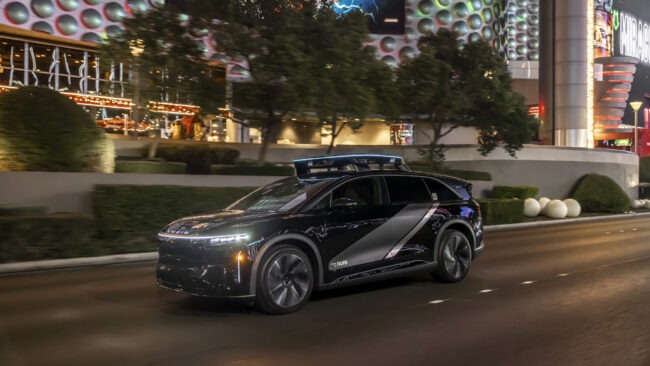
Lucid Group, Inc., Nuro, Inc., and Uber Technologies, Inc. have jointly revealed a production-intent robotaxi vehicle at CES 2026, underpinned by Lucid’s electric platform, Nuro’s level 4 autonomous stack, and Uber’s ridehailing scale. Autonomous on-road testing began in December 2025, led by Nuro in California, as the trio prepares for a pilot launch later in 2026.
This collaboration introduces a purpose-built luxury robotaxi with end-to-end autonomy, NVIDIA-based compute, and a ride experience customized by Uber, targeting a new convergence point in EV, AV, and mobility-as-a-service (MaaS) business models.
What does the Lucid–Nuro–Uber robotaxi partnership signal about the next phase of autonomous ridehailing?
The CES 2026 announcement does more than unveil a luxury robotaxi. It marks a high-conviction commitment from three differently positioned companies—Lucid Group from premium EVs, Nuro from delivery-centric autonomy, and Uber Technologies from global ridehailing—to converge on a common commercialization strategy: scale autonomy through a vertically optimized, rider-first platform.
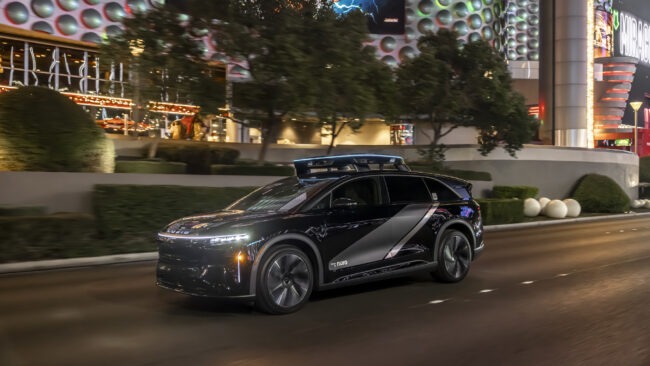
Lucid brings a high-performance EV architecture with superior cabin design, range, and compute integration. Nuro contributes its level 4 software stack and operational testing model honed in logistics and delivery contexts. Uber wraps the stack with a customer interface and routing logic tuned for high-frequency, urban rides.
The vehicle is not a modified prototype but a production-intent model. It leverages Lucid Gravity’s SUV design while embedding roof-mounted sensors in a low-profile halo system, real-time rider personalization, AI-powered visualization, and space for six passengers. Combined with NVIDIA DRIVE AGX Thor compute, the architecture signals a push toward mass-producible, sensor-integrated autonomous EVs with retail-grade fit and finish.
While Tesla continues to bet on vision-only systems and internal development, this multi-entity collaboration reflects a different industry thesis: that scaling autonomy will require best-in-class partners across vehicle design, AI compute, and service networks—each optimized for its domain rather than vertically consolidated.
Why is Uber pursuing this route after years of divestment from in-house AV development?
Uber Technologies exited its in-house autonomy program with the sale of Advanced Technologies Group to Aurora Innovation in 2020, followed by other capital-light autonomy alliances. The partnership with Nuro and Lucid reflects Uber’s evolved position: serve as a demand aggregator and network orchestrator, not a self-builder of hardware or autonomy stacks.
This approach limits Uber’s capex and operational risk while giving it optionality across AV partners. Notably, it aligns with Uber’s existing AV mobility pilots—including those with Waymo and Motional—where Uber offers the front-end user experience while relying on external partners for autonomy.
By customizing the in-cabin experience on Lucid’s hardware, Uber retains brand identity and service logic control even in the AV context. This reinforces its strategic position as the layer between AV fleet operators and end users, maximizing retention and service differentiation without building from scratch.
For investors, this model reduces long-term autonomy exposure risk while signaling Uber’s intent to scale AV availability selectively, beginning in autonomy-friendly geographies like the Bay Area.
How does this shift position Nuro in the competitive autonomous vehicle stack race?
Nuro’s entry into passenger autonomy represents a significant pivot from its roots in sidewalk robots and delivery bots. The robotaxi program highlights its ambition to evolve beyond short-distance logistics and apply its level 4 stack to higher-risk, high-density passenger environments.
By anchoring the stack around a compute-heavy architecture (NVIDIA DRIVE Hyperion), Nuro is signaling that it intends to compete with high-end players like Waymo and Cruise in terms of sensing, prediction, and motion planning—not just low-speed autonomy.
The emphasis on explainability, safety validation, and multimodal testing (closed course, simulation, and real-world trials) is critical. As Cruise faces regulatory scrutiny after its safety incidents, Nuro’s insistence on an “AI foundation model with verifiable logic” may help position it as a more cautious and compliance-oriented player.
Still, the passenger ridehailing domain introduces new layers of liability, latency tolerance, and customer interface expectations. Success here will hinge on whether Nuro can make the leap from low-speed, non-human payloads to complex, multi-occupant ride scenarios.
What are the manufacturing and operational risks for Lucid’s entry into robotaxi production?
Lucid Group has been under pressure to broaden its revenue base beyond the low-volume luxury sedan market. The robotaxi program could open a new channel for monetizing its EV platform while leveraging manufacturing capacity at its Arizona facility.
However, robotaxi production introduces new engineering challenges—particularly around redundant safety systems, fail-operational architectures, and reliability across millions of fleet miles. These differ from retail EV manufacturing KPIs like design, comfort, and consumer UX.
Lucid’s integration with Nuro’s sensor array and compute stack must now be industrialized at scale. While the CES display may wow attendees, the shift to low-defect, high-throughput production for commercial fleet deployment is nontrivial.
Institutional sentiment toward Lucid Group remains cautious amid persistent losses and high burn rates. While this partnership offers strategic upside, it may also increase operational complexity at a time when Lucid’s core sedan and SUV programs are still in early ramp.
How will regulators and cities respond to a premium, large-capacity robotaxi entering live testing?
Launching in the San Francisco Bay Area brings advantages and liabilities. California regulators are among the most experienced in handling autonomous vehicle pilot programs but are also under public scrutiny following recent accidents and service pauses.
The larger size of the Lucid-based robotaxi—seating six passengers—raises additional regulatory touchpoints compared to smaller AVs or delivery bots. Questions around curbside pickup, lane behavior, and pedestrian interactions may take on new dimensions.
Yet the decision to focus initial deployment on a known regulatory environment suggests strategic risk containment. Uber’s prior experience with AV rollouts in California, combined with Nuro’s commercial operating history, may help navigate the compliance and public trust landscape.
Longer-term, if the pilot demonstrates reliability and positive rider experiences, the model could support Uber’s rollout in similar jurisdictions with strong AV regulatory frameworks and urban density.
Key takeaways on the Lucid–Nuro–Uber robotaxi launch and market implications
- Lucid Group, Nuro, and Uber Technologies have launched a production-ready robotaxi with autonomous testing underway, targeting a 2026 launch in the Bay Area.
- The vehicle is built on Lucid Gravity’s platform, integrating NVIDIA-powered AI, Nuro’s level 4 autonomy, and Uber’s in-cabin UX and ridehailing logic.
- The collaboration reflects a multi-domain autonomy strategy—distinct from Tesla’s vertical play—where vehicle, software, and service layers are decoupled but integrated.
- Uber is reinforcing its position as an aggregator of AV supply while avoiding full-stack development and minimizing direct autonomy risk.
- Nuro’s pivot to passenger autonomy raises competitive stakes in level 4 deployment and positions it closer to Cruise, Waymo, and Motional in strategic intent.
- Lucid’s manufacturing of a robotaxi fleet introduces complexity beyond retail EV production and will test its scalability under commercial fleet requirements.
- Regulatory and public response will be critical, particularly as California reevaluates AV deployment frameworks in light of recent high-profile incidents.
- The project could mark the first luxury-grade robotaxi built at production scale, but execution risks remain across engineering, compliance, and real-world reliability.
Discover more from Business-News-Today.com
Subscribe to get the latest posts sent to your email.