


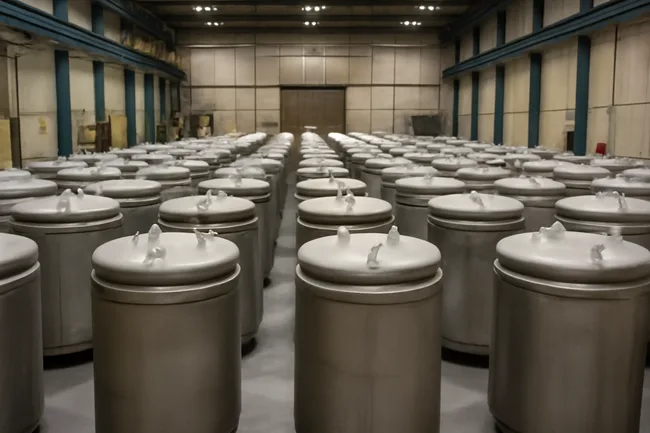
The United Kingdom has unlocked a multi-million-pound push to deal with one of its most persistent nuclear legacies: civil plutonium. The British government has confirmed £154 million in fresh funding for the Nuclear Decommissioning Authority (NDA) group, earmarked to design and develop the specialised technologies needed to immobilise and permanently dispose of the nation’s plutonium stockpile.
The investment, which spans five years, will support around 100 jobs in North West England, mostly concentrated in Cumbria, where Sellafield has long served as the heart of the UK’s nuclear reprocessing and waste management industry. Officials emphasised that the decision to immobilise the material — a by-product of decades of nuclear fuel reprocessing — would reduce long-term security risks while also strengthening the region’s nuclear economy.
Why is the UK investing £154 million in plutonium immobilisation and what does it mean for Sellafield?
The NDA, alongside subsidiaries Sellafield Ltd and Nuclear Waste Services, is now tasked with transforming this funding into tangible laboratory and pilot-scale facilities that can prove the viability of immobilisation technology. The approach, according to officials, is about turning plutonium from a material with high proliferation potential into a stable form that can be locked away for geological disposal.
Over the next two years, early research and development will dominate, with 50 staff already in post. The project includes installing two new laboratories at Sellafield, providing controlled environments where experts can work safely with hazardous materials.
Energy Minister Michael Shanks underlined the political weight of the move, pointing out that Cumbria’s nuclear industry has always been central to the UK’s energy strategy. He framed the investment as a double dividend: both a safety measure to handle legacy stockpiles and a local economic stimulus, saying the programme would eventually support thousands of skilled jobs and drive billions in wider investment.
How does this project fit into the UK’s broader civil plutonium management challenge?
The UK holds one of the largest civil separated plutonium inventories in the world, stored securely at Sellafield under international safeguards. While the NDA has spent decades managing reprocessing waste and decommissioning redundant reactors, plutonium has posed a unique challenge due to its potential use in nuclear weapons and its hazardous properties.
Previous policy debates weighed potential reuse in new nuclear fuels, such as mixed oxide (MOX), but cost and technical feasibility ultimately steered the UK toward disposal pathways. The immobilisation strategy currently being pursued involves two parallel technologies. The first, Disposal MOX (DMOX), focuses on creating ceramic pellets designed for long-term disposal. The second technique, Hot Isostatic Pressing (HIP), applies high temperature and pressure to form a dense, “rock-like” ceramic material. Both methods are being explored as viable solutions to securely immobilise plutonium for permanent disposal.
Once developed, these waste forms would be suitable for final placement in a Geological Disposal Facility (GDF) — the UK’s planned deep underground repository for radioactive waste. Nuclear Waste Services, part of the NDA group, is leading the assessment of how immobilised plutonium will interact with GDF safety requirements.
What role will universities and academic partnerships play in the UK’s plutonium disposal strategy?
Beyond the industrial programme at Sellafield, the government is co-funding a £5 million Plutonium Ceramics Academic Hub with the Universities of Manchester and Sheffield, allocating £2.5 million from this latest package. The hub is designed to build the next generation of technical expertise in ceramic immobilisation science, ensuring that knowledge is embedded in the UK research base.
The focus on academia signals recognition that this is not merely an engineering challenge, but also a long-term scientific effort requiring new subject matter experts. Analysts note that training pipelines for nuclear scientists have been under pressure in recent decades, with talent often gravitating to defence or energy generation rather than waste management. The hub is intended to rebalance that equation.
What is the institutional and investor sentiment around this investment in nuclear waste management?
While the NDA is not a listed company, nuclear sector suppliers and contractors in the UK’s industrial supply chain are likely to see opportunities from the Sellafield-based laboratories and potential future construction of immobilisation plants. Institutional investors tracking the UK’s nuclear programme broadly view government commitments of this scale as a positive signal for supply chain stability, particularly in regions where nuclear provides long-term employment.
In addition, the broader nuclear sector has been under renewed scrutiny as the UK pursues both decarbonisation goals and energy security objectives. Analysts point out that robust strategies for legacy waste and plutonium management are essential for maintaining social licence for nuclear energy expansion, particularly as projects such as Hinkley Point C and the proposed Sizewell C continue to require public and political support.
How does the funding address the long-term risks and security concerns associated with plutonium?
Plutonium’s hazardous nature means researchers must operate under some of the strictest laboratory controls in the nuclear sector. Immobilisation is seen as the most secure pathway because it physically locks the material into a ceramic matrix, reducing both environmental and proliferation risks.
The NDA has made clear that once immobilised, the material would be placed into interim storage at Sellafield before its eventual transfer to the GDF. This long-term vision requires not just R&D but also a major investment in a nuclear material processing plant and dedicated interim storage capacity, both of which would anchor employment and investment in Cumbria for decades.
Experts highlight that the real value of this funding is not just the initial £154 million allocation but the signal it sends about commitment to a multi-decade disposal programme. Institutional observers believe this clarity reduces uncertainty for local communities and enhances the UK’s credibility in international nuclear governance circles.
What does this investment mean for Cumbria and the North West economy over the next decade?
The initial tranche of funding supports 100 jobs directly, but the long-term programme is expected to support thousands. For Cumbria, which already has a strong identity as the UK’s nuclear heartland, this investment strengthens its position as a centre of excellence in nuclear decommissioning and waste management.
Minister Shanks suggested billions in associated investments could follow as the immobilisation programme moves toward full-scale deployment. Analysts believe that supply chain effects will extend well beyond Cumbria, with engineering firms, safety equipment suppliers, and specialised materials companies across the UK potentially benefiting.
This mirrors the historical pattern of nuclear investment in the region: large government commitments have typically catalysed private sector partnerships, university collaborations, and a pipeline of skilled jobs in science and engineering.
What are the future steps and policy implications of the UK’s plutonium immobilisation programme?
The immediate focus remains on research and proving the two key immobilisation technologies. But the NDA has indicated that the next major milestone will be securing government approval for a full plutonium disposition programme. That would involve construction of a dedicated processing plant at Sellafield, marking one of the most significant nuclear infrastructure projects in the UK outside of power station builds.
Policy experts also highlight that success in this programme would place the UK at the forefront of plutonium immobilisation globally. Other countries, including the United States, have struggled with cost overruns and delays in similar efforts, notably the now-halted MOX Fuel Fabrication Facility in South Carolina. By contrast, if the UK can demonstrate viable immobilisation pathways, it may export expertise and shape international standards for dealing with plutonium inventories.
For the UK public, the long-term implication is assurance that one of the most hazardous elements of the nuclear legacy is being responsibly managed. For industry, the message is clear: nuclear decommissioning and waste management are not only environmental imperatives but also economic opportunities.
Is this investment a national policy milestone or just the first step in a long journey?
The £154 million allocation is, in essence, a down payment on a far larger challenge. Immobilising plutonium is not a short-term fix but a multi-decade endeavour requiring coordination between government, academia, industry, and local communities.
Institutional sentiment remains cautiously supportive, with recognition that successful demonstration of immobilisation technologies will be pivotal for the UK’s nuclear credibility. For Cumbria, it represents both continuity and renewal: another chapter in a long nuclear history, but with a forward-looking focus on safety, security, and scientific innovation.
Discover more from Business-News-Today.com
Subscribe to get the latest posts sent to your email.