Airlines across the world are reassessing their assumptions about radiation safety after Airbus grounded more than 6,000 aircraft in the A320 family due to corrupted flight control data linked to intense solar activity. The grounding, which affected a significant portion of the world’s single aisle fleet, instantly shifted attention from conventional aircraft maintenance risks to a more unexpected threat: the growing influence of solar storms on aviation systems that increasingly depend on sensitive electronics and software-driven flight controls. The scale and timing of the grounding underscored how a burst of radiation capable of disturbing onboard data systems can ripple across global travel networks in minutes, forcing airlines, regulators and manufacturers to confront a problem that has been on scientific radars for years but rarely acknowledged at this operational magnitude.
Investigators examining the October 30 JetBlue event, in which a Cancun to Newark flight suddenly lost altitude and injured passengers before landing in Tampa, said corrupted data caused by solar radiation is a credible explanation for the incident. Although the European Union Aviation Safety Agency categorised the event as an incident, the fallout triggered a worldwide response. Suddenly, a largely theoretical concern about radiation interference was no longer an academic discussion limited to scientists, but a real-time operational challenge affecting aircraft dispatch decisions, maintenance planning and airworthiness directives.
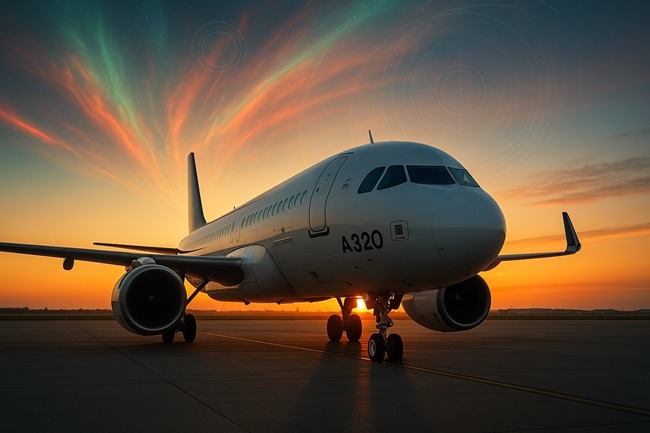
How a single A320 incident triggered global attention on whether solar storms can compromise modern avionics architecture and real time flight control data integrity
For years, radiation exposure has been regarded mainly as a human health issue for pilots and cabin crew rather than a direct systems threat. Airlines tracked cosmic radiation doses at high altitudes, but aircraft electronics were largely expected to withstand the solar activity that typically reaches commercial flight levels. The A320 grounding has now reframed that assumption. The event demonstrated that solar radiation spikes can influence data-dependent flight control systems in ways that were previously considered improbable.
Aviation analysts said the JetBlue case is forcing operators to ask more fundamental questions about whether today’s avionics architecture, built around high levels of digital integration and automated redundancy, is sufficiently resilient to a rapidly intensifying period of solar activity. Scientists have noted that the sun is entering its solar maximum cycle, a phase expected to produce stronger and more frequent storms. While no regulator suggested that the grounding indicates a systemic failure, the convergence of digital dependence and solar unpredictability has created an emerging risk category that airlines can no longer treat as a theoretical footnote.
In the days following the Airbus directive, indirect sentiment from airline engineering leaders suggested a shift in focus. They indicated privately that they are not just reviewing the immediate software update but are also beginning to explore whether radiation shielding, sensor redundancy and alternative data validation layers should be revisited for future fleet plans. The grounding exposed the degree to which commercial aviation now relies on precise digital inputs to maintain stable flight performance, making even rare data corruption events worth deeper investigation.
Why the rapid expansion of fly-by-wire systems and integrated flight computers has magnified concerns about the long term resilience of aircraft electronics to solar weather variability
Modern commercial aircraft operate with highly centralised flight computer systems that integrate data from sensors, inertial reference units, air data modules and cockpit interfaces. The advantages of this architecture are clear: improved safety, greater efficiency and predictable aircraft behaviour. However, the Airbus grounding highlighted how these integrated systems create a single point where corrupted data can have immediate operational consequences.
Industry experts said that as avionics grow more advanced, they also become more sensitive. Components increasingly rely on high density integrated circuits that are inherently vulnerable to radiation-induced bit flips. While redundancy and cross checking systems are designed to catch anomalies, the JetBlue event suggests that extreme bursts of radiation can still penetrate protective layers at the wrong moment. Regulators indicated indirectly that they will now review whether existing standards for radiation hardening need updates, especially as solar maximum conditions continue to escalate.
Researchers studying atmospheric radiation exposure have long warned that commercial aircraft flying polar routes face the greatest risk. Airlines use these routes for shorter travel times between North America and Asia. Although this grounding involved a flight far from polar latitudes, analysts said it reinforces the idea that radiation vulnerabilities are no longer limited to a specific corridor but are spreading across altitudes and geographies based on dynamic solar conditions.
How global airlines and regulators are reassessing operational playbooks to prepare for future solar events that could trigger similar system level anomalies
The Airbus A320 grounding forced airlines to begin evaluating new operational protocols. Some carriers are exploring whether predictive radiation monitoring tools should be integrated into dispatch systems to flag periods of elevated solar activity. This approach is already used in limited form by some long haul operators, but short haul networks have rarely viewed it as essential. The grounding has changed that perception.
Indirect sentiment from regulatory officials suggested that there will be more coordination between meteorological agencies, space weather observatories and aviation authorities. The goal is to ensure operators receive faster warnings when the sun emits bursts of high energy particles capable of interfering with avionics. Industry observers said more operators may begin using alternative routing or altitude adjustments during extreme solar episodes, similar to practices used during geomagnetic storms that disrupt high frequency radio communications.
Engineers at several carriers indicated that maintenance teams are reviewing whether additional data validation steps should be implemented in flight control computers. While Airbus has made clear that the immediate fix involves reverting to previous software versions and updating older hardware, airlines are beginning to look beyond the current event to evaluate new safeguards that go beyond the mandatory directive.
Why the Airbus grounding is prompting questions about long-term fleet strategy as airlines weigh radiation resilience alongside fuel efficiency and engine performance
Fleet strategy discussions traditionally centre on economics, environmental regulation, engine reliability and cabin layout. The Airbus grounding introduced a new variable that had rarely entered mainstream debate: radiation resilience. Although airlines are not suggesting that the A320 family has structural exposure, the event has highlighted that aircraft acquisition decisions may soon include more scrutiny of how avionics systems respond to environmental extremes.
Aviation consultants said the event may accelerate interest in newer airframes equipped with next generation avionics, especially where manufacturers emphasise radiation shielding and advanced data integrity systems. Airlines renewing narrow body fleets could begin asking more pointed questions about how aircraft electronics are hardened against solar events. While no operator is suggesting a shift away from Airbus or any other manufacturer, the grounding has encouraged a level of technical scrutiny that aligns with the increasingly digital nature of modern aircraft.
The economic aspect is also a factor. A short but global recall involving more than 6,000 aircraft is operationally costly. Airlines are calculating the financial impact of grounded flights, maintenance labour and contingency scheduling. While the broader industry response remained measured, the event served as a reminder that digital vulnerabilities can create real-world financial consequences at scale.
How the aviation sector may redefine safety frameworks as solar weather becomes a more visible part of aerospace risk management
Aviation safety frameworks have historically emphasised mechanical reliability, pilot training, human factors and standard operating procedures. The Airbus grounding suggests that solar weather will now become a more prominent element of risk assessment. Regulators indicated indirectly that future safety reviews may incorporate new monitoring protocols and updated certification standards for avionics exposed to radiation.
The grounding has also influenced discussions within pilot associations, which are seeking more detailed briefings on how solar activity affects flight computers. Pilots said understanding potential symptoms of radiation-induced anomalies will help them recognise unusual aircraft behaviour more quickly. Airlines responded by increasing internal training material focused on radiation awareness, although they emphasised that such events remain rare.
Aviation researchers said the operational lessons from the grounding will contribute to future models predicting how solar activity interacts with aircraft systems. As the current solar maximum continues, manufacturers, regulators and airlines will likely expand collaborative efforts to map exposure patterns, strengthen redundancy and improve software resilience.
Why the A320 grounding may be remembered as the event that pushed solar weather from scientific discussion into mainstream aviation policy
Before the Airbus directive, the idea that solar weather could influence commercial aircraft operations was regarded by many as an edge case. The grounding of more than half of the global A320 fleet changed the conversation almost instantly. Airlines responded with urgency, regulators issued rapid guidance and maintenance teams moved in coordinated waves across global hubs. The event demonstrated that radiation interference is not a theoretical anomaly but a real operational risk that can emerge without warning.
Industry experts said the long-term impact will extend beyond the immediate fixes. The grounding is likely to shape future policy discussions, avionics design choices and safety regulations. It will also influence how airlines prepare for the next solar cycle, ensuring that flight operations remain stable even during periods of intense solar activity.
The aviation industry is entering a period in which software reliability, environmental variability and data resilience will play a more important role in aircraft design and regulatory oversight. The Airbus grounding is a clear reminder that the next frontier of aviation safety may not come from mechanical components or pilot error, but from the increasingly unpredictable behaviour of the sun.
Discover more from Business-News-Today.com
Subscribe to get the latest posts sent to your email.