



How are marketing and retail operations becoming Shell plc’s most stable source of profit growth?
In the third quarter of 2025, Shell plc delivered adjusted earnings of 5.4 billion US dollars and cash flow from operations amounting to 12.2 billion US dollars. While these numbers alone may appear impressive, the real shift lies beneath the surface. Unlike previous decades where oil majors were heavily reliant on upstream production for profitability, Shell’s latest results suggest that a new business model is emerging. The cash engine of the modern integrated energy company may no longer be oil fields alone. Shell’s Marketing and Integrated Gas divisions are now anchoring profitability and providing stability in a volatile energy environment. This signals a shift not just for Shell plc, but potentially for the oil and gas sector as a whole.
Shell’s Marketing segment delivered 1.316 billion US dollars in adjusted earnings during the third quarter of 2025. This represented the second-highest quarterly profit from the division in over a decade. While overall sales volumes ticked up only slightly to 2.824 million barrels per day compared to 2.813 million in the prior quarter, profitability was driven primarily by improved margins and seasonal strength. Performance across sub-segments such as mobility, lubricants, and decarbonisation was a key driver of the earnings expansion. This performance is not a one-off anomaly, but rather part of a growing trend. Shell has begun positioning Marketing as a core value engine within its broader portfolio, with significant emphasis in its investor presentations on the long-term resilience and returns of this segment.
Why is Shell plc doubling down on LNG as a core pillar of its capital allocation and cash flow strategy?
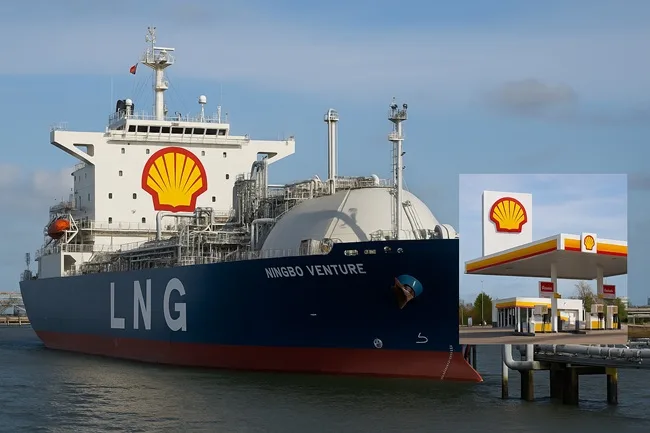
Historically, Marketing and Retail were considered less attractive compared to upstream oil and gas exploration, often viewed as volume-heavy and margin-thin. Today, however, the narrative has changed. Shell’s downstream infrastructure, global footprint, and ability to optimise margins through digitalisation and consumer engagement have turned Marketing into a predictable, cash-generative pillar. The company is now extending this foundation into its mobility business, electric vehicle charging infrastructure, and next-generation energy retail offerings. With energy consumption patterns shifting in both developed and emerging markets, these downstream plays have become strategic rather than simply operational.
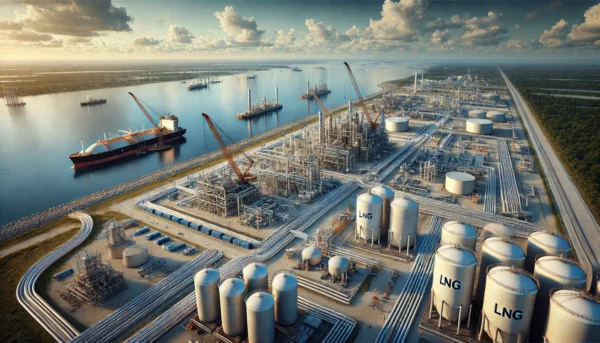
Parallel to the rise of Marketing, Shell’s Integrated Gas business—particularly its leadership in liquefied natural gas (LNG)—is also becoming a defining force in the company’s cash flow story. In the third quarter of 2025, Shell reported 2.143 billion US dollars in adjusted earnings from Integrated Gas. This performance was supported by a rise in LNG liquefaction volumes from 6.7 million tonnes in the second quarter to 7.3 million tonnes in the third quarter. LNG sales also increased, reaching 18.9 million tonnes. The division benefitted not only from volume growth but also from strong trading and optimisation outcomes, which Shell has historically been known to execute well.
Shell has signaled its long-term confidence in LNG through strategic forecasts and infrastructure investments. During its 2025 Capital Markets Day, the company projected a 4 to 5 percent compound annual growth rate in LNG sales beyond 2030. The company views LNG as a crucial transition fuel, particularly in regions such as Southeast Asia and Europe, where renewables adoption is growing but remains constrained by intermittency and infrastructure. Shell’s trading operations have helped maximise margin capture from LNG cargoes, especially in an environment where regional price differentials can be wide.
How does Shell’s earnings mix suggest a fundamental shift away from upstream-led valuation models?
While upstream operations remain foundational to Shell’s structure, the company appears to be recalibrating its earnings balance. In the third quarter, Shell’s upstream production climbed to 1.832 million barrels of oil equivalent per day, and upstream adjusted earnings stood at 1.804 billion US dollars. However, this performance was only modestly higher than the returns from Integrated Gas and Marketing. This signals a broader shift. Upstream volumes are no longer the sole proxy for valuation or shareholder confidence. Instead, investors and analysts are paying closer attention to earnings diversification, cash flow conversion efficiency, and the consistency of returns across segments.
Shell’s strategic portfolio messaging supports this interpretation. The company groups its assets into categories like Growth, Longevity, and Resilience, with Marketing and Integrated Gas occupying significant space within those themes. Shell is consciously structuring its capital allocation framework to reduce dependency on high-risk upstream megaprojects, which often have long lead times and exposure to geopolitical shocks. The emphasis is increasingly on assets and segments that provide predictable returns, stronger margin control, and better alignment with evolving policy and environmental landscapes.
What is the market reaction to Shell plc’s post-oil-major capital discipline and segmental performance shift?
Investor response has been largely constructive. Shell reported free cash flow of 10 billion US dollars in the third quarter, bolstered by its robust operational performance and disciplined capital expenditure of 4.9 billion US dollars. Net debt declined to 41.2 billion US dollars, and the company maintained its gearing ratio below 20 percent, despite a minor non-cash increase linked to Dutch pension legislation. These financial results have reinforced confidence among institutional investors. Analysts note that Shell’s cash flow stability, supported by Marketing and LNG, has enabled the company to sustain shareholder distributions through dividends and share buybacks.
In fact, Shell has maintained a consistent capital return policy, announcing a 3.5 billion US dollar share buyback for the fourth quarter of 2025. This marks the sixteenth consecutive quarter in which the company has committed at least 3 billion US dollars to repurchase programs. This consistency is notable in a sector that has historically been marked by dividend volatility and cyclical capital expenditure swings. Shell’s ability to maintain capital discipline while still rewarding shareholders is being viewed as a model for next-generation energy majors.
How is Shell plc’s strategy diverging from peers like BP and TotalEnergies in the energy transition race?
Shell’s strategy contrasts with several of its peers. For example, TotalEnergies SE has leaned more heavily into solar and battery storage, while BP plc has made aggressive commitments to offshore wind. Shell, in contrast, appears to be navigating a more balanced transition path. Its approach to energy transformation is gradual and cash-focused, with renewables and carbon capture investments sitting alongside legacy businesses that continue to perform. This integrated framework allows Shell to extract value across the full energy chain while scaling newer platforms like hydrogen, carbon capture, and digital energy services in measured increments.
Going forward, analysts and investors are expected to track a new set of metrics when evaluating integrated energy companies. Traditional measures like reserve replacement ratios and upstream production growth are being supplemented by LNG volume growth, marketing margin expansion, power trading returns, and cash generation from decarbonisation services. Shell appears to be aligning its disclosures and reporting structure accordingly, creating greater transparency around these emerging value drivers.
Could Shell plc’s evolving cash engine model become the new template for oil majors in a carbon-constrained world?
While Shell’s upstream business remains relevant, it is no longer the only lens through which investor sentiment is shaped. The growth of LNG and the resurgence of marketing as a strategic profit center reflect a deeper evolution. In an energy world that increasingly prizes cash resilience, customer intimacy, and infrastructure optionality, Shell’s emerging portfolio mix is not just reactive—it is defining. The company’s ability to generate high-quality earnings from retail-facing businesses, coupled with its leadership in LNG, places it in a strong position to navigate future market uncertainties.
As the industry approaches the end of the decade, Shell plc may be redefining what it means to be an oil major. The company’s emphasis on consumer energy services and natural gas solutions over pure-play hydrocarbons suggests that the future oil major may look less like a producer and more like an optimizer—leveraging infrastructure, trading insights, and customer proximity to generate value. Shell’s 2025 financials indicate that this shift is already underway and gaining momentum.
Discover more from Business-News-Today.com
Subscribe to get the latest posts sent to your email.