Helium One Global Limited (LON: HE1) is no longer just another AIM exploration story chasing a distant discovery. The company now has two moving parts that retail investors are watching closely: a 50% working interest in the Galactica-Pegasus helium development project in Colorado and the Southern Rukwa helium project in Tanzania, where the next major value test is the search for a strategic farm-out partner. With Helium One shares trading around 0.57p, near the lower half of their 52-week range, the market is effectively asking one sharp question: can production momentum in the United States and a farm-out in Tanzania turn HE1.L from a helium explorer into a credible development-stage helium stock?
Why are retail investors watching Helium One (HE1.L) after the Galactica-Pegasus production update?
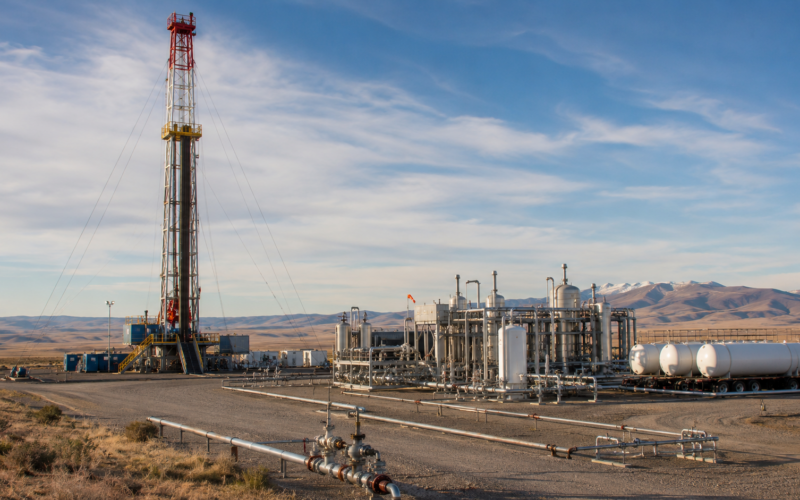
Helium One Global Limited has drawn renewed retail attention because the investment case is shifting from pure exploration towards early production and development execution. At the Galactica-Pegasus helium development project in Colorado, six wells have been tied into the Pinon Canyon facility, completing Stage One of the development campaign. The facility has been moving towards continuous 24/7 operations, and initial helium sales have been agreed at spot pricing.
That matters because AIM investors often treat first revenue moments differently from exploration milestones. A discovery can excite a message board for a few days. A functioning facility, however, gives the market something more tangible to model, even if early-stage production remains small, variable, and operationally sensitive. For Helium One, the Colorado project provides a near-term commercial anchor while the much larger Tanzania story moves through its farm-out process.
The risk is that early production should not be confused with mature cash generation. Helium One still needs reliable operational uptime, repeatable sales, stronger offtake visibility, and clear evidence that the Galactica-Pegasus project can contribute meaningful revenue rather than just symbolic validation. For retail investors, this is why the stock remains a watchlist name rather than a clean rerating story. The company has crossed an important threshold, but the market still wants proof that the threshold leads somewhere profitable.
What does the Southern Rukwa farm-out process mean for Helium One shareholders in 2026?
The Southern Rukwa helium project in Tanzania is the deeper strategic prize inside the Helium One story. The company’s Mining Licence covers 480 square kilometres and represents the first helium mining licence awarded in Tanzania. Helium One holds its interest through Songwe Helium Limited, in which it has an 83% stake, after the formal signing ceremony and supporting agreements were completed in May 2026.
The key catalyst now is the farm-out process. Helium One has appointed PVE Consulting Limited to lead discussions with potential industry partners and external investors. That is a sensible move because Southern Rukwa is not just a geological story. It is a capital, engineering, infrastructure, and commercialisation challenge. A credible partner could reduce funding pressure, validate the project technically, and provide a clearer route towards commercial development.
For shareholders, the farm-out is the classic AIM inflection point. A strong partner on attractive terms could make the market reassess the value of Southern Rukwa. A slow process, weak terms, or lack of partner interest would raise uncomfortable questions about capital intensity and execution. This is why the next major HE1.L catalyst is not simply another operational update. It is whether Helium One can convert a discovery narrative into a partnered development plan without giving away too much future upside.
How strong are the Tanzania test results behind the Helium One investment case?
The latest Tanzania test work gave investors both encouragement and caution, which is exactly why the stock remains controversial. At ITW-1, Electrical Submersible Pump testing produced the equivalent of more than 250,000 barrels of water over a 20-day period, with flow rates of up to the equivalent of 16,400 barrels per day. Helium concentrations were sustained at 5.4% air corrected, with a maximum surface concentration of 9.2%.
Those numbers matter because helium concentration is central to the project’s appeal. Many commercial helium sources operate at far lower concentrations, and a discovery with sustained high helium readings naturally attracts retail interest. The test also showed that flow could be materially improved versus natural flow during the 2024 extended well test, which supports the idea that the reservoir system can respond to engineered production methods.
However, the gas water ratio remains the part investors cannot ignore. The company itself has indicated that further work is needed to improve understanding of the Basement fault and fracture play, where it sees potential to increase gas water ratios and helium concentrations. In plain market English, the project has shown helium, flow, and technical promise, but the commercial model still needs tightening. That is why a partner matters. Tanzania has the potential to be the big prize, but it still needs capital discipline and subsurface de-risking.
How is the market currently pricing HE1.L compared with its project newsflow?
Helium One shares recently traded around 0.57p, with a market capitalisation of roughly £57 million and a 52-week range of about 0.23p to 1.05p. That range tells the story neatly. The stock has recovered from its lows, but it remains well below its 12-month high, suggesting the market is not yet pricing in a full development success case.
The March 2026 fundraise is central to that discount. Helium One raised £3.5 million through a direct subscription at 0.6p per share and targeted an additional £1 million through a WRAP Retail Offer. The issue price represented a discount to the previous closing price, and the proceeds were earmarked for advancing Galactica-Pegasus, maintaining Southern Rukwa during the farm-out process, and general working capital. For junior resource stocks, such raises are often necessary, but they also remind investors that progress comes with dilution.
The market is therefore applying a classic small-cap risk filter. It is giving Helium One credit for real milestones, but not enough credit to price the stock like a fully funded development company. That is fair. The share price is being held between two forces: optimism around helium exposure and first production, and caution around dilution, farm-out timing, and the still-early revenue profile. HE1.L does not need perfection to rerate, but it does need cleaner evidence that the next phase can be funded and executed.
Why does the global helium market matter so much for the HE1.L share price?
Helium is not a normal commodity story. It sits inside critical supply chains for medical imaging, semiconductor manufacturing, fibre optics, aerospace, leak detection, and advanced research. Supply is structurally constrained because helium is usually extracted from natural gas fields, not mined as a standalone commodity in the way gold, copper, or lithium might be.
That scarcity is the macro tailwind behind Helium One. The company’s positioning as a primary helium player gives it a cleaner strategic identity than many gas-linked stories. It is not trying to market itself as another fossil fuel producer with a helium byproduct. Its appeal rests on the idea that reliable helium supply is becoming more important at precisely the moment industrial, medical, and technology users want secure sources.
The risk is that commodity scarcity alone does not make a project bankable. Helium prices, offtake structures, plant uptime, transport logistics, CO₂ handling, local regulation, and capital costs all matter. Retail investors can easily fall into the trap of treating “critical gas” as a guaranteed valuation shortcut. It is not. The helium market gives Helium One a powerful backdrop, but execution still decides whether the company captures that value or merely talks around it.
What role does the Colorado Galactica-Pegasus project play in reducing Helium One’s risk profile?
The Colorado asset changes the tone of the Helium One story because it gives the company a near-term production angle outside Tanzania. The Galactica-Pegasus project, operated by Blue Star Helium Limited, has completed a six-well development drilling campaign and moved into first gas. Wells including Jackson-2, Jackson-4, Jackson-31, Jackson-29, State-9, and State-16 have been tied into the Pinon Canyon facility.
For a retail investor, the strategic benefit is diversification. Tanzania offers scale and exploration upside, while Colorado offers a shorter route to commercial activity. The first helium sales at spot pricing and the expected CO₂ liquefaction timeline create the possibility of early revenue streams, including CO₂ sales if the plan progresses as expected.
The limitation is that Helium One owns a 50% working interest rather than full control, and the project is operated by Blue Star Helium Limited. That means operational pace, execution quality, and field-level reporting depend partly on the joint venture partner. The Colorado project can reduce the market’s perception of HE1.L as a single-country exploration bet, but it cannot remove the normal risks of early-stage production. It gives the stock credibility, not immunity.
What are retail investors on forums really debating about Helium One right now?
The retail debate around Helium One is active because the stock has all the ingredients that small-cap investors love and fear in equal measure. It has a low nominal share price, a strategic commodity angle, a major Tanzania discovery narrative, a United States production angle, broker targets that sit far above the current price, and a recent dilution event that keeps sceptics engaged.
On London South East, ADVFN-style forums, and broader retail channels, the conversation appears to cluster around three questions. First, whether first helium sales from Galactica-Pegasus can become meaningful enough to change the balance sheet. Second, whether Southern Rukwa can attract a credible partner without overly diluting future project economics. Third, whether the March fundraise was a necessary bridge or a sign that more equity will be needed before the market sees real commercial traction.
That mix explains the stock’s volatility. Bulls see a rare AIM company with exposure to a critical gas market, real helium concentrations, a mining licence, and early production progress. Bears see a cash-hungry junior still trying to prove commercial scale. Both sides have something to work with, which is usually why a stock stays noisy. For HE1.L, the debate will only calm down when cash flow, farm-out terms, or further technical data give investors less room to guess.
What is the milestone timeline for Helium One investors watching the next catalyst?
The next milestone sequence starts with the Galactica-Pegasus ramp-up. Investors will want to see evidence of continuous operations, additional tube trailer sales, progress on long-term helium and CO₂ offtake, and the planned CO₂ liquefaction step. The Jackson-27 tie-in is also important because it is expected to support the CO₂ sales stream.
The second milestone track is Southern Rukwa. The formal licence signing is complete, the joint venture structure is in place, and the farm-out process has begun. From here, investors will watch for partner interest, terms, technical work programme details, and any indication of how much capital is required to move the project from appraisal towards commercial development.
The third track is financial. After the March 2026 raise, the company has added working capital, but AIM investors will remain sensitive to cash burn. The more progress Helium One can show before needing fresh capital, the stronger the market’s confidence may become. The less visible the revenue ramp or farm-out process becomes, the more investors will worry that future dilution is still part of the journey.
Is Helium One (HE1.L) worth watching after the recent share price weakness?
Helium One is worth watching because the stock is sitting at a genuine transition point. It is not a mature producer, and it is not a low-risk income stock. It is a speculative AIM resource name trying to prove that a primary helium strategy can move from discovery and development into commercial relevance.
The bullish case rests on three pillars. Galactica-Pegasus provides near-term production exposure in the United States. Southern Rukwa offers a potentially larger helium development story in Tanzania. The global helium market remains structurally tight enough to keep investors interested in new sources of supply. If those three pieces align, the current market capitalisation could look conservative.
The cautious case is just as important. The company still faces operational risk, partner risk, capital risk, dilution risk, and commercialisation risk. A low share price does not automatically mean cheap value. In HE1.L’s case, it means the market is waiting for proof. Retail investors should treat Helium One as a catalyst-driven watchlist stock where the farm-out process, Colorado revenue signals, and working capital runway will matter more than message-board momentum.
Key takeaways for retail investors watching Helium One (HE1.L) in 2026
- Helium One Global Limited is moving beyond a pure exploration narrative, with first gas and early sales activity at the Galactica-Pegasus project giving the company a more tangible commercial angle.
- The Southern Rukwa farm-out process is the next major catalyst for HE1.L because a credible partner could validate the Tanzania project and reduce future funding pressure.
- Tanzania test results showed strong helium concentrations and improved flow rates, but the gas water ratio and further subsurface work remain central technical risks.
- The stock trades around 0.57p, with a market capitalisation near £57 million, leaving it below its 52-week high despite meaningful operational progress.
- The March 2026 fundraise gave Helium One additional working capital, but it also reinforced investor sensitivity around dilution and future capital needs.
- Retail investor interest remains high because HE1.L combines a strategic commodity story, AIM volatility, broker optimism, and unresolved execution risk.
- The stock is best viewed as a catalyst-driven helium development play, not as a proven producer, with farm-out terms and production ramp-up likely to decide sentiment.
Discover more from Business-News-Today.com
Subscribe to get the latest posts sent to your email.