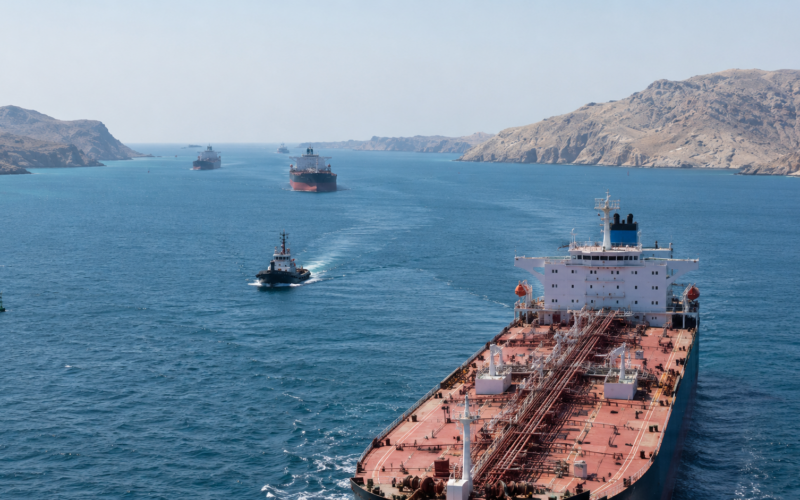
Iran has intensified attacks against commercial shipping in and around the Strait of Hormuz, adopting tactics intended to disrupt tanker movements and complicate United States efforts to stabilise global energy prices, according to Iranian and American officials cited by Reuters on October 14, 2026. The latest escalation includes increased maritime attacks, the use of small surveillance vessels and an expansion of threats into waters beyond the narrow shipping corridor itself.
At least five attacks were reported within a 48-hour period, affecting vessels operating around the Strait of Hormuz, the Gulf of Oman and nearby waters. The United States Navy’s Joint Maritime Information Center described the threat environment in Hormuz as severe, underscoring the risks facing commercial operators and crews.
The escalation comes during the continuing conflict that began with United States and Israeli strikes against Iran on February 28. Iranian officials have acknowledged changes in their military approach, while the United States continues to use naval and economic measures intended to constrain Tehran’s ability to disrupt shipping.
How has Iran changed its tactics for attacking ships in the Strait of Hormuz?
Iranian forces have increasingly relied on small vessels to monitor commercial shipping, according to officials familiar with recent operations. This approach allows personnel to observe and track vessel movements without depending entirely on larger military platforms or conventional radar systems.
American officials said Iran’s Islamic Revolutionary Guard Corps had used unarmed spotters aboard small boats after damage to radar capabilities. Such surveillance can potentially support subsequent targeting by other forces, although the presence of a small vessel near commercial shipping does not by itself establish that an attack is underway.
The shift reflects efforts to adapt to damage inflicted during the wider conflict. Maritime forces operating with degraded equipment may seek alternative methods of collecting location and movement information.
Reuters also reported that attacks were occurring more frequently and across a wider geographical area. That expansion creates challenges for shipping companies because avoiding the narrowest part of the Strait of Hormuz may not eliminate exposure to regional threats.
Why is the Strait of Hormuz so important to global oil and LNG supplies?
The Strait of Hormuz connects the Persian Gulf with the Gulf of Oman and international shipping routes. Before the current disruption, approximately one-fifth of internationally traded oil and liquefied natural gas passed through the corridor, making it one of the world’s most consequential energy transportation routes.
Exports from several Gulf producers depend heavily on maritime access through or around the strait. Alternative infrastructure exists for some shipments, but it cannot necessarily replace every barrel or cargo that would otherwise move through the waterway.
The economic consequences of disruption extend beyond the immediate region. Import-dependent economies in Asia and elsewhere may face higher energy costs, while global freight and insurance markets can respond to perceived risks to shipping.
A threat to the route is not equivalent to a verified complete closure. The extent of disruption must be assessed through actual vessel movements, transit restrictions, reported attacks and energy shipments.
Is Iran trying to keep US fuel prices high before the November midterm elections?
Reuters reported that Iranian officials acknowledged the objective of frustrating Washington’s efforts to reduce energy prices and increasing pressure ahead of the November 3 elections. Those accounts place the new maritime tactics within a wider confrontation involving military operations and economic pressure.
Higher oil prices can affect American consumers through gasoline, diesel and other energy-related costs. They may also influence business expenses and inflation, making energy-market conditions relevant to public debate during an election period.
However, the effect of individual shipping attacks on retail fuel prices cannot be calculated directly from the number of incidents. Oil prices respond to supply, demand, inventories, expectations and financial-market developments, while local retail prices depend on additional factors.
The reported Iranian strategy therefore concerns an attempted economic pressure mechanism rather than an established outcome. Whether it changes market conditions over a sustained period depends on the degree of disruption and the response by shipping companies and governments.
How is the United States responding to Iranian maritime activity?
Washington has employed naval operations and expanded sanctions as part of its effort to constrain Iranian military capabilities and protect shipping. United States officials have also described efforts to address threats created by Iranian vessels and surveillance activities.
The continuing confrontation has involved strikes against Iranian military infrastructure, including systems relevant to maritime operations. Iran has sought to adapt its tactics as those capabilities have been damaged.
The use of naval restrictions and sanctions introduces further complexity into commercial trade. Shipping operators must account for both the risk of attacks and the legal requirements associated with restrictions imposed by governments.
The effectiveness of these measures remains difficult to establish in the short term. Continued attacks indicate that Iran retains some capacity to threaten maritime traffic, but they do not demonstrate that every American countermeasure has failed.
Could the shipping crisis affect India, Europe and other energy importers?
India imports a substantial proportion of its crude oil requirements, making international energy prices an important influence on its import bill and currency market. A sustained increase in oil prices can create financial pressure even when Indian refiners obtain supplies from producers outside the immediate conflict zone.
European and Asian economies may also face higher costs for LNG and other energy products. The actual exposure varies according to supply contracts, available alternative sources and domestic energy infrastructure.
Shipping delays and changing routes can increase operational expenses for companies moving petroleum products and other goods. Insurers may also reassess risk, although any specific increase in premiums requires separate market evidence.
The Hormuz crisis consequently has implications extending beyond the countries involved in the conflict. Its long-term economic consequences will depend on whether energy flows can continue at sufficient volume and whether attacks become more widespread.
What developments will determine whether the Strait of Hormuz crisis worsens?
The most important indicators include the frequency of confirmed attacks, the geographical spread of incidents and actual changes in tanker traffic. Updated maritime security assessments will also help determine whether the immediate danger to commercial crews is increasing.
A confirmed interruption to a major export terminal or prolonged closure of the strait would represent a substantially different development from attacks on individual vessels. Such scenarios should not be treated as completed events unless supported by reliable evidence.
For now, the October 14 reporting establishes that Iranian forces are changing their methods and that maritime threats have intensified. The next phase will depend on further military actions, responses from the United States and whether commercial shipping can maintain normal operations.
What are the key takeaways from Iran’s new Strait of Hormuz tactics?
- Reuters reported on October 14, 2026, that Iran was using changed tactics to intensify attacks and disruption involving commercial vessels around the Strait of Hormuz.
- At least five maritime attacks were reported within a 48-hour period, with threats extending into the Gulf of Oman and nearby waters.
- American officials said Iranian forces were using small boats to observe vessel movements after damage to radar capabilities.
- The US Navy’s Joint Maritime Information Center classified the maritime threat around Hormuz as severe.
- The strait previously handled approximately one-fifth of global oil and LNG trade, making sustained disruption economically consequential.
- Iranian officials described efforts to frustrate US energy-price objectives, although the market impact of those efforts remains uncertain.
- The situation represents an escalating shipping threat, not proof that all traffic through the waterway has stopped.
Discover more from Business-News-Today.com
Subscribe to get the latest posts sent to your email.