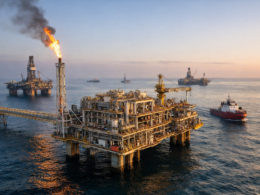
Danish renewable-energy major Ørsted A/S is taking a decisive step in reshaping its future, announcing plans to eliminate around 2,000 positions—roughly a quarter of its global workforce—by the end of 2027. The move marks a pivotal moment for the world’s largest offshore wind developer as it seeks to sharpen focus on Europe and the Asia-Pacific region, bolster margins, and restore investor confidence after a volatile period for the wind-power industry.
The restructuring follows a robust first half of 2025 in which Ørsted reported DKK 15.5 billion in EBITDA, a 10 percent rise from last year, and launched a DKK 60 billion rights issue to strengthen its balance sheet. The dual approach—financial reinforcement and organizational streamlining—signals a renewed commitment to efficiency and disciplined capital allocation.
Why is Ørsted cutting 2,000 jobs and narrowing its global focus toward Europe and offshore wind?
Ørsted’s management framed the job cuts as an essential recalibration rather than a retrenchment. The company, which employs about 8,000 people globally, expects to end 2027 with around 6,000 staff. The transition will occur through natural attrition, outsourcing, divestitures, and redundancies. In the first phase, around 500 roles will be eliminated in the fourth quarter of 2025, including approximately 235 in Denmark.
Chief Executive Officer Rasmus Errboe acknowledged that the decision, though difficult, was driven by the company’s maturing project pipeline. Ørsted is nearing completion of its 8.1 GW construction portfolio across three continents—its largest build-out to date. As these megaprojects approach final commissioning, the demand for large construction teams will naturally decline. Errboe stated that the restructuring aims to create “a more efficient and flexible organization ready to bid on new value-accretive offshore wind projects.”
The realignment also reflects a hard-learned lesson from Ørsted’s experience in the U.S. market. Political pushback, inflationary pressures, and supply-chain disruptions—compounded by stop-work orders on projects such as Revolution Wind—have eroded profitability. The company is now concentrating on regions with clearer policy support and stable regulatory frameworks, particularly Europe and select Asia-Pacific markets.
How did Ørsted perform financially in the first half of 2025, and what do the numbers imply for investors?
Ørsted’s interim financial report for H1 2025 offered a mixed but encouraging picture. EBITDA climbed to DKK 15.5 billion from DKK 14.1 billion a year earlier, underpinned by higher generation output from Gode Wind 3 and compensation payments for grid delays at Borkum Riffgrund 3. Offshore wind earnings reached DKK 12.5 billion, a 10 percent increase, offset slightly by weaker wind speeds.
Net profit surged to DKK 8.2 billion compared to DKK 931 million in H1 2024, while return on capital employed rose to 7.5 percent (12.3 percent adjusted). The company generated DKK 7.8 billion in cash from operations, but free cash flow was negative at nearly DKK –10 billion due to heavy capital expenditure of DKK 25 billion on its development pipeline. Net debt climbed to DKK 67 billion, up more than one-third year-on-year, underscoring the importance of the rights issue in restoring leverage ratios.
Despite these pressures, Ørsted reaffirmed its 2025 EBITDA guidance of DKK 25–28 billion and maintained its gross investment target of DKK 50–54 billion. However, the company revised its offshore guidance from “higher” to “neutral,” acknowledging the impact of lower wind speeds in early 2025.
Analysts viewed the results as evidence that the company’s core operating engine remains intact, but capital efficiency must improve. Institutional investors have praised the transparent approach to restructuring, noting that Ørsted’s proactive stance may help the company regain control of its cost base before sector headwinds worsen.
How does the restructuring tie into Ørsted’s broader strategic and financial roadmap through 2028?
The 2025–2027 plan represents a shift from rapid expansion toward sustainable profitability. Ørsted aims to generate annual cost savings of about DKK 2 billion from 2028, derived from streamlined operations, optimized project execution, and reduced corporate overheads. These savings are already embedded in its updated business plan.
The DKK 60 billion rights issue—one of the largest in Danish corporate history—is fully underwritten, with the Danish government maintaining its 50.1 percent ownership stake. Proceeds will finance ongoing offshore projects, reinforce liquidity, and reduce dependence on asset sales to fund new developments. The recapitalization also gives Ørsted flexibility to pursue partnerships or partial divestments once market conditions stabilize.
The company’s construction progress remains strong. About 70 percent of turbines are already installed at Revolution Wind in the U.S., and Taiwan’s Greater Changhua 2b and 4 projects have achieved first power. However, Ørsted has paused development of Hornsea 4 in its current form and opted out of certain Danish carbon-capture tenders, focusing resources on higher-return opportunities.
How are investors and analysts interpreting Ørsted’s turnaround plan amid volatile sector sentiment?
Ørsted’s stock has traded cautiously higher since the October announcement, reflecting moderate investor approval. While share prices remain well below 2023 highs, market participants see the downsizing as a pragmatic reset rather than distress. Analysts note that offshore wind developers globally are being forced to reassess growth plans amid cost inflation and tightening credit conditions.
The company’s decision to consolidate operations around its strongest regional bases aligns with similar efficiency drives across the renewable-energy industry. Peer companies such as Equinor ASA and RWE AG have likewise adopted leaner capital structures and selective market participation strategies. For Ørsted, the challenge lies in executing these reforms without undermining its project pipeline or innovation capacity.
Institutional sentiment is cautiously optimistic. Fund managers tracking clean-energy indices consider Ørsted a potential rebound candidate once debt ratios normalize and new European auctions materialize. Analysts have highlighted that a successful rights issue and visible cost savings could improve credit metrics and restore dividend flexibility by 2028.
What long-term opportunities and risks could shape Ørsted’s competitiveness after 2027?
Ørsted’s future competitiveness will depend on how effectively it converts scale into profitability. A smaller but more agile organization could give the Danish renewable-energy leader an edge in bidding for next-generation offshore projects, especially as European governments accelerate green-transition goals under revised energy-security policies.
The annual cost savings of DKK 2 billion from 2028 will help absorb inflation and interest-rate shocks, positioning Ørsted to bid aggressively without eroding returns. The pivot also reduces exposure to U.S. policy volatility—a factor that has weighed on renewables valuations throughout 2024 and 2025.
Still, challenges remain. Execution risk in complex projects, potential legal disputes in the U.S., and dependence on stable wind resources all continue to cloud the medium-term picture. Furthermore, investor confidence hinges on management’s ability to meet cost-reduction targets without sacrificing innovation or safety.
Errboe has emphasized that Ørsted’s identity as a market leader in offshore wind remains unchanged. The company intends to make offshore wind a “key pillar of Europe’s energy mix,” reflecting the belief that profitability and sustainability can coexist when scale is matched with operational discipline.
What does the Ørsted realignment signal for the offshore wind sector as a whole?
The restructuring underscores a maturing phase for the global offshore wind industry. After a decade of exuberant growth and low-rate financing, developers are now confronting a tougher macro environment characterized by rising costs, higher capital charges, and slower permitting cycles. The Ørsted reset demonstrates that profitability—not just capacity—is becoming the defining measure of success in renewable infrastructure.
For institutional investors, the message is clear: offshore wind remains strategically vital, but capital discipline will dictate winners and losers. If Ørsted executes successfully, it could serve as a blueprint for how large-scale renewables can navigate high-rate cycles and still deliver shareholder value.
Can Ørsted’s 2,000-job restructuring be viewed as a painful but ultimately strategic reset for profitability and investor confidence?
Market observers interpret Ørsted’s transformation as both necessary and forward-looking. By acting before financial pressures peak, the company positions itself to capture upside when rates eventually moderate and supply chains normalize. Analysts point out that Ørsted’s combination of strong government backing, proven engineering execution, and a leaner structure gives it a defensible long-term advantage.
Investors will be watching the next two quarters closely for signs that cost savings are tracking ahead of plan. Any acceleration in offshore auction wins or improved free-cash-flow metrics could reignite institutional accumulation in the stock.
Discover more from Business-News-Today.com
Subscribe to get the latest posts sent to your email.