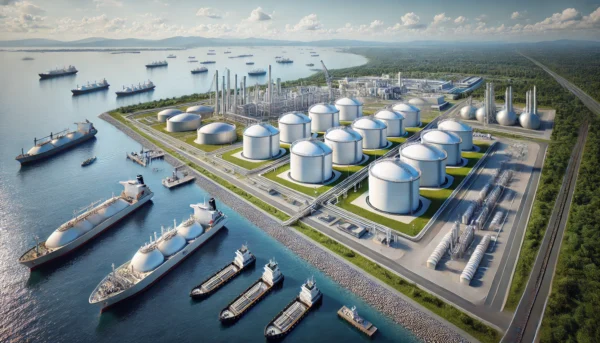

Stabilis Solutions, Inc. (NASDAQ: SLNG) is making a decisive move to reshape its long-term revenue base through infrastructure-led expansion. The company is targeting 75% contract coverage for its upcoming liquefied natural gas (LNG) liquefaction facility in Galveston, Texas, even as it posts double-digit revenue growth in its core marine, aerospace, and power-generation markets. This approach, which echoes established project-financing discipline seen among larger LNG developers, signals Stabilis Solutions’ intent to evolve from a niche LNG logistics player to a small-cap infrastructure story grounded in long-term offtake economics.
Why is Stabilis Solutions pursuing a 75% contract target before Galveston LNG reaches final investment decision?
At a time when the LNG bunkering market is gaining strategic importance due to regulatory shifts in maritime fuel emissions and the expanding use of LNG in distributed power and aerospace support, the company’s move to de-risk its largest infrastructure project by locking in future demand marks a major inflection point.
Stabilis Solutions reported third-quarter 2025 revenues of USD 20.3 million, up 15.3% from the same period a year ago. Key segment performance was equally notable: marine-related revenues grew by 31.5%, aerospace rose by 88.3%, and power generation advanced by 31.4%. The company’s earnings for the period stood at USD 1.1 million, or USD 0.06 per diluted share, while adjusted EBITDA improved to USD 2.9 million.
The company has already secured a 10-year LNG marine bunkering contract with a global operator at the Port of Galveston. That contract alone accounts for approximately 40% of the planned capacity at the Galveston facility. By targeting 75% coverage before moving to a final investment decision (FID), Stabilis Solutions is aiming to secure sufficient long-term demand visibility to attract financing and accelerate project buildout. Engineering and design are already underway, and financing discussions are expected to conclude in early 2026.
How will the Galveston LNG hub reshape Stabilis Solutions’ liquefaction footprint?
The Galveston LNG facility, if built, would scale Stabilis Solutions’ liquefaction capacity from roughly 130,000 gallons per day across its existing George West, Texas and Port Allen, Louisiana facilities to over 600,000 gallons per day. This includes new liquefaction trains, expanded storage, and the addition of a Jones Act-compliant LNG bunkering vessel, placing the company in direct competition with other Gulf Coast players in the small-scale LNG distribution market.
Investor sentiment has shown cautious optimism. Analyst consensus places a 12-month price target for Stabilis Solutions stock around USD 9.50, roughly 50% above its current trading level. While institutional ownership remains low at just over 5%, insider ownership is high at approximately 82%, suggesting alignment with long-term project success. Investors are expected to closely monitor upcoming milestones including offtake contract signings, project financing structure, and clarity on feedstock gas sourcing and logistical execution.
What is fueling marine, aerospace, and power segment growth for Stabilis Solutions in 2025?
By taking advantage of growing demand for clean marine fuels, aerospace fueling logistics, and decentralized power generation, Stabilis Solutions is attempting to de-risk a capital-intensive asset before taking the plunge. If the 75% target is met and financing is secured under favorable terms, the Galveston project could shift the company’s business model toward recurring infrastructure cash flows.
The LNG bunkering market, particularly in ports like Galveston, is becoming increasingly important as cruise liners and container vessels transition to cleaner fuel. LNG is favored for its ability to meet International Maritime Organization emissions standards, significantly reducing sulfur oxide and nitrogen oxide emissions. This gives Stabilis Solutions a strategic foothold in a high-growth, regulation-driven market.
Similarly, the aerospace revenue surge—up 88% year-on-year—hints at diversification beyond traditional LNG markets. This likely includes logistical fueling for spaceport support, high-horsepower aviation operations, or remote launch and data site applications. While small in current revenue terms, this segment opens up high-margin opportunities if Stabilis Solutions continues building partnerships in spaceport or specialized industrial support services.
Power generation remains the third pillar of the company’s expansion play. LNG has seen growing adoption in backup generation, hybrid grid support, and industrial microgrids, especially in regions with weak grid infrastructure or remote mining and processing operations. By positioning Galveston LNG as a regional supply hub, Stabilis Solutions is anchoring its infrastructure strategy to diversified use cases across maritime, aviation, and power.
How are analysts reacting to Stabilis Solutions’ strategic LNG infrastructure ambitions?
The project financing model being followed—contracted capacity first, followed by financing and construction—mirrors best practices in LNG development globally. It enhances credibility with institutional capital, reduces exposure to spot-market volatility, and may unlock access to cheaper debt or equity partnerships. However, it also introduces execution risks. A delay in securing the final 35% of offtake or a cost escalation during construction could strain balance sheets. The company’s modest free cash flow of USD 2.4 million last quarter underscores the importance of getting financing terms right.
Institutional investors will be watching for signals of financial discipline, such as whether the company opts for a joint venture, debt-led financing, or equity raise. The presence of a 10-year marine offtake contract covering 40% of the facility provides a strong anchor, but pricing, counterparty strength, and additional contracts will be closely scrutinized.
What external market forces could support or hinder LNG contract conversion?
The broader LNG infrastructure environment also presents mixed signals. While global LNG demand is expected to rise, with International Energy Agency forecasts suggesting up to 25% growth through the end of the decade, small-scale players face rising input costs and increasing regulatory complexity. Additionally, LNG faces growing competition from emerging fuels like green ammonia and hydrogen in the long term, especially in the maritime sector. This makes the next 12 to 18 months critical for Stabilis Solutions to lock in its market position.
As the Galveston LNG project inches toward a final investment decision, its success will hinge on the company’s ability to align long-term demand with capital availability and project execution efficiency. If successful, this facility could mark Stabilis Solutions’ transition into a scalable, infrastructure-backed player with predictable revenues. If it falters, the risk of balance sheet overextension looms large.
What makes this project compelling for investors is its attempt to blend emerging LNG demand segments—bunkering, aerospace, power—into a contracted revenue stream before construction even begins. In a small-cap infrastructure landscape often characterized by speculative growth, Stabilis Solutions appears to be offering a more disciplined, milestone-driven path. That narrative could gain traction if milestones are met and additional offtake contracts materialize in the coming quarters.
What are the key takeaways from Stabilis Solutions, Inc.’ (NASDAQ: SLNG) Galveston LNG strategy and Q3 2025 performance?
- Stabilis Solutions, Inc. (NASDAQ: SLNG) reported Q3 FY2025 revenue of USD 20.3 million, up 15.3% year-on-year.
- Marine revenue rose 31.5%, aerospace surged 88.3%, and power generation advanced 31.4%.
- A 10-year LNG bunkering agreement at the Port of Galveston secures 40% of planned Galveston LNG capacity.
- The company is targeting 75% contract coverage ahead of final investment decision.
- Project financing is expected to close in early 2026, with FID and construction to follow.
- Analysts have placed a USD 9.50 price target on the stock, nearly 50% above current levels.
- Execution risks include offtake conversion, financing structure, and regulatory hurdles, but early indicators are positive.
- The Galveston LNG hub positions Stabilis for long-term infrastructure-style returns across marine, aerospace, and power sectors.
Discover more from Business-News-Today.com
Subscribe to get the latest posts sent to your email.