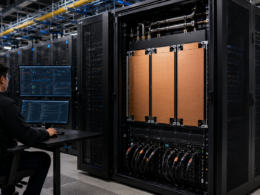



OpenAI is weighing a $25 billion investment in Argentina as part of its sweeping global data-center expansion known as the Stargate project, according to a Reuters report citing sources familiar with the discussions. The artificial-intelligence company has reportedly signed a letter of intent with Sur Energy, an Argentine renewable-power developer, to explore construction of a 500-megawatt hyperscale data-center complex that would anchor OpenAI’s next phase of compute scaling.
If executed, the project would represent one of the largest foreign-direct-investment initiatives in Argentina’s history and a landmark moment for Latin America’s emerging role in the global AI economy. Though still in the proposal stage, the move highlights how OpenAI is diversifying its infrastructure footprint beyond North America and Europe to access cheaper renewable power, strategic minerals, and favorable investment incentives.

What factors make Argentina the strategic location for OpenAI’s $25 billion Stargate project in 2025 and how does it benefit the AI giant?
Argentina’s appeal lies in its mix of abundant wind and solar capacity, competitive energy pricing, and an increasingly open regulatory regime for foreign investors. The proposed site, reportedly near Bahía Blanca in Buenos Aires Province, is already a hub for energy exports and port-based logistics. According to local officials quoted in national media, discussions with OpenAI and Sur Energy have been ongoing for months, facilitated under the government’s Régimen de Incentivo a las Grandes Inversiones (RIGI) framework — a new incentive program aimed at fast-tracking mega-projects above $200 million.
For OpenAI, Argentina provides an opportunity to offload power-intensive AI compute operations to a region rich in renewable potential. Industry analysts noted that the company’s next-generation AI models, including multimodal systems powering ChatGPT and enterprise products, demand exponentially higher compute density. Argentina’s wind corridors in Patagonia and the Atlantic coast could deliver relatively clean electricity at one of the lowest global cost curves — a critical advantage as OpenAI pursues its carbon-neutral infrastructure strategy.
How does the Stargate initiative fit into OpenAI’s global strategy for AI scaling?
The Stargate project is the centerpiece of OpenAI’s long-term infrastructure plan. Earlier this month, the company announced five new Stargate sites across North America, Asia, and Europe in collaboration with Oracle, SoftBank, and MGX, forming what insiders describe as a “500-billion-dollar AI compute corridor.” Each Stargate facility is designed to deliver exascale-class computing optimized for large-language-model training, inference, and generative-AI workloads.
In this context, Argentina would serve as the first Southern Hemisphere node in OpenAI’s architecture — effectively globalizing the company’s compute network. The proposed 500-megawatt data center would rival some of the largest hyperscale facilities in the United States and Singapore, putting Argentina on the AI infrastructure map alongside nations like the U.S., South Korea, and the United Arab Emirates.
OpenAI’s leadership has emphasized that the next wave of AI innovation requires “orders of magnitude more energy, compute, and resilience.” By expanding southward, the company can hedge against regional grid constraints, geopolitical bottlenecks, and climate-related risks that affect existing data-center clusters in the Northern Hemisphere.
What role does Sur Energy play, and how does this partnership shape the project’s viability?
Sur Energy, a Buenos Aires-based renewable-energy company, is expected to supply both project development expertise and local power-procurement capabilities. The firm operates wind and solar assets across Argentina’s southern provinces and has ties to state and municipal energy agencies. Its collaboration with OpenAI reportedly covers site assessment, grid interconnection, and energy-sourcing feasibility.
Industry observers say this structure mirrors OpenAI’s recent partnerships with utilities and cloud-infrastructure providers in the United States, where the company leases capacity rather than owning facilities outright. Under such models, OpenAI could co-develop the site with Sur Energy, secure long-term power-purchase agreements (PPAs), and integrate the data center into its broader Stargate architecture through partners such as Oracle Cloud Infrastructure.
While details remain fluid, the participation of Sur Energy ensures compliance with Argentina’s domestic-content rules and provides a foothold for renewable-energy scaling. According to preliminary government estimates, the project could create more than 5,000 jobs during construction and hundreds of permanent technical roles upon commissioning.
How are Argentine policymakers and the tech industry reacting to the announcement?
Reports of the potential investment have drawn immediate attention from the administration of President Javier Milei, which has prioritized foreign capital inflows as part of Argentina’s economic-stabilization agenda. Government officials have framed the project as a vote of confidence in Argentina’s innovation ecosystem and energy potential.
In statements carried by local media, aides to President Milei suggested that OpenAI’s letter of intent represents “the beginning of a new technological era for Argentina.” Analysts say the endorsement could also help Argentina’s image among international investors after years of capital-market volatility.
At the same time, technology associations have welcomed the idea but urged caution, noting that permitting, power-grid upgrades, and water-use approvals will be decisive factors in turning the proposal into reality. Several industry commentators observed that while the Stargate brand carries prestige, many global hyperscale projects remain years from completion due to infrastructure bottlenecks and regulatory hurdles.
What do analysts and institutional observers say about the potential impact on OpenAI’s growth trajectory?
Institutional sentiment around the Stargate initiative has been broadly positive, viewing it as a necessary step for OpenAI to sustain its AI-model training pipeline amid rising competition from Alphabet, Anthropic, and xAI. Equity analysts following the AI-infrastructure space told Reuters that partnerships in energy-secure regions like Argentina could lower operational costs while signaling commitment to clean-energy sourcing.
Investment-bank research has also highlighted that diversification into Latin America could provide OpenAI with currency and policy hedges, particularly against the strong U.S. dollar and tightening U.S. export controls on high-performance chips. Some analysts liken the move to how data-center leaders such as Amazon Web Services and Google Cloud began expanding into Brazil a decade ago to tap regional demand and power advantages.
Still, skepticism remains. Commentators in The Verge and other outlets have questioned whether OpenAI’s aggressive infrastructure messaging — including the “$500 billion global Stargate plan” — is partly aspirational, given that funding, permitting, and supply-chain execution are still in progress. Yet most agree that the Argentina proposal reflects a credible and ambitious extension of OpenAI’s vision to build the physical backbone of artificial intelligence.
Could the Stargate Argentina project redefine Latin America’s role in global AI and data infrastructure?
If the project advances beyond feasibility, it could catalyze a regional wave of AI-infrastructure investment. Argentina’s entrance into the AI-data-center race could inspire neighboring countries such as Chile, Uruguay, and Brazil to pursue similar partnerships leveraging renewable resources and regulatory incentives.
Latin America has already seen growing interest from hyperscalers in cloud and edge computing, but a full-scale AI supercomputing site would mark a new phase — shifting the region from data consumption to compute production. Analysts note that the proximity to undersea-cable routes and trans-Atlantic fiber connectivity also strengthens Argentina’s candidacy as a gateway between the Americas, Europe, and Africa.
From a geopolitical perspective, the move underscores a broader South-South technology alignment emerging in 2025, as nations with abundant renewable potential court partnerships with AI leaders seeking scale and sustainability.
Can OpenAI’s ambitious $25 billion Stargate plan in Argentina truly redefine how global AI infrastructure expands beyond Silicon Valley?
While OpenAI’s $25 billion Argentina plan remains at the letter-of-intent stage, the announcement itself signals how the company’s ambitions have outgrown the traditional boundaries of Silicon Valley infrastructure. Argentina’s participation in the Stargate vision illustrates a global race to host the next generation of AI compute facilities — where energy affordability, policy alignment, and geographic diversification outweigh proximity to headquarters.
Whether the project reaches financial close or not, it already positions Argentina as a symbol of the emerging AI infrastructure frontier. For OpenAI, it represents both a logistical challenge and a statement of intent — that the future of artificial intelligence will be built not just in data centers, but across continents powered by renewable ambition.
Discover more from Business-News-Today.com
Subscribe to get the latest posts sent to your email.