




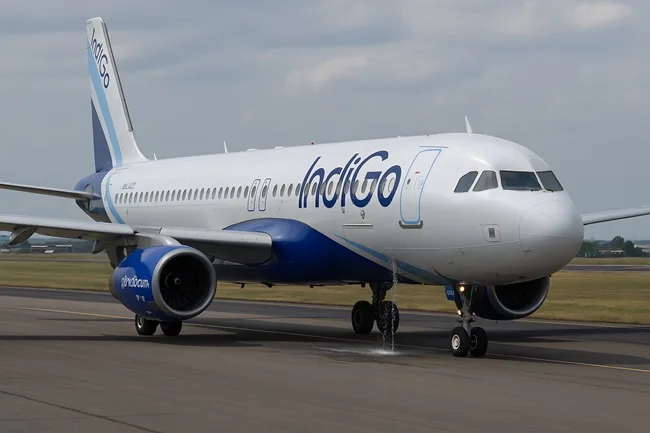
Indigo Airlines, operated by InterGlobe Aviation Limited, has been penalized ₹22.2 crore by the Directorate General of Civil Aviation following an inquiry into widespread operational disruptions between December 3 and 5, 2025. In addition, the airline has been required to pledge a ₹50 crore bank guarantee under a conditional compliance assurance scheme. This dual-action approach, one of the most comprehensive regulatory responses in Indian civil aviation history, was triggered by Indigo Airlines’ over-optimized scheduling practices, failure to comply with new Flight Duty Time Limitation norms, and systemic lapses in operational control.
This case has created a pivotal moment in Indian aviation oversight. With Indigo Airlines controlling more than half of the country’s domestic market, its operational stability has implications beyond the airline itself. The enforcement decision not only penalizes mismanagement but also establishes a new regulatory architecture that could become a model across sectors where critical service continuity is at risk.
What failures at Indigo Airlines led to such a high regulatory penalty and reform mandate?
The disruptions in December 2025 were not caused by external shocks such as weather, security incidents, or infrastructure failures. Instead, the inquiry conducted by a DGCA-appointed four-member committee found that the root causes lay entirely within Indigo Airlines’ own operational strategy. The report identified a corporate-level failure to balance utilization with resilience, resulting in tightly packed rosters, minimal recovery margins, and an overdependence on practices such as tail swaps and deadheading.
The airline reportedly ignored multiple operational warning signs and pressed ahead with an aggressive schedule under the Winter 2025 timetable without recalibrating for revised Flight Duty Time Limitation norms. These provisions, intended to protect pilot and crew well-being and ensure flight safety, were not effectively implemented. Instead, Indigo Airlines maximized crew utilization at the cost of buffer margins.
The inquiry specifically cited the airline’s inability to deploy an effective compliance mechanism for tracking duty hours, rest periods, and fatigue-risk thresholds. More than 2,500 flights were cancelled and over 1,800 delayed in just a three-day period, affecting more than 300,000 passengers nationwide. The committee attributed this disruption to a mix of strategic, operational, and software-related shortfalls.
Regulators imposed ₹1.80 crore in one-time penalties across six key violations of Civil Aviation Requirements. Each violation, spanning fatigue-risk planning, crew utilization standards, and failures in delegated operational control, attracted a ₹30 lakh fine. However, the most significant financial exposure came from the daily fine for continued non-compliance with fatigue regulations from December 5, 2025, through February 10, 2026. The 68-day period of sustained violation attracted a ₹20.4 crore cumulative fine, bringing the total to ₹22.2 crore.
What is the IndiGo Systemic Reform Assurance Scheme and why is it a regulatory game-changer?
The most novel aspect of this enforcement action is not the fine but the design and deployment of the IndiGo Systemic Reform Assurance Scheme, or ISRAS. Instead of levying an open-ended penalty, the Directorate General of Civil Aviation required Indigo Airlines to pledge a ₹50 crore bank guarantee tied to verifiable implementation of long-term reforms. The structured release of this bond, over 9 to 15 months, depends on compliance milestones certified by regulators.
Under ISRAS, the ₹50 crore is distributed across four pillars. The first pillar is leadership and governance reform, linked to a ₹10 crore release within three months upon proof of accountability framework changes. The second pillar covers fatigue-risk management, rostering integrity, and manpower planning, tied to a ₹15 crore tranche that requires six months of sustained compliance. The third pillar focuses on digital systems and operational planning software upgrades, with a ₹15 crore incentive linked to DGCA approval within nine months. The final ₹10 crore is tied to board-level oversight and proof of sustained adherence over a longer period.
This framework introduces an escrow-like mechanism into regulatory compliance, ensuring that financial penalties are not just punitive but tied to verified improvements. It effectively extends regulatory visibility deep into the airline’s executive and planning functions over a full-year cycle. The phased model allows for correction without operational interruption, and it sets a precedent for tiered enforcement tools in other industries.
How will this enforcement action reshape regulatory risk and planning discipline across Indian aviation?
The Indigo Airlines case arrives at a time of increasing operational stress in the Indian aviation sector. With Jet Airways grounded, Go First in insolvency proceedings, and new entrants like Akasa Air still building network depth, Indigo Airlines holds an outsized share of both capacity and scheduling pressure. As the anchor of India’s low-cost carrier ecosystem, Indigo Airlines’ planning lapses have national ripple effects.
The DGCA’s enforcement sends a signal to other carriers that fatigue management and rostering discipline will now be treated with the same regulatory seriousness as airworthiness and safety audits. Carriers like Vistara, Air India, and Akasa Air can expect pre-emptive reviews of their crew planning and FDTL compliance ahead of peak summer schedules. The December 2025 debacle exposed the systemic vulnerability of depending on lean operational structures without adequate buffers.
There are also second-order regulatory implications. The Ministry of Civil Aviation has reportedly initiated an internal review of the Directorate General of Civil Aviation’s own processes. This parallel inquiry suggests that Indian aviation regulators are acknowledging the need for internal reform in how early warning signals, fatigue oversight, and airline compliance are handled.
In an aviation sector where passenger volume growth routinely outpaces infrastructure expansion, operational discipline and fatigue-resilience planning may now emerge as core benchmarks in airline licensing, route allocation, and even fleet expansion permissions.
How has Indigo Airlines responded to the findings and what are the reputational and investor consequences?
Indigo Airlines has accepted the findings and issued internal warnings and reassignments at multiple executive levels. The Chief Executive Officer received a formal caution for oversight lapses, while the Accountable Manager (Chief Operating Officer) was warned for failure to align the Winter 2025 schedule with revised fatigue norms. The Senior Vice President of Operations Control has been removed from active operational responsibility, with a directive not to be reassigned to any accountability-linked roles.
Further warnings were issued to the Director of Flight Operations, Deputy Head of Flight Operations, and AVP of Crew Resource Planning. Indigo Airlines has also been directed to complete its own internal investigation and submit a compliance report on additional staff actions.
The airline’s short-term operational recovery was acknowledged by the Directorate General of Civil Aviation. Flight schedules were stabilized within a matter of days, and the company issued full refunds and ₹10,000 “Gesture of Care” vouchers to affected passengers for delays exceeding three hours. This public-facing response has helped mitigate immediate reputational fallout.
On the financial front, market reaction has been restrained. While institutional analysts have flagged the penalties and bank guarantee as a non-trivial hit, Indigo Airlines’ strong cash position and recovery execution have tempered sell-side downgrades. Investor attention now shifts to whether the airline can execute ISRAS milestones without compromising its profitability metrics or network growth plans.
The greater concern lies in reputational currency. For a carrier aspiring to deepen international operations and receive preferred access to new routes, compliance infractions at this scale can jeopardize credibility with foreign regulators, leasing partners, and joint venture stakeholders.
Could ISRAS become the new enforcement template beyond aviation?
The ISRAS framework opens the door to performance-linked compliance across other sectors, particularly those where service reliability is critical. From railways and ports to power transmission and digital infrastructure, regulators may now view bank guarantee-based oversight as a way to tie penalties to reform without causing operational paralysis.
For policymakers, the model aligns with the central government’s broader focus on ease of doing business combined with robust regulatory backstops. It represents a fusion of accountability and execution discipline, capable of inducing behavior change without escalating into litigation or blanket shutdowns.
If ISRAS proves effective in delivering real systemic change within Indigo Airlines, the Ministry of Civil Aviation may institutionalize similar frameworks across airline licensing, MRO auditing, and even airport slot allocations. For other ministries, this offers a pilot case in modernizing sectoral enforcement with outcome-based levers.
The December 2025 Indigo Airlines disruption may thus prove to be more than an operational mishap. It may mark the beginning of a regulatory realignment in India’s critical infrastructure sectors, one that rewards compliance not just through certification, but through verifiable system reform.
Key takeaways on what this enforcement action signals for Indigo Airlines, its rivals, and India’s aviation policy direction
- Indigo Airlines has been fined ₹22.2 crore for systemic lapses leading to widespread flight delays and cancellations in December 2025.
- The airline must pledge a ₹50 crore bank guarantee under the ISRAS reform scheme, with release tied to verifiable operational and governance reforms.
- DGCA’s enforcement marks one of the strongest regulatory actions in Indian civil aviation history, setting a precedent for fatigue-risk compliance.
- Key planning failures included poor crew rostering, inadequate FDTL implementation, and over-optimization of network and fleet usage.
- Indigo’s internal response included executive-level warnings and removal of operational planning leaders.
- The ISRAS framework could become a blueprint for enforcement-based compliance schemes across aviation and other infrastructure sectors.
- Competitor airlines such as Air India, Vistara, and Akasa may face greater scrutiny in fatigue management and schedule recovery protocols.
- MoCA has also initiated internal reforms within DGCA, indicating a parallel focus on regulatory system improvement.
- Investor sentiment toward Indigo remains watchful but not severely impacted, reflecting confidence in the airline’s operational recovery.
- The case signals a shift toward risk-managed growth in Indian aviation, prioritizing resilience over sheer scale.
Discover more from Business-News-Today.com
Subscribe to get the latest posts sent to your email.
