




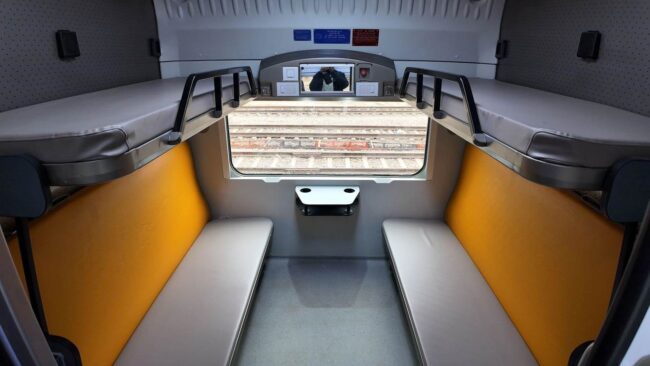
Union Minister for Railways, Information and Broadcasting, and Electronics and Information Technology, Ashwini Vaishnaw, conducted an official inspection of India’s first Vande Bharat Sleeper Train on January 3, 2026, at New Delhi Railway Station. The visit was part of the final pre-launch assessment for what Indian Railways considers a pivotal evolution in its long-distance travel offerings. The new train extends the semi-high-speed capabilities of the Vande Bharat series into overnight service segments, addressing a significant gap in premium rail mobility across the country.
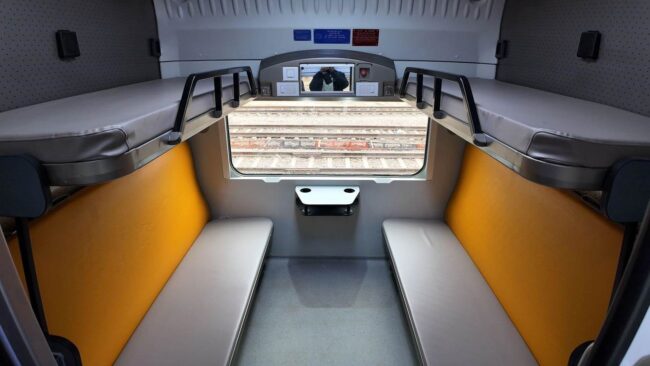
The Union Minister personally examined the seating and berthing layouts, ergonomically redesigned interiors, and upgraded safety systems. Particular focus was placed on passenger convenience features, including onboard surveillance, sanitary design, and automated operations. Officials from Indian Railways confirmed that the trial, testing, and certification processes have been successfully concluded, and that the train is operationally ready. The first service will connect Guwahati in Assam with Howrah in West Bengal, marking a strategic link between the northeastern and eastern regions through advanced rail technology.
The sleeper variant is equipped with features specifically designed to address the challenges of overnight journeys in Indian climatic and usage conditions. These include automatic doors, fire-retardant materials, touchless water fixtures, and a coach-wide closed-circuit television surveillance system. The Vande Bharat Sleeper Train also integrates the KAVACH automatic train protection system, an indigenously developed safety technology endorsed by Indian Railways.
What are the technical specifications and route details of the first Vande Bharat Sleeper deployment?
The Vande Bharat Sleeper Train has been engineered for a top design speed of 180 kilometers per hour. It includes a 16-coach formation comprising 11 AC three-tier coaches, four AC two-tier coaches, and one AC first-class coach. This configuration allows the train to accommodate approximately 823 passengers. The design maintains the aerodynamic and lightweight elements characteristic of the Vande Bharat brand, but adapts them for longer-duration travel, with reinforced suspension systems and noise-insulating materials to support sleep quality.
The inaugural route between Guwahati and Howrah has been strategically selected to highlight the train’s capacity to link remote northeastern regions with major eastern commercial hubs. According to senior officials in the Ministry of Railways, this alignment is consistent with broader government efforts to improve regional connectivity under the Act East policy. The train will significantly reduce travel time on this corridor while introducing a tiered premium service class that does not currently exist on comparable routes.
The Railway Minister stated during the inspection that Prime Minister Narendra Modi will inaugurate the first service later in January 2026. The announcement aligns with Indian Railways’ broader timeline for rolling out upgraded sleeper services across other long-distance routes in phases. Once operational, the Vande Bharat Sleeper Train is expected to compete not only with conventional express trains but also with low-cost airlines operating on overnight sectors.
How is Indian Railways enhancing passenger amenities in the Vande Bharat sleeper configuration?
The Vande Bharat Sleeper Train represents a clear upgrade in both aesthetic and functional terms compared to legacy sleeper services operated by Indian Railways. Interior spaces have been reengineered to accommodate region-specific needs, with dedicated zones for luggage storage, ambient lighting, temperature control, and automated sanitation. In a first for Indian Railways, passenger washrooms have been fitted with anti-splash toilet designs aimed at improving hygiene and water drainage during extended travel durations.
Touchless systems have been integrated across high-contact areas, including faucets, soap dispensers, and flushing mechanisms. Each coach features air purification systems and disinfectant spraying technology, reflecting the post-pandemic pivot toward public health prioritization in transport design. For security, the entire train is equipped with closed-circuit television monitoring, and onboard attendants will have direct access to centralized alert systems in case of emergencies.
Another distinctive feature of the new sleeper service is the introduction of culturally aligned onboard catering. Passengers originating from Guwahati will be served Assamese cuisine, while those departing from Kolkata will be offered traditional Bengali dishes. The integration of local culinary offerings is part of a broader strategy by Indian Railways to enhance cultural relevance and customer satisfaction across zones.
Officials also highlighted upgrades in ride comfort. The suspension system has been tuned for long-duration travel to minimize vibrations and improve sleep quality. Berths have been designed with ergonomic backrests and privacy partitions, marking a significant departure from conventional sleeper class aesthetics.
What does the launch of the Vande Bharat Sleeper Train signal about Indian Railways’ modernization roadmap?
The introduction of the Vande Bharat Sleeper Train represents a new benchmark in the modernization of India’s rail infrastructure. Unlike earlier phases of the Vande Bharat program which focused on daytime intercity routes using chair-car models, the sleeper variant is designed to address demand from a much larger segment of passengers who rely on overnight trains for cross-country travel. This segment constitutes a significant portion of Indian Railways’ annual ridership and revenue.
By deploying this train on a high-demand corridor between Guwahati and Howrah, Indian Railways aims to test not only operational readiness but also market reception. The initiative dovetails with concurrent upgrades to station infrastructure, real-time scheduling systems, electrification targets, and in-house coach manufacturing programs. The sleeper variant is also expected to trigger a cascading upgrade cycle across multiple Indian Railways zones, especially on trunk routes such as Delhi–Mumbai and Chennai–Bengaluru.
The integration of the KAVACH safety system further signals the government’s intent to position Indian Railways as a technology-forward entity. This system, developed by the Research Designs and Standards Organisation and Bharat Electronics Limited, is part of a broader effort to meet global safety benchmarks in rail operations. Its presence in the Vande Bharat Sleeper Train supports the government’s broader rail safety modernization narrative.
Minister Ashwini Vaishnaw’s inspection was framed as a milestone event in the Vande Bharat program’s expansion. The Minister reiterated that the train has cleared all necessary trials and is technically sound. He also interacted with engineers and reviewed backend systems, confirming operational readiness ahead of the formal flag-off by Prime Minister Narendra Modi.
Why the Guwahati–Howrah route matters for semi-high-speed rail in eastern India
The selection of the Guwahati–Howrah route for the first Vande Bharat Sleeper deployment reflects both logistical and symbolic considerations. Geographically, this corridor cuts across diverse topographies, operational zones, and passenger demographics. It serves a mix of urban, peri-urban, and remote catchment areas, making it an ideal pilot for high-speed sleeper operations. It also aligns with Indian Railways’ stated goal of extending high-performance train services to the northeastern region, which has historically seen limited premium service coverage.
Strategically, the route also supports India’s efforts to strengthen economic and cultural linkages within the eastern corridor. With the implementation of improved rail infrastructure, regional hubs such as Siliguri, Malda, and New Jalpaiguri could benefit from spillover connectivity. The high-capacity Vande Bharat Sleeper service is positioned not only as a transportation solution but also as a policy instrument for regional integration.
The Railway Ministry has indicated that learnings from this corridor will inform future deployments. The Guwahati–Howrah test case will be assessed for parameters including on-time performance, passenger feedback, system reliability, and cost efficiency. These metrics will be crucial for scaling the Vande Bharat Sleeper model to other geographies and integrating it into India’s multi-modal transport architecture.
What are the key takeaways on the Vande Bharat Sleeper Train rollout and its strategic implications?
- Union Minister Ashwini Vaishnaw inspected the completed Vande Bharat Sleeper Train at New Delhi Railway Station, confirming readiness for launch.
- The train will operate between Guwahati and Howrah, with Prime Minister Narendra Modi expected to flag it off in January.
- Designed for speeds up to 180 kmph, the sleeper train has 16 coaches with a capacity of approximately 823 passengers.
- Safety systems include automatic doors, KAVACH, advanced fire protection, CCTV surveillance, and touchless hygiene features.
- Region-specific meals, ergonomic interiors, and upgraded suspension systems aim to enhance the overnight travel experience on Indian Railways.
Discover more from Business-News-Today.com
Subscribe to get the latest posts sent to your email.