



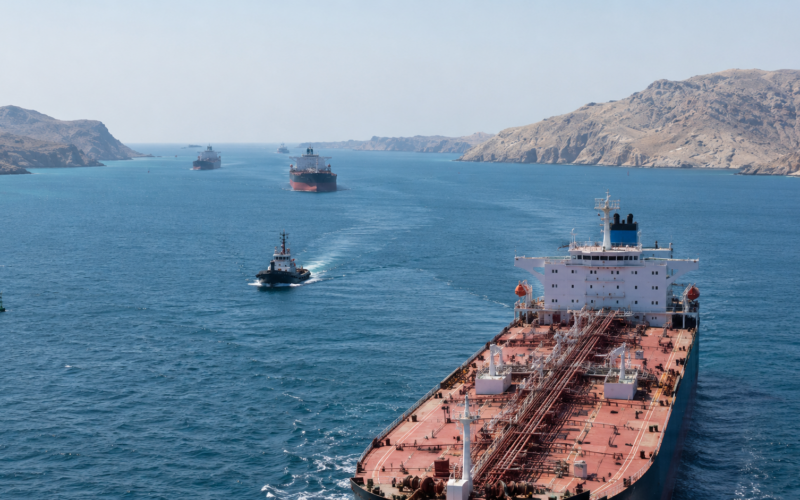
The International Maritime Organization’s (IMO) governing council urged countries on July 10, 2026, to reject Iran’s attempt to impose control over the Strait of Hormuz, sharply escalating the legal and diplomatic fight over one of the world’s most important oil and gas shipping routes.
The non-binding decision strongly condemned Iran’s creation of a body claiming authority over traffic through the strait and called on member states not to recognise Tehran’s sovereignty claim, jurisdictional assertions or any measures that obstruct international navigation and transit passage.
Iran has created a Persian Gulf Strait Authority that said in a June advisory that vessels could not pass through the waterway without a valid passage permit issued by the Iranian body. Tehran told International Maritime Organization delegates that its measures were intended to protect maritime safety, prevent support for aggression and safeguard national security, while insisting that it had not closed the strait.
The ruling comes after a renewed exchange of attacks between the United States and Iran, including United States strikes on Iranian military assets after Washington accused Tehran of attacking tankers near the Strait of Hormuz. Daily tanker traffic through the waterway slowed on July 10, while oil prices remained on course for weekly gains of roughly 4% to 5%.
Why has the International Maritime Organization rejected Iran’s Strait of Hormuz control claim?
The International Maritime Organization’s decision is important because it moves the Hormuz dispute from military confrontation into the legal machinery of global shipping. The agency’s council is not commanding navies or imposing sanctions, but it is telling member states that Iran’s claim to control traffic through the strait should not be treated as legitimate.
That matters because Iran is trying to convert geography into authority. Tehran sits along the northern side of the Strait of Hormuz, giving it military and surveillance reach across the waterway. But international shipping rules treat the strait as a passage used by the world, not as a domestic Iranian channel that Tehran can license at will.
The IMO Council’s language was broad. It objected not only to Iran’s new traffic-control body but also to its assertions over maritime zones of third states around the strait. That means the dispute includes the rights of other Gulf states as well as the general right of commercial vessels to transit an international waterway.
For shipping companies, insurers and energy buyers, recognition matters. If countries or operators begin applying for Iranian passage permits, Tehran can claim that its authority is becoming normal. If they reject the permit system, the risk of confrontation with Iranian forces remains high.
The IMO decision therefore gives governments and shipowners a legal reference point. It does not remove the physical danger in the strait, but it makes clear that the international shipping system does not accept Iran’s unilateral claim.

How does Iran’s Persian Gulf Strait Authority change the conflict over shipping?
Iran’s Persian Gulf Strait Authority is a major escalation because it attempts to institutionalise Tehran’s wartime control over vessel movement. Instead of only using naval patrols, drones or missiles to pressure shipping, Iran is creating an administrative structure that claims the right to approve passage.
That is a different kind of power. Military threats can be temporary. A licensing body suggests a more permanent attempt to rewrite the rules of the waterway.
Iran’s argument is that the measures are defensive. Tehran says vessels must not be used to support aggression against Iran and that its system is intended to ensure navigation remains safe and non-threatening. In Iranian terms, the strait has become a security zone during a war in which the United States and Israel attacked Iran, and Tehran believes it has the right to screen or supervise traffic.
The United States and its partners reject that logic. They argue that Iran cannot use security claims to control passage through a waterway essential to global commerce. If every coastal state near a chokepoint could impose wartime permits on commercial shipping, the entire maritime trade system would become vulnerable to coercion.
The practical danger is that Iran’s permit system could become a tool of selective pressure. Vessels linked to hostile governments, insurers, cargo buyers or military logistics could face delays, denial or seizure threats. Even the fear of such treatment is enough to slow traffic and raise costs.
That is why the IMO ruling is not just symbolic. It challenges the legal foundation of Iran’s attempt to turn military leverage into administrative control.
Why is tanker traffic slowing again through the Strait of Hormuz?
Tanker traffic slowed because shipowners, charterers and insurers are reacting to renewed clashes between the United States and Iran. Even when the waterway is not formally closed, operators must calculate the risk that a vessel could be hit, delayed, boarded, denied passage or caught between rival naval forces.
Before the latest flare-up, daily tanker traffic through the strait had recovered to an average of about 40 ships, its highest level since the Iran war began, but still far below the pre-conflict range of 125 to 140 daily sailings. Reuters reported that tanker traffic appeared to slow again on July 10 after the latest United States-Iran exchange.
That shows how fragile the reopening remains. A partial recovery in traffic does not mean the market has confidence. It means some operators are willing to move under risk while others delay sailings, wait for naval guidance or demand higher compensation.
The International Energy Agency said global oil supply rose by 4.1 million barrels per day in June as shipping through the strait resumed, but remained 9.4 million barrels per day below pre-war levels. The agency also warned of tight diesel and gasoline supplies, which means the shipping slowdown can quickly affect refined fuel markets as well as crude oil prices.
The key point is that Hormuz does not need to shut completely to damage the global economy. A slower, more expensive and less predictable strait can still raise freight costs, disrupt refinery planning, affect fuel supplies and keep oil markets under pressure.
How does the IMO decision affect the United States-Iran military standoff?
The IMO decision supports the United States position that Iran does not control the Strait of Hormuz, but it does not give Washington a military solution. It gives diplomatic and legal backing to countries that reject Iran’s permit system while leaving the hard security problem unresolved.
The United States has already used force. United States Central Command said this week that it struck Iranian air defence systems, command networks, coastal radar sites, anti-ship missile capabilities and Islamic Revolutionary Guard Corps small boats in and near the strait after tanker attacks attributed to Iran.
Iran responded by warning that further United States intervention would draw a crushing response. Tehran also said United States action in redirecting shipping through the strait was disrupting the waterway’s reopening, while the Revolutionary Guards claimed that vessel movement under Iranian supervision had recovered to about half of pre-war levels.
The IMO decision now hardens the political environment. If countries follow the council’s guidance and refuse to recognise Iranian permits, Iran must decide whether to tolerate defiance or enforce its claim. If it tries to enforce the claim, the risk of further United States strikes increases.
The decision therefore narrows Tehran’s diplomatic room while increasing the importance of de-escalation channels. Iran can continue saying it is protecting safety, but the global shipping regulator has now rejected the legitimacy of its control structure.
Why does Iran’s refusal to rely on UNCLOS matter in the Hormuz dispute?
Iran told IMO delegates that it is not a party to the United Nations Convention on the Law of the Sea and is not bound by its treaty-based regime. That argument is legally significant because UNCLOS provides much of the modern framework for maritime rights, transit passage and coastal-state jurisdiction.
Iran’s position does not automatically give it freedom to impose any rule it wants. Many countries view key navigation principles as broader customary international law, not only treaty obligations. The IMO Council’s decision reflects that wider view by calling on states not to accept Iranian measures that interfere with transit.
The legal dispute is not academic. If Iran says it is not bound by the treaty framework, then commercial operators face a harder environment because Tehran may not accept the same rules that other states invoke.
For Gulf countries, this is especially sensitive. Oman, the United Arab Emirates, Qatar, Bahrain, Kuwait and Saudi Arabia depend on predictable passage through or near the strait. If Iran’s legal theory expands, it could affect their sovereign rights, maritime zones and export routes.
Iran’s position also complicates negotiations. A maritime settlement normally depends on shared rules, verification and dispute-resolution mechanisms. If Tehran rejects the legal regime used by most shipping states, any agreement must either bridge that gap or create a separate practical arrangement that both sides can follow.
That is why the IMO decision carries weight. It tells Iran that the wider maritime community will not allow a war emergency to rewrite the legal status of the strait through unilateral declarations.
How could Gulf states be affected by Iran’s attempt to manage Hormuz traffic?
Gulf states face the most immediate consequences because their energy exports, ports, shipping lanes and security relationships all depend on the Strait of Hormuz remaining usable.
Qatar is heavily exposed through liquefied natural gas exports. Saudi Arabia and the United Arab Emirates have some pipeline routes that bypass the strait, but those routes cannot fully replace normal tanker flows. Kuwait, Bahrain and Iraq also depend heavily on Gulf shipping access.
Iran’s traffic-control claim puts these states in a difficult position. If they reject Tehran’s authority, their vessels and cargoes may face heightened risk. If they accommodate it, they may indirectly legitimise Iranian control over a route that is central to their own sovereignty and economic survival.
The issue also affects their relationship with the United States. Gulf states rely on United States military power to protect shipping and deter Iranian pressure, but they also want to avoid becoming direct battlegrounds in a wider war. Iran has already claimed attacks on United States military sites in Gulf states, including Kuwait, Qatar and Bahrain, after United States strikes on Iran.
That makes de-escalation difficult. Gulf governments want the strait open, but they do not want a permanent confrontation in which every tanker movement becomes a test of loyalty to Washington or Tehran.
The IMO decision may help Gulf states by giving them multilateral cover. They can oppose Iranian control not only as United States partners, but as members of a global shipping system defending freedom of navigation.
Why is the Hormuz dispute now central to whether the Iran war can end?
The Iran war cannot be ended through battlefield pauses alone if the Strait of Hormuz remains contested. The waterway has become the main bargaining arena because it links military pressure, oil revenue, sanctions relief and global economic stability.
The interim truce was supposed to create space for a broader settlement. But tanker attacks, United States strikes, Iranian retaliation and Iran’s traffic-control claim have exposed the truce’s central weakness: both sides disagree on who guarantees safe passage and under what rules.
For Donald Trump, the dilemma is sharp. If he accepts Iran’s control structure, he risks appearing to surrender the world’s most important energy chokepoint to Tehran. If he keeps striking Iranian assets, he risks returning to full-scale war and higher fuel prices ahead of the United States midterm elections.
Iran faces its own dilemma. Its leaders want to show that they can resist United States pressure and extract concessions, but too much pressure on shipping can unify other countries against Tehran and justify stronger military or sanctions action.
This is why the IMO decision is strategically important. It internationalises the dispute and reduces the chance that Iran can treat Hormuz as a bilateral bargaining chip against Washington alone.
Any future peace deal will now need a maritime chapter. It must define safe transit, inspection rules, naval presence, emergency communication, sanctions relief and what happens if a ship is attacked. Without that, the war may pause but the shipping crisis will keep restarting it.
What should be watched after the IMO decision on Iran and the Strait of Hormuz?
The first issue is whether major shipping states publicly endorse the IMO Council’s decision. Strong statements from European, Gulf and Asian governments would increase pressure on Iran.
The second issue is whether shipowners ignore Iran’s permit system or quietly comply to reduce risk. What companies do in practice may matter as much as what governments say.
The third issue is whether tanker traffic continues slowing. If daily sailings fall further, oil and fuel markets may price in a deeper Hormuz disruption.
The fourth issue is Iran’s enforcement behaviour. Boarding attempts, warnings, drone surveillance or denial of passage would signal that Tehran intends to turn its claim into operational control.
The fifth issue is United States posture. More naval escorts, strikes on coastal assets or rerouting of vessels through Omani waters could trigger Iranian retaliation.
The sixth issue is diplomacy. Qatar, Oman and other mediators will likely try to prevent the legal dispute from hardening into another military exchange.
The IMO ruling has not reopened the strait. It has clarified the international position. Iran can claim a permit regime, but the global shipping system has now said that claim should not be recognised.
What are the key takeaways from the IMO’s rejection of Iran’s Hormuz control claim?
- The International Maritime Organization’s governing council urged countries on July 10, 2026, to reject Iran’s attempt to impose sovereignty and traffic control over the Strait of Hormuz.
- The non-binding decision strongly condemned Iran’s creation of a body claiming authority over vessel movement through the strait and called on member states not to recognise Iranian measures obstructing international navigation.
- Iran’s Persian Gulf Strait Authority has said vessels cannot pass through the waterway without a valid Iranian passage permit, turning the Hormuz dispute into both a military and legal confrontation.
- Tehran told IMO delegates that its measures were intended to protect maritime safety, prevent support for aggression and safeguard national security, while saying it had not closed the strait.
- Tanker traffic through the Strait of Hormuz appeared to slow on July 10 after renewed United States-Iran clashes, while oil prices remained on course for weekly gains of roughly 4% to 5%.
- The International Energy Agency said global oil supply rose in June as shipping resumed, but remained 9.4 million barrels per day below pre-war levels, showing that the recovery remains incomplete.
- The IMO decision gives Gulf states and shipping nations multilateral backing to reject Iran’s permit system, but it does not remove the operational risk facing tankers, LNG carriers and naval escorts.
- Any durable end to the Iran war will require a settlement on the Strait of Hormuz, including safe passage, enforcement limits, naval presence, sanctions relief and consequences for attacks on commercial shipping.
Discover more from Business-News-Today.com
Subscribe to get the latest posts sent to your email.