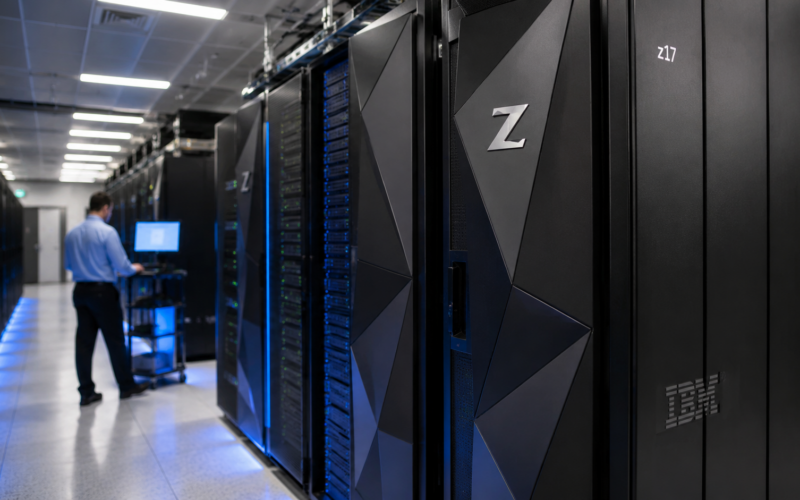
International Business Machines Corporation (NYSE: IBM) issued a rare pre-announcement of its second-quarter 2026 financial results on 14 July, disclosing revenue and profit metrics that fell materially short of Wall Street expectations and triggering one of the sharpest single-session valuation resets in the company’s modern history. In a letter to investors, Chairman, President and Chief Executive Officer Arvind Krishna acknowledged that IBM “faltered” during the quarter, citing weakness in the Z mainframe and Transaction Processing software franchise, a late-quarter client shift toward memory, storage and server purchases, and cybersecurity distractions that delayed large-deal closures. Preliminary revenue of $17.2 billion, up 1 percent, missed the FactSet consensus of $17.86 billion, while operating earnings per share of $2.93 fell short of the $3.01 estimate. IBM shares slid as much as 25 percent from Monday’s $290.23 close, erasing close to $60 billion in market capitalisation before the New York opening. The central question is whether an execution stumble at the wrap of the z17 mainframe cycle has damaged the investment case for IBM’s broader software-plus-AI transformation, or simply exposed how much of the near-term earnings mix still depends on a legacy franchise.
Why did IBM issue a rare preliminary earnings warning before its scheduled July 22 call?
IBM does not typically pre-announce ahead of a scheduled results release, and the July 22 investor call remains eight days away. The decision to publish preliminary numbers in the form of a Form 8-K letter from the chief executive is itself the story. Companies generally take this step only when the gap between internal expectations and street consensus is wide enough that continuing to trade without disclosure could raise its own regulatory and reputational risk. Management chose to disclose the shortfall, the reasons behind it and the strengths in the underlying portfolio in a single controlled communication rather than allow the news to emerge on the day of the earnings call. The tone of the letter suggests that IBM’s leadership believed the miss was material enough to require immediate context. Krishna described the results as disappointing and used unusually direct language, saying the company did not adapt and move quickly enough, and that numerous large deals failed to close on the timelines expected. That level of candour from an incumbent chief executive is uncommon and appears designed to reset expectations before the full call rather than after it.
What went wrong in the Z mainframe and Transaction Processing software franchise this quarter?
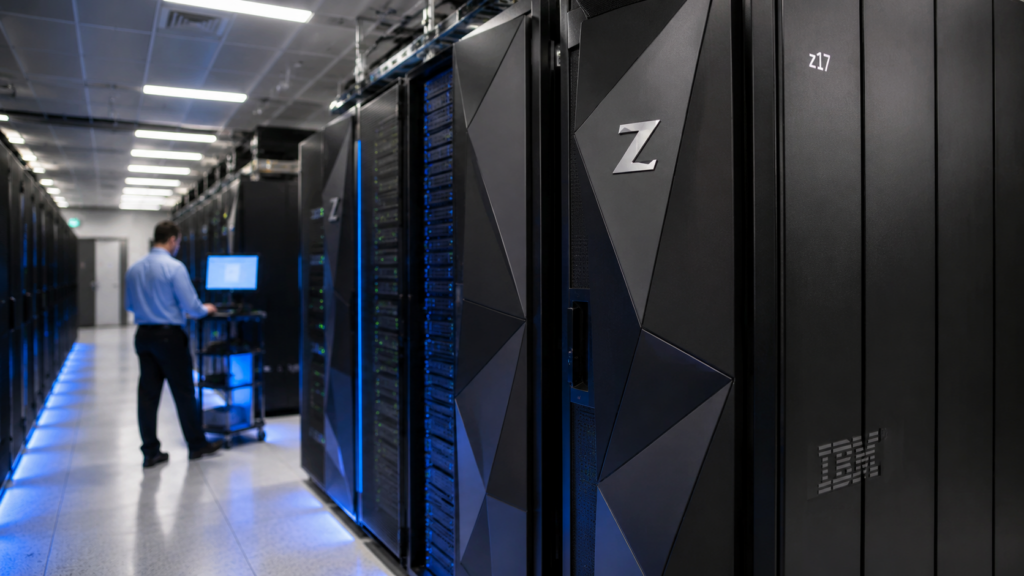
Infrastructure revenue fell 7 percent in the quarter, and Krishna attributed the majority of the shortfall to the Z line and its associated Transaction Processing software. IBM had signalled in April that Infrastructure revenue would decline low-single digits for the year as the z17 launch program wrapped in the second quarter. The company describes z17 as the strongest start to a mainframe program in its history, and IBM confirmed in the letter that z17 remains at nearly 130 percent program-to-program versus z16, which had itself been the strongest program on record. Clients representing 85 percent of installed MIPs are said to be maintaining or growing capacity. The Q2 shortfall therefore reflects timing rather than a fundamental collapse in mainframe demand. Nevertheless, the near-term revenue geometry is unforgiving. Mainframe cycles pull large hardware orders and adjacent software renewals into a concentrated window, and when that window closes the next quarter is a step-down by design. The added complication this year is that Transaction Processing, historically a stable software franchise attached to Z installations, underperformed. Since Transaction Processing carries higher margins than the underlying hardware, its weakness compresses both revenue and mix simultaneously.
How did the memory chip capex reprioritisation reshape enterprise IT budgets against IBM?
Krishna described a specific late-quarter dynamic in June where clients shifted their quarterly capex spend toward servers, storage and memory purchases to secure supply-constrained infrastructure ahead of expected price increases. This is a first-order consequence of the ongoing global memory chip tightness and reflects a broader capex reallocation that affected several enterprise IT budgets. When customers face a rising HBM and DRAM cost curve driven by AI training and inference demand, they tend to secure hardware supply while it remains available and defer discretionary software and services spend. For IBM, whose fastest-growing infrastructure line is now Distributed Infrastructure with a 37 percent gain in the quarter, the capex shift was a mixed picture. Power and Storage products captured incremental spend and IBM built an approximately $500 million exit backlog in Distributed Infrastructure. However, the same capex reprioritisation appears to have starved Z and its adjacent transaction software of demand at the exact moment the z17 launch cycle was tapering. Management also cited rapidly evolving industry-wide cybersecurity concerns as an additional distraction affecting client purchasing focus during the quarter. Together these factors delayed the close of numerous large deals, and IBM’s letter concedes that internal execution did not adapt fast enough to the shift.
Which parts of the IBM portfolio actually held up against a difficult second-quarter backdrop?
Software revenue rose 5 percent, and Red Hat accelerated to 11 percent growth sequentially. IBM highlighted that recent acquisitions of HashiCorp and Confluent both delivered strong performance during the period, which is material because both were expected to demonstrate their contribution during the first full year of consolidation. Consulting revenue was broadly flat, up 1 percent at constant currency, but signings growth was led by what management described as strong GenAI contribution, an important leading indicator for the second half. Distributed Infrastructure, as noted, delivered its best performance in reported history with 37 percent growth and an approximately $500 million backlog exiting the quarter. Operating pre-tax income margin also expanded 30 basis points to 19.2 percent, reflecting continued productivity work even as GAAP pre-tax margin declined 90 basis points to 14.4 percent. Free cash flow for the six months ended 30 June reached $4.76 billion, on operating cash of $7.77 billion, giving IBM the balance-sheet flexibility to fund the strategic bets outlined in the letter alongside its ordinary dividend commitments. The mix of these disclosures suggests that IBM’s software transformation and its acquisition integration work remain broadly on track. The weakness is concentrated, not systemic. What it exposes, however, is how much quarterly revenue still hinges on the Z hardware cycle and its attached software layer.
How do Lightwell and the $5 billion open-source security bet fit into the recovery narrative?
Krishna used the letter to reinforce IBM’s strategic positioning beyond the immediate quarterly slip. The company reiterated the commercial launch of Lightwell, a joint IBM and Red Hat platform for automated open-source vulnerability remediation. The letter positions Lightwell as a $5 billion commitment backed by new frontier AI capabilities and more than 20,000 engineers, offering enterprises a clearinghouse for validated, backported security fixes across production software versions. Lightwell general availability was announced on 8 July, and early adopters named in the letter include Bank of America, BNY, Citi, Goldman Sachs, JPMorganChase, Mastercard, Morgan Stanley, Royal Bank of Canada, State Street, Visa and Wells Fargo. That client list matters strategically because financial services carry the highest compliance cost per unhandled vulnerability, and the sector is the initial target for the Lightwell Clearinghouse Premier tier. The commercial question is whether Lightwell can convert its early cohort into a recurring subscription revenue stream durable enough to materially move IBM’s software growth line over the next 12 to 24 months. The market reaction on 14 July suggests investors are not yet prepared to underwrite that outcome without evidence of contract value and revenue conversion. On the 22 July call, disclosures on Lightwell bookings and consulting attach rates will therefore matter more than the marketing narrative around the launch.
What does the Anderon quantum wafer foundry and $10 billion commitment signal to investors?
IBM used the letter to formalise its longer-term quantum computing capital plan. The company disclosed a letter of intent with the United States Department of Commerce to build Anderon, described as the world’s first pure-play quantum wafer foundry, supported by $1 billion in CHIPS Act incentives and a $1 billion cash contribution from IBM. Separately, IBM committed to invest more than $10 billion in quantum over the next five years, spanning research and development, capital expenditure, manufacturing scaling, mergers and acquisitions, and ecosystem expansion. Management restated its target of delivering the first large-scale fault-tolerant quantum computer by 2029. For investors, the quantum programme represents long-dated optionality that will not generate meaningful revenue within the current investment case horizon. Its role is closer to strategic positioning than to near-term earnings, and its funding scale places IBM alongside the small group of vendors credibly building a hardware-plus-services quantum stack. The market’s willingness to reward that positioning will depend on whether the core enterprise franchise, and particularly the Z and Transaction Processing lines, can regain footing over the next two quarters. A large forward capital commitment is easier to defend when the base business is compounding predictably. The Q2 pre-announcement raises the burden of proof.
What does the $60 billion single-day valuation reset imply for IBM’s near-term investment case?
IBM shares closed on Monday, 13 July at $290.23 and traded down 21.86 percent in pre-market to $226.80, with intraday moves widening to as much as a 25 percent decline. That drop erased close to $60 billion in market value in a single session, and according to reporting from CNBC, the stock was on pace for its steepest single-session decline since October 1987. IBM’s 52-week high of $332.46, set on 2 June 2026, is now more than 30 percent above the pre-market print. The magnitude of the reaction reflects several compounding factors. Investors had been positioned for a strong Z-driven quarter, with Bank of America having raised its price target to $330 on 6 July. Consensus positioning had drifted higher on the software line into the print, and HSBC’s earlier move to a more cautious stance was one of the few visible cautious calls into the second quarter. The pre-announcement therefore hit a book of expectations that had drifted upward, and the position unwind was severe. The valuation debate now hinges on the 22 July call. If management delivers a credible plan to close large deals that slipped, provides a defensible second-half revenue trajectory and shows tangible commercial evidence from Lightwell and Red Hat, the reset could be revisited as an entry point. If the call reveals wider structural issues in the software franchise or additional guidance cuts, the current re-rating could extend. The current market value implies materially lower confidence in near-term execution than existed a week ago. A sustained recovery would likely require stronger operating evidence, not simply an improved narrative.
Key takeaways from IBM’s Q2 2026 pre-announcement and Arvind Krishna’s investor letter
- Preliminary Q2 2026 revenue of $17.2 billion missed FactSet consensus of $17.86 billion, and operating EPS of $2.93 missed the $3.01 estimate; GAAP EPS came in at $2.27, down 2 percent year over year.
- Infrastructure revenue fell 7 percent, with the Z mainframe and its Transaction Processing software driving the majority of the shortfall as the z17 launch cycle wrapped.
- A late-quarter client capex shift toward memory, storage and servers ahead of expected price increases redirected spend away from IBM’s higher-margin infrastructure software line.
- Cybersecurity distractions and execution delays on large deals compounded the miss; Krishna acknowledged in unusually direct language that IBM faltered in the quarter.
- Software rose 5 percent with Red Hat accelerating to 11 percent sequential growth, and HashiCorp and Confluent both delivered strong contributions during the period.
- Distributed Infrastructure posted its best-ever quarter with 37 percent growth and an approximately $500 million backlog exiting Q2, offset by weakness in Z.
- Lightwell reached general availability on 8 July, backed by a $5 billion commitment, more than 20,000 engineers and a marquee financial services client list.
- IBM committed more than $10 billion to quantum over five years and disclosed a US Department of Commerce letter of intent for the Anderon quantum wafer foundry, supported by $1 billion in CHIPS Act incentives.
- Free cash flow of $4.76 billion for the first half preserves capital flexibility to fund Lightwell, quantum and the ordinary dividend without near-term balance-sheet strain.
- The full second-quarter results and updated full-year outlook will be released on the regularly scheduled conference call at 5:00 p.m. ET on 22 July 2026.
Discover more from Business-News-Today.com
Subscribe to get the latest posts sent to your email.