




Why is the Iberdrola–Masdar East Anglia THREE project considered the largest offshore wind deal of the decade?
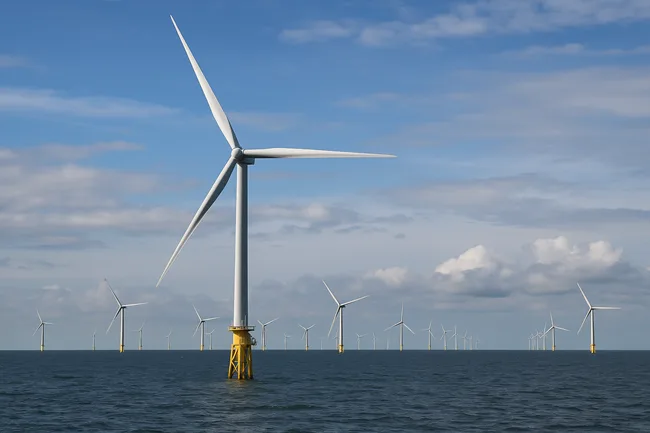
In a landmark development for European renewable energy, Spain-based Iberdrola and the United Arab Emirates’ Masdar have finalized a €5.2 billion joint investment in the East Anglia THREE offshore wind farm, marking the largest offshore wind transaction of the current decade. The announcement was accompanied by the completion and energization of the 476-megawatt Baltic Eagle project in the German Baltic Sea—their first completed joint project. Both milestones further solidify the growing alliance between Iberdrola and Masdar, as they seek to scale renewable generation across key European markets and beyond.
Located off the coast of Suffolk in the United Kingdom, East Anglia THREE will have a nameplate capacity of 1,400 megawatts, making it one of the two largest offshore wind farms globally once operational in the fourth quarter of 2026. The joint venture agreement allocates a 50% ownership share to each partner. Construction of the wind farm is expected to generate approximately 2,300 jobs and deliver clean power to an estimated 1.3 million British homes.
This agreement forms part of a broader €15 billion clean energy development framework between the two companies, initially announced during the COP28 summit in December 2023. The framework aims to triple renewable generation capacity by 2030 across select regions, including the United Kingdom, Germany, and the United States.
How is the East Anglia THREE project being financed, and what makes the funding structure significant?
On July 9, Iberdrola and Masdar closed project financing for East Anglia THREE with 24 international banks, raising £3.5 billion—equivalent to approximately €4.1 billion. The financing round was oversubscribed by 40%, reflecting strong institutional confidence in the long-term viability of large-scale offshore wind assets. This non-recourse structure will fund the bulk of the €5.2 billion total investment and will not consolidate debt onto the balance sheets of either co-investor, an important consideration amid ongoing global inflation and interest rate volatility.
The financing strategy also benefits from two major revenue anchors. First, the project has secured a Contract for Difference (CfD) from the United Kingdom Government, guaranteeing long-term fixed-price clean energy sales. Second, a corporate power purchase agreement (PPA) was signed with Amazon in 2024, providing additional price certainty and counterparty security.
Analysts believe this dual-revenue structure offers enhanced bankability and could become a reference model for future mega-projects in the sector, especially as interest in low-carbon assets from sovereign wealth funds, pension groups, and corporate buyers continues to expand.
What role does the Baltic Eagle project play in Iberdrola and Masdar’s growing partnership?
Baltic Eagle represents the first completed project under the Iberdrola–Masdar partnership, coming online in mid-2025. The 476-megawatt offshore wind farm is located in the German sector of the Baltic Sea and will supply electricity to around 475,000 homes. Annual CO₂ emissions avoided are estimated at roughly 800,000 tonnes. Iberdrola has confirmed that Baltic Eagle strengthens its presence in Germany, where it already operates the 350 MW Wikinger wind farm and is developing the 315 MW Windanker project, expected to be completed in 2026.
Masdar and Iberdrola executives have emphasized that Baltic Eagle serves as a proof point for their capacity to execute complex renewable projects efficiently. It also demonstrates the operational synergies they expect to replicate in future ventures. Masdar’s Chairman, Dr. Sultan Al Jaber, noted that the strategic partnership is now among the largest in global clean energy, adding that both companies are responding to rising global demand for electricity driven by artificial intelligence growth and emerging market consumption.
How does this joint venture fit into Iberdrola’s long-term investment and asset rotation strategy?
Iberdrola has positioned this partnership with Masdar as a cornerstone of its broader asset rotation strategy. According to internal disclosures, the Spanish energy major has completed transactions totaling €14 billion since 2024 under this framework. These capital recycling efforts are designed to fund new growth projects while maintaining balance sheet discipline, a priority as the group targets €28 billion in UK investments by 2028—primarily across renewables and transmission infrastructure.
Executive Chairman Ignacio Galán emphasized that the deal supports Iberdrola’s energy security and climate action goals. He also underlined the importance of attracting partners like Masdar, which not only bring capital but also share long-term decarbonization ambitions. With growing investor scrutiny around capital efficiency and net-zero credibility, joint ventures like this enable Iberdrola to de-risk project pipelines while meeting climate objectives.
Institutional sentiment toward Iberdrola (BME: IBE) remains largely favorable, supported by robust clean energy credentials, a diversified regional footprint, and regulatory tailwinds in Europe. Investors are particularly focused on Iberdrola’s capacity to balance growth with financial prudence amid rising capital costs.
What are the strategic implications for Masdar as it deepens its renewable investments in Europe?
For Abu Dhabi-based Masdar, the partnership with Iberdrola aligns with its ambition to become one of the top global clean energy developers by 2030. With deep pockets and strategic backing from the UAE Government, Masdar is accelerating capital deployment in Europe to complement its existing footprint in the Middle East and Asia. The East Anglia THREE and Baltic Eagle projects give Masdar a credible presence in two of Europe’s most established offshore wind markets—the UK and Germany—both of which offer stable regulatory environments and mature transmission infrastructure.
The €15 billion strategic agreement with Iberdrola reflects Masdar’s pivot from isolated asset acquisitions to long-term institutional partnerships. This model not only supports technology transfer and knowledge exchange but also lowers project development risk. Offshore wind, which is increasingly seen as critical to Europe’s energy security in a post-Russia gas landscape, remains one of Masdar’s top deployment priorities.
With global electricity demand surging—particularly from AI data centers and electrified industrial loads—Masdar is betting that stable, large-scale offshore wind assets will offer both strategic influence and steady returns in a high-demand future. Some institutional investors expect the group’s European expansion to continue via joint ventures, merchant PPAs, and targeted acquisitions.
What can investors expect next from the Iberdrola–Masdar clean energy alliance?
Industry observers expect Iberdrola and Masdar to accelerate joint development across the United States and other OECD markets. The duo’s €15 billion pipeline includes potential utility-scale wind and solar projects in states with favorable clean energy mandates and Inflation Reduction Act (IRA) incentives. In Europe, the partners are likely to seek new CfD rounds and strategic PPAs, particularly with hyperscale data center operators and ESG-aligned corporate buyers.
Analysts anticipate that future co-investments will increasingly integrate storage and grid-edge capabilities, making the next generation of Iberdrola–Masdar projects more resilient and adaptable to peak demand volatility. There is also speculation that the alliance could explore floating offshore wind, hydrogen-linked wind-to-X applications, or grid interconnection projects, especially as EU energy integration initiatives gain traction.
The Baltic Eagle and East Anglia THREE projects represent not only operational milestones but also a test case for scaling investor-grade clean energy infrastructure through global partnerships. With growing attention on capital-efficient climate action, the Iberdrola–Masdar model could become a blueprint for similar alliances between Western utilities and Gulf-based capital in a multipolar energy future.
Discover more from Business-News-Today.com
Subscribe to get the latest posts sent to your email.



