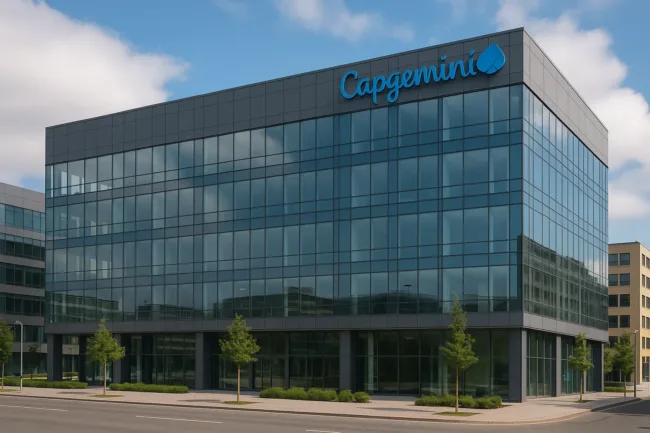
Why is Capgemini’s $3.3 billion WNS acquisition a pivotal milestone in its transformation journey?
Capgemini SE’s (Euronext Paris: CAP) $3.3 billion acquisition of WNS (Holdings) Limited (NYSE: WNS), announced on July 7, 2025, represents more than just a strategic entry into Intelligent Operations. It marks the culmination of a decade-long mergers and acquisitions strategy designed to evolve Capgemini from a traditional IT services player into a vertically integrated transformation partner, deeply embedded in business processes and powered by artificial intelligence.
This all-cash deal, priced at $76.50 per share, delivers a 28% premium over WNS’s 90-day average and is expected to close by the end of 2025. It will immediately boost Capgemini’s normalized earnings per share by 4% in 2026 and 7% by 2027 after synergy realization. The goal: to capture the surging enterprise demand for Agentic AI-powered transformation across sectors like BFSI, healthcare, utilities, and travel.
The acquisition also delivers a high-growth, margin-accretive revenue stream—WNS clocked $1.27 billion in FY25 revenue with an 18.7% adjusted operating margin—further increasing Capgemini’s exposure to the North American market. But perhaps more importantly, it ties together years of calculated M&A designed to turn Capgemini into an end-to-end business transformation powerhouse.
How has Capgemini used M&A to build scale and specialization across consulting, engineering, and digital operations?
Capgemini’s acquisition history over the last ten years shows a deliberate pivot from horizontal IT services to vertical industry solutions, powered by cloud, AI, and domain-specific platforms. The foundation was laid with the 2015 acquisition of IGATE, a U.S.-headquartered IT services firm with over 30,000 employees. That $4 billion transaction gave Capgemini critical delivery scale in North America and deepened its presence in banking and insurance.
Next came the 2020 acquisition of Altran Technologies for approximately €3.7 billion, a landmark move that created what Capgemini described as a “world leader in intelligent industry.” Altran brought deep engineering and R&D capabilities in sectors like aerospace, automotive, and telecom—sectors now central to Capgemini’s digital twin and IoT-led offerings. The Altran deal was transformative, merging operational technology with Capgemini’s IT stack.
Further regional and capability-based acquisitions followed. In 2021, Capgemini acquired Australia-based Empired and RXP Services to strengthen its Microsoft Cloud services and digital experience capabilities in the Asia-Pacific region. In 2022 and 2023, the Group expanded its SAP, data analytics, and customer experience verticals via bolt-on deals across Europe and India.
These deals were not scattershot. They were consistently aimed at reinforcing Capgemini’s stack across consulting, cloud engineering, and operational delivery, each deal adding a missing layer to its evolving value proposition. The WNS acquisition closes the loop—by giving Capgemini full ownership of business processes in addition to the technology, platform, and consulting layers it already commands.
What is the strategic logic behind moving from automation to Agentic AI-driven operations?
The shift from rules-based automation to Agentic AI has changed how enterprises evaluate digital transformation partners. Agentic AI systems, unlike conventional RPA or scripted bots, can operate autonomously across end-to-end processes, adapting to changing workflows and generating insights with minimal human intervention. This evolution has redefined Business Process Services (BPS) into Intelligent Operations.
Capgemini had a gap in this space. While its consulting and platform capabilities were best-in-class—especially through its alliances with AWS, Google, Microsoft, and NVIDIA—it lacked a strong domain-led BPS layer with high process intimacy. That’s what WNS delivers.
WNS’s sector-specific solutions in travel, insurance, and healthcare, combined with platform-based delivery and recent investments like Kipi.ai, give Capgemini the ability to own the last mile of enterprise transformation. Now, Capgemini can offer clients a single-vendor solution: from strategy and design to implementation and intelligent operations—executed by AI agents trained on vertical-specific data.
How is this acquisition viewed by institutional investors and what are the financial implications?
Early institutional sentiment is positive, with many investors seeing the WNS acquisition as the next logical step in Capgemini’s maturation. The deal enhances Capgemini’s recurring revenue streams, improves geographic balance by increasing U.S. exposure, and is EPS-accretive even before synergies.
Capgemini expects €100–140 million in annual revenue synergies by 2027 and €50–70 million in cost synergies. With 2024 pro forma revenues of €23.3 billion and an operating margin of 13.6%, the Group is forecasting further margin expansion post-integration.
Importantly, Capgemini has financed the deal through a €4 billion bridge loan—of which €1 billion will be repaid via cash and the rest through new debt. This structured approach preserves financial flexibility and sends a signal to investors that the Group is not over-leveraging to pursue inorganic growth.
In terms of earnings guidance, Capgemini has reaffirmed its FY25 outlook: constant currency revenue growth of -2% to +2%, operating margins of 13.3%–13.5%, and organic free cash flow of around €1.9 billion. WNS’s contribution will start reflecting in FY26.
What makes WNS the missing piece in Capgemini’s AI-first transformation strategy?
WNS brings what Capgemini lacked: deep domain process control and BPS execution at scale. Its strength lies in highly automated, industry-specific operations underpinned by recurring, outcome-based contracts. That model aligns perfectly with Capgemini’s Gen AI strategy, which logged over €900 million in bookings in 2024.
WNS also complements Capgemini’s cultural values—its integration is expected to be seamless within Capgemini’s Global Business Services unit. With delivery centers in India, South Africa, the Philippines, and Eastern Europe, WNS also boosts Capgemini’s cost-optimized global footprint.
Together, the merged entity can now operate across every layer of enterprise transformation. Capgemini Invent anchors the consulting and strategy layer, guiding enterprise reinvention through digital-first roadmaps. Its AI and platform capabilities are strengthened by deep partnerships with hyperscalers such as Microsoft, Google Cloud, and AWS, along with proprietary GenAI solutions and toolkits. The engineering and digital manufacturing layer, inherited through the Altran acquisition, brings robust capabilities in product lifecycle management, embedded systems, and industrial automation. Finally, WNS fills the operations gap by delivering verticalized Intelligent Operations—executing processes with Agentic AI, platform-led delivery, and deep domain expertise.
This unification positions Capgemini as a full-stack transformation partner for AI-first enterprises—a segment expected to see the highest enterprise IT investment growth over the next 3–5 years.
What’s next for Capgemini and how does it stack up against global competitors?
Post-WNS, Capgemini is no longer just competing with IT service firms like Infosys or Cognizant. It is now positioned directly against Accenture, IBM Consulting, and Deloitte in the high-value intersection of AI, consulting, and business operations. This deal helps close the operational delivery gap that previously left Capgemini dependent on client-owned process teams or third-party BPOs.
Analysts expect further platform consolidation in this space, especially as GenAI accelerates the convergence of IT and BPO. Capgemini’s move may also push rivals to fast-track their acquisitions—raising questions about potential moves by Genpact, Tech Mahindra, or even Big Four firms expanding into operations.
From a branding perspective, Capgemini’s consistent message—“Get the future you want”—now carries operational weight. With full-stack capabilities across 340,000 employees in over 50 countries, the Group is evolving from a service provider to a strategic enabler of AI-native enterprises.
Discover more from Business-News-Today.com
Subscribe to get the latest posts sent to your email.