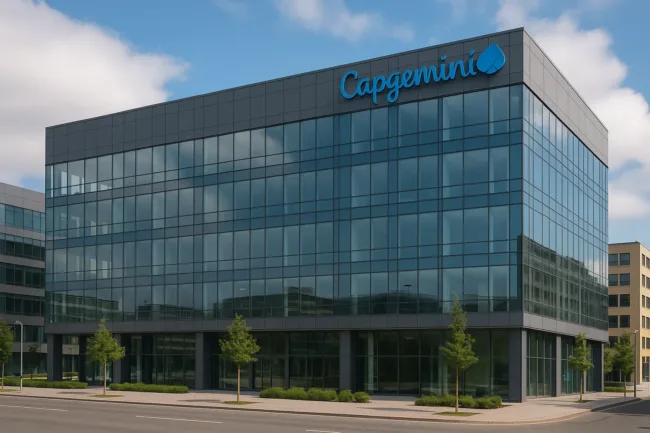
Why is Capgemini acquiring WNS and how will it reshape the Intelligent Operations landscape in 2025?
Capgemini SE (Euronext Paris: CAP) announced on July 7, 2025, that it will acquire WNS (Holdings) Limited (NYSE: WNS) in a definitive cash transaction valued at approximately $3.3 billion. The French technology and consulting giant is offering $76.50 per share, representing a 28% premium over WNS’s 90-day volume-weighted average price and a 17% premium over its July 3 closing price. The deal has been unanimously approved by both boards and is expected to close by year-end, pending regulatory approvals and shareholder consent.
This move positions Capgemini as a global leader in Agentic AI-powered Intelligent Operations—an emerging category of business process services (BPS) increasingly shaped by generative and autonomous artificial intelligence tools. The transaction is expected to be accretive to Capgemini’s earnings per share by 4% in 2026, even before realizing any cost or revenue synergies. Post-synergies, EPS accretion is forecast to reach 7% by 2027.
For Capgemini, the acquisition is a strategic response to the evolving enterprise demand for AI-powered end-to-end process transformation. In a statement, CEO Aiman Ezzat noted that Agentic AI represents a “paradigm shift” in how enterprises approach BPS, transitioning from traditional efficiency plays to hyper-automated, data-driven, and outcome-based models. With this acquisition, Capgemini aims to offer consulting, technology, platform, and deep industry-process expertise in a unified value proposition.
How does WNS’s portfolio strengthen Capgemini’s push into AI-powered digital business services?
WNS brings a high-growth, margin-accretive, and digitally native BPS business to Capgemini. As of FY25 (ending March 2025), WNS reported $1.27 billion in revenue, supported by a 9% constant currency CAGR over the past three fiscal years. Its operating margin stood at an adjusted 18.7%, aligning with Capgemini’s performance metrics and profitability aspirations.
WNS is recognized for its domain-centric and vertically specialized services, spanning key sectors such as travel, insurance, utilities, healthcare, and financial services. With marquee clients including United Airlines, M&T Bank, Aviva, Centrica, and McCain Foods, WNS offers deep integration across critical client workflows. The firm operates 64 delivery centers globally and employs over 64,000 professionals.
In recent quarters, WNS has deepened its AI and analytics capabilities through acquisitions such as Kipi.ai, aligning with its mission to shift from automation to autonomy. The Indian digital transformation services provider has also established a resilient delivery model, leveraging platform-based recurring revenues and non-linear pricing structures, which will enhance Capgemini’s Business Services footprint in the U.S. and globally.
What is the strategic significance of Intelligent Operations and how is Agentic AI changing the market?
The concept of Intelligent Operations reflects a broader shift in enterprise priorities—from cost optimization to end-to-end value creation through AI-infused processes. At its core, Intelligent Operations integrates horizontal and vertical BPS offerings with consulting, AI/ML, data, and digital tools to deliver hyper-automation and superior business outcomes.
Agentic AI, in particular, goes beyond traditional RPA and static automation frameworks by embedding adaptive, learning-driven models that act autonomously within business processes. According to Capgemini’s leadership, the new demand landscape is prompting enterprises to prioritize AI investments that directly transform their core operations.
The acquisition of WNS is designed to give Capgemini both the consulting-led structure and the sector-specific solutions required to lead this transformation. It follows a clear recognition by institutional investors that Gen AI-led Intelligent Operations is no longer a peripheral capability but a central component of enterprise reinvention.
How do institutional investors view the financial and operational impact of the Capgemini–WNS merger?
Institutional sentiment around the acquisition appears largely constructive, with analysts highlighting the transaction’s immediate financial benefits and long-term positioning advantages. Capgemini expects €100 million to €140 million in revenue synergies and €50 million to €70 million in cost synergies annually by the end of 2027. These synergies will be driven by cross-selling, expanded service portfolios, and integration of delivery centers.
In calendar year 2024, the combined entity would have generated €23.3 billion in revenue with a 13.6% operating margin. Capgemini’s own revenue was €22.1 billion in 2024, indicating WNS’s integration would boost topline by nearly €1.2 billion. This scale, alongside operating model consolidation, reinforces Capgemini’s competitive position against peers like Tata Consultancy Services, Accenture, and Cognizant, particularly in the North American BPS market.
Importantly, Capgemini has secured a €4 billion bridge facility to finance the deal and simultaneously redeem existing debt obligations. Roughly €1 billion of this is expected to be refinanced with cash on hand, with the remainder through future debt issuances. This disciplined financial approach signals to institutional investors that the Group is balancing expansion with balance sheet prudence.
How does this acquisition fit into Capgemini’s broader AI and platform strategy for 2025 and beyond?
Capgemini has aggressively expanded its Gen AI and Agentic AI offerings across the enterprise technology stack. In 2024 alone, the Group recorded over €900 million in Gen AI bookings, backed by strategic alliances with hyperscalers such as Microsoft, Google, AWS, NVIDIA, and emerging AI labs like Mistral AI. Its 25 strategic partnerships and investment in AI training programs underscore its commitment to future-proofing client operations.
This acquisition dovetails into Capgemini’s broader aim of being a “partner of choice” for organizations seeking AI-driven reinvention. The company’s platform strategy combines strategy and design with engineering, cloud, and data services—allowing for deep integration of verticalized AI models. Integrating WNS adds operational depth and client proximity to this equation, enabling Capgemini to deliver full-stack Intelligent Operations with sector-specific customization.
With WNS in its fold, Capgemini enhances its relevance in industries undergoing rapid digital reinvention—particularly where regulatory complexity, customer personalization, and data security intersect. The Group’s diversified talent base of 340,000 employees across more than 50 countries further supports scalable AI delivery.
What is the market outlook for digital BPS and how will Capgemini position itself post-integration?
The Digital BPS market is undergoing rapid change, with forecasts suggesting a 7%–11% growth rate through FY26 for key players. Factors driving this include AI adoption, need for customer-centric service models, and increasing demand for flexible, outcome-based pricing. Capgemini aims to be at the forefront of this evolution by offering Intelligent Operations as a turnkey service—merging consulting, execution, and analytics.
Capgemini’s guidance for FY25 remains unchanged despite the acquisition. The company expects -2.0% to +2.0% revenue growth at constant currency, an operating margin between 13.3% and 13.5%, and organic free cash flow around €1.9 billion. The WNS acquisition will be additive from 2026 onward.
Pending shareholder and regulatory approvals, the transaction is expected to close by the end of 2025. Integration will be streamlined through Capgemini’s Global Business Services division, where WNS’s capabilities will be directly absorbed. Executives have pointed to strong cultural alignment and operational synergy as key enablers for a smooth post-merger integration.
What makes this deal a landmark for enterprise AI-driven process transformation?
Industry experts view this transaction as a timely alignment of two domain-rich service providers at the forefront of AI-powered process transformation. Capgemini’s consulting and technology prowess pairs naturally with WNS’s deep vertical operations and delivery infrastructure. More than a scale play, the acquisition is a strategic bet on Agentic AI becoming the default paradigm in digital BPS.
While risks remain—especially around integration complexity and regulatory timelines—analysts suggest the combined group is uniquely positioned to meet enterprise demand for AI-native transformation partners. Capgemini’s visibility into AI procurement pipelines, coupled with WNS’s operational anchoring, could shape the future of Intelligent Operations across multiple sectors, from BFSI and insurance to healthcare and logistics.
The deal reaffirms that Agentic AI is not a tech experiment but a foundational shift in enterprise service delivery.
Discover more from Business-News-Today.com
Subscribe to get the latest posts sent to your email.