
What makes space-based solar power different from ground solar and why does it matter for clean energy?
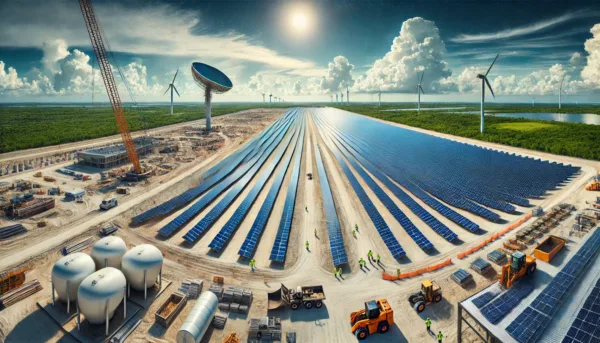
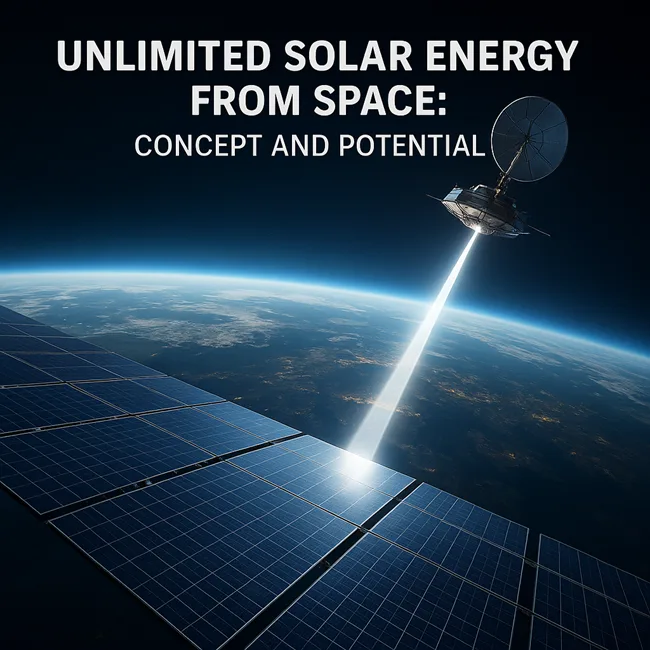
Space-based solar power (SBSP) is one of those audacious ideas that sounds like science fiction but is steadily edging toward feasibility. The concept is elegantly simple: place vast arrays of solar panels in Earth’s orbit, capture uninterrupted sunlight, and beam the harvested energy down to Earth via microwaves or lasers. Unlike traditional solar farms that wrestle with cloudy skies and darkness, space-based platforms can, in theory, generate electricity nearly 24 hours a day, 365 days a year.
The promise is staggering. A single orbital solar array could produce multiple terawatts of electricity, many times more than a terrestrial facility of similar size. The energy would be transmitted to ground-based “rectennas”—specialized antenna farms that convert the microwave or laser beams back into electricity. Supporters say such systems could deliver baseload power, stabilize grids, and extend clean energy access to remote areas without the need for sprawling transmission networks. They also envision SBSP powering future lunar bases or Martian colonies, where sunlight availability is limited.
Why are costs the biggest hurdle for space-based solar power to become commercially viable?
For all its allure, SBSP faces a brutal economic reality. Launch costs remain the single most prohibitive barrier. Sending heavy photovoltaic panels and supporting structures into orbit currently costs thousands of dollars per kilogram, translating into a price per watt of energy that is nearly 100 times higher than Earth-based solar. Even as reusable rockets like SpaceX’s Starship push costs downward, the economics still heavily favor ground-based renewables.
This has spurred research into ultra-lightweight alternatives. Engineers are experimenting with thin-film photovoltaics, inflatable structures, and modular arrays that can be robotically assembled in orbit. Each innovation aims to reduce mass per watt and eliminate the need for bulky launches. Another possibility is manufacturing in space itself, leveraging lunar regolith or asteroid-derived materials to build arrays without lifting them from Earth. But this opens up new technological, environmental, and ethical debates—ranging from the feasibility of in-space mining to the governance of extraterrestrial resources.
Until these hurdles are overcome, SBSP remains more of a research aspiration than a commercial enterprise. For it to make sense economically, launch costs would need to fall by at least an order of magnitude, and solar technologies would have to achieve radical improvements in weight efficiency.
How are countries and agencies approaching space-based solar power as part of their energy and space agendas?
SBSP is no longer just a speculative exercise in white papers. Multiple governments and agencies are actively testing prototypes and pilot projects.
China has been particularly aggressive, announcing plans to build a one-megawatt test facility by 2030 and aiming for a commercial orbital power station by mid-century. Japan’s Aerospace Exploration Agency (JAXA) has already demonstrated wireless microwave power transmission over short distances, an essential precursor to full-scale deployment.
In the United States, the U.S. Air Force is collaborating with Northrop Grumman and Caltech on the Space Solar Power Demonstrator (SSPD), which is testing deployable photovoltaic arrays and microwave beaming. The U.S. sees SBSP not only as an energy innovation but also as a potential strategic capability, given its dual-use implications.
European agencies, meanwhile, are studying both the technological feasibility and environmental footprint of orbital solar platforms. Their focus has been on ensuring that SBSP, if deployed, aligns with climate goals while avoiding unintended consequences in orbital traffic management and atmospheric effects.
What legal, geopolitical, and safety challenges surround the beaming of solar energy from orbit?
Beyond the technical and economic barriers, SBSP sits at the intersection of space law, geopolitics, and security. Beaming gigawatts of energy to Earth via microwaves or lasers is not something that can happen without international oversight.
Existing treaties, such as the Outer Space Treaty, prohibit militarization of space, but they do not fully address the nuances of energy transmission. Critics worry about “dual-use” risks, where high-power microwave beams could theoretically be weaponized. Others highlight the potential for interference with satellites, aviation, or even ecological systems if safety protocols are not rigorously enforced.
There is also the issue of orbital real estate. With satellite constellations like Starlink already crowding low Earth orbit, future SBSP platforms would need carefully allocated slots to avoid collisions. The challenge is compounded by the possibility that nations with advanced launch capabilities could monopolize orbital positions, turning SBSP into a geopolitical flashpoint.
How could space-based solar power reshape global energy markets if it overcomes its barriers?
If SBSP crosses the threshold from prototype to practical deployment, the economic ripple effects could be profound. Constant, high-capacity power from orbit could replace fossil-fuel-driven peaker plants, which currently serve as backup during demand spikes. Industries requiring continuous power—data centers, steelmaking, and chemical plants—could become early adopters.
At the national level, SBSP could redefine energy geopolitics. Instead of oil and gas pipelines, countries with orbital infrastructure and launch capacity could become exporters of clean power. This raises equity questions: would SBSP widen the gap between spacefaring nations and those without access? Or could international cooperation create shared orbital grids that democratize access to orbital energy?
Another economic implication lies in storage. Since SBSP delivers near-constant electricity, it could reduce the need for large-scale batteries and grid-level storage projects, lowering system costs for utilities. That said, the upfront infrastructure for rectennas and transmission would still be significant.
What do experts and investors think about the future of space-based solar power?
Experts remain both captivated and cautious. The promise of 24/7 clean energy, potentially orders of magnitude more productive than terrestrial solar, makes SBSP an irresistible vision for futurists. Yet, the current cost differential cannot be brushed aside. Even with reusable rockets and lighter materials, the economics are unlikely to close within the next two decades.
For investors, this makes SBSP a long-term, high-risk opportunity rather than a near-term play. There are no public “pure-play” SBSP companies. Instead, exposure comes indirectly through aerospace giants like Northrop Grumman, launch providers like SpaceX, or advanced materials firms experimenting with ultralight solar technologies. Venture investment has been tepid, as most capital remains concentrated in terrestrial renewables, grid storage, and established clean-tech verticals.
The consensus is that incremental demonstrators—kilowatt-scale platforms or short-range beaming experiments—will be critical. They can validate technical feasibility while chipping away at the staggering cost structure. Until then, SBSP will remain more a symbol of ambition than an imminent energy revolution.
Could space-based solar power become the ultimate bridge between the clean energy transition and space exploration?
While it is easy to dismiss SBSP as a distant dream, its development dovetails neatly with other megatrends. As humanity pushes further into space—toward lunar bases, asteroid mining, and eventual Mars exploration—the ability to beam energy wirelessly across long distances could prove indispensable. SBSP research today may lay the groundwork not only for Earth-bound decarbonization but also for powering off-world settlements tomorrow.
For now, though, the race to commercialize SBSP is more marathon than sprint. Ground-based renewables paired with storage solutions remain the pragmatic foundation of the clean energy transition. SBSP sits on the horizon—a dazzling but distant beacon that reminds us how far technology might take us if economics, policy, and political will converge.
Discover more from Business-News-Today.com
Subscribe to get the latest posts sent to your email.