



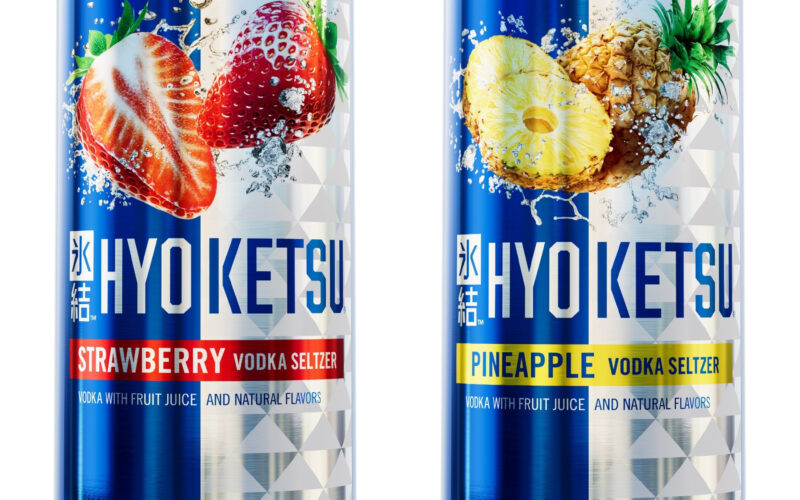
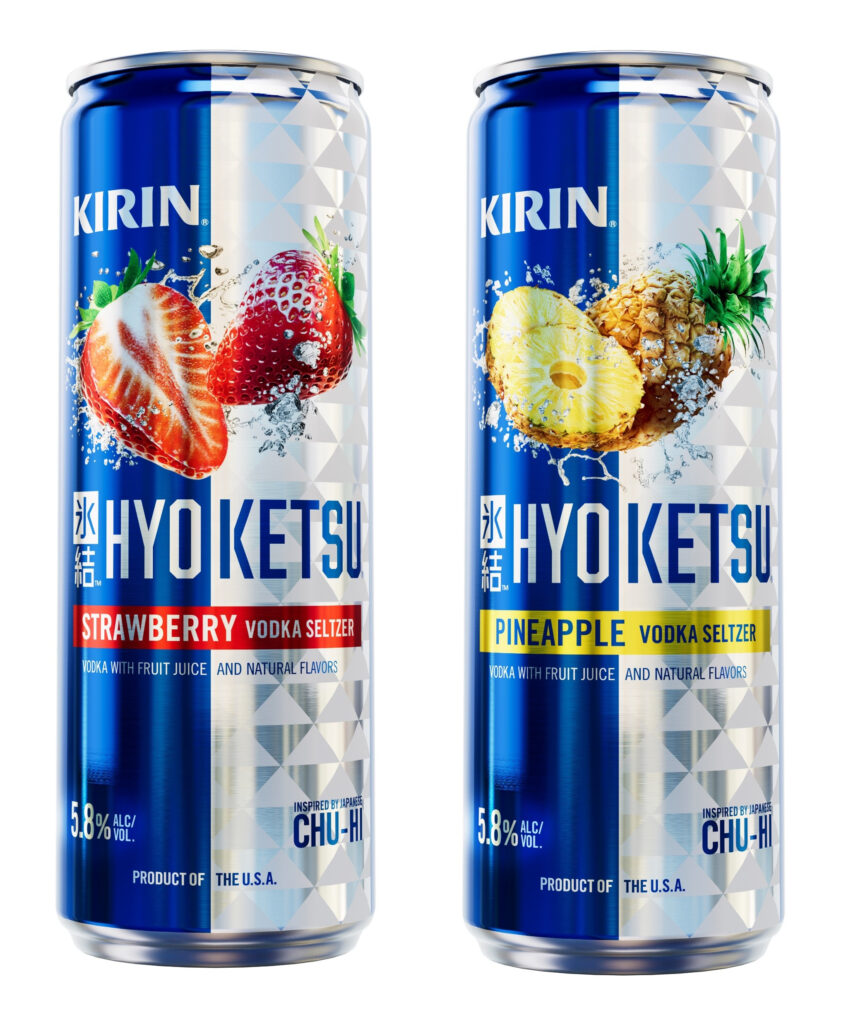
Kirin Holdings Company (TSE: 2503), operating its U.S. alcoholic beverage business through New Belgium Brewing, is launching two locally produced ready-to-drink cocktails under the KIRIN HYOKETSU brand in select U.S. markets on March 2. The move marks Kirin Brewery Company’s first attempt to manufacture and sell HYOKETSU within the United States, targeting Hawaii, Tampa, Florida, and The Japan Pavilion at EPCOT theme park. For a Japanese beverage conglomerate historically reliant on domestic volume and offshore exports, local U.S. production signals a structural shift in how Kirin Holdings intends to compete in the world’s largest RTD market.
Why is Kirin Holdings choosing local U.S. manufacturing as its primary RTD market entry strategy?
The decision to manufacture HYOKETSU in the United States rather than import it from Japan is the most consequential detail in this announcement, and it deserves scrutiny beyond the product launch itself. Import-led RTD strategies carry meaningful cost and freshness disadvantages, particularly for products positioned around crisp, fruit-forward taste profiles where the gap between production and consumption matters to quality perception. By anchoring manufacturing in the U.S., Kirin Brewery sidesteps tariff exposure, shortens the supply chain, and gains the pricing flexibility to compete against domestic incumbents rather than arriving with an import premium attached.
New Belgium Brewing, which Kirin Holdings acquired in 2017, provides the operational infrastructure that makes this possible without building from scratch. New Belgium Brewing’s existing U.S. distribution relationships, production facilities, and regulatory familiarity reduce execution risk considerably compared to a greenfield market entry. That said, the choice of Tampa, Florida and Hawaii as launch markets is deliberate rather than arbitrary. Hawaii has a structurally embedded Japanese-American consumer base and established cultural affinity for Japanese food and beverage brands. Tampa, by contrast, is a Sun Belt growth market with younger demographics and demonstrated appetite for flavored, convenience-format alcoholic beverages. The EPCOT Japan Pavilion placement, operated by Mitsukoshi (U.S.A.), adds a controlled, brand-immersive retail environment that serves as much as a marketing channel as a sales channel.
How does the U.S. RTD market structure shape the competitive challenge Kirin Brewery faces at launch?
The U.S. accounts for approximately half of global RTD volume according to IWSR 2024 data, making it both the most attractive and the most contested arena for any international RTD entrant. The category has attracted aggressive capital from domestic brewers, spirits companies, and dedicated hard seltzer and canned cocktail brands over the past five years. White Claw, Truly, High Noon, and a proliferating field of regional and craft RTD producers have already conditioned U.S. consumers to expect competitive pricing, broad distribution, and continuous flavor innovation. Entering this market with two SKUs in two states is not a volume play; it is a proof-of-concept exercise.
HYOKETSU’s core competitive differentiator is its positioning as a Japanese-origin chu-hi style RTD, a product category that does not have meaningful brand representation in the U.S. mainstream market. Chu-hi, which broadly describes a carbonated cocktail base built on shochu or neutral spirit mixed with fruit flavoring, occupies a lighter, more refreshing sensory profile than many domestic canned cocktails. If Kirin Brewery can communicate that distinction effectively through packaging and retail placement, HYOKETSU has a credible angle that avoids direct head-to-head competition with established American RTD brands on their own terms. The packaging choice to retain the “CHU-HI” descriptor is a calculated signal: this is Japanese provenance positioned as a premium differentiator rather than an attempt to blend into the domestic category.
What does HYOKETSU’s Japan performance record actually tell investors about its U.S. scalability?
Since its 2001 launch, HYOKETSU has sold approximately 15 billion units on a 350ml equivalent basis in Japan as of December 2025, a volume figure that reflects over two decades of consumer entrenchment in a market where chu-hi is a culturally native category. That track record is genuine brand equity, but its transferability to the U.S. context requires careful interpretation. Japan’s RTD market operates on different structural premises: convenience store culture, deeply embedded brand loyalty cycles, and a consumer base that is already fluent in the chu-hi format. The U.S. consumer does not arrive with any of those reference points.
The strawberry and pineapple flavor selection reflects an attempt to bridge that gap. Both flavors index strongly with younger U.S. female consumers and broad demographic cross-sections in warm-climate markets, which aligns with the Florida and Hawaii footprint. What Kirin Brewery is testing, in effect, is whether a flavor-forward, fruit-forward RTD with Japanese aesthetic packaging can carve out shelf space and repeat purchase behavior in a market that has never had meaningful exposure to the chu-hi format. That is a genuinely open question, and the two-market launch structure provides a contained environment to gather the answer before committing to national distribution investment.
What are the execution and capital risks as Kirin Holdings attempts to scale HYOKETSU beyond its initial U.S. footprint?
The asset-light entry strategy via New Belgium Brewing’s existing infrastructure is sensible, but it also creates a dependency. New Belgium Brewing’s distribution reach, while national in its craft beer business, is not uniformly competitive in the convenience and grocery RTD channels where HYOKETSU would need to perform to justify scale investment. RTD cocktail shelf penetration in major U.S. retail chains requires distributor relationships and category buyer relationships that are structurally different from craft beer placements. If New Belgium Brewing’s RTD distribution relationships prove insufficient in markets beyond Hawaii and Tampa, Kirin Holdings may face the choice of investing in dedicated RTD distribution infrastructure or accepting a permanently niche positioning.
On the balance sheet, Kirin Holdings has been in an active portfolio rationalization phase, strengthening its non-alcoholic beverages and health science domains under the Innovate2035 long-term strategy. The U.S. RTD expansion sits within the alcoholic beverages segment, which has faced volume pressure in Japan as demographic trends and health consciousness weigh on domestic consumption. A successful HYOKETSU U.S. rollout would provide the alcoholic beverages segment with an offshore growth vector at a point when the Japan home market offers limited expansion headroom. The capital commitment at this stage appears modest given the limited geographic scope, but scaling nationally would require a materially different investment posture.
What does this launch signal about where Japanese beverage brands are positioning themselves in global RTD competition?
Kirin Holdings’ U.S. RTD move is part of a broader pattern of Japanese consumer goods companies using culturally differentiated product heritage to compete in Western markets without attempting direct category imitation. Suntory Holdings, Asahi Group Holdings, and Kirin Holdings have each pursued Western market presence through acquisition rather than organic brand-building in recent years. Kirin Holdings’ approach with HYOKETSU is somewhat different: it is attempting to internationalize a domestic brand with genuine scale credentials rather than acquiring a local brand and absorbing it. That is a higher-risk, higher-reward path. If HYOKETSU succeeds in building U.S. consumer recognition for the chu-hi format, Kirin Holdings owns the category definition. If it stalls, the cost of retreat is manageable given the contained launch structure, but the opportunity cost of having used New Belgium Brewing’s distribution capacity on an underperforming RTD line is real.
The broader industry signal is worth noting for RTD category watchers. Japanese-style light, fruit-forward RTDs represent a format gap in the U.S. market that several international players have identified. Kirin Brewery is the first major Japanese brewer to attempt local U.S. production of a chu-hi style product at meaningful brand scale. Whether that first-mover positioning proves durable or simply opens the door for better-resourced competitors to follow with faster distribution rollouts will depend heavily on execution in the next 12 to 18 months.
Key takeaways: What Kirin Holdings’ HYOKETSU U.S. launch means for the RTD market, its competitors, and its global strategy
- Kirin Holdings is using New Belgium Brewing’s existing U.S. infrastructure to minimize entry capital while testing domestic consumer appetite for Japanese-style chu-hi RTDs, a format with no established U.S. brand benchmark.
- Local U.S. manufacturing is the structurally significant decision: it removes import cost disadvantages and signals intent to compete on price parity with domestic RTD brands rather than as a premium import.
- The two-market launch in Hawaii and Tampa is a disciplined proof-of-concept structure, not a national rollout, giving Kirin Brewery controlled data on repeat purchase rates and retail channel fit before committing to scale investment.
- HYOKETSU’s 15 billion unit Japan sales record is a legitimate brand equity signal, but its transferability depends on whether U.S. consumers can be educated on the chu-hi format without that cultural context pre-existing.
- Flavor selection (strawberry, pineapple) is deliberately calibrated to warm-climate, younger U.S. demographics, reducing the product’s reliance on Japanese brand recognition to drive trial.
- New Belgium Brewing’s RTD distribution capability in convenience and grocery channels is the key execution variable: craft beer distribution infrastructure does not automatically translate to RTD category shelf presence.
- A successful national expansion would give Kirin Holdings’ alcoholic beverages segment an offshore growth engine at a moment when Japan domestic RTD volumes face structural headwinds from demographics and health trends.
- Kirin Holdings’ strategy of internationalizing a domestic Japanese brand contrasts with its peers’ acquisition-led Western expansion; the risk-reward profile is higher but so is the long-term brand ownership value if the format gains traction.
- Competitors including Suntory Holdings and Asahi Group Holdings will be watching the HYOKETSU U.S. trial closely: a validated chu-hi format in the U.S. could accelerate competing entries with larger distribution budgets.
- For RTD category analysts, this launch is the most credible test yet of whether Japanese-origin alcoholic beverage brands can build consumer-facing equity in the U.S. market without relying on the Japanese diaspora as the primary customer base.
Discover more from Business-News-Today.com
Subscribe to get the latest posts sent to your email.