


Equinor ASA and its partners have launched Phase 2 of the Åsgard Subsea Compression (ÅSC) project in the Norwegian Sea, marking a new chapter in subsea gas recovery and reservoir pressure management. Nearly a decade after becoming the first company to successfully deploy subsea compression technology on a producing field, Equinor has now completed the final module of its next-generation compressor system on the Åsgard B platform. The upgrade not only extends the field’s life but also dramatically increases recovery potential, adding an estimated 306 million barrels of oil equivalent across the Åsgard and Mikkel licenses.
With Europe navigating a complex energy transition while also seeking supply stability, Equinor’s move underscores how mature offshore assets can still deliver extraordinary returns through targeted infrastructure investment. The technology represents a strategic evolution of Equinor’s brownfield approach and signals confidence in the long-term role of the Norwegian Continental Shelf as a reliable, low-emission supplier of natural gas.
Why is Equinor’s subsea compression upgrade at Åsgard drawing global attention in 2025?
The Åsgard field, first brought online in 1999, has long been a cornerstone of Norway’s offshore gas portfolio. It was the site of a major technological first in 2015 when Equinor, backed by government approval and partner investment, launched the world’s first subsea gas compression facility. This infrastructure was designed to counteract the natural pressure decline in the Midgard and Mikkel reservoirs, maintaining consistent flow rates and extending production life without surface-based compressor platforms.
Phase 2 of the subsea compression initiative, launched in 2025, builds on that legacy with a more modular, resilient, and energy-efficient system. According to Trond Bokn, Equinor’s senior vice president for project development, the second-generation compressor modules have been developed in collaboration with technology suppliers and are engineered to operate reliably at 270 meters below sea level. The updated configuration enables even higher gas recovery from the Midgard and Mikkel reservoirs, using an all-electric architecture designed for long-term uptime.
The first of the two new compressor modules was installed in 2023. Now, with the final installation complete, the entire system is running at full capacity, backed by a spare compressor train stored in Kristiansund for quick swap-in if any faults arise.
How does subsea compression technology help extend the life of gas fields like Åsgard?
Reservoir pressure naturally declines over the life of a field, and gas production can taper off without intervention. Traditionally, operators would either drill new wells or install large, topside compression platforms to sustain pressure levels. But these methods are expensive, space-intensive, and environmentally taxing.
Subsea compression offers a more elegant solution by placing the compressor system directly on the seabed, much closer to the wellhead. This setup minimizes pressure loss, enhances energy efficiency, and reduces the overall footprint of gas operations.
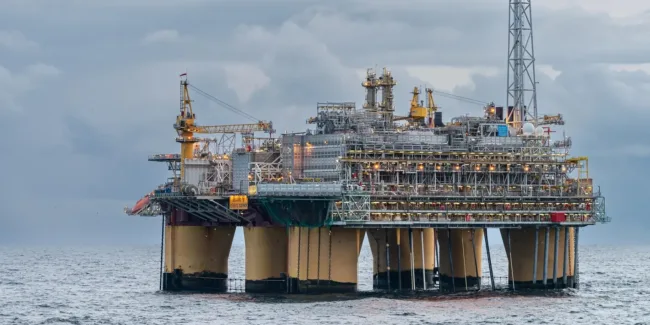
In the case of Åsgard, the subsea station is a massive feat of engineering, weighing 5,100 tons and standing 26 meters tall on the seafloor. Its footprint spans 3,300 square meters, making it the largest subsea processing station ever installed. It houses two identical compressor trains powered by 11.5 MW electric motors, designed to work in parallel for redundancy and maximum output.
The entire system is modular by design, allowing Equinor to reuse components from the original 2015 installation. Key parts were refurbished and incorporated into the Phase 2 build, lowering costs and emissions. Operators describe the setup as “Lego-like,” due to its swappable, prefabricated architecture.
What scale of gas recovery increase is expected from the new compression system?
Equinor projects that the updated Åsgard subsea compression plant will push the combined recovery rate of the Midgard and Mikkel fields to 90 percent. In volume terms, that equates to 306 million additional barrels of oil equivalent—an enormous gain considering the field’s advanced maturity.
For comparison, that volume is on par with greenfield developments requiring billions of dollars in capex. Yet Equinor is achieving it through targeted infrastructure optimization, on a field that has already been producing for over two decades. This strategy of maximizing recovery from existing reservoirs without adding new surface infrastructure aligns with Norway’s broader decarbonization goals and Equinor’s own capital discipline.
Randi Hugdahl, vice president for exploration and production at Åsgard and Kristin, emphasized that the compression system has delivered stable output with nearly 100 percent uptime over the past ten years. She noted that the project has already generated approximately NOK 175 billion in added value for stakeholders—before accounting for the gains from Phase 2.
What are the financial and operational advantages for Equinor and its partners?
Subsea compression allows Equinor to achieve high-margin production from an existing field without the permitting delays, capital risks, or carbon exposure of new exploration. The partners behind the Åsgard license—Equinor Energy AS with 35.01 percent, Petoro AS with 34.53 percent, Vår Energi ASA with 22.65 percent, and TotalEnergies EP Norge AS with 7.81 percent—stand to benefit from years of additional revenue without significant incremental investment.
On the Mikkel license, Equinor serves as operator with a 43.97 percent stake, alongside Vår Energi ASA with 48.38 percent and Repsol Norge AS with 7.65 percent. For these companies, subsea compression represents a high-efficiency path to extending field life while keeping production costs low and carbon intensity minimal.
The modularity of the new compressor plant also plays a role in operational resilience. By maintaining a complete spare train onshore, Equinor can conduct hot swaps for any critical failure events, ensuring that uptime remains close to 100 percent—critical for an asset with limited redundancy options once installed.
How does the Åsgard upgrade fit into Equinor’s broader North Sea energy strategy?
Equinor has publicly emphasized its commitment to maintaining strong production levels from the Norwegian Continental Shelf through the use of smart technologies rather than new field expansion. Subsea compression, electrification of platforms, and digital optimization are three key pillars of this approach.
With Åsgard as a proof point, Equinor is signaling that smart brownfield investments can rival greenfield projects in returns. The compression technology also offers a blueprint for future upgrades on other mature assets like Ormen Lange, Kristin, or even Troll.
Moreover, the company is integrating its subsea infrastructure into wider European energy strategies. Norwegian gas continues to be a critical source of supply for the European Union, especially amid shifts away from Russian pipeline gas. By sustaining flow from fields like Åsgard, Equinor enhances its role as a long-term energy partner to the continent, using infrastructure that is already linked into the continental gas grid.
What is the sentiment among institutional stakeholders and the offshore industry?
Institutional analysts and energy technology experts widely view Åsgard’s Phase 2 compression as a model for maximizing returns on legacy assets. In a high-cost, post-pandemic environment where capital must be deployed selectively, subsea compression offers a rare combination of operational reliability, emissions efficiency, and financial payoff.
Equinor’s continued leadership in seabed processing has also positioned Norway at the forefront of offshore innovation. Few other operators have deployed compression systems directly on the seabed, and even fewer have achieved nearly a decade of fault-free performance. That makes Åsgard not just an asset—but a global case study in resilient, low-carbon gas recovery.
Given Europe’s need for reliable energy in the transition decade, the timing of this deployment could not be more strategic. With higher field recovery and increased infrastructure utilization, Equinor is reinforcing the Norwegian shelf’s relevance in a carbon-constrained future.
Discover more from Business-News-Today.com
Subscribe to get the latest posts sent to your email.