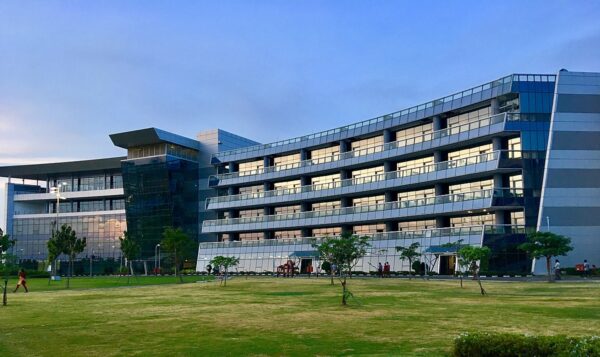
DXC Technology has officially launched its first Client Experience Centre in the Philippines, an investment that redefines its Asia-Pacific strategy while accelerating the company’s pivot toward AI-first service delivery. Situated in the dynamic business district of Taguig City in Metro Manila, the facility marks DXC’s transition from a legacy IT outsourcing provider to a global innovation partner offering AI-driven, human-centric digital transformation. Executives described the opening as part of a broader effort to create “co-creation spaces” where clients, partners, and employees can jointly design, test, and deploy emerging technologies that shorten digital-innovation cycles.
Why DXC Technology is deepening its roots in the Philippines to expand AI service delivery and client collaboration
The Philippines centre sits within DXC’s Global Delivery Centre, which currently employs around 7,000 professionals. It is one of the company’s largest integrated hubs worldwide and a cornerstone of its Asia-Pacific operations. The new Client Experience Centre complements DXC’s core functions in cloud migration, cybersecurity, digital applications, and data modernization—areas where enterprise clients are accelerating spending as they race to integrate generative and predictive AI into business processes.
Local leadership emphasized that the Taguig facility will allow clients to experience innovation in real time through immersive demonstrations, from generative AI workflow prototypes to AI-augmented security dashboards. The company’s Asia-Pacific president, Seelan Nayagam, highlighted that the move represents DXC’s intent to “equip every enterprise for an AI-first world,” leveraging the Philippines’ strong digital-talent base and its reputation as a global IT-BPM powerhouse.
The centre’s opening also builds on DXC’s SAP delivery strength in the country—more than 1,800 consultants currently support over 350 enterprise accounts, from financial institutions and utilities to logistics and telecommunications. This deep bench of application experts makes the Philippines one of DXC’s most strategic delivery geographies, allowing clients to tap local expertise while engaging directly in innovation workshops.
Industry analysts said the location choice reflects multiple strategic drivers: a favorable time zone for regional collaboration, high English fluency, and a government supportive of digital-economy growth. For multinational clients, DXC’s physical presence adds assurance that critical enterprise workloads can be managed securely, regionally, and at scale.
How the Manila hub fits into DXC Technology’s global AI-first transformation and strategic growth blueprint
The Taguig centre is purpose-built around two flagship functions. The first is the AI Incubation Hub, a space dedicated to prototyping and deploying emerging AI models that can enhance automation, cybersecurity, and customer-experience design. The second is a 24/7 AI-enhanced Security Operations Centre, a global command post for real-time threat detection and response, integrating large-language-model-based analytics and predictive risk scoring.
Both functions operate under DXC’s proprietary “Xponential” AI orchestration framework, which aims to unify machine learning, automation, and cloud infrastructure into a single, adaptive ecosystem. By combining these capabilities with its long-standing IT-service backbone, DXC is effectively repositioning itself as an AI systems integrator capable of bridging traditional enterprise systems with modern agentic-AI workflows.
Analysts view the Manila centre as an anchor in a network that already includes AI collaboration sites in Bangalore, Warsaw, and Dallas. Each facility is designed to serve as a client-innovation sandbox, allowing joint experiments before full-scale deployment. The result, they said, is a more agile, experiential service model that goes beyond consulting slides to hands-on, measurable transformation.
Financially, DXC is aiming to shift its revenue mix toward higher-margin consulting, AI-managed services, and IP-driven platforms. The centre’s infrastructure will enable rapid development of proof-of-concept deployments, letting clients quantify AI ROI before scaling. For enterprises grappling with digital-trust challenges, DXC’s on-site AI governance tools and human-in-the-loop validation offer a responsible framework for adopting generative models safely.
What the new centre reveals about shifting investor sentiment toward DXC Technology and its transformation strategy
Investor response to DXC’s AI expansion has been cautiously optimistic. In its latest quarterly report, the company delivered adjusted EPS of $0.84, roughly 20 percent above market expectations, even as revenue slipped between 2.5 and 4.3 percent year over year. The earnings beat sent DXC shares (NYSE: DXC) up nearly 9 percent, reflecting renewed confidence in management’s margin-recovery strategy.
Market analysts interpret the new Manila centre as a concrete step in addressing one of DXC’s persistent investor concerns: the need to demonstrate visible innovation beyond cost optimization. The AI-first positioning helps shift the narrative from legacy IT maintenance toward proactive transformation enablement, aligning the company with macro trends reshaping the IT-services sector.
Research from SimplyWallSt indicates the stock remains undervalued relative to fair value estimates, a potential opportunity for long-term investors if the company can sustain free-cash-flow growth. However, sentiment is tempered by concerns about revenue contraction and a leveraged balance sheet. For institutional investors, the Philippines expansion signals execution progress in DXC’s turnaround plan—showing that management is deploying capital strategically in regions offering both talent scalability and cost leverage.
How DXC’s Philippines launch could influence its competitive standing in global enterprise IT and consulting markets
The centre’s debut intensifies competition among global IT service providers vying for leadership in AI-integrated enterprise modernization. DXC’s decision to anchor in Manila mirrors strategies used by Accenture, IBM, and TCS, which have established regional innovation labs to meet surging demand for near-shore collaboration. Yet DXC differentiates itself through its hybrid delivery model—offering on-site design with remote execution—creating a fluid client experience that blends local insight with global reach.
For clients across industries such as banking, healthcare, manufacturing, and energy, the centre offers access to workshops where engineers simulate the impact of AI on business KPIs, such as cost-to-serve and time-to-market. By co-developing algorithms and process automations directly with enterprise teams, DXC enhances stickiness in client relationships, potentially lengthening contract durations and improving renewal rates.
On the national stage, the IT and Business Process Association of the Philippines (IBPAP) praised DXC’s move, describing it as a milestone for the local digital economy. IBPAP noted that the project aligns with the government’s ambition to upskill 1 million workers in data analytics, automation, and AI by 2030. For the Philippines, hosting a global firm’s AI-collaboration hub elevates its position as a regional innovation corridor, drawing further foreign investment into the tech-services ecosystem.
How the Philippines experience centre advances DXC Technology’s path toward sustainable digital leadership
DXC’s Manila centre embodies the company’s renewed commitment to innovation-led service delivery. By pairing AI incubation with cybersecurity operations and client-experience design, DXC is transforming its delivery architecture from project-based support to continuous, insight-driven engagement. The company’s approach to AI operationalization—embedding models across workflow, infrastructure, and customer channels— positions it as a credible partner for enterprises navigating the generative-AI transition.
The challenge ahead lies in scaling this momentum into measurable revenue growth. The centre’s success will be judged not only by pilot projects launched but by how effectively those pilots evolve into commercial contracts. Still, the early market reaction and improved profitability metrics suggest the transformation is gaining traction.
In an industry increasingly defined by AI fluency, security resilience, and co-innovation culture, DXC’s Client Experience Centre in Taguig stands as both a proof point and a growth lever. It symbolizes a shift toward value-based outcomes and reinforces DXC’s identity as a technology orchestrator capable of bridging legacy IT with next-generation AI ecosystems.
As Asia-Pacific economies continue to digitalize at speed, the Philippines hub will serve as a launchpad for new partnerships, local AI talent development, and enterprise-scale deployment of intelligent solutions. For clients, it offers a pathway to accelerate transformation with a trusted technology partner; for DXC, it represents tangible progress in its long-term reinvention story—one defined by innovation, resilience, and responsible AI leadership.
Discover more from Business-News-Today.com
Subscribe to get the latest posts sent to your email.