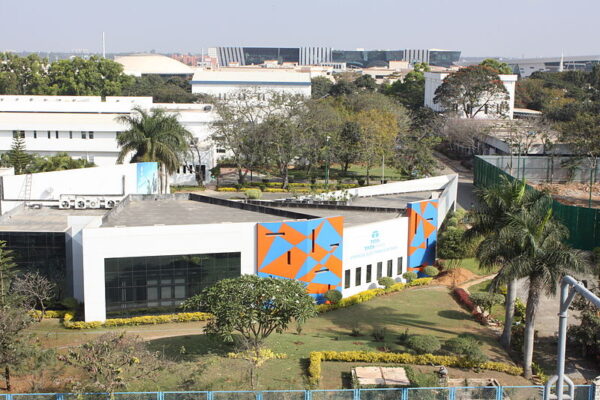
CHAR Technologies Ltd. (TSXV: YES) has closed its acquisition of Elkem ASA’s biocarbon assets in Saguenay, Québec, securing a pilot and demonstration facility, associated intellectual property, and a five-year offtake agreement covering 62,500 tonnes of supply. The transaction links CHAR Technologies Ltd.’s production platform directly to contracted industrial demand from Elkem ASA, shifting the company’s positioning from development-stage narrative toward execution-driven commercialization.
How does the Saguenay acquisition change CHAR Technologies Ltd.’s transition from pilot validation to commercial-scale execution?
The Saguenay facility offers something uncommon in clean industrial development: partial de-risking before scale. Built in 2022 as a pilot and demonstration plant, it has already produced biocarbon used in an industrial test within Elkem Métals’ electric arc furnace, confirming operational compatibility in real metallurgical conditions.
That distinction matters. Many decarbonization technologies stall between pilot validation and sustained output, where throughput consistency, process stability, and integration challenges emerge. By acquiring a facility that has already cleared early industrial validation, CHAR Technologies Ltd. reduces one of the most common risks in scaling.
Planned upgrades to approximately 15,000 tonnes per year reinforce this shift. The alignment between this capacity and the 12,500-tonne annual offtake agreement suggests the project is structured around immediate utilization rather than speculative expansion.
The facility’s role in converting raw biochar into pelletized biocarbon tailored for ferrosilicon production also signals a move toward higher-value outputs. Instead of supplying intermediate material, CHAR Technologies Ltd. is positioning itself as a provider of application-ready industrial inputs, which typically carry stronger margins and deeper customer integration.
Why does the Elkem ASA offtake agreement reshape revenue visibility and market credibility?
The five-year offtake agreement fundamentally alters the company’s commercial profile. Rather than relying on future demand assumptions, CHAR Technologies Ltd. now has a defined buyer and contracted volume, introducing measurable revenue visibility.
This shifts the investment conversation. The question is no longer whether biocarbon demand exists, but whether CHAR Technologies Ltd. can execute reliably against that demand. For emerging industrial companies, this is a materially stronger starting point.
Elkem ASA’s involvement adds further weight. As a global silicon-based materials producer, Elkem ASA brings both scale and technical validation. Its willingness to commit to multi-year supply indicates that the biocarbon process meets internal performance requirements relevant to ferrosilicon production.
Management framed the relationship as a strategic alignment, with CHAR Technologies Ltd. commercializing a validated process while Elkem ASA secures long-term access to lower-carbon inputs. This reflects a broader industrial trend where incumbents increasingly rely on specialized partners to scale decarbonization technologies. The agreement also allows CHAR Technologies Ltd. to source material from its broader pipeline, including Saint-Félicien and Lake Nipigon, indicating that Saguenay will operate as part of a multi-site production network rather than a standalone asset.
How does this transaction strengthen CHAR Technologies Ltd.’s vertical integration strategy in biocarbon production?
The acquisition strengthens vertical integration by extending CHAR Technologies Ltd.’s role further downstream. The company already produces biochar through pyrolysis, but pelletization and process-specific intellectual property enable it to deliver industrial-grade biocarbon tailored to end-use requirements.
This transition matters commercially. Moving from feedstock production to application-specific inputs typically increases pricing power and reduces dependency on third-party processors. It also allows tighter control over product quality, which is critical in metallurgical applications where performance consistency directly affects furnace operations.
The Saguenay facility effectively closes the gap between production and industrial application. That integration improves the likelihood that CHAR Technologies Ltd. can optimize its product for specific use cases such as ferrosilicon production, where material properties must align with energy efficiency and process stability.
Why is Québec emerging as a strategic location for biocarbon commercialization in heavy industry?
Québec’s relevance in this transaction goes beyond geography. The Saguenay facility’s proximity to Elkem Métals’ electric arc furnace reduces logistical complexity and supports efficient integration into existing operations. In heavy industry, proximity can materially influence cost structures and operational reliability.
The province’s broader energy profile also supports low-carbon industrial inputs. As global markets increasingly prioritize emissions reduction, regions that combine industrial infrastructure with cleaner energy sources may gain competitive advantage in supplying low-carbon materials.
For CHAR Technologies Ltd., establishing a presence in Québec aligns with its multi-site expansion strategy and strengthens its ability to serve both North American and potentially European markets. The location also positions the company within a growing ecosystem of industrial decarbonization initiatives.
What does recent stock performance indicate about investor sentiment toward CHAR Technologies Ltd. and the Elkem ASA deal?
Investor response suggests cautious optimism. CHAR Technologies Ltd. shares have shown upward movement following the announcement, indicating that the market is assigning value to the combination of asset acquisition, contracted demand, and financing support.
This aligns with broader clean industrial investment patterns. Markets tend to reward tangible progress toward commercialization, particularly when it includes visible customers and defined revenue pathways. The Saguenay acquisition reduces uncertainty by combining infrastructure, demand, and process validation.
However, sentiment remains conditional. For a company at this stage, valuation is still closely tied to execution milestones. Positive reaction to strategic announcements can reverse if operational progress does not materialize as expected.
Elkem ASA’s share movement has been more muted, reflecting the transaction’s relatively smaller impact on its overall business. For Elkem ASA, the deal functions as a supply chain enhancement aligned with its decarbonization strategy rather than a major financial catalyst.
Which execution, financing, and scale risks could still constrain CHAR Technologies Ltd.’s ability to deliver on this strategy?
Execution remains the primary risk. Transitioning from pilot operations to consistent commercial output requires precision in engineering, operations, and workforce management. Delays or performance variability at the Saguenay facility could affect both revenue timing and customer confidence.
Financing risk is also relevant. Support from Bioveld Canada, a subsidiary of The BMI Group, provides near-term capital through a term loan, but debt-funded expansion requires disciplined cash flow management. Any deviation from expected ramp-up timelines could increase financial pressure.
Customer concentration presents another challenge. While the Elkem ASA agreement strengthens credibility, reliance on a single major buyer during early commercialization introduces exposure. Expanding the customer base will be important to demonstrate broader market adoption.
Finally, there is coordination risk across the company’s broader project pipeline. Advancing multiple facilities simultaneously requires careful allocation of capital and operational resources. Misalignment between project timelines and funding availability could slow overall progress.
What should executives and investors watch over the next 12 months as CHAR Technologies Ltd. integrates and scales the Saguenay asset?
The next 12 months will determine whether this acquisition marks a true inflection point. A central indicator will be how quickly and effectively CHAR Technologies Ltd. can complete upgrades at the Saguenay facility, particularly whether production targets are achieved within expected timelines.
Equally important will be delivery performance under the Elkem ASA offtake agreement. Consistent supply at contracted volumes would validate operational capability and reinforce commercial credibility.
Attention will also focus on integration across the broader asset base. Evidence that Saguenay is functioning as part of a coordinated production network, rather than a standalone facility, would strengthen the scalability narrative. Additional partnerships or customer agreements would further signal that the platform is gaining traction beyond its initial anchor relationship.
Key takeaways on what this development means for CHAR Technologies Ltd., Elkem ASA, and the industrial decarbonization sector
- The Saguenay acquisition moves CHAR Technologies Ltd. closer to commercial-scale execution with contracted industrial demand
- The Elkem ASA offtake agreement provides rare revenue visibility for an emerging clean industrial platform
- Vertical integration into pelletized biocarbon strengthens margins and customer integration potential
- Québec’s industrial and energy profile enhances the strategic positioning of the Saguenay facility
- Investor sentiment is improving but remains dependent on execution milestones
- Financing support reduces near-term capital constraints while requiring disciplined delivery
- Customer concentration and multi-project execution remain key risks
- The next year will determine whether CHAR Technologies Ltd. can translate strategy into sustained operational performance
Discover more from Business-News-Today.com
Subscribe to get the latest posts sent to your email.