Fiserv, Inc. (NYSE: FI), the American financial services and payments technology major, has completed its acquisition of the remaining 49.9% stake in AIB Merchant Services, bringing one of Ireland’s largest merchant acquirers fully under its control. While the transaction marks the culmination of a longstanding joint venture with AIB Group, it also signals something larger: the growing dominance of U.S.-based fintech companies in Europe’s fast-evolving merchant acquiring market.
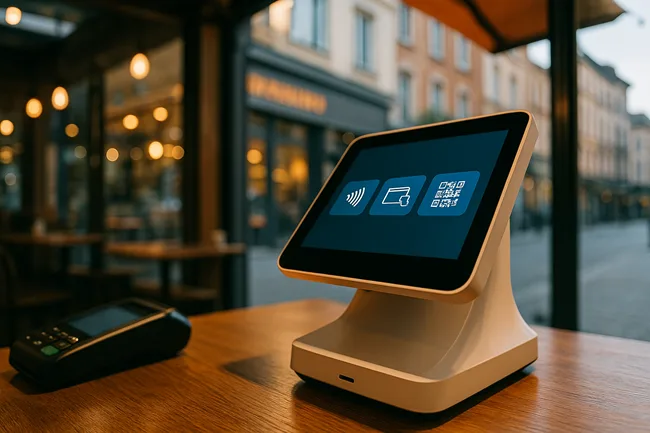
By acquiring full ownership of AIB Merchant Services, Fiserv strengthens its position as a key player in the region, unlocking greater control over its European distribution, operational flexibility, and POS product deployment. This milestone enables Fiserv to scale Clover, its smart point-of-sale (POS) system, across the Irish market and into new European territories without the legacy constraints of joint governance.
This deal is not just about local consolidation. It is a case study in how U.S. fintechs are methodically scaling into Europe’s fragmented and increasingly digitized payments ecosystem—one platform, one partnership, one acquisition at a time.
What does Fiserv’s full ownership of AIB Merchant Services reveal about its broader European ambitions?
The completion of this transaction marks a clear shift from joint control to full integration. While Fiserv had already held a majority stake in AIB Merchant Services, its remaining acquisition of 49.9% provides it with unilateral control of one of the largest merchant acquirers in Ireland and a significant e-commerce enabler across the EU.
Importantly, AIB Group has agreed to continue referring its business customers to Fiserv for card acquiring services under an exclusive long-term agreement. This ensures that Fiserv retains access to new merchant clients through AIB’s banking infrastructure while allowing the fintech provider to independently execute its POS rollout strategy via Clover.
Industry watchers believe this move will allow Fiserv to enhance service delivery, harmonize Clover’s backend with AIBMS’s existing merchant base, and unlock new vertical-specific functionality across hospitality, retail, and services. The American fintech firm is betting that it can expand more effectively by consolidating full-stack ownership across all parts of the merchant engagement journey—distribution, transaction processing, and POS software.
Why are American fintechs intensifying their focus on the European merchant acquiring landscape in 2025?
The European fintech market is entering a new phase of platform-led expansion. Analysts estimate that the broader European fintech sector is worth over USD 85 billion in 2025 and could grow beyond USD 170 billion by the end of the decade. Merchant acquiring—a critical subset of this ecosystem—is expected to grow at a CAGR exceeding 10% over the next five years.
American fintechs are moving quickly to capture that growth. Unlike North America, where acquiring is highly consolidated, Europe’s merchant ecosystem remains fragmented, with domestic players, legacy bank-owned processors, and independent providers vying for share. The region’s diverse regulatory frameworks, tax codes, and payment preferences make it difficult for monolithic players to scale without local partnerships.
U.S. firms like Fiserv, Stripe, PayPal, and Square (Block) are overcoming those barriers by combining deep software integration with strategic alliances or outright acquisitions. The AIBMS transaction is Fiserv’s answer to this challenge—acquiring a strong local asset, retaining its referral engine, and embedding Clover deeper into the European SME stack.
How does Fiserv’s Clover strategy align with growing demand for integrated POS systems across Europe?
Smart POS platforms are no longer just about accepting payments—they are becoming the central nervous system of small and mid-sized businesses. From inventory management and staff scheduling to mobile ordering and loyalty campaigns, merchants increasingly expect their POS systems to function as end-to-end business platforms.
Clover, Fiserv’s flagship POS offering, fits that mold. Already successful in North America, Clover is being positioned as a modular, app-driven solution that can be customized by vertical and scaled across regions. With the AIBMS integration, Clover will be deployed more aggressively across Ireland, with plans to enter additional EU markets where demand for software-rich merchant tools is surging.
This rollout comes at a time when European SMEs are increasingly digital-native, driven by mobile commerce, regulatory digitization mandates, and consumer demand for seamless omnichannel experiences. Clover’s ability to plug into accounting tools, e-commerce platforms, and embedded finance services makes it especially well-suited for this environment.
What strategies are other U.S.-based fintechs using to scale merchant services in Europe?
While Fiserv’s acquisition strategy centers around local consolidation, other U.S. fintechs are taking different yet complementary routes.
Stripe continues to dominate online payment infrastructure across the continent. With its “Terminal” product, the company is now entering in-person payments, targeting tech-forward businesses that want a unified experience across online and offline commerce. Stripe’s strength lies in its developer-first tools, API-driven architecture, and ability to embed payments directly into workflows.
Square is leveraging its sleek hardware and low-friction onboarding process to gain traction among micro-merchants, cafes, and appointment-based businesses in the UK, France, and Spain. Its verticalized tools for restaurant and salon management provide it with an edge in specific sectors.
PayPal, through its Zettle subsidiary, remains a favorite among gig workers, creators, and one-person shops. While less flexible than Clover or Square, Zettle’s simplicity, deep PayPal integration, and strong brand trust continue to make it a dominant presence in mobile POS.
Across these strategies, a common thread emerges: U.S. fintechs are no longer just exporting card processing—they are exporting operating systems for small businesses.
What regulatory and structural challenges remain for U.S. fintechs expanding in Europe?
Despite the opportunity, Europe presents a host of operational challenges. Regulatory compliance remains complex, with updates like PSD3, GDPR revisions, and local AML frameworks requiring robust governance. Localization is critical—everything from language and tax modules to domestic debit scheme integration must be adapted to local market requirements.
In addition, European institutions are pushing back against over-reliance on U.S.-dominated infrastructure. The European Payments Initiative (EPI) and the rollout of the Wero digital wallet reflect efforts to build sovereign payment alternatives. These domestic initiatives could alter competitive dynamics, especially if they gain traction among large merchants or receive government backing.
Yet for now, fintech platforms like Clover, Stripe, and Square remain well-positioned due to their modularity, cloud-native architectures, and ability to innovate faster than incumbents.
How are institutional investors reacting to Fiserv’s strategy in Europe and merchant services?
Investor sentiment surrounding Fiserv has remained constructive following the AIBMS announcement. The move aligns with Fiserv’s ongoing transition from legacy transaction processing to platform-based revenue streams, which are generally seen as higher-margin and more defensible.
Fiserv’s stock (NYSE: FI) has maintained steady performance, with analysts highlighting the benefits of European diversification amid macro headwinds in U.S. retail payments. Institutional flow data shows accumulation by long-term fintech-focused funds, particularly those rotating out of higher-volatility growth names into more infrastructure-based plays.
Investors see the AIBMS acquisition as a model for future Fiserv expansion—low-risk integration of an already profitable asset, with upside potential through Clover deployment and operational streamlining. With the European SME market still under-digitized in many respects, the potential for scale remains high.
What could come next for Fiserv and other U.S. players in Europe’s acquiring and POS ecosystem?
Analysts expect that Fiserv may seek similar bank-partnered expansions in other European markets, particularly in Central and Eastern Europe where digital payment infrastructure remains nascent. Acquisitions of regional ISOs (independent sales organizations), white-label partnerships, or fintech-bank hybrids could follow.
Meanwhile, Clover’s roadmap will be critical. Success in Europe may depend on Fiserv’s ability to localize vertical-specific modules (e.g., hospitality in Spain, healthcare in Germany) and align with EU data policies while maintaining central product control.
As for the broader U.S. fintech cohort, Square and Stripe are expected to continue penetrating via software and developer ecosystems, while PayPal may lean on its marketplace presence and consumer apps to drive merchant conversion.
What’s clear is that U.S. fintechs are no longer dipping their toes into Europe. They’re embedding themselves—structurally, commercially, and technically—into the continent’s merchant economy.
Discover more from Business-News-Today.com
Subscribe to get the latest posts sent to your email.