


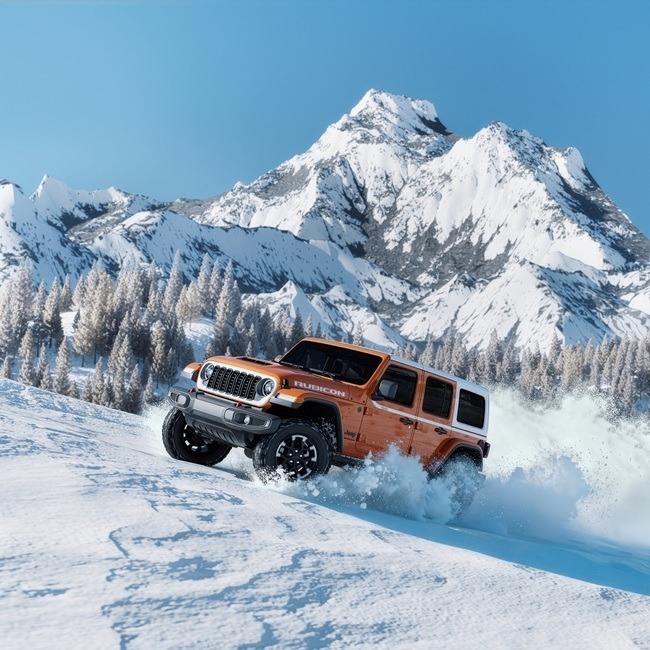
Jeep brand has unveiled the 2026 Jeep Wrangler Whitecap as the second exclusive model in its yearlong Twelve 4 Twelve product strategy, aimed at deepening brand monetization through heritage-driven design and limited-edition appeal. This follows the debut of the 2026 Jeep Wrangler Moab 392 in November 2025 and reinforces a deliberate strategy by Stellantis to build incremental pricing power into the Jeep Wrangler lineup through a curated release calendar of unique variants. Orders for the Whitecap are now open, with pricing starting at $495 on the Rubicon X and extending above $3,000 on select trims with optional visual upgrades.
The move signals a structured effort by Stellantis to use brand legacy as a monetization lever, targeting enthusiasts and loyalists willing to pay more for distinctiveness rather than just features. Jeep brand’s execution here reflects a broader automotive trend in which cultural relevance, visual identity, and perceived exclusivity are increasingly aligned with price optimization and brand engagement.
Why is Stellantis launching a yearlong sequence of limited-edition Jeep models now?
Jeep brand’s Twelve 4 Twelve initiative represents a shift in how Stellantis views legacy nameplates like the Wrangler—not merely as high-volume utility vehicles, but as platforms capable of sustaining rolling premium editions. The Whitecap edition leverages the familiar Wrangler silhouette but overlays it with retro styling elements including a Bright White painted hardtop and grille inspired by the classic CJ-Universal, further reinforced with distinctive hood and side decals. Available exclusively on the Sahara and Rubicon trims, the Whitecap is not positioned as a trim level in itself but as a buzz model layered on top of Jeep’s most profitable variants.
The choice to roll out 12 exclusive models across 12 months coincides with Jeep’s 85th anniversary and reflects an attempt to stretch that milestone into a full-year commercial cadence. Bob Broderdorf, head of Jeep brand, characterized the Whitecap as a “statement” rather than just a design variant, noting that the strategy allows buyers to further personalize their vehicles while staying rooted in the brand’s off-road DNA. That language aligns closely with Stellantis’ broader goal of reducing promotional pricing dependence while raising per-unit revenue through bundled, optional aesthetics and special-edition offerings.
The MSRP architecture makes the pricing strategy explicit. While the entry cost of $495 on Rubicon X is designed to trigger a low barrier to adoption, the edition escalates significantly with the inclusion of a body-color hardtop and fender flares, reaching $2,690 on Sahara and $3,185 on Rubicon. This reveals a two-tier revenue model in which base price hooks the enthusiast while optional features drive profit. The 2026 Jeep Wrangler Whitecap is also offered with Stellantis’ Sky One-Touch powertop in matching white accent, providing another upsell channel through exterior styling coherence.
What does this reveal about Stellantis’ approach to per-unit monetization in a softening SUV market?
The Wrangler Whitecap initiative comes at a time when automakers face decelerating consumer demand across key markets and are seeking to stabilize margins without resorting to incentives or widespread discounting. Stellantis, like many of its peers, is under pressure to deliver profitability per unit as capital costs rise and electrification investments expand. Limited-run editions like the Whitecap allow for layered pricing flexibility without altering drivetrain or safety components, keeping manufacturing complexity low while retail value perception remains high.
This tactic also aligns with practices typically associated with premium and luxury brands. Automakers such as Mercedes-Benz, Toyota with its TRD lines, and Ford through Bronco variants have long used cosmetic and minor performance tweaks to generate marketing value and higher price tags. Jeep brand’s strategy appears to be codifying that into a serialized calendar, moving beyond the occasional one-off and toward a programmatic model where each month brings a new reason to visit showrooms or online configurators.
From a dealer economics perspective, the 12-month edition strategy could improve showroom dynamics by reducing inventory fatigue and providing floor staff with a continually rotating narrative. However, execution risk remains. If these editions are perceived as aesthetic-only with marginal substance, or if optional pricing creates consumer friction, then the Twelve 4 Twelve cadence could backfire, especially among repeat buyers who track feature-value propositions closely.
How might this influence SUV segment competition and dealership behavior?
The release of Whitecap and future Twelve 4 Twelve variants may pressure competitors to follow suit. Brands like Ford with the Bronco, Toyota with the 4Runner, and Land Rover across its Defender series already engage in edition-driven model strategies. However, few have institutionalized the frequency or sequencing implied by Jeep brand’s yearlong calendar. If successful, the strategy could reset consumer expectations around SUV personalization cycles, pushing the industry toward more agile product refresh rhythms and short-cycle visual updates.
Dealer networks will play a key role in shaping how these editions are perceived. The ability to merchandise the Whitecap as a distinct product experience rather than a cosmetic package will impact sales performance and customer satisfaction. For dealers, the upside is a new SKU to generate margin and incentivize floor traffic. The downside is inventory management if consumer interest lags or optional pricing feels excessive. Moreover, if Stellantis fails to clearly communicate the scope and intent of each monthly release, the campaign could be misinterpreted as marketing fluff rather than a serious product strategy.
Where does this fit in Stellantis’ broader electrification and platform goals?
One potential challenge is reconciling heritage-centric ICE models like the Whitecap with Stellantis’ public commitment to electrification and modular platform convergence. While Jeep brand continues to lean on its 4×4 legacy and internal combustion-based variants for profitability, the transition to electric propulsion will require new brand cues and edition strategies that resonate beyond nostalgia. It remains to be seen whether future Twelve 4 Twelve models will include hybrid or electric variants, or whether the program is primarily about short-term monetization of legacy architecture.
Stellantis has previously indicated that future Wrangler models, including those built on the STLA Large architecture, may incorporate electrification options. If so, Jeep brand’s limited-edition playbook will need to evolve to integrate styling and performance themes that reflect next-generation technology rather than backward-looking design motifs alone.
What does investor sentiment and brand health look like heading into 2026?
For institutional investors tracking Stellantis, the Twelve 4 Twelve program serves as a real-time case study on product differentiation, pricing power, and brand stretch. While short-term earnings impact from a single edition like the Whitecap is minimal, the cumulative effect of a yearlong cadence could provide valuable data on willingness to pay, inventory churn, and brand heat across channels.
If the program lifts average selling prices without suppressing demand or adding material cost, that would signal strong execution and could translate to better margin forecasting. Conversely, if the models create consumer confusion, cannibalize existing trims, or fail to deliver pricing premiums, they may be viewed as distracting from Stellantis’ core product roadmap and capital allocation priorities.
Residual values and resale data will also matter. If Twelve 4 Twelve editions retain value and become sought-after on the used market, they could support the broader pricing umbrella around Wrangler and potentially improve lease dynamics. If they depreciate more rapidly than standard trims, the strategy could face scrutiny from both financial analysts and dealer networks.
How could Jeep brand’s limited-edition strategy reshape product monetization across Stellantis in 2026?
The 2026 Jeep Wrangler Whitecap is more than a styling package. It is a bellwether for how legacy automotive brands are trying to engineer product-led revenue lift without straying too far from their roots. Stellantis is betting that nostalgia, serialized exclusivity, and configuration optionality can sustain customer engagement in a market where real innovation cycles are lengthening and pricing power is increasingly fragile.
If the Twelve 4 Twelve strategy succeeds, Stellantis could apply the same cadence-based approach to other profitable nameplates across its global portfolio. If it falters, the experiment could become a cautionary tale about over-indexing on heritage without aligning to future product strategy.
What are the key takeaways for Jeep brand, Stellantis, and the wider SUV market?
- Jeep brand is institutionalizing heritage-driven monetization through serialized, monthly limited-edition launches as part of the Twelve 4 Twelve campaign.
- The 2026 Wrangler Whitecap illustrates a two-tier pricing model that blends low-barrier access with high-margin optional add-ons.
- Stellantis is signaling a strategic shift toward margin defense via visual differentiation, as volume growth softens across the SUV market.
- Dealer execution will determine whether these editions boost showroom engagement or create inventory drag.
- Competitors may respond with accelerated edition models of their own, reshaping SUV buyer expectations in 2026.
- Integration with Jeep’s electrification roadmap remains a critical next test for aligning heritage with forward-looking powertrains.
- Investor sentiment will hinge on transaction price trends, early order flow, and used value performance rather than unit volumes alone.
- If successful, the cadence could be expanded to other Stellantis brands, institutionalizing product differentiation as a strategic monetization lever.
Discover more from Business-News-Today.com
Subscribe to get the latest posts sent to your email.