
What does the $1.61 billion Hope Downs 2 investment reveal about Rio Tinto and Hancock Prospecting’s long-term Pilbara strategy?
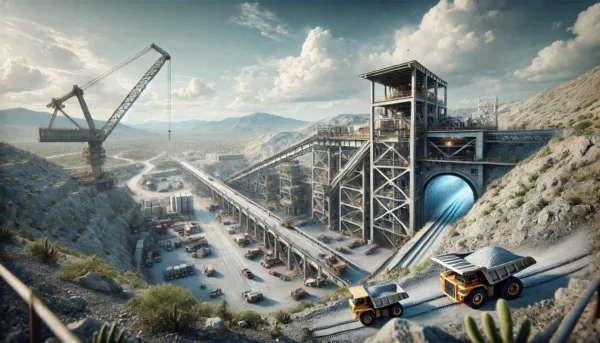
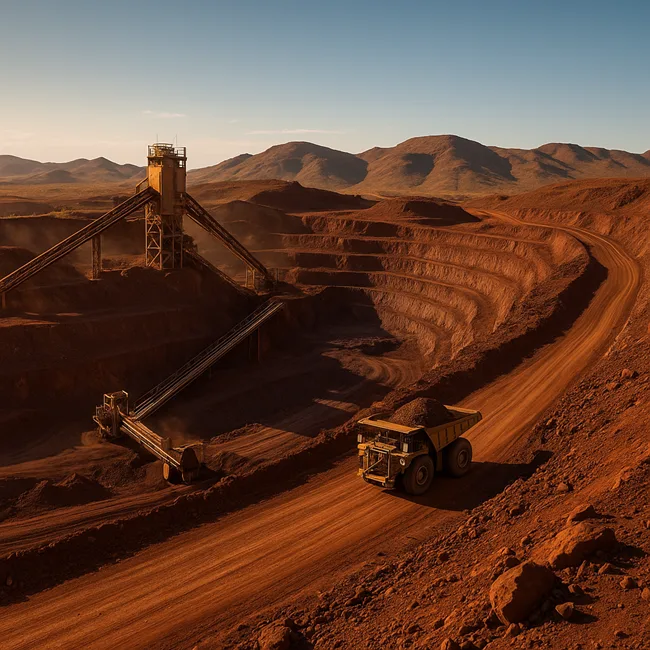
Rio Tinto (LSE: RIO) and Hancock Prospecting have jointly committed US$1.61 billion to develop the Hope Downs 2 iron ore project in Western Australia’s Pilbara region. The two companies, equal partners in the Hope Downs Joint Venture, will invest approximately US$800 million each to construct two new above-water-table iron ore pits—Hope Downs 2 and Bedded Hilltop—with a combined annual production capacity of 31 million tonnes. The project has received all required Western Australian state and federal approvals, clearing the way for immediate development and a first-ore target in 2027.
The investment marks a key milestone in sustaining Rio Tinto’s long-standing dominance in the Pilbara iron ore corridor. It aligns with the multinational miner’s broader strategy to maintain medium-term system capacity at between 345 and 360 million tonnes per annum. Hope Downs 2 will replace declining volumes from aging assets while reinforcing the economic legacy of the Hope Downs region, first developed in the early 2000s.
How does the Hope Downs 2 project contribute to regional economic development and job creation in Western Australia?
The Hope Downs 2 buildout is projected to create over 950 construction jobs and support approximately 1,000 full-time equivalent roles once operational. By transporting ore to the existing Hope Downs 1 processing facility, the project minimizes the need for duplicate infrastructure and leverages economies of scale across the Greater Hope Downs footprint. New infrastructure will include non-process precincts, rail crossings, haul roads, and the realignment of a six-kilometre section of the Great Northern Highway—ensuring logistical continuity in a high-traffic mining zone.
By situating the project above the water table, Rio Tinto and Hancock Prospecting have also opted for a development model that reduces hydrological risks and lowers environmental impact during extraction.
What safeguards have been integrated to protect indigenous heritage and environmental assets in the Hope Downs 2 area?
Rio Tinto has worked in consultation with the Nyiyaparli, Banjima, and Ngarlawangga Traditional Owner groups, in addition to relevant state and federal agencies, to manage environmental and cultural risks. The project’s development plan emphasizes responsible land use, including detailed heritage assessments and sustainable infrastructure placement. This is particularly important in a region where indigenous stewardship and cultural continuity intersect with some of Australia’s highest-yielding iron ore reserves.
The project’s approval process involved comprehensive heritage assessments and continuous dialogue with Traditional Owners, in line with broader industry shifts following public backlash to prior site mismanagement across Australia’s resources sector.
How does Hope Downs 2 fit into Rio Tinto’s multi-asset replacement program for sustaining Pilbara output?
Hope Downs 2 plays a pivotal role in Rio Tinto’s broader strategy to sustain long-term iron ore output from the Pilbara region, where many legacy assets are reaching maturity. It is one of five major replacement and sustaining capital projects currently underway across Rio Tinto’s Western Australian operations. These include Western Range, Brockman Syncline 1, West Angelas, and Greater Nammuldi—all forming part of a coordinated capital program aimed at maintaining system capacity within the 345–360 million tonnes per annum (Mtpa) guidance range.
Collectively, these projects are expected to contribute an estimated 130 Mtpa of capacity, serving as a buffer against ore grade declines and natural depletion at older mines such as Yandicoogina and Mount Tom Price. Hope Downs 2 alone is expected to provide 31 Mtpa, accounting for approximately 9 percent of the total system capacity—a significant contribution that reflects its strategic importance in the overall asset replacement matrix.
The US$13 billion earmarked for Pilbara capital expenditures between 2025 and 2027 covers not only mine development but also upgrades to haulage infrastructure, processing plants, and energy systems aimed at decarbonizing operations. According to internal planning documents, Rio Tinto is prioritizing modular buildouts and brownfield expansions that can integrate with existing rail and port infrastructure at Cape Lambert and Dampier, reducing upfront risk and shortening the path to positive cash flow.
In parallel, Rio Tinto is advancing a pre-feasibility study at the Rhodes Ridge deposit—believed to be the most significant undeveloped iron ore resource in the Pilbara. Rhodes Ridge, held in joint venture with Wright Prospecting, is reported to contain over 5.8 billion tonnes of high-grade ore, positioning it as a potential cornerstone asset for Rio Tinto’s post-2030 production profile. If developed, Rhodes Ridge could not only offset declines at key legacy mines but also provide the miner with optionality in future market conditions, including shifts in Chinese steel demand, pricing volatility, and ESG-driven supply preferences.
The inclusion of Hope Downs 2 in this replacement portfolio is not merely about sustaining volume—it is also a hedge against price compression and ore quality differentiation in the global marketplace. As premium-grade ores increasingly attract a pricing advantage due to lower emissions in blast furnace processing, assets like Hope Downs 2, which can feed high-Fe content ore into Rio Tinto’s value chain, are critical for competitive positioning.
Additionally, this multi-asset strategy underscores the miner’s long-term commitment to the Pilbara as a core operating hub, even as it diversifies into copper, lithium, and aluminum. Institutional investors have signaled support for Rio Tinto’s disciplined approach, noting that the focus on brownfield assets and staged execution reduces capex risk and improves predictability of returns in a commodity environment where cost inflation remains a concern.
Hope Downs 2, in particular, benefits from being able to leverage the existing processing and logistics footprint at Hope Downs 1, creating cost synergies and accelerating ramp-up timelines. These operational advantages reinforce its strategic value not just as a replacement asset, but as a margin-enhancing development that fits squarely into Rio Tinto’s long-term production and profitability goals in Australia.
What are institutional investors and analysts saying about Rio Tinto’s iron ore strategy and project execution capabilities?
Investor sentiment around the Hope Downs 2 announcement has been broadly positive, with Rio Tinto shares gaining modestly in early London trading. Institutional stakeholders view the investment as disciplined and capacity-anchored, especially given its use of existing infrastructure and alignment with global steel demand forecasts. Analysts expect the project’s low capital intensity—estimated at roughly US$51–52 per tonne of capacity—to enhance margins and preserve return-on-capital targets.
Industry watchers note that despite short-term executive turnover, Rio Tinto’s iron ore unit, under Simon Trott, continues to deliver operational continuity in Pilbara. The mining group’s ability to de-risk new builds through stakeholder engagement and modular development has been cited as a comparative advantage in an otherwise volatile commodity cycle.
How is Rio Tinto navigating recent leadership transitions while maintaining strategic clarity on core projects?
The Hope Downs 2 announcement comes amid executive reshuffling within Rio Tinto, following a governance dispute that led to the resignation of CEO Jakob Stausholm. With interim leadership in place and a search underway for a permanent replacement, investors have expressed cautious optimism that the iron ore division will maintain its strategic momentum under Trott’s guidance. Institutional preference is reportedly leaning toward an internal candidate who can align with Rio Tinto’s dual imperative: advancing traditional assets like Pilbara while also growing its energy transition footprint across lithium and copper.
Despite the leadership uncertainty, analysts suggest that Pilbara operations remain largely insulated due to project-level autonomy and long-standing planning horizons that stretch beyond quarterly management cycles.
What future milestones should stakeholders monitor as the Hope Downs 2 buildout progresses?
The construction phase is already underway, with Rio Tinto and Hancock Prospecting targeting first ore from Hope Downs 2 in 2027. Key milestones over the next 24–36 months include civil works completion, haul road commissioning, and final integration with Hope Downs 1 processing infrastructure. Investors will also be tracking updates from the Rhodes Ridge feasibility study, which could serve as a follow-on growth catalyst if development timelines accelerate.
Furthermore, any new leadership appointments at Rio Tinto will be closely watched for signs of commitment to existing iron ore roadmaps, especially given growing scrutiny around capital allocation between traditional resources and energy transition assets.
Discover more from Business-News-Today.com
Subscribe to get the latest posts sent to your email.