Honda Motor Co., Ltd. (NYSE: HMC; TYO: 7267) has officially ended production of the Acura ZDX electric crossover, a model that had been assembled by General Motors Company (NYSE: GM) at its Spring Hill plant in Tennessee. The decision ends a short yet telling chapter in Honda’s early U.S. EV journey and signals a pivot away from outsourced platforms toward vehicles built on Honda’s own architecture. At a time when American EV demand growth has slowed and policy incentives have become less predictable, the retreat underscores how automakers are recalibrating their ambitions to avoid margin-draining partnerships and reset investor expectations.
Honda confirmed that the move reflects the need to realign its lineup with shifting customer demand, evolving market conditions, and long-term strategic priorities. Industry reports highlighted that the company circulated an internal communication to dealers indicating production had ceased, followed by formal acknowledgment from Acura’s communications team. The timing is significant: it arrives just as the expiration of certain federal EV tax credits threatens to dent consumer affordability, leaving premium crossovers like the ZDX exposed to reduced incentives and rising price sensitivity.
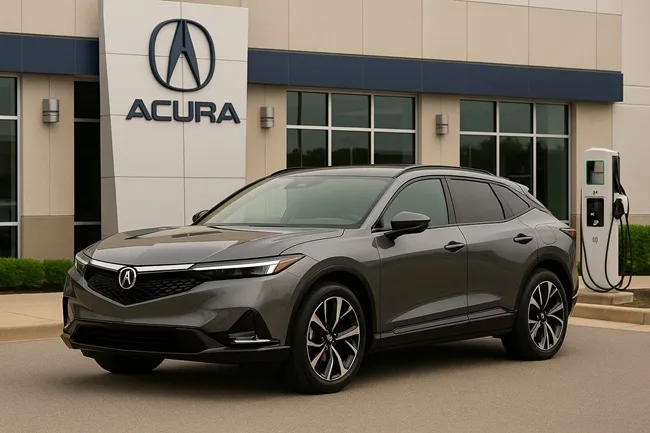
Why did Honda cancel the GM-assembled Acura ZDX now, and how do slowing EV demand and shifting incentives intersect with platform control risks?
The ZDX was meant to be a statement vehicle for Acura, but its commercial reality turned complicated. Market adoption of EVs in the U.S. has been slower than optimistic projections, particularly in luxury segments where buyers are still cautious about charging infrastructure and residual value. Dealers increasingly leaned on deep discounts and manufacturer incentives to move ZDX inventory, cutting into profitability at precisely the moment when logistics and battery materials costs remained elevated. An internal memo described the cancellation as a response to both sluggish adoption rates and policy changes affecting EV production and sales. That combination made the ZDX unsustainable in the near term.
General Motors’ own EV strategy also cast a shadow. GM has been adjusting its EV production targets throughout 2025, including temporary pauses at Spring Hill to better align capacity with demand. When a host manufacturer is recalibrating its own throughput, a partner program such as the ZDX becomes especially vulnerable to the economics of low volume. The cancellation reflects how quickly a co-development arrangement can turn from a fast-to-market advantage into a structural liability once incentives weaken and demand softens.
The structural issue at the heart of the ZDX was its dependence on GM’s Ultium platform. While Ultium underpins a growing stable of GM models, including the Cadillac Lyriq and Chevrolet Blazer EV, Honda effectively outsourced critical architectural control. That arrangement enabled Acura to debut an EV sooner, but it left the brand with little influence over software, OTA cadence, and cost curve optimization. As the EV market matured, these became defining factors of competitiveness. The ZDX therefore found itself in a strategic mismatch: a prestige crossover built on someone else’s backbone at a time when investors and customers increasingly demand authentic brand-level differentiation.
How does the Acura RSX prototype and Honda’s Ohio EV hub signal a decisive shift to proprietary EV platforms and software-defined vehicles?
Honda has already unveiled its answer: the Acura RSX, the first model to be engineered entirely in-house on Honda’s new EV platform. The RSX, scheduled to be produced at the company’s Ohio EV hub, will run on Honda’s new Asimo operating system and serve as a cornerstone for software-defined vehicle ambitions. The Asimo OS is designed to deliver frequent over-the-air updates, advanced energy management, and bidirectional charging capabilities. It reflects a direct response to the lessons of the ZDX experiment—Honda wants full control over the software and hardware stack, from battery chemistry to cockpit UX.
The Ohio hub represents more than a production facility. Honda has invested heavily in retooling assembly lines, integrating pack assembly, and establishing a supplier ecosystem that can sustain volume in North America. Investors view the facility as a litmus test for whether Honda can replicate the engineering self-reliance that historically differentiated its engines and transmissions. If successful, it will allow Honda to move faster on cost reductions, roll out OTA features at a steady cadence, and define premium differentiation in terms of brand-authored software rather than shared architecture compromises.
What does the ZDX stop mean for General Motors’ Ultium partnership strategy and for Honda’s Prologue crossover built on the same base?
For General Motors, the loss of ZDX production represents a marginal but notable reduction in Ultium platform scale. GM continues to build the Cadillac Lyriq and its own Ultium models at Spring Hill, but every partner stream adds weight to learning-curve cost reductions. The cancellation suggests that GM may face more difficulty in persuading external brands to commit to its architecture at a time when OEMs are refocusing on in-house solutions. Nevertheless, GM remains committed to expanding Ultium across its own luxury and mainstream lineups, and it continues to adjust production and capex sequencing to match market demand.
Honda’s GM-based Honda Prologue, also built on Ultium, is still in production and has not been formally canceled. However, the ZDX’s demise makes clear that Honda’s growth bets are tied to its own proprietary platforms. The RSX will be the proof point for Acura, while the broader Honda Zero EV series will establish whether the company can recapture momentum by building vehicles entirely on its own terms.
How does this fit a wider industry pattern, and what recent EV production pullbacks suggest about the 2025 demand reset?
Honda’s move mirrors a wider pattern across the auto industry in 2025. Ford Motor Company slowed production of its F-150 Lightning, citing both cost headwinds and demand moderation. GM has paused certain EV assembly lines to balance inventories. European automakers, from Volkswagen to Mercedes-Benz, have pushed back some EV launches or trimmed sales forecasts. Even Tesla has cautioned about the cost of maintaining volume in a volatile policy environment. The ZDX cancellation fits this narrative: EV adoption is still progressing but at a measured slope, and capacity overreach is being corrected across the sector.
Historically, Honda has leaned on engineering autonomy rather than aggressive volume. This decision is consistent with that cultural DNA. Executives have been explicit since early 2025 that new U.S. EV launches would be timed cautiously in light of federal policy uncertainty. The ZDX stop is the first tangible sign of that conservative stance materializing into action.
Why could canceling an early Acura EV actually improve Honda’s EV credibility with premium buyers over the medium term?
At first glance, halting a model can undermine confidence. Yet in the luxury market, credibility often comes from coherence rather than breadth. Customers are looking for platforms that feel authentic to the brand, with unique driving dynamics, sophisticated interfaces, and reliable support over the vehicle lifecycle. The Acura ZDX, for all its sleek design, was widely understood to be a re-skinned GM product. By retiring it and signaling that future models will be engineered fully in-house, Honda and Acura may ultimately strengthen their EV credentials among discerning buyers.
The reputational risk lies in how existing ZDX owners are treated. Acura must deliver strong warranty support, robust servicing, and a commitment to software maintenance to avoid creating an “orphan EV” stigma. If it succeeds and the RSX arrives with competitive range, modern charging curves, and a strong software roadmap, the narrative could flip. In that case, what looks like a retreat today may be remembered as a bold reset that preserved Acura’s brand integrity.
How are shares of Honda and General Motors reacting, and what does early investor sentiment imply for buy-sell-hold positioning?
On September 24, Honda ADRs traded modestly lower while General Motors shares moved slightly higher, reflecting a nuanced investor reaction. For Honda, the move underscores near-term caution around its U.S. EV strategy but aligns with its stated shift toward proprietary platforms. For GM, the cancellation reduces production complexity at Spring Hill and may allow better allocation of resources to its core models, including the Cadillac Lyriq.
Institutional sentiment remains steady. Flows suggest that neither company is facing major portfolio rotation based solely on this decision. For Honda, the dominant investment case continues to rest on the strength of its hybrid lineup and its upcoming proprietary EV platform, with the RSX and Honda Zero series representing key milestones. For GM, investors remain focused on the broader Ultium cost curve, the execution of high-margin Cadillac and GMC EVs, and the balance of EV and hybrid offerings.
Our sentiment characterization is that Honda is a hold with constructive medium-term potential provided execution on the RSX and Ohio hub stays on schedule. Short-term weakness in U.S. EV headlines may even present entry points for investors seeking Japanese OEM exposure with strong hybrid cash flows. General Motors remains a hold to selective buy, depending on Ultium execution and hybrid expansion, with today’s development having limited direct impact.
What should investors watch next to judge whether Honda’s in-house pivot is gaining traction and whether GM offsets lost partner volume?
For Honda, the first test is software execution. Acura has promised that the Asimo OS will deliver frequent over-the-air updates, advanced charging profiles, and new digital features. Investors will want concrete timelines and evidence that the company can sustain monthly or quarterly release cadences rather than annual refreshes. Manufacturing readiness at the Ohio EV hub is the second test. Supplier integration, pack assembly yield, and launch curve scrap rates will indicate whether Honda’s verticalization is delivering results. Pricing strategy will be equally critical. If the RSX arrives with brand-appropriate pricing rather than subsidy-dependent discounting, it will suggest that Acura has internalized the lessons of the ZDX.
For GM, the offset strategy lies in consistency. Scaling Cadillac Lyriq production, driving down battery costs, and maintaining Spring Hill uptime will demonstrate resilience even without Acura’s contribution. If GM can showcase margin expansion while balancing hybrids, the market will reward the discipline.
How does today’s decision connect to the bigger EV market narrative in 2025, and why is the medium-term outlook still constructive despite near-term caution?
The broader lesson is that EV adoption is not a straight line. Automakers overestimated how quickly mainstream buyers would embrace the technology, especially when incentives shift and charging networks lag. The ZDX exit fits into a year of recalibration across the sector. Yet the medium-term trajectory for electrification remains positive. Battery costs are trending lower, grid-interactive features are being standardized, and software monetization is opening new revenue streams. These dynamics suggest that while near-term EV launches may be fewer and more deliberate, the long-term transition remains intact.
For Honda, the RSX and the Honda Zero EV lineup will determine whether the company can reestablish itself as a premium EV contender. For General Motors, executing cleanly on Ultium and balancing its mix with hybrids will shape investor confidence. What unites both is a recognition that coherence, control, and execution matter more than speed. The ZDX may have been a casualty of timing and architecture, but its demise allows both companies to focus on platforms better aligned with their strategic futures.
Discover more from Business-News-Today.com
Subscribe to get the latest posts sent to your email.