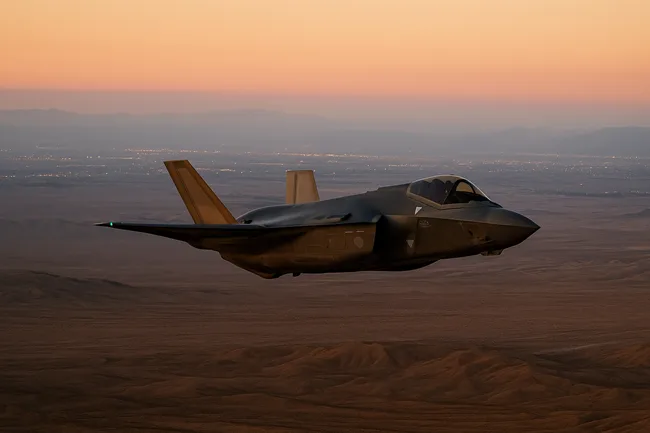




The Royal Navy Type 45 air defence destroyer HMS Dragon is not expected to depart Portsmouth until early the following week, United Kingdom defence officials confirmed on Wednesday, March 5, 2026, as the delayed deployment renewed scrutiny of Britain’s preparedness to defend its overseas military installations against a broadening campaign of Iranian drone and missile strikes across the Eastern Mediterranean region.
HMS Dragon is being loaded with ammunition in Portsmouth having recently come out of maintenance. The Type 45 destroyer had been earmarked to carry out a different mission before Prime Minister Sir Keir Starmer confirmed on Tuesday that the warship would be deployed to the Mediterranean region to defend the Sovereign Base Area of RAF Akrotiri in Cyprus. HMS Dragon was selected because it was judged by officials to be at the highest state of readiness among available vessels, overriding initial reports that HMS Duncan would be dispatched.
Why did an Iranian-made drone strike the RAF Akrotiri runway in Cyprus and what damage was caused on March 2, 2026?
The trigger for the deployment was a drone strike on RAF Akrotiri in the early hours of Monday, March 2, 2026. A blast hit the runway at the base, coming within 800 yards of thousands of British military personnel and their families stationed on the island. Air raid sirens were activated and Royal Air Force Typhoons and F-35B Lightning jets were scrambled alongside air-to-air refuelling tankers. The Ministry of Defence said there were no casualties and described the physical damage as minimal. Families and non-essential personnel have since been relocated from the base to accommodation elsewhere on Cyprus.
The Ministry of Defence confirmed that the wreckage of a Shahed-type drone that struck the base had been retrieved and analysed. The Shahed-136 is an Iranian-designed one-way attack drone that carries a 50-kilogram warhead and has a range of approximately 1,000 miles. United Kingdom officials stated that their assessment was that the unmanned aerial vehicle that struck RAF Akrotiri had not been launched from Iran itself, though they declined to identify the location from which it was fired. The Cypriot government separately stated it had intelligence that the drone had been launched from Lebanese territory, which is consistent with the known operational patterns of Hezbollah, the Iranian-backed militant organisation.
What is RAF Akrotiri in Cyprus and why does it matter to United Kingdom defence strategy in the Middle East?
RAF Akrotiri is one of two United Kingdom Sovereign Base Areas in Cyprus established under the 1960 Treaty of Establishment that accompanied Cypriot independence. The base sits on approximately 123 square kilometres of territory on the southern coast of Cyprus and hosts a permanent garrison of Royal Air Force personnel, support staff, and their dependants. Its strategic importance lies in its proximity to the Eastern Mediterranean, the Levant, and the broader Middle East, making it a critical node for United Kingdom intelligence gathering, air operations, and power projection. The base has served as a launch point during multiple regional crises and has periodically hosted United States forces.
Why was no Royal Navy Type 45 destroyer prepositioned in the Eastern Mediterranean before Iran struck RAF Akrotiri?
United Kingdom defence officials, when asked why no Type 45 destroyer had been prepositioned in the region during the weeks-long United States military build-up that preceded strikes on Iran, said that increasingly fragile geopolitics and multiple simultaneous security commitments made the situation complex. The option to forward-deploy a Type 45 ahead of the United States-Israeli operation had been considered, but planned North Atlantic Treaty Organization commitments were deemed the priority. Officials said there was nothing that would have happened to ready a warship any earlier.
That explanation has drawn criticism from senior military figures. Former Royal Navy commander Tom Sharpe said it was a good decision to send HMS Dragon but one that came too late, estimating that the United Kingdom was approximately ten days behind what had been a foreseeable operational requirement. He noted that British forces had been monitoring the Hezbollah threat from RAF Akrotiri for an extended period. Naval Technology reported that despite weeks of escalation in the Gulf, no Royal Navy vessels had been deployed to protect United Kingdom assets or personnel in the region, and described the absence of a Type 45 destroyer as a planning failure given the capability was available.
What are the air defence capabilities of HMS Dragon and is the Type 45 destroyer fully armed for the Cyprus mission?
HMS Dragon is a Daring-class air defence destroyer launched in 2008 and commissioned into Royal Navy service in 2012. The warship is fitted with the Sea Viper missile system, which is capable of launching eight missiles in under ten seconds and guiding up to 16 missiles simultaneously. It is equipped with the Sampson multi-function radar and is designed to defeat medium-range ballistic missiles, cruise missiles, and attack drones. Whether HMS Dragon will deploy with her 48-cell missile silo fully loaded remains a question raised by defence analysts, given that HMS Diamond, a sister ship, returned to Gibraltar to replenish missile stocks midway through her 2024 Red Sea operations after expending only a small number of rounds.
The Ministry of Defence confirmed that two Royal Navy AW159 Wildcat helicopters armed with Martlet drone-busting missiles will deploy to the Eastern Mediterranean ahead of HMS Dragon as an interim measure. Those helicopters will reinforce Royal Air Force Typhoons, F-35B jets, ground-based counter-drone teams, radar systems, and Voyager refuelling aircraft already deployed at and around RAF Akrotiri. The voyage from Portsmouth to Cyprus is expected to take between five and seven days, meaning British service personnel at RAF Akrotiri will rely on allied French and Greek naval assets for protection during the interval before HMS Dragon arrives on station.
How have France and Greece responded to the drone attack on Cyprus and why did allied warships arrive before the Royal Navy?
Allied nations have moved with greater speed. French President Emmanuel Macron ordered the nuclear-powered aircraft carrier Charles de Gaulle, previously operating in the Baltic Sea, to reposition to the Mediterranean. The Charles de Gaulle will be accompanied by its air wing and escorting frigates. France also deployed Rafale fighter jets, air defence systems, and airborne radar systems to the Middle East. Greece dispatched four Hellenic Air Force F-16 jets to Andreas Papandreou Air Base in Cyprus and two Hellenic Navy frigates to Cypriot waters, including the brand new frigate Hellenic Ship Kimon and a second vessel carrying the Kentavros anti-drone jamming system capable of detecting and disabling low-flying drones. Greek Defence Minister Nikos Dendias stated that Greece is present and will continue to be present to assist in the defence of the Republic of Cyprus.
What combat operations have United Kingdom forces conducted against Iranian drones since the RAF Akrotiri attack?
British forces have meanwhile conducted active combat operations across the wider region. On Monday night, a Royal Air Force F-35B jet operating from RAF Akrotiri shot down an Iranian drone over Jordanian airspace, the first recorded combat kill for a British F-35B on operations. A British counter-drone unit also destroyed multiple drones in Iraqi airspace that had been heading towards coalition forces. A Royal Air Force Typhoon operating with the joint United Kingdom-Qatar 12 Squadron shot down an Iranian one-way attack drone directed at Qatar using an air-to-air missile.
How has Keir Starmer responded to United States pressure over UK involvement in the Iran conflict and base access decisions?
Prime Minister Starmer confirmed on Sunday that the joint British-United States base at Diego Garcia in the Chagos Islands and Royal Air Force Fairford in Gloucestershire could be used by United States forces for defensive strikes on Iranian missile sites. However, Starmer stated that RAF Akrotiri is not being used by United States bombers, saying the Cyprus base is not suitable for that purpose. He also stated that the United Kingdom was not involved in the initial United States-led strikes on Iran and would not join offensive action against the Iranian government.
During Prime Minister’s Questions on Wednesday, Starmer defended his approach, saying American aircraft are operating out of British bases and describing that as the special relationship in practice. He declined to characterise his government’s position as dithering. Speaking at the White House during a visit from the German Chancellor on Tuesday, President Trump said he was not happy with the United Kingdom and with Starmer, referencing the prime minister’s decision to decline involvement in the initial strikes on Iran. Conservative Party leader Kemi Badenoch asked at Prime Minister’s Questions why the Royal Air Force had not taken offensive action to destroy Iranian missile sites after British bases in Bahrain and Cyprus had been attacked.
United Kingdom officials described Iran’s actions as reckless, haphazard, and dangerous, stating that ten countries had been targeted by Iranian strikes since Saturday. They noted that the volume of Iranian missile launches was beginning to slow, in part due to United States and Israeli strikes on Iranian launch sites, but warned that Iran may retain sufficient capacity for several more days of attacks, with an increasing probability of a shift toward cheaper drone systems as guided missile stocks are degraded. Starmer said the United Kingdom has at least 200,000 British citizens in the region, including residents, families on holiday, and travellers in transit, and urged all British nationals to register with the Foreign Commonwealth and Development Office and to follow official travel advice.
What does the delayed deployment of HMS Dragon to Cyprus mean for United Kingdom security commitments and the regional defence posture in the Eastern Mediterranean?
- A Shahed-type drone struck the runway at Royal Air Force Akrotiri, a United Kingdom Sovereign Base Area in Cyprus, in the early hours of March 2, 2026, causing minimal damage and no casualties; the Ministry of Defence assessed that the drone was not launched from Iranian territory.
- Prime Minister Sir Keir Starmer confirmed on March 3, 2026 the deployment of HMS Dragon, a Royal Navy Type 45 air defence destroyer, and two AW159 Wildcat helicopters armed with Martlet missiles to the Eastern Mediterranean; the warship is not expected to depart Portsmouth until the week of March 9, 2026.
- HMS Dragon’s voyage from Portsmouth to Cyprus is expected to take five to seven days, during which RAF Akrotiri will remain reliant on interim Royal Air Force assets and allied French and Greek naval forces for air and drone defence.
- France has repositioned the aircraft carrier Charles de Gaulle from the Baltic Sea to the Mediterranean and deployed Rafale jets and air defence systems; Greece has sent frigates, including one equipped with the Kentavros anti-drone system, and four F-16 jets to Cypriot territory.
- United Kingdom defence officials and former Royal Navy commanders have acknowledged that the absence of a Type 45 destroyer in the region during weeks of pre-conflict build-up represented a planning gap, with the United Kingdom now relying on allied vessels to protect its sovereign military base in the interim period before HMS Dragon arrives on station.
Discover more from Business-News-Today.com
Subscribe to get the latest posts sent to your email.