The United Kingdom has taken a definitive step toward expanding its only hub airport, Heathrow, by confirming that Heathrow Airport Limited’s proposal for a third runway will form the basis of a formal policy review. This selection, announced on 25 November 2025, sets the groundwork for revising the Airports National Policy Statement (ANPS) and potentially allowing the new runway to begin operations by 2035.
Transport Secretary Heidi Alexander stated that the government will use the HAL scheme to guide the ANPS review process, with a target of concluding the policy overhaul three years faster than the previous 2018 process. This would allow a development consent decision to be made within this Parliament, with the full ANPS consultation scheduled to open by July 2026.
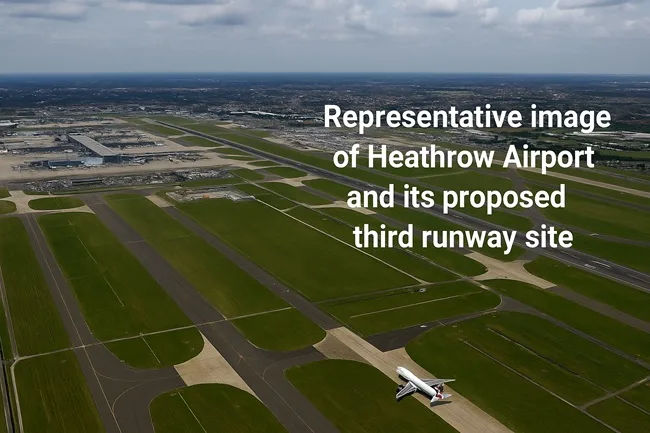
What makes the Heathrow Airport Limited proposal more viable than other options?
Following a comparative assessment of the two remaining expansion proposals—one from Heathrow Airport Limited and another from Arora Group’s Heathrow West—the Department for Transport found the HAL plan to be the most deliverable. According to the government’s evaluation, HAL’s 3.5-kilometre northwest runway offers greater operational resilience and long-term scalability than the 2.8-kilometre alternative suggested by Heathrow West.
The HAL scheme also provides stronger assurances in terms of surface access feasibility, particularly regarding its integration with the M25 motorway network. While both schemes would require major road infrastructure adjustments, HAL’s approach was judged more mature and technically prepared. Additionally, the selected scheme would require the acquisition of fewer residential properties, minimizing the project’s local displacement impact.
This round of assessment builds on information requested from both promoters last month, which was used to evaluate each scheme’s readiness, environmental footprint, and potential to meet regulatory and planning criteria. The government emphasized that HAL’s plan does not yet constitute a final decision on construction, but it will now inform the remainder of the ANPS review process.
How will the third runway reshape UK aviation by 2035?
If Heathrow Airport Limited’s third runway receives final development consent by 2029, the runway could begin operations by 2035. The expansion is positioned as a major enabler of economic growth, foreign investment, and job creation. The Department for Transport highlighted Heathrow’s record-breaking 23.4 million passengers over the recent summer season as clear evidence of mounting capacity pressure.
Chancellor of the Exchequer Rachel Reeves said that the government is pressing forward on a project that prior administrations hesitated to tackle. She added that Heathrow expansion will create over 100,000 jobs, boost regional prosperity, and signal to global investors that the United Kingdom remains open, connected, and forward-looking.
The government also confirmed that expansion will be fully privately financed. This includes the main runway project and any associated surface transport improvements. No taxpayer funds will be used. Instead, the focus is on balancing cost efficiency with strict compliance to legal and environmental obligations.
What environmental and regulatory hurdles remain for the third runway?
A critical part of the government’s next steps will involve ensuring Heathrow’s expansion complies with the UK’s legally binding environmental and climate targets. As part of this effort, Transport Secretary Heidi Alexander has formally written to the Climate Change Committee to request guidance on how airport expansion can align with national carbon budgets and net-zero goals.
The Department for Transport reiterated that the project must meet four key tests: deliverability, economic benefit, compliance with air quality standards, and alignment with climate targets. Any amendments to the ANPS will be subjected to public consultation and full parliamentary scrutiny. The review will also integrate updated aviation forecasts, regulatory changes, and stakeholder feedback, including from local communities and environmental groups.
To futureproof the project, the government is linking Heathrow expansion with the UK’s wider airspace modernization strategy. London’s airspace, which handles over 1.1 million annual flight movements, will be redesigned to accommodate the third runway. This will include redrawing air routes to enable quieter, faster, and more efficient departures.
A new consultation on air navigation guidance was launched concurrently with the HAL selection. The proposed changes aim to simplify the airspace design process, reduce carbon emissions, and increase public transparency in how airspace changes are proposed and approved.
What role will the Civil Aviation Authority play in the Heathrow runway review?
The Civil Aviation Authority is actively involved in shaping the financial and regulatory frameworks that will underpin Heathrow’s expansion. On the same day as the HAL scheme announcement, the regulator released a new discussion paper outlining potential models for cost recovery, pricing, and regulatory oversight.
This framework is intended to help Heathrow Airport Limited recover early-stage development costs while ensuring pricing remains fair for passengers and airline partners. The Department for Transport stated that cost control will be essential in maintaining confidence among institutional investors and ensuring the long-term financial sustainability of the project.
Further coordination between the Department and the Civil Aviation Authority is expected as the ANPS review progresses. The goal is to align economic oversight with public interest, keeping the expansion competitive without sacrificing environmental accountability or operational resilience.
How does the HAL scheme tie into broader aviation and infrastructure priorities?
The HAL-led expansion is not occurring in isolation. The United Kingdom is currently moving forward with several airport infrastructure initiatives, including recently approved expansions at Luton and Gatwick. These moves indicate a broader shift in government strategy to support high-capacity aviation projects that generate economic value and employment.
The third runway is also expected to benefit from the Sustainable Aviation Fuel Bill, which was introduced to support domestic SAF production. The legislation will establish a price floor for UK producers, helping to stabilize investment in low-carbon aviation fuel. Additionally, £63 million in new government funding has been allocated to accelerate the development of SAF production plants across the country.
This policy alignment suggests the third runway will be expected to serve not only conventional air travel demand but also support emerging aviation technologies. These include next-generation aircraft and low-emission propulsion systems, which are increasingly central to the decarbonization of the global aviation sector.
What are the key elements of the upcoming ANPS consultation process?
By July 2026, the government plans to release a formal draft of the revised Airports National Policy Statement. This draft will incorporate the HAL proposal, updated aviation demand projections, and emerging environmental criteria. A stakeholder engagement roadmap published alongside the selection announcement outlines the timeline and participation process for interested groups.
The Department for Transport reiterated that the ANPS review is not the final planning approval. Instead, it is the policy framework that will guide any subsequent application for development consent. The actual planning application by Heathrow Airport Limited would still require further detailed assessments, including public inquiries, environmental impact studies, and final legislative approval.
Nonetheless, the HAL scheme’s selection provides the greatest clarity to date on the direction of Heathrow’s expansion. The next two years will be pivotal in finalizing the policy architecture, securing investor backing, and aligning environmental mitigation strategies before any construction begins.
What does this milestone mean for UK aviation investors and stakeholders?
Investor sentiment toward Heathrow’s third runway has historically been mixed, due to legal challenges, political indecision, and concerns over environmental liabilities. However, the selection of a mature, detailed proposal such as HAL’s signals a new phase of procedural certainty.
Analysts tracking UK aviation infrastructure believe this could open the door to increased capital flows into long-term infrastructure vehicles and private equity funds. Institutional investors may also view the project’s climate compliance framework and airspace integration roadmap as de-risking signals.
While stock market movement for Heathrow’s stakeholders is less directly measurable, given its private ownership structure, the wider aviation ecosystem, including airlines, fuel suppliers, and airport service providers, may see enhanced visibility and planning confidence as the ANPS review takes shape.
What are the key takeaways from Heathrow Airport Limited’s third runway selection for policy review?
- The United Kingdom government has selected Heathrow Airport Limited’s proposal for a 3.5-kilometre northwest runway as the preferred scheme to inform the review of the Airports National Policy Statement (ANPS), bringing the project closer to a final planning decision.
- The selected plan is seen as more technically mature and operationally resilient compared to the rival Heathrow West proposal, with advantages in surface access planning, airspace compatibility, and long-term scalability.
- The policy review process is set to conclude by 2027, with a formal consultation on ANPS amendments scheduled for mid-2026. If approved, the new runway could become operational by 2035.
- The third runway will be fully privately financed, including all surface transport upgrades, with no cost to taxpayers. The Civil Aviation Authority will implement a regulatory framework for early cost recovery and pricing oversight.
- Climate compliance is central to the process, with the Department for Transport consulting the independent Climate Change Committee to ensure alignment with the UK’s carbon budgets and net-zero targets.
- London’s airspace will be redesigned to accommodate the new runway, improving flight efficiency, reducing noise, and enhancing overall sector resilience.
- The Sustainable Aviation Fuel Bill and £63 million in government funding are part of broader efforts to decarbonize aviation and integrate environmental safeguards into infrastructure expansion.
- Stakeholder engagement will continue through to July 2026, after which Heathrow Airport Limited is expected to file for development consent. Public scrutiny and environmental impact assessments will follow.
- The move signals a broader pro-infrastructure stance from the UK government, which has recently approved expansions at Gatwick and Luton airports to meet future aviation demand.
- Investor sentiment may improve due to the increased regulatory clarity and climate alignment, with analysts seeing the project as more de-risked than previous iterations halted by legal or political delays.
Discover more from Business-News-Today.com
Subscribe to get the latest posts sent to your email.