


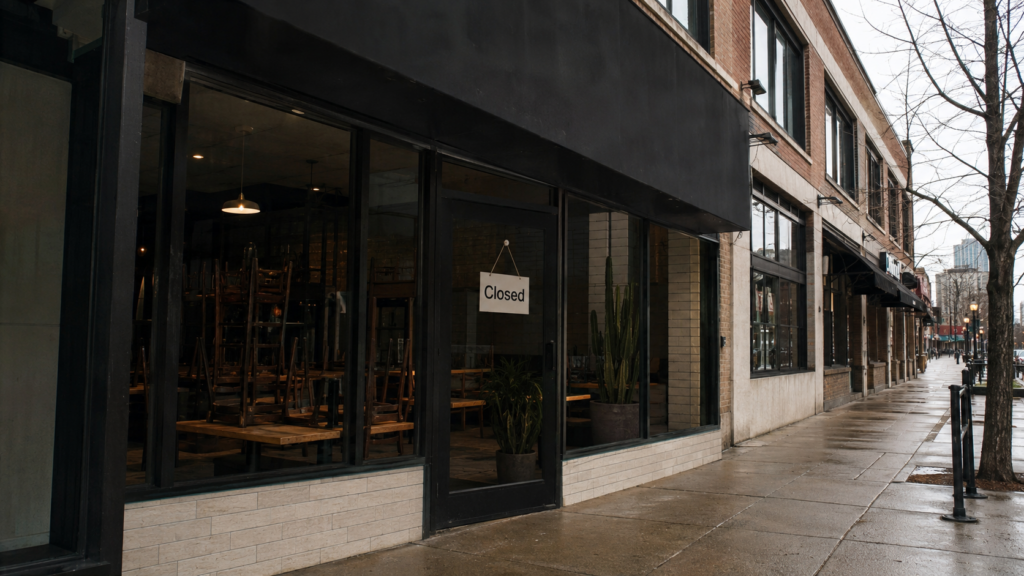
Guzman y Gomez (ASX: GYG) is exiting the United States and has permanently closed all eight of its Chicago-area restaurants effective May 22, ending a six-year, roughly $115 million attempt to break into the world’s largest fast-food market and redirecting capital toward its highly profitable Australian operations. Founder and co-chief executive Steven Marks said the US business was unlikely to deliver the performance that would justify continued investment of shareholder capital, a candid admission that came alongside one-time exit costs estimated at $30 million to $40 million for the 2025 to 2026 fiscal year. The market reaction was unusual for a corporate retreat, with Guzman y Gomez shares rising as much as 20% on the announcement before closing roughly 9.6% higher at A$19.81, as investors welcomed the end of a persistent capital drain that had weighed on group profitability since the company’s June 2024 initial public offering. The exit removes a marginal competitor from the crowded US fast-casual Mexican segment, a modest positive read-through for incumbents including Chipotle Mexican Grill and Taco Bell parent Yum Brands, while reframing Guzman y Gomez as a disciplined domestic operator with a master-franchise-led international strategy rather than a company chasing scale in a market it could not crack.
Why did Guzman y Gomez abandon the United States after six years and $115 million of investment?
The decision reflects a hard-nosed capital allocation judgment rather than an operational collapse. Marks, who spent the three months prior to the announcement in the US assessing the business directly, concluded that turning the market profitable would require significantly more time and shareholder capital than the company had anticipated. After six years and a reported $115 million of cumulative investment, the eight Chicago-area restaurants had not generated the sales momentum needed to validate further expansion, and the board determined that continued funding could not be justified against the far superior returns available in Australia.
The structural problem was differentiation. Analysts covering the exit pointed to the lack of meaningful differentiation between Guzman y Gomez and Chipotle Mexican Grill, the dominant incumbent in US fast-casual Mexican dining, as a core reason the likelihood of long-term success was low. In Australia, Guzman y Gomez occupies a distinctive position with a premium, made-to-order proposition and a 24-hour Cafe Hola coffee offering at some locations. In the US, that positioning collided directly with Chipotle’s entrenched brand, scale, and supply chain, leaving Guzman y Gomez as an undifferentiated challenger in a market that punishes the undifferentiated.
The geographic concentration compounded the difficulty. All eight US restaurants were clustered in the Chicago metropolitan area, including locations in Naperville, Evanston, Schaumburg, and Bucktown, which meant Guzman y Gomez never achieved the density or brand awareness needed to build a defensible position. Entering one of the most competitive restaurant markets in the country with a small, geographically concentrated footprint and a proposition that closely resembled the market leader was a strategy with a low probability of success, and the company has now acknowledged as much.
How does the US exit reshape Guzman y Gomez capital allocation and the investment case for GYG shares?
The market’s positive reaction tells the clearest story. Investors had been treating the US business as a value-destroying capital sink that diluted the exceptional economics of the Australian operation, and the decision to exit removes that drag. The one-time exit costs of $30 million to $40 million are a manageable price to stop an ongoing cash burn, and the market’s willingness to push shares up 20% on the news reflects relief that management has chosen capital discipline over the prestige of maintaining a US presence.
The Australian business that Guzman y Gomez is now refocusing on carries genuinely strong unit economics. The company operates more than 230 restaurants in its home market and is on track to open 32 new domestic restaurants this financial year, supported by an expanding real estate pipeline and a long-term target of 1,000 Australian locations. That domestic growth runway is the core of the investment case, and removing the US distraction allows management attention and capital to concentrate where the returns are demonstrably highest. The return of co-chief executive Steven Marks to Australia to focus on local operations was itself flagged by analysts as a positive structural outcome of the exit.
The international strategy is not being abandoned, but it is being narrowed to a more capital-efficient model. Guzman y Gomez continues to pursue disciplined international growth through master franchising rather than company-owned expansion, with ongoing success in Singapore, where the brand opened its 24th outlet recently, and in Japan. The master-franchise model shifts the capital burden onto local partners while Guzman y Gomez collects royalty revenue, a far more attractive risk profile than the company-owned US expansion that has now failed. The contrast between the capital-intensive US approach and the capital-light Asian approach is the strategic lesson the company appears to have absorbed.
What does the Guzman y Gomez retreat signal for Chipotle, Taco Bell, and the US fast-casual Mexican market?
For the US incumbents, the Guzman y Gomez exit is a modest but real positive. Chipotle Mexican Grill is the most direct beneficiary because Guzman y Gomez positioned itself as a premium made-to-order alternative competing for the same health-conscious, quality-focused customer. The departure of even a small challenger removes a marginal source of competition and reinforces the difficulty that new entrants face in dislodging Chipotle’s dominance. The episode is a case study in Chipotle’s competitive moat, demonstrating that brand strength, scale, and supply chain integration create a barrier that even a well-capitalised and operationally strong foreign entrant could not overcome.
Taco Bell, owned by Yum Brands, operates at a different price point but also benefits at the margin from one fewer competitor in the broader Mexican-inspired fast-food category. The more important signal for both incumbents is what the Guzman y Gomez failure says about the maturity and competitiveness of the US fast-casual Mexican market. The segment is saturated enough that a chain with a strong international track record, a differentiated home-market proposition, and meaningful capital still could not establish a viable foothold. That is a deterrent to future foreign entrants and a validation of the incumbents’ positioning.
The broader read-through is about the difficulty of cross-border restaurant expansion generally. Restaurant concepts that thrive in one market frequently fail in another because local competitive dynamics, real estate costs, labour markets, and consumer preferences differ in ways that are hard to anticipate. Guzman y Gomez’s experience adds to a long history of restaurant chains that succeeded at home and stumbled abroad, and it will likely make ASX-listed and other international operators more cautious about company-owned US expansion in favour of the master-franchise model.
What are the legal and reputational risks Guzman y Gomez faces from the abrupt US closure?
The manner of the exit has created legal exposure. A class action lawsuit was filed in Illinois on behalf of former US employees, alleging that Guzman y Gomez violated the federal Worker Adjustment and Retraining Notification Act and corresponding Illinois state law by failing to provide the required 60 days’ notice of the closures. Employees reportedly received notice on May 21 of closures effective May 22, far short of the statutory notice period, and the suit seeks compensation for what the plaintiffs characterise as inadequate dismissal procedures.
The WARN Act exposure is a quantifiable financial risk, though likely modest relative to the overall exit costs given the small US workforce involved. The more significant risk is reputational. An abrupt closure with minimal employee notice generates negative coverage and can affect the company’s standing with prospective franchise partners, employees, and customers in its other markets. For a company that emphasises its brand and culture, the optics of a hasty exit that left employees with a single day’s notice sit uncomfortably against its preferred positioning.
That said, the reputational damage is geographically contained. The US exit affects a market Guzman y Gomez is leaving entirely, and the negative coverage has limited reach into its core Australian market or its Singapore and Japan franchise operations. The board explicitly stated that the exit does not alter its conviction in the global appeal of the brand or the long-term opportunity to expand into new geographies in a disciplined manner, framing the US failure as a strategic and financial decision rather than a referendum on the brand. The legal and reputational costs are real but appear to be a price the company has judged worth paying to stop the capital drain.
How should investors weigh the Guzman y Gomez exit against the broader risks in its growth story?
The exit is unambiguously positive for the near-term investment case because it removes a loss-making operation and concentrates resources on the high-returning Australian business. The stock’s 20% intraday surge reflects that the market views the decision as value-accretive, and the underlying Australian unit economics genuinely support an attractive domestic growth runway toward the 1,000-restaurant long-term target. For investors focused on capital discipline and return on invested capital, the exit is exactly the kind of decision that builds confidence in management.
The longer-term questions are about growth durability and valuation. Guzman y Gomez shares trade well below their post-IPO levels, down roughly 30% since the June 2024 listing even after the exit-driven rally, reflecting broader concerns about the pace of domestic growth and the rich valuation the stock carried at IPO. With the US growth vector now removed, the entire equity story rests on the Australian expansion and the capital-light Asian franchise model. That concentrates the risk: any slowdown in Australian same-store sales, real estate availability, or new-restaurant economics would weigh heavily on a company that no longer has an international company-owned growth narrative.
The market capitalisation of roughly A$2.1 billion still embeds substantial growth expectations, and the company aims to open more than 40 restaurants globally each year. The bull case is that a focused, disciplined Guzman y Gomez compounds Australian store growth at strong unit economics while collecting high-margin royalty revenue from Asia. The bear case is that the domestic market eventually saturates and the company lacks the international growth options it just walked away from. The US exit resolves the immediate capital drain but sharpens the long-term question of where durable growth comes from once Australia matures.
What are the key takeaways from the Guzman y Gomez US exit for the company, competitors, and the restaurant sector?
- Guzman y Gomez exited the United States and closed all eight Chicago-area restaurants effective May 22, ending a six-year, roughly $115 million expansion that never reached profitability.
- The market cheered the retreat, with shares rising as much as 20% as investors welcomed the end of a capital drain that had diluted the exceptional economics of the Australian business.
- The core failure was a lack of differentiation from Chipotle Mexican Grill, which left Guzman y Gomez as an undifferentiated challenger in a saturated US fast-casual Mexican market.
- One-time exit costs of $30 million to $40 million are a manageable price to halt an ongoing cash burn, and co-CEO Steven Marks will return to Australia to focus on domestic operations.
- The exit is a modest positive for Chipotle and Taco Bell parent Yum Brands, removing a marginal competitor and validating the incumbents’ competitive moats.
- Guzman y Gomez retains a strong Australian growth runway with 32 new domestic restaurants planned this year and a long-term target of 1,000 locations.
- The international strategy shifts to a capital-light master-franchise model, with continued success in Singapore and Japan replacing company-owned US expansion.
- A class action lawsuit alleging WARN Act violations over inadequate closure notice creates quantifiable legal exposure and reputational risk, though geographically contained.
- The episode underscores the difficulty of cross-border restaurant expansion and will likely make international operators more cautious about company-owned US entry.
- With the US growth vector removed, the entire GYG equity story now rests on Australian expansion and Asian franchise royalties, concentrating long-term growth risk.
Discover more from Business-News-Today.com
Subscribe to get the latest posts sent to your email.