



Gunnison Copper Corp. (TSX: GCU / OTCQB: GCUMF) has appointed Robert Winton as its new Chief Operating Officer, strengthening operational leadership just as the Arizona-based copper developer transitions from pilot operations to steady-state production. The promotion underscores Gunnison’s broader push to become a flagship producer of domestically refined copper cathode at a time when the U.S. is racing to secure critical-minerals supply chains.
Winton’s appointment comes on the heels of a milestone year at the Johnson Camp Mine, where the company achieved first copper cathode production and commercial sales in 2025 under his direction. His elevation to COO signals that Gunnison intends to double down on proven internal talent as it enters its next expansion phase.
Why did Gunnison Copper choose Robert Winton to lead its next phase of operations and growth?
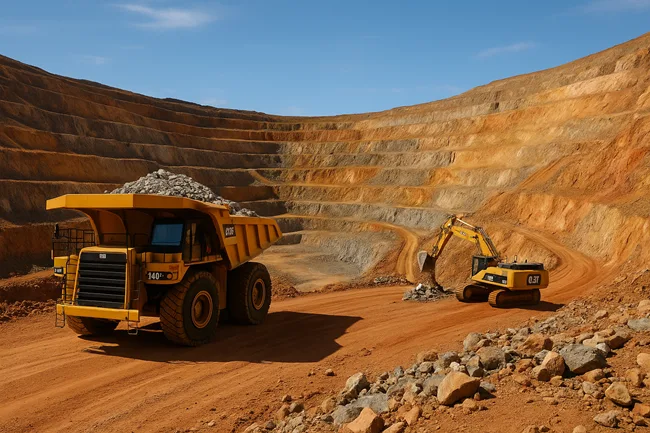
Executives rarely rise faster than Winton has within Gunnison Copper. Having joined in 2020 as Senior Vice President of Operations and General Manager, he quickly gained a reputation for disciplined execution. He oversaw the transformation of Johnson Camp Mine from a care-and-maintenance asset into a fully operational mine in barely a year—a turnaround that few in North American copper have matched recently.
Chief Executive Officer Stephen Twyerould described the appointment as a recognition of “exceptional leadership and operational expertise.” The company credits Winton with building a culture of accountability, efficiency, and safety that allowed Gunnison to deliver production ahead of schedule and within budget.

For Gunnison, the move provides leadership continuity and mitigates one of the biggest risks that small-cap miners face when scaling from development to full operations: execution drift. Winton’s deep familiarity with the site’s geology, leach pad design, and workforce structure positions him to drive the company’s operational rhythm without disruption.
How do Gunnison’s copper projects position it within America’s critical-minerals strategy?
Gunnison Copper’s ambitions extend far beyond Johnson Camp. Its portfolio spans the Cochise Mining District of southern Arizona, covering a cluster of 12 known deposits within an eight-kilometre radius. This region has long been considered one of the most prospective yet under-developed copper belts in the U.S.
The company’s flagship Gunnison Project is being advanced as a low-cost, environmentally responsible operation that produces finished copper cathode rather than concentrate. This approach eliminates dependence on foreign smelters and aligns with U.S. government initiatives to on-shore key materials for the energy transition.
According to the company’s preliminary economic assessment, the Gunnison Project carries a post-tax NPV (8 %) of roughly US$1.3 billion and an internal rate of return of 20.9 % based on a long-term copper price of US$4.10 per pound. The mine is expected to produce around 167 million pounds of copper annually during its first 16 years, at cash costs of US$1.42 per pound.
Unlike many peers that ship intermediate concentrates overseas, Gunnison will supply end-use manufacturers directly—offering domestic buyers a cleaner, traceable source of copper for electric-vehicle components, grid conductors, and renewable-energy installations.
What operational and technological shifts define the company’s next production stage?
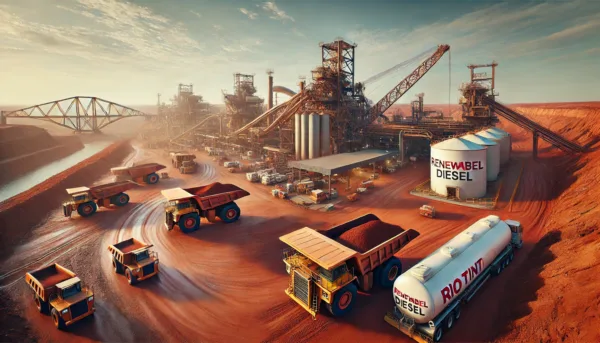
As COO, Winton now assumes responsibility for all site operations, project development, and integration of new work programs. A key near-term task is coordinating with Nuton LLC, the Rio Tinto-backed venture developing bio-leaching technology capable of economically treating lower-grade and sulfide-rich ores.
Bio-leaching represents a potential game-changer: by using natural bacterial processes instead of intensive heat and chemicals, it could unlock new resource categories while dramatically reducing environmental impact. Winton is expected to lead the pilot integration of this technology at Johnson Camp later this year—a technical milestone that could set Gunnison apart from traditional heap-leach operators.
Johnson Camp’s nameplate capacity of 25 million pounds of copper per year will form the backbone of near-term revenue. Further expansion, including a Stage 2 ramp-up using Nuton’s processes, could boost output and extend mine life while maintaining the company’s low-emission profile.
How does this leadership shift align with broader U.S. copper-market dynamics?
Gunnison’s timing is strategic. The United States consumes more than 1.8 million tons of copper annually but produces only about 1.2 million tons, leaving a structural deficit that must be filled by imports. As clean-energy infrastructure, data-center demand, and grid modernization projects accelerate, analysts project that copper demand could double by 2035.
Arizona, historically dubbed the “Copper State,” is regaining attention as a revival hub for domestic production. Major players such as Freeport-McMoRan Inc. and Rio Tinto continue expanding local operations, while mid-tiers like Gunnison offer scalable, lower-capex alternatives aligned with sustainability and permitting agility.
By promoting Winton and emphasizing operational readiness, Gunnison positions itself as a credible emerging supplier in this national context. Its focus on finished cathode production directly supports U.S. industrial policy priorities to secure materials critical to electrification, defense, and semiconductor manufacturing.
What are investors and analysts watching most closely in Gunnison Copper’s next chapter?
Investor attention now centres on execution risk. Gunnison Copper’s share price recently hovered near CAD 0.47, reflecting an 8 to 9 percent pullback since early October. The market appears to be in a “wait-and-see” mode—acknowledging operational progress but looking for sustained output and cash-flow evidence before re-rating the stock.
Institutional flows remain light, as expected for a company transitioning from developer to producer. Early sentiment among retail investors and small-cap mining funds is cautiously optimistic, with some seeing the promotion as a vote of confidence that may precede a future production-based valuation re-rate.
No consensus analyst coverage exists yet, but industry observers note that the appointment strengthens Gunnison’s internal leadership bench and could help attract institutional capital once quarterly production updates confirm stable volumes.
On fundamentals, Gunnison’s PEA projects average annual EBITDA of about US$419 million with free cash flow of US$309 million over the first 16 years. If those figures prove achievable, the company’s valuation multiples remain compelling relative to peers in the U.S. copper space.
What challenges must Robert Winton overcome as Gunnison expands its copper footprint?
Even with strong fundamentals, Winton inherits a demanding operational agenda. Ramping production reliably at Johnson Camp is only the first step. He must also manage bio-leach trials, optimize reagent use, maintain metallurgical recovery rates, and safeguard safety performance as headcount expands.
The capital side poses equal complexity. Sustaining capital requirements for heap leach operations can fluctuate sharply with ore-grade variability and maintenance cycles. Gunnison will need disciplined financing to avoid shareholder dilution while funding exploration in satellite deposits such as Strong and Harris and South Star.
Environmental compliance and stakeholder engagement also loom large. Arizona’s permitting climate is favourable compared to many U.S. jurisdictions, yet community relationships and water-management protocols remain under scrutiny. Winton’s experience in operational leadership will be tested in ensuring transparency, particularly as production scales and visibility increases.
What could the future look like for Gunnison Copper under Winton’s leadership?
If Winton maintains Gunnison’s early-stage momentum, the next 24 months could redefine the company’s trajectory. The near-term goal is steady-state production at Johnson Camp followed by successful bio-leach deployment. Longer term, exploration across the Cochise District could reveal sufficient resource scale to justify a multi-mine hub strategy—turning Gunnison into a vertically integrated regional producer.
For investors, that would mean leverage to both copper-price upside and policy tailwinds surrounding U.S. critical-minerals independence. For Arizona, it could reinforce the state’s resurgence as the epicentre of North American copper mining.
Market watchers will also monitor whether Gunnison’s innovations influence peers. If bio-leaching proves commercially viable at scale, it may accelerate adoption across the industry—potentially giving Gunnison first-mover advantage and positioning it as a technology partner for other miners.
Winton’s challenge, therefore, is as strategic as it is operational: to demonstrate that modern, low-impact copper mining can be both profitable and sustainable. His success or failure will shape not only Gunnison’s valuation but also the broader narrative about how the U.S. rebuilds its resource-extraction base in a climate-conscious era.
Can Robert Winton’s track record at Johnson Camp rebuild market trust in Gunnison Copper’s growth story?
From an investor-relations perspective, the promotion is both a morale statement and a pragmatic choice. Analysts see it as a signal that Gunnison is confident enough in its internal capabilities to keep execution in-house rather than recruit externally. That continuity reduces uncertainty in the eyes of project financiers and potential offtakers.
Sentiment currently trends neutral-positive, with the next catalysts expected from production data and financing clarity. Traders describe the stock as “early-cycle,” meaning it could attract speculative interest on operational updates but still carries ramp-up risk typical of new miners.
In essence, Gunnison Copper’s decision to promote Robert Winton marks a decisive step in its evolution—from exploration hopeful to operational producer. The company now faces the proving ground every miner must cross: delivering consistent output, maintaining cost discipline, and earning market trust. If Winton’s leadership replicates his Johnson Camp success, Gunnison could emerge as one of the few U.S. mid-tiers supplying domestically refined copper to a world hungry for electrification metals.
Discover more from Business-News-Today.com
Subscribe to get the latest posts sent to your email.