


Gradiant has won a contract to design and deliver a water treatment facility for a hyperscale data center in Didcot, Oxfordshire, giving the Boston-based water technology company a foothold in one of the most strategically important parts of the artificial intelligence infrastructure stack. The April 2 announcement did not name the end customer, but it said the project would serve one of the world’s foremost AI and cloud infrastructure providers at a former power station site in the United Kingdom. That matters because hyperscale operators are now discovering that land and power alone do not guarantee deployment speed if water treatment, reuse, and discharge systems are not equally robust. In plain English, Gradiant is not just supplying plant equipment. It is moving closer to the part of the data center value chain where uptime, permitting, sustainability, and expansion economics all collide.
The company framed the project around treatment, recycling, and zero liquid discharge, which is a strong signal that this is meant to solve more than a narrow cooling-water problem. Water is becoming an increasingly political and operational issue for hyperscale campuses, especially those linked to AI workloads that push cooling systems harder than traditional enterprise compute. Operators are under rising pressure to show that data center growth will not simply convert local water systems into invisible subsidy engines for cloud expansion. That is where Gradiant’s pitch becomes commercially interesting. It is effectively selling accountability, not just filtration.
What does the Didcot location reveal about who may be building the hyperscale campus there?
The Didcot detail is not incidental. Recent industry reporting has tied the former Didcot A power station site to a major data center campus proposal by Amazon, with planning processes under way in early 2026. Gradiant’s release still avoids naming the customer, so any direct identification would be premature, but the geography, the former power station reference, and the timing line up closely enough to make the site strategically significant even without formal customer confirmation. If that alignment holds, this contract would place Gradiant inside a globally important cloud buildout rather than a generic regional project.
That possibility matters because hyperscale campuses are becoming multi-decade infrastructure assets. Winning the initial water package can open the door to adjacent process scope, future capacity additions, operations support, and follow-on work across other sites. In sectors such as semiconductors and energy, infrastructure contractors often use one critical system win to establish themselves as long-term site partners. Gradiant appears to be pursuing exactly that playbook in digital infrastructure. The company’s own language around “Site-Wide Peace of Mind” is marketing-heavy, but underneath it sits a sensible commercial strategy: own the part of the stack nobody can afford to fail.
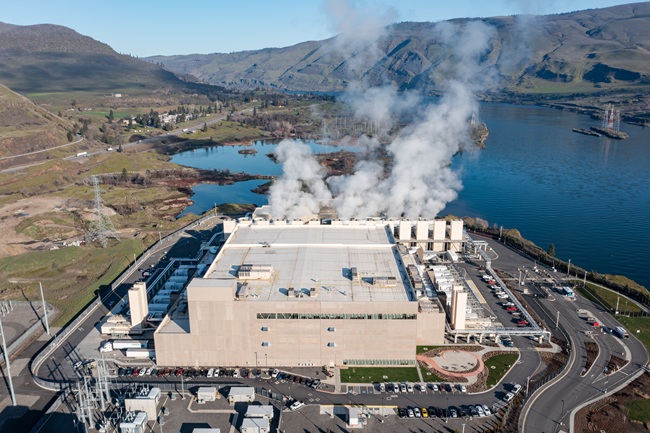
Why are water treatment and recycling becoming central to hyperscale data center economics in 2026?
The artificial intelligence boom has made electricity the celebrity bottleneck, but water is increasingly the quieter executive headache. Cooling systems for large campuses depend on stable treatment quality, regulatory compliance, recycling performance, and discharge control. Those requirements become harder, not easier, when sites are built at scale, repurposed from heavy industrial land, or located in regions facing resource scrutiny. A project that integrates treatment, reuse, and zero liquid discharge is therefore not just an ESG badge. It is part of the operating model.
This is where Gradiant’s value proposition starts to look more strategic than its size might initially suggest. Water infrastructure in data centers has often been treated as a specialist subcontracting layer. But as AI campuses grow more power-dense and more politically visible, operators may prefer vendors who can absorb broader performance responsibility. Fewer counterparties, tighter accountability, and lower permit risk can justify higher upfront system sophistication. Put differently, if compute clusters are becoming the new industrial plants, then water vendors that behave like mission-critical infrastructure partners may find themselves moving upstream in value capture.
There is also a second-order implication here for the broader UK market. The country wants to remain competitive in cloud, semiconductor-adjacent digital services, and AI deployment, yet every large site now faces practical questions around energy access, planning friction, and resource intensity. Contracts like this suggest that the winning formula may depend less on headline megawatt claims and more on whether enabling infrastructure can be industrialized fast enough. Chips may win the keynote, but treated water still has to show up on schedule.
How does Gradiant’s financing position strengthen its ability to compete for large industrial infrastructure work?
The background you shared is important because this contract arrives less than six months after Gradiant announced a $50 million corporate revolving credit facility from HSBC, taking its total financing capacity above $100 million. The company said at the time that the facility reflected profitability and balance sheet maturity and would support project execution, working capital, and potentially future acquisitions. For a private infrastructure technology company, that matters. Large project wins are only useful if the contractor can finance delivery, absorb milestone timing, and reassure major customers that it can execute at scale without liquidity strain.
That financing context changes the reading of the Didcot contract. Without it, this could look like another nice headline from a water-tech company trying to attach itself to the AI narrative. With it, the story becomes more credible. Gradiant is showing the classic markers of a company trying to graduate from technology specialist to scaled project platform: institutional lending relationships, working-capital capacity, multinational delivery claims, and a growing list of infrastructure-critical end markets. That does not eliminate execution risk, but it does make the strategy easier to take seriously.
The more subtle point is that lenders do not usually line up behind industrial growth stories unless they see recurring commercial momentum and discipline in project conversion. A revolving facility is not the same thing as a public market endorsement, of course, but it does suggest Gradiant has crossed into a more mature phase of financial management. For customers building expensive, time-sensitive campuses, vendor balance sheet confidence is not a side note. It is part of procurement logic.
What competitive pressure could this create for water technology vendors serving AI and cloud infrastructure?
Gradiant’s win also hints at a coming competitive shift in industrial water. Historically, many providers have sold equipment packages, engineering modules, or narrow process solutions. Hyperscale customers may now prefer integrated site-level partners that can handle treatment, recycling, reuse, and discharge under a single operating logic. If that preference spreads, the market could tilt toward firms that combine proprietary process technology with delivery capacity and lifecycle accountability.
That would raise the bar for smaller vendors and for companies whose expertise is strong but fragmented. The AI buildout is not going to wait patiently while five contractors argue over interfaces and who owns performance drift in a live cooling environment. Customers will increasingly pay for reduced coordination risk. In that sense, Gradiant’s Didcot contract may be less about one UK site and more about whether water infrastructure procurement is starting to resemble the broader consolidation logic already seen in data center power systems, thermal management, and digital controls.
There is a regional angle too. Europe’s data center landscape is tightening under environmental scrutiny, land constraints, and local approval pressure. A vendor that can credibly position water reuse and discharge minimization as deployment enablers may have an advantage when projects move from boardroom ambition to municipal review. That does not guarantee dominant market share, but it gives Gradiant a sharper narrative than simply saying it treats wastewater very efficiently and hopes people notice.
What execution risks and unanswered questions should executives watch after Gradiant’s UK contract win?
For all the strategic upside, the announcement still leaves big blanks. The customer is unnamed. Contract value is undisclosed. Delivery timelines are not public. Operational scope after commissioning remains unclear. Those omissions are typical in infrastructure announcements, but they matter because they limit how much revenue or margin significance can be attached to the project today. Investors and industry watchers should resist the temptation to turn this into a blockbuster assumption without more evidence.
There is also plain old project risk, which stubbornly refuses to be disrupted by PowerPoint. Repurposed industrial sites can bring permitting complexity, legacy land issues, utility coordination challenges, and sequencing dependencies with the broader campus build. Water systems are mission-critical, but they are also interdependent with mechanical, energy, and environmental compliance layers. A contractor can be right on strategy and still run into timing or handoff friction.
The other major unknown is repeatability. The real value of this win will depend on whether Gradiant can use it as a reference point to capture additional hyperscale work in the United Kingdom, Europe, and other water-stressed digital infrastructure markets. One project proves relevance. A pipeline proves market position.
What does this Gradiant contract say about the future of AI infrastructure buildouts in the United Kingdom?
The broader takeaway is that the next chapter of AI infrastructure in the United Kingdom will not be defined only by headline data center capacity announcements. It will be defined by whether enabling systems such as water treatment, recycling, and discharge control can be delivered with the same seriousness as power and compute. The Didcot contract suggests the market is moving in that direction.
For Gradiant, the opportunity is straightforward but meaningful. If it can deliver reliably, this project could become a template for how industrial water technology companies insert themselves deeper into the economics of AI and cloud expansion. For the wider market, it is another reminder that the AI race is increasingly an infrastructure race, and infrastructure races are won by solving boring problems exceptionally well. Water may not have the glamour of graphics processing units, but it is rapidly becoming the kind of constraint that can kill schedules, inflate costs, and invite political pushback. That gives companies like Gradiant a bigger strategic lane than many observers may have assumed.
What are the key takeaways on how Gradiant’s Didcot project could reshape hyperscale water infrastructure strategy?
- Gradiant’s Didcot contract positions water treatment as a core enabling layer of AI infrastructure rather than a back-end utility function.
- The unnamed hyperscale customer and former power station location strongly suggest this project sits inside a strategically important UK digital campus build.
- Water reuse and zero liquid discharge are becoming commercial differentiators as operators face more scrutiny over local resource intensity.
- The contract supports a broader thesis that future hyperscale procurement will favor integrated site-level accountability over fragmented specialist packages.
- Gradiant’s October 2025 HSBC credit facility gives the company more credibility as a scaled delivery partner, not just a technology vendor.
- The biggest near-term unknowns are contract size, revenue timing, customer identity, and whether Gradiant retains post-commissioning operational scope.
- If the company executes well, this project could become a reference asset for winning additional hyperscale and AI-linked infrastructure contracts.
- The Didcot win reflects a broader shift in UK and European data center development, where water and environmental compliance increasingly influence deployment speed.
- Competitors in industrial water may face pressure to bundle treatment, recycling, and performance accountability into more comprehensive offerings.
- The larger industry lesson is simple: AI infrastructure growth will depend as much on water resilience as on power availability and compute density.
Discover more from Business-News-Today.com
Subscribe to get the latest posts sent to your email.

