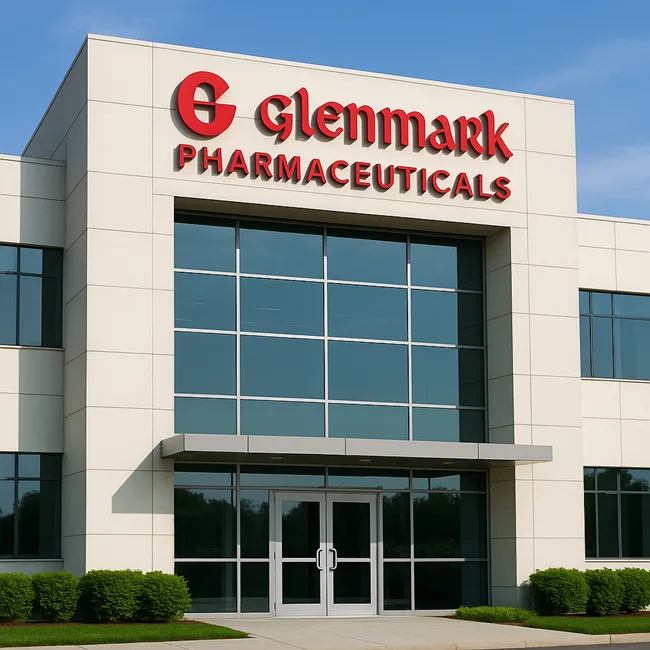
Glenmark Pharmaceuticals Limited has posted a strong performance for the fiscal year ended March 31, 2025, delivering a 12.8% year-on-year increase in consolidated revenue to ₹1,33,217 crore. This growth was powered by a double-digit surge in India and Europe, renewed focus on branded products, and an expanding innovation pipeline led by Ichnos Glenmark Innovation (IGI), the company’s biotech arm. Despite headwinds in North America, Glenmark managed to sustain profitability, reporting an adjusted profit after tax of ₹13,894 crore and an EBITDA margin of 17.6%.
This fiscal year marked a turning point in Glenmark’s strategy—pivoting toward advanced therapies, branded market share, and R&D-driven global competitiveness. The full-year results offer a snapshot of a company building not just resilience, but future-readiness in a rapidly evolving pharmaceutical landscape.
What Are the Key Financial Highlights of Glenmark’s FY25?
Glenmark reported ₹32,562 crore in consolidated revenue for Q4FY25, up 6.3% from the year-ago period. EBITDA for the quarter stood at ₹5,607 crore, up 11.2%, while adjusted PAT came in at ₹3,466 crore, translating to a margin of 10.6%. For the full year, consolidated revenue grew from ₹1,18,131 crore in FY24 to ₹1,33,217 crore in FY25, with EBITDA nearly doubling from ₹11,953 crore to ₹23,510 crore. This sharp rise reflects both improved cost structures and higher-margin product mixes.
The adjusted PAT margin for the year was 10.4%, despite one-time expenses linked to legal settlements and the closure of the La Chaux-de-Fonds manufacturing facility in Switzerland. These adjustments point to the company’s renewed focus on efficiency and structural consolidation in non-core geographies.
How Did Glenmark Perform Across Regions?
India emerged as Glenmark’s biggest contributor with a 31.9% annual revenue growth, reaching ₹44,845 crore. The company secured second position in dermatology and respiratory therapy areas and ranked third in cardiac therapies as per IQVIA MAT March 2025. Even though acute respiratory segments and diabetes products underperformed due to competitive pricing and seasonal trends, chronic categories such as dermatology and cardiac witnessed 15%+ secondary sales growth.
Glenmark’s Europe business delivered ₹28,463 crore in FY25, a 17.6% increase over the previous year, driven by expansion in branded formulations. RYALTRIS continued to show traction across Western and Central Europe, while WINLEVI received UK regulatory clearance and is set for launch in FY26. The company is betting heavily on dermatology and respiratory brands to deepen its European moat.
The Rest of the World (RoW) segment recorded modest growth of 1.7% to ₹28,138 crore, but currency headwinds in key LATAM and African markets weighed on overall performance. That said, Glenmark retained top-five rankings in respiratory and dermatology segments in Mexico and South Africa and improved its position in markets like Malaysia and the Philippines through new launches.
North America remained subdued, with revenue falling 2.5% to ₹30,172 crore. The dip reflects a lack of major U.S. launches in FY25 and sustained price erosion in the generics space. However, the company expects to recover in FY26 with upcoming respiratory and injectable drug launches, several of which are under FDA review.
What’s the Status of Glenmark’s Innovation and Biologics Pipeline?
A standout highlight for FY25 is the progress made by Glenmark’s innovation engine, Ichnos Glenmark Innovation (IGI). The U.S. FDA granted Fast Track designation to ISB 2001, a trispecific T-cell engager developed to treat relapsed/refractory multiple myeloma (MM). This candidate targets BCMA and CD38 while activating CD3 on T-cells, making it one of the most advanced biologics in development globally for this indication.
ISB 2001 demonstrated a 75% overall response rate (ORR) in early trials among heavily pretreated MM patients. IGI has now moved into Phase 1 dose-expansion studies and will present new data at ASCO 2025 and EHA 2025, marking Glenmark’s formal entry into high-impact oncology innovation. The asset also holds Orphan Drug Designation, giving it commercial and regulatory advantages for accelerated development.
Other IGI assets like ISB 880 (licensed to Almirall) and ISB 830 (licensed to Astria Therapeutics) are advancing in clinical stages for autoimmune diseases, with both partners having triggered milestone payments to Glenmark. These partnerships not only validate Glenmark’s R&D capability but also offer upfront and royalty-based revenue streams for FY26 and beyond.
How Is Glenmark Positioned in the Competitive Pharmaceutical Landscape?
Within the Indian pharmaceutical industry, Glenmark is steadily transitioning from a generics-heavy player to a research-backed innovator. Its strategic launches of biosimilars like LIRAFIT (Liraglutide) and branded therapies like GLEMPA (Empagliflozin) position it well in the chronic disease landscape. Collaborations with global majors like Pfizer (JABRYUS) and BeiGene (Zanubrutinib, Tislelizumab) give it an edge in advanced dermatology and oncology segments.
The U.S. portfolio, while currently challenged, still boasts a robust pipeline. Glenmark has over 200 authorized generics in the U.S. and 51 pending ANDA approvals with the FDA, including 23 Paragraph IV filings. With new respiratory and nasal spray generics expected in FY26, the company is poised for a rebound in the North American market.
In consumer care, Glenmark’s non-prescription business posted strong growth, with flagship brands like Candid Powder™, Scalpe Plus™, and La Shield™ contributing significantly to primary sales. This vertical has the potential to de-risk revenue and add brand equity, similar to models followed by peers like Sun Pharma’s FMCG arm.
What’s the Market Sentiment Around Glenmark Pharmaceuticals?
Investor sentiment has remained cautiously positive. On May 24, 2025, Glenmark shares closed at ₹1,420.20, reflecting a moderate pullback of 0.66% despite strong earnings. The stock remains 22% below its October 2024 peak of ₹1,830.95, suggesting room for re-rating if U.S. launches and biotech milestones materialize.
Brokerage commentary has acknowledged Glenmark’s shift toward innovation and higher-margin brands. Analysts are likely to revisit price targets post-ASCO 2025, especially if ISB 2001’s new data set reinforces clinical efficacy.
Foreign Institutional Investors (FIIs) have shown selective buying interest, particularly after IGI’s fast-track announcement. Domestic institutional flows remain neutral but could shift depending on Q1FY26 guidance and U.S. product approvals.
What Should Stakeholders Expect from Glenmark in FY26?
FY26 promises to be a transition year. The biotech pipeline, especially ISB 2001 and Envafolimab, could drive sentiment and long-term value. WINLEVI’s UK launch and possible China approvals for RYALTRIS may deepen Glenmark’s international footprint. Strategic commercialization agreements and CDMO outsourcing for biologics production are expected to improve scalability and margins.
On the U.S. front, much depends on the timely FDA approval of respiratory drugs and injectable generics. If Glenmark succeeds in reviving growth in North America while sustaining its India and Europe momentum, it could emerge as one of the few Indian pharma players balancing generics, branded drugs, and biologics globally.
Discover more from Business-News-Today.com
Subscribe to get the latest posts sent to your email.