Fortis Inc. reported higher second-quarter earnings as regulated rate-base growth across its North American utilities and stronger electricity sales in Arizona offset higher financing and operating costs. The Toronto Stock Exchange and New York Stock Exchange-listed utility company, which trades under $FTS, generated net earnings attributable to common shareholders of C$396 million, compared with C$384 million a year earlier, while earnings per share increased to C$0.78 from C$0.76. Fortis invested C$2.7 billion during the first half and maintained its C$5.6 billion capital plan for 2026. The larger strategic development came from British Columbia’s approval of the Tilbury Phase 1B liquefied natural gas expansion, which includes a project cost allowance of up to C$2.2 billion and creates potential capital investment beyond Fortis’s existing five-year plan. The opportunity could extend the company’s regulated growth profile, but its value will depend on final costs, permits, customer protections and whether marine-fuel demand supports the expanded facility.
Fortis’s quarterly earnings growth was driven by investment across its utilities and higher retail electricity sales at UNS Energy in Arizona. The improvement was partly offset by costs associated with rate-base growth that have not yet been recovered through customer rates, the timing of operating expenses, higher holding-company financing costs and the impact of utility businesses sold during 2025.
First-half net earnings increased by C$14 million to C$897 million, but earnings per share remained unchanged at C$1.76. The difference reflects an increase in the weighted average number of common shares, primarily through Fortis’s dividend reinvestment plan, as well as the dilutive effect of the company’s 2025 asset sales.
How regulated rate-base growth lifted Fortis earnings despite higher costs and dilution
Fortis’s Independent Electric Transmission business, ITC Holdings Corp., generated C$152 million of second-quarter earnings, an increase of C$9 million. The improvement reflected continued investment in transmission infrastructure, including projects designed to connect new generation and serve accelerating electricity demand across the Midcontinent Independent System Operator region.
UNS Energy contributed C$114 million, up from C$104 million, as warmer weather and customer growth supported higher retail electricity sales. The quarterly improvement was partly offset by operating costs and investment-related expenses that have not yet been fully incorporated into regulated rates.
Fortis’s Western Canadian electric and gas utilities collectively generated C$162 million, an increase of C$8 million. FortisBC Energy, FortisAlberta and FortisBC Electric all reported higher contributions as capital investment increased the assets on which the regulated businesses are permitted to earn returns.
The company’s regulated model provides greater earnings stability than a merchant electricity or commodity-producing business because revenues and returns are established through regulatory frameworks. Fortis invests in approved infrastructure, and regulators determine how those investments and associated operating costs are recovered from customers over time.
That structure reduces direct exposure to daily commodity-price movements but creates regulatory timing risk. Fortis may begin incurring depreciation, interest and operating expenses before new rates take effect, temporarily reducing earnings until a regulator authorizes recovery.
The second-quarter results show that this timing pressure is already affecting some businesses. Rate-base investment supported growth, but unrecovered expenses and higher corporate financing costs absorbed part of the benefit.
Weighted average common shares increased to approximately 510 million from 502.6 million. The additional shares helped finance the capital program and reduced dependence on debt, but they also limited the increase in earnings per share.
Fortis expects its 2025 dispositions in Turks and Caicos and Belize to reduce 2026 earnings by approximately C$0.05 per share after financing-cost savings. Those sales simplified the portfolio and generated capital, but the associated earnings are no longer available to common shareholders.
The underlying investment case therefore depends on new rate-base growth replacing the earnings lost through divestitures and overcoming dilution from equity issuance. Fortis’s C$28.8 billion capital plan is designed to produce that growth through transmission, distribution, gas infrastructure, electricity generation and energy-storage investment.
Why the Tilbury LNG approval could add nearly C$2 billion beyond Fortis’s current plan
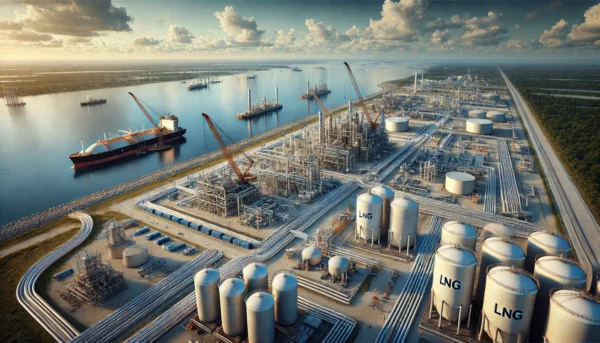
The Province of British Columbia issued an Order in Council approving the Phase 1B expansion of FortisBC Energy’s Tilbury liquefied natural gas facility on July 24. The approval provides a project cost allowance of up to C$2.2 billion and permits the Tilbury Marine Jetty to be included within the regulated utility.
Fortis’s current five-year capital plan includes approximately C$350 million for Tilbury Phase 1B. If the final approved investment approaches the C$2.2 billion allowance, the project could add roughly C$1.8 billion beyond the amount presently incorporated in the plan. This is an inference based on the disclosed allowance and current planned expenditure, rather than a finalized incremental investment forecast.
FortisBC Energy will refine the project design and cost estimate before incorporating appropriate spending into Fortis’s next five-year capital plan. Construction could begin as early as the middle of 2027, with the expanded facilities potentially entering service in 2031.
The project remains subject to regulatory approvals and permitting requirements. The government decision advances the commercial and financial framework, but it does not mean construction can begin immediately or that the full C$2.2 billion will ultimately be spent.
Tilbury Phase 1B is intended to expand liquefied natural gas production serving the marine-fueling market. Shipping companies are considering LNG as an alternative to conventional marine fuels because it can reduce certain local air pollutants and, depending on production and engine performance, lower greenhouse-gas emissions compared with heavier petroleum fuels.
LNG’s environmental benefit remains debated because methane leakage across production, transportation and vessel operations can weaken or eliminate some climate advantages. Fortis’s commercial opportunity therefore depends not only on fuel-price economics but also on evolving shipping regulations, methane controls and competition from methanol, ammonia and other lower-carbon marine fuels.
The Order in Council includes mechanisms intended to protect FortisBC Energy customers from adverse rate impacts associated with the expansion. Fortis said existing LNG sales connected with the earlier Tilbury 1A facility have already provided an approximate 1.5% rate benefit, and it expects Phase 1B to build on that effect. These are company estimates and depend on future sales, costs and regulatory treatment.
The approval also enables the planned equity partnership with the Musqueam Indian Band. FortisBC and Musqueam have been working together on development of the Tilbury site since signing an agreement in 2022.
The partnership could align Indigenous economic participation with the project’s long-term operation rather than limiting involvement to consultation or short-term contracting. The final ownership, governance and economic terms will determine how much value and decision-making influence the partnership provides.
Tilbury already plays a role in British Columbia’s gas system by storing LNG for periods of peak demand and providing backup supply during disruptions. The wider expansion combines that resilience function with a commercial marine-fueling strategy, giving the project more than one potential source of value.
The regulated structure reduces the risk that Fortis must rely entirely on volatile spot LNG prices. It also places a greater responsibility on the company and regulators to demonstrate that project costs, contracted sales and system benefits justify including the investment in customer rates.
How Roadrunner Reserve II expands Fortis’s battery capacity and Arizona load-growth strategy
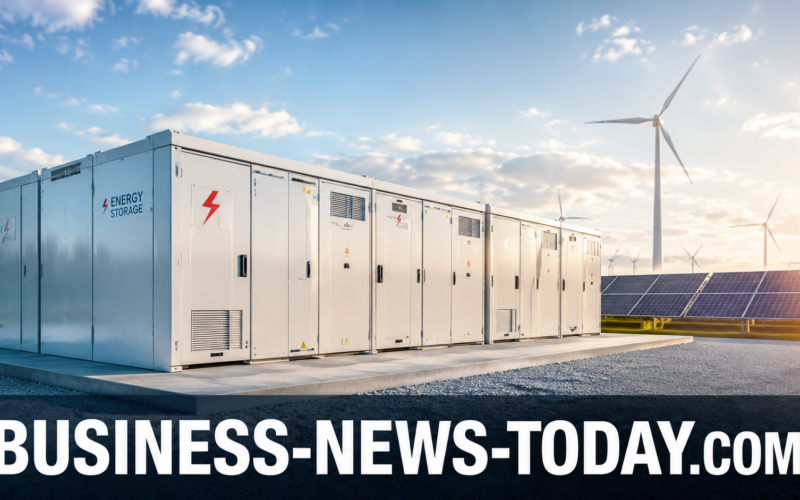
Tucson Electric Power placed Roadrunner Reserve II into service in mid-June. The 200-megawatt battery system can store 800 megawatt-hours of electricity, enough to serve approximately 42,000 homes for four hours when operating at full capacity.
Tucson Electric Power invested approximately US$350 million in the second phase. The utility now has about 550 megawatts of battery-storage capacity in service, compared with 50 megawatts approximately one year earlier.
Roadrunner Reserve II allows the utility to charge batteries during the morning and early afternoon when solar generation is abundant and electricity is less expensive. The stored power can then be delivered during late-afternoon and evening periods when temperatures and electricity consumption are usually highest.
This operating strategy can reduce the need to purchase expensive peak-period electricity and can improve the usefulness of solar facilities that would otherwise produce most heavily several hours before the highest customer demand.
Battery storage does not create electricity and cannot provide unlimited backup. Its financial value depends on charging costs, discharge timing, battery degradation, market prices and how regulators compensate the utility for the investment.
The four-hour duration is designed for daily peak shifting and grid-balancing rather than multiday supply disruptions. Arizona will still require transmission, conventional generation, renewable resources and purchased power to serve customers during extended heat events or periods of reduced solar production.
Tucson Electric Power also placed 100 megawatts of battery storage and 100 megawatts of solar capacity into service at Wilmot Energy Center II during April. Combined with Roadrunner Reserve II, the additions show that Fortis is investing in storage as a core regulated utility asset rather than a limited demonstration technology.
Arizona represents one of Fortis’s most significant load-growth opportunities. The company has secured credit support for an energy-supply agreement serving a planned data centre with an initial potential demand of approximately 300 megawatts.
Fortis estimates that the data-centre load could save a typical residential Tucson Electric Power customer approximately US$13 per month once the facility reaches full production. The projected benefit comes from spreading fixed utility-system costs across a larger electricity-sales base, although actual savings will depend on the final infrastructure requirements, rate design and customer usage.
The company is also preparing to convert units at the Springerville Generating Station from coal to natural gas. Fortis estimates that the conversion will cost approximately 10% as much as building equivalent new gas generation, providing a potentially lower-cost way to preserve dispatchable capacity while ending coal use.
Data-centre and manufacturing growth can improve system utilization and support additional rate-base investment. It also creates planning risk because large customers can require substantial generation and transmission capacity before their facilities reach full operation.
Fortis must ensure that existing customers are protected if a large project is delayed, downsized or canceled. Credit support, long-term contracts and carefully structured rates will be important when utilities invest billions of dollars to serve a relatively small number of major electricity users.
Can Fortis fund its C$28.8 billion capital plan without weakening its credit profile?
Fortis plans to invest C$28.8 billion between 2026 and 2030, including C$5.6 billion during 2026. Approximately 46% of the five-year plan is allocated to transmission, 31% to distribution and 7% to generation, with the remainder directed toward LNG, renewable gas, information technology and other investments.
The company expects the plan to increase consolidated rate base from C$42.4 billion in 2025 to C$57.9 billion in 2030. That represents an increase of approximately C$16 billion and a five-year compound annual growth rate of 7% at a constant exchange rate.
ITC accounts for approximately C$9.8 billion of planned capital, making electric transmission the largest individual component. Investment includes Midcontinent Independent System Operator long-range transmission projects and connections serving new industrial and data-centre customers.
The Big Cedar Load Expansion project is designed to serve 300 megawatts for an initial data centre and another 1,600 megawatts of expected load by 2028. The scale illustrates how digital infrastructure can create utility investment extending well beyond the generation needed to power the facilities.
Fortis expects ITC Midwest’s growing data-centre connections to reduce network transmission rates for existing customers by approximately 20% by the end of the decade compared with the projected 2026 rate. The estimate assumes the new loads enter service and share system costs as expected.
Fortis uses a combination of internally generated cash, equity and net debt to finance growth. Its current funding framework attributes approximately 59% to cash from operations, 11% to equity and 30% to net debt.
The equity component includes shares issued through the dividend reinvestment and employee share-purchase plans. Fortis also has a C$500 million at-the-market equity program available for additional flexibility.
Issuing equity protects credit metrics and reduces the amount of borrowing required, but it can dilute earnings growth. The second-quarter results already show that a larger share count can offset part of the increase in total net income.
Fortis raised C$2.1 billion of long-term debt during the first half. S&P Global Ratings maintained an A-minus issuer rating and BBB-plus unsecured debt rating, while Fitch Ratings maintained BBB-plus ratings with a stable outlook.
The investment-grade ratings are important because regulated infrastructure requires continuous access to long-duration financing. Higher interest rates or weaker credit metrics could raise customer costs and reduce the economic return from projects that take several years to complete.
Fortis declared a quarterly common-share dividend of C$0.64, payable on September 1. The company has increased its dividend for 52 consecutive years and continues to target annual growth of between 4% and 6% through 2030.
The dividend forecast is supported by expected rate-base and earnings growth, but it remains dependent on regulatory outcomes, project execution and the board’s future decisions. Dividend reinvestment also provides equity funding, creating a direct link between shareholder distributions and the financing of the capital program.
What the muted FTS share reaction says about valuation and execution risk
Fortis shares traded near US$57.16 in New York during July 31 trading, down approximately 0.5% from the previous close after moving between US$57.13 and US$57.88. The limited response suggests that the earnings result and project progress were largely consistent with investor expectations.
The regulated utility model generally attracts investors seeking predictable earnings and dividends rather than rapid quarterly growth. A C$12 million increase in net earnings is constructive, but the long-term valuation depends more heavily on whether Fortis delivers its capital plan without major cost overruns or adverse regulatory decisions.
Tilbury Phase 1B creates meaningful upside because much of its potential investment is not yet reflected in the C$28.8 billion plan. It also introduces additional project risk because the capital allowance is large, the development period extends to 2031 and the commercial rationale depends partly on an evolving marine-fuel market.
Arizona storage and load growth provide another opportunity, but battery economics, data-centre commitments and regulatory rate cases must remain aligned with customer affordability. A utility can increase rate base rapidly and still destroy value if regulators conclude that projects were unnecessary or excessively expensive.
Fortis’s geographic and regulatory diversification reduces the impact of one adverse decision. The company serves customers across five Canadian provinces, ten United States states and the Cayman Islands, spreading exposure across several regulators and economic regions.
The same scale creates complexity. Fortis must coordinate dozens of major projects, secure labor and equipment, manage interest-rate and currency exposure and maintain reliable service while replacing aging infrastructure.
The company’s current performance supports its conservative growth thesis. Earnings increased, the annual investment plan remains on track and major projects are entering service. The stronger long-term investment case will depend on converting Tilbury, data-centre transmission and Arizona generation opportunities into regulated earnings without placing an excessive burden on customers or shareholders.
Key takeaways from Fortis’s second-quarter results and Tilbury LNG approval
- Fortis Inc. reported second-quarter net earnings of C$396 million, up from C$384 million, as regulated rate-base growth and stronger Arizona electricity sales supported performance.
- Earnings per share increased only C$0.02 to C$0.78 because the weighted average common-share count rose and prior asset sales reduced the comparative earnings base.
- Fortis invested C$2.7 billion during the first half and maintained its C$5.6 billion capital plan for 2026.
- British Columbia approved Tilbury Phase 1B with a project cost allowance of up to C$2.2 billion and permitted the marine jetty to be included within the regulated utility.
- Only approximately C$350 million of Tilbury Phase 1B investment is included in Fortis’s current plan, creating a potential incremental opportunity approaching C$1.8 billion if final spending reaches the approved allowance.
- The Tilbury approval enables an equity partnership with the Musqueam Indian Band and includes mechanisms intended to protect utility customers from adverse rate impacts.
- Roadrunner Reserve II added 200 megawatts and 800 megawatt-hours of battery storage in Arizona, allowing solar power to be shifted into higher-demand evening periods.
- Fortis’s C$28.8 billion capital plan is expected to increase rate base from C$42.4 billion to C$57.9 billion by 2030, supporting a forecast 7% annual growth rate.
- The funding plan relies on operating cash, equity and debt, making project execution and investment-grade credit ratings essential to maintaining affordable financing.
- The outlook for $FTS depends on delivering Tilbury, transmission, storage and large-load projects while preserving customer affordability and annual dividend growth of 4% to 6%.
.
Discover more from Business-News-Today.com
Subscribe to get the latest posts sent to your email.