





First Graphene Limited (ASX: FGR; OTCQB: FGPHF; Frankfurt: M11) has secured its first production order from US-based Flux Footwear, extending PureGRAPH from industrial and safety footwear into athletic and leisure shoes. Flux intends to incorporate PureGRAPH into its Graphene XT performance footwear and progressively replace the graphene material currently used in its existing models as production requirements increase. First Graphene has explicitly said the initial order is not financially material, making the commercial significance less about immediate revenue and more about demonstrating that a previously validated graphene formulation can be transferred into another customer, geography and higher-volume consumer product category. The next test is whether the first purchase order develops into repeat supply substantial enough to move First Graphene’s still-small revenue base.
The order makes Flux Footwear the third footwear customer using First Graphene technology after earlier commercial work with Australian safety footwear manufacturer Steel Blue and Indonesian mining work-boot manufacturer PT Alasmas Berkat Utama. Unlike those industrial applications, Flux sells directly into athletic and leisure markets, where product volumes can potentially become much larger but where materials must justify their cost through measurable performance benefits. Flux already markets graphene-enhanced footwear, which means PureGRAPH is not being introduced merely to create a new marketing label. First Graphene has instead won an opportunity to replace an existing graphene input, giving the order more relevance as a supplier-conversion test.
Why is replacing Flux Footwear’s existing graphene more meaningful than launching another prototype?
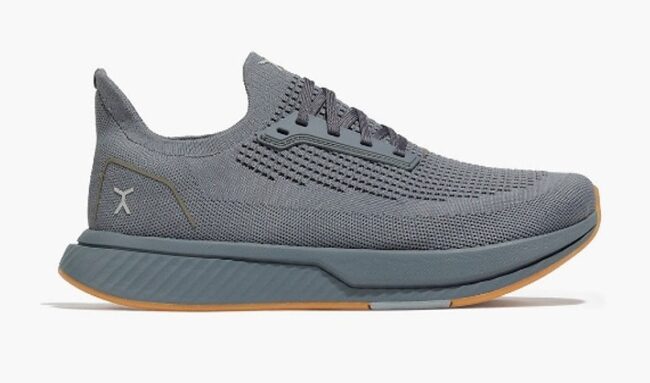
Flux already sells the Adapt Graphene XT, a US$150 cross-training shoe that uses graphene in high-wear sections of the outsole. The company positions the material around durability, grip and flexibility, with the outsole designed for lifting, conditioning and other indoor training applications. PureGRAPH is therefore entering a commercial product architecture in which graphene already has a defined function rather than requiring Flux to redesign its footwear proposition around an unfamiliar additive.
That makes the current development different from an exploratory material trial. First Graphene said recent development work resulted in PureGRAPH being selected for Flux’s graphene-enhanced range, with the material expected to progressively replace existing graphene as production requirements increase. The announcement does not disclose which graphene supplier is being displaced, the PureGRAPH grade selected, the graphene loading per pair of shoes or the number of Flux units expected to contain First Graphene material.
Those missing figures prevent a reliable revenue forecast, but the supplier-switch dynamic provides a useful technical signal. Flux has an existing benchmark for how graphene performs in its footwear, so PureGRAPH needed to fit an established manufacturing and product-performance requirement rather than being assessed without a commercial reference point. If repeat orders follow, First Graphene would gain stronger evidence that its material can compete against alternative graphene products on performance, manufacturability, consistency or economics.
How does the Flux order build on First Graphene’s earlier work with Steel Blue and Alasmas?
First Graphene’s footwear strategy did not begin with athletic shoes. The company has already progressed PureGRAPH through development, independent testing and commercial manufacturing in industrial footwear with Steel Blue and PT Alasmas Berkat Utama, creating formulation experience around the properties most exposed to heavy wear.
Graphene has been incorporated into footwear compounds to target abrasion resistance, tear strength and durability while limiting additional weight. These characteristics are particularly relevant in outsoles because repeated contact with hard surfaces progressively degrades conventional rubber compounds. Industrial footwear provided an early environment in which durability could be tested under demanding use conditions before First Graphene sought access to broader consumer categories.
Flux creates a pathway into a different purchasing cycle. Safety footwear is generally selected around workplace protection, longevity and compliance requirements, while athletic footwear competes more heavily on comfort, performance, appearance and brand positioning. A formulation that transfers successfully between those categories becomes more commercially reusable because First Graphene does not need to begin every customer relationship with a completely new technical concept.
The company now has three footwear customers spanning Australia, Indonesia and the United States. That geographic spread remains small relative to the global footwear industry, but it gives First Graphene multiple reference applications that can be used when approaching additional manufacturers. The value of those references will rise materially if each customer progresses from initial production into recurring orders rather than remaining at limited commercial volumes.
Why does the Flux relationship fit First Graphene’s wider US commercialisation strategy?
North America has become increasingly important to First Graphene’s expansion strategy. Earlier in 2026, the company acquired assets, intellectual property, product lines and manufacturing capability from US-based MITO Material Solutions, adding functionalised graphene technologies and a more direct commercial presence in the United States.
The Flux order adds a consumer-facing application to that expansion. MITO strengthened First Graphene’s position in composites, including opportunities across aerospace, defence and advanced manufacturing, while Flux gives PureGRAPH exposure to performance footwear. The applications differ materially, but both support the same commercial objective of embedding graphene into products manufactured repeatedly rather than relying primarily on isolated development projects.
First Graphene also recently entered a three-year development and commercialisation agreement with Turkish prepreg manufacturer Aeropreg covering graphene-enhanced carbon fibre materials. Taken together, the recent announcements show the company widening its routes to market across composites and consumer products rather than depending on one sector to absorb production capacity.
Diversification can reduce dependence on individual projects, but it can also create a portfolio containing many technically successful applications that remain financially small. The commercialisation challenge is therefore no longer demonstrating that PureGRAPH can work in numerous materials. First Graphene needs some of those applications to scale into customers purchasing meaningful quantities repeatedly.
How large could the sports-footwear opportunity become without overstating the first order?
First Graphene cited third-party market research estimating the global sports-shoe market at more than US$150 billion and projecting it could exceed US$212 billion by 2035. Those figures demonstrate the size of the end market but should not be interpreted as First Graphene’s addressable graphene revenue because footwear represents only a fraction of each shoe’s selling price and graphene itself is used at relatively low loading levels.
Flux’s own sales volumes have not been disclosed in the announcement. First Graphene has also provided no forecast for annual PureGRAPH consumption, price per kilogram, minimum purchase commitments or the revenue expected from the relationship. Management’s statement that the first production order is not financially material provides the clearest near-term financial boundary.
The opportunity lies in repeatability rather than market-share arithmetic. A footwear formulation that performs consistently could potentially be incorporated into additional models, greater production volumes or other customers without requiring First Graphene to build a footwear manufacturing business of its own. PureGRAPH would remain an ingredient, allowing revenue to grow as the customer’s output grows.
That model can also produce higher-quality revenue if customer qualification creates switching friction. Once a material has been incorporated into a commercial outsole formulation and a manufacturer is satisfied with performance and processing, changing supplier may require another development and validation cycle. First Graphene still needs evidence that this dynamic will translate into long-duration Flux demand, but production qualification represents a more meaningful stage than laboratory testing alone.
Why does First Graphene need recurring PureGRAPH orders rather than more development milestones?
First Graphene’s FY2026 financial results show why commercial conversion remains central to the investment case. Revenue from customer contracts increased 14.8% to A$537,594, while the company recorded a net loss of approximately A$5.40 million. Gross profit improved to about A$220,562, but the absolute sales base remains small relative to corporate, technical and commercialisation expenditure.
Operating cash outflow was approximately A$2.39 million for the year, compared with A$2.72 million in FY2025. Cash and cash equivalents stood at A$2.87 million at June 30, supported by A$3.5 million of share-placement proceeds during the year. The audited accounts identify a material uncertainty related to going concern because continued operations remain dependent on securing additional funding.
Those figures do not make the Flux order financially material simply because First Graphene’s revenue is small. The company has explicitly classified the initial order as immaterial, and there is no disclosed value from which to calculate a revenue contribution. The more important financial test is whether Flux becomes one of several customers that purchase PureGRAPH repeatedly and collectively begin lifting annual sales faster than operating expenditure.
First Graphene operates graphene manufacturing capacity of approximately 100 tonnes a year at Henderson in Western Australia. Existing financial results indicate that available production capacity is substantially ahead of current commercial demand. Converting capacity into utilisation therefore requires many more kilograms of repeat customer consumption rather than further demonstration that the company can manufacture graphene at scale.
Could performance footwear become a useful bridge between industrial graphene and consumer adoption?
Graphene commercialization has historically faced a gap between impressive material properties and economically repeatable products. Laboratory claims about strength, conductivity or thermal characteristics provide limited value unless manufacturers can disperse graphene consistently, integrate it into existing production and demonstrate that the performance gain justifies additional material cost.
Footwear offers an interesting middle ground. It is a mass-produced consumer product, but material performance can be evaluated through familiar metrics such as abrasion, tear resistance, grip and durability. Those characteristics are easier to connect with a practical product benefit than many abstract nanomaterial properties.
Flux already sells a collection built around graphene-enhanced soles, reducing the need to educate the company about why the material is being used. First Graphene can instead compete on whether PureGRAPH preserves or improves the performance Flux already expects from graphene while integrating reliably into the manufacturing process.
The opportunity also carries a credibility requirement. Consumer products can attract marketing language that outruns technical evidence, particularly around advanced materials. First Graphene’s strongest commercial case will therefore come from repeat orders, independent performance testing and broader model adoption rather than relying on the general reputation of graphene as an exceptionally strong material.
What does the First Graphene share price imply as the Flux order reaches the market?
First Graphene shares closed at A$0.053 on October 6, down 3.6% for the session, before the Flux production-order announcement reached the Australian market. During October 7 trading, the shares were around A$0.054, approximately 1.9% above the previous close.
The movement is modest and should not be attributed solely to the Flux announcement because small-cap shares can move on limited trading volumes and other market factors. FGR remains close to the lower end of its 52-week range of approximately A$0.049 to A$0.110, with a market capitalisation of roughly A$48 million around the latest trading level.
That valuation remains many times larger than current annual customer revenue, meaning the equity market continues to price First Graphene principally on expectations for future commercial scaling rather than the earnings power of its existing business. The Flux order contributes evidence that development work can convert into production, but management has already cautioned that the initial purchase is not material.
A more meaningful rerating would likely require several of these commercial programmes to begin producing sustained revenue simultaneously. Flux footwear, Aeropreg composites, existing industrial customers and opportunities brought through MITO provide multiple pathways, but those pathways still need to show measurable sales growth.
What evidence would prove the Flux Footwear relationship is becoming commercially important?
The clearest next indicator would be follow-on orders. A second or larger purchase would show that the first production run has moved beyond qualification and into continuing manufacturing demand, particularly if First Graphene begins disclosing greater annual PureGRAPH volumes.
Expansion across more Flux models would provide another useful signal. Flux currently markets several Graphene XT variants, and First Graphene says PureGRAPH will progressively replace existing graphene models as production requirements increase. Confirmation that the transition has been completed across a broader portion of the range would increase the likely recurring consumption base.
Customer economics will also matter. Neither company has disclosed whether PureGRAPH lowers material cost, improves durability compared with Flux’s current graphene or simply offers more reliable supply. Understanding why Flux selected First Graphene would help establish whether the competitive advantage can be repeated with other footwear manufacturers.
The Flux order improves First Graphene’s commercial position because it converts an existing application into a new production customer rather than adding another early-stage experiment. Its financial significance remains deliberately limited at the starting point. The stronger thesis requires the next stage, where a small first order becomes recurring supply and the company demonstrates that the same footwear formulation can be replicated across more customers faster than cash is consumed.
What are the key takeaways from First Graphene’s Flux Footwear production order?
- First Graphene has secured its first PureGRAPH production order from US-based Flux Footwear for athletic and leisure footwear.
- Flux plans to use PureGRAPH in its Graphene XT range and progressively replace the graphene material currently used in existing models.
- The order represents First Graphene’s first commercial production application in sporting and athletic footwear.
- Flux becomes First Graphene’s third footwear customer after Steel Blue and PT Alasmas Berkat Utama.
- First Graphene has explicitly said the initial order is not financially material, and no purchase value or annual volume has been disclosed.
- The strategic value comes from transferring a validated footwear formulation into a new customer, geography and consumer product segment.
- FY2026 customer revenue was A$537,594, while First Graphene recorded a A$5.40 million net loss and A$2.39 million operating cash outflow.
- The company held A$2.87 million of cash at June 30 and remains dependent on additional funding while commercial revenue scales.
- FGR shares traded around A$0.054 during October 7, close to the lower end of their A$0.049 to A$0.110 52-week range.
- Repeat Flux orders, broader model adoption and disclosed PureGRAPH volumes would provide the clearest evidence that the footwear opportunity is becoming financially meaningful.
Discover more from Business-News-Today.com
Subscribe to get the latest posts sent to your email.