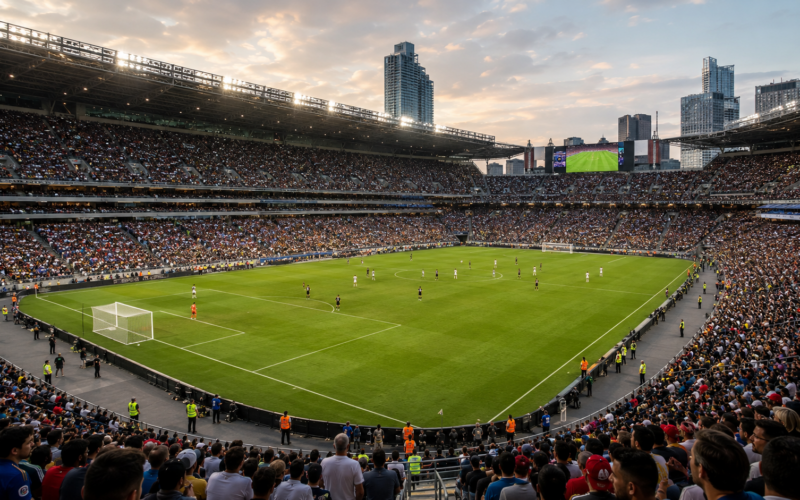
FIFA World Cup 2026 will introduce sensory rooms across all tournament stadiums, placing accessibility, crowd management and fan wellbeing at the centre of preparations for the largest men’s World Cup ever staged across the United States, Canada and Mexico.
Fédération Internationale de Football Association, known globally as FIFA, has said the tournament has earned Sensory Inclusive Tournament recognition, making FIFA World Cup 2026 the first FIFA tournament to receive that designation. The move means fans who experience sensory overload, including people with autism, post-traumatic stress disorder, dementia, anxiety and other conditions, will have access to calmer support spaces within the stadium footprint on matchdays.
The measure matters because FIFA World Cup 2026 will be unusually large and intense. The tournament will feature 48 teams, 104 matches and 16 host cities, with crowds moving through stadiums, fan zones, transport hubs and security areas over a 39-day period. Stadium noise, dense crowds, flashing screens, long queues, emotional match atmospheres and unfamiliar travel environments can create serious barriers for fans with sensory needs.
Sensory rooms are therefore not a soft add-on to the tournament. They are part of a wider shift in how major sporting events are being judged. The modern matchday experience is no longer assessed only by ticket sales, broadcast reach and stadium capacity. It is also assessed by whether children, families, disabled fans, neurodivergent supporters and people with anxiety-related conditions can safely participate in high-intensity public events.
Why are sensory rooms becoming part of FIFA World Cup 2026 stadium planning?
Sensory rooms are becoming part of FIFA World Cup 2026 stadium planning because major football matches can be overwhelming environments for some spectators. A World Cup stadium brings together loud cheering, music, announcements, visual displays, security checks, crowd movement, lights, queues and high emotional tension before, during and after matches.
For many fans, that intensity is part of the attraction. For others, it can trigger distress, anxiety, disorientation or sensory overload. People with autism, post-traumatic stress disorder, dementia, anxiety and other sensory processing needs may require a calmer environment to reset before returning to the matchday crowd.
FIFA World Cup 2026 will magnify the issue because the event is larger than previous men’s World Cups. More matches mean more matchdays. More host cities mean more venue environments. More fans mean more varied accessibility needs. A tournament spread across the United States, Canada and Mexico will also draw international visitors who may be unfamiliar with local stadium layouts and public transport systems.
The inclusion of sensory rooms signals that accessibility is moving from a narrow facilities issue to a broader fan safety issue. It is not only about wheelchair access or seating categories. It is also about how stadiums support people whose challenges may be invisible but still significant during crowded, noisy and unpredictable events.
How will sensory rooms work across FIFA World Cup 2026 stadiums and fan areas?
FIFA World Cup 2026 sensory rooms are expected to be available within stadium venues or in the Stadium Fan Experience area that forms part of the broader matchday footprint. At some stadiums, fans will have access to both types of spaces, meaning support can be available inside the venue and in surrounding fan experience zones.
The key feature is availability throughout the game. Sensory needs can arise at any stage of matchday, including arrival, pre-match buildup, halftime, extra time, penalty shootouts or post-match exit. A fan may not need support at kickoff but may need it later as noise, fatigue, crowding or emotional stress builds.
A sensory room is generally designed to provide a calmer environment away from the main stadium atmosphere. These spaces may include softer lighting, reduced noise, controlled stimulation and staff support. The aim is not to remove fans from the event permanently, but to give them a place where they can regulate stress and continue participating if they are able.
The placement of these spaces will matter. If sensory rooms are too difficult to find, too far from seats or poorly signposted, their practical value will be reduced. For international fans, clear venue maps, multilingual guidance and digital information through FIFA platforms will be important.
Why does stadium accessibility matter more in a 48-team World Cup across three countries?
Stadium accessibility matters more in FIFA World Cup 2026 because the tournament’s scale increases both opportunity and risk. A 48-team World Cup opens the event to more countries, more national audiences and more travelling supporters. It also increases the number of people who may need accessible services across many different matchday environments.
The three-country structure adds another layer. Fans will move through different cities, transport systems, stadium designs, legal environments and public service arrangements. Accessibility cannot depend only on one national model or one venue standard. It must work consistently across all 16 host cities.
The expanded format also increases the chance that fans will attend multiple matches in different cities. A family travelling to see one national team may move between venues with different entry layouts, crowd flows and transport access. If accessibility information varies too much from stadium to stadium, planning becomes harder.
For FIFA and host city organisers, this creates a coordination challenge. Sensory rooms, mobility assistance, accessible seating, closed captioning, digital venue information and fan support services must be clear enough for visitors who may not know the stadium, the city or even the language. The success of the accessibility programme will depend on how usable it is on matchday, not only whether services exist on paper.
How could sensory rooms support fans with autism, anxiety and other sensory needs?
Sensory rooms can support fans with autism, anxiety and other sensory needs by providing a controlled break from the most intense parts of the stadium experience. A football match can involve sudden noise, chanting, crowd surges, drums, lighting changes, public announcements, emotional reactions and long periods of close physical proximity.
For a fan with sensory processing differences, that combination can become overwhelming. A calmer room can reduce sensory input and allow the person to recover. This can help families avoid leaving the stadium entirely and can give fans more confidence to attend a major event.
The benefit may extend beyond the individual fan. Parents, caregivers and companions also face pressure when a supporter becomes distressed in a public space. A designated sensory room gives families a clearer response option instead of forcing them to search for quiet corners, exits or medical areas during a crowded match.
The measure also helps normalise the idea that accessibility is not only physical. Many people who need support do not have visible disabilities. By creating dedicated spaces for sensory needs, FIFA World Cup 2026 may help shift public understanding of what inclusive stadium design requires.
What role will digital accessibility information play during FIFA World Cup 2026?
Digital accessibility information will play an important role because fans need to know what services are available before they arrive at a stadium. FIFA has indicated that each stadium will have dedicated accessibility information through digital channels, including details on venue-specific services.
This matters because accessibility planning often begins days or weeks before matchday. Fans may need to know where accessible entrances are located, how far sensory rooms are from seating areas, whether mobility assistance is available, how to access closed captioning and what support exists in fan experience zones.
Digital information can also reduce stress on matchday. If fans can check venue maps, service locations and entry procedures in advance, they are less likely to feel uncertain in crowded environments. For people with anxiety or sensory needs, predictability can be a major part of safety.
The challenge is consistency. Information must be easy to find, clear, updated and practical. A long policy page buried inside a website may not help a family standing outside a stadium gate. Mobile-friendly maps, simple instructions and visible matchday signage will be essential.
Why does the FIFA World Cup 2026 accessibility programme matter beyond football?
The FIFA World Cup 2026 accessibility programme matters beyond football because global sports events often influence expectations for other public venues. When a major tournament normalises sensory rooms, closed captioning, mobility support and venue-specific accessibility information, other stadiums, arenas, concert venues and public event organisers may face pressure to raise their own standards.
The measure also reflects a broader public policy shift. Governments, transport agencies, venue operators and event organisers are increasingly expected to consider invisible disabilities, neurodivergence and mental health needs when designing public experiences. Football stadiums are highly visible testing grounds for these expectations because they combine crowds, noise, movement and emotion on a large scale.
For host cities, accessibility is part of reputation. A city hosting World Cup matches is not only being judged by the scoreboard. It is also being judged by transport performance, security, hospitality, crowd management and whether all fans can participate safely and with dignity.
For fans, accessibility determines whether the tournament feels open or exclusionary. A World Cup that welcomes more countries also needs to welcome more types of supporters. Sensory rooms will not solve every accessibility challenge, but they are a visible sign that matchday inclusion is becoming part of tournament operations.
What challenges could still affect FIFA World Cup 2026 sensory room access?
The first challenge is awareness. Fans cannot use sensory rooms if they do not know the spaces exist. Clear communication before and during matchday will be essential, especially for international visitors and families attending a World Cup match for the first time.
The second challenge is location. A sensory room must be reachable without forcing fans through long, crowded or confusing routes. If access requires navigating dense concourses, steep movement patterns or unclear signage, the support may become less useful during moments of distress.
The third challenge is capacity. The World Cup will draw very large crowds. If sensory rooms are too small, too few or unavailable at high-demand moments, families may still struggle. Demand may be difficult to predict because sensory needs can arise suddenly and may vary by match atmosphere.
The fourth challenge is staff training. A sensory room is not only a physical space. Staff must understand how to communicate calmly, support families and avoid escalating distress. Training across multiple host cities will be important because the tournament will involve many venues and temporary event workers.
The fifth challenge is integration with wider accessibility planning. Sensory rooms should connect with accessible seating, mobility support, closed captioning, medical services, transport guidance and emergency procedures. Isolated services are less effective than a coordinated accessibility system.
How could FIFA World Cup 2026 change expectations for future stadium accessibility?
FIFA World Cup 2026 could change expectations for future stadium accessibility by making sensory inclusion part of the global matchday conversation. If sensory rooms are visible, useful and well communicated, fans may expect similar support at domestic leagues, international tournaments, concerts and other large public events.
The tournament could also influence how stadiums define accessibility upgrades. Traditional accessibility often focused on ramps, lifts, seating positions and toilets. Those remain essential, but sensory services show that accessibility also includes noise management, calm spaces, digital guidance, staff training and support for invisible needs.
For venue operators, the shift may affect investment priorities. Stadiums designed or renovated for future events may need to include flexible quiet spaces, accessible digital maps, clearer wayfinding and better crowd-flow planning for vulnerable fans. These features may increasingly be seen as basic event infrastructure rather than optional hospitality extras.
For public agencies and sports bodies, FIFA World Cup 2026 may offer lessons on how to scale accessibility across multiple venues. A single stadium can create a sensory room. A 16-city tournament must create a system. That distinction is important because future mega-events will be judged on consistency across locations.
What are the key takeaways from FIFA World Cup 2026 sensory rooms and stadium accessibility?
- FIFA World Cup 2026 will include sensory rooms across all tournament stadiums, making accessibility and sensory inclusion part of the matchday experience for the expanded 48-team tournament.
- FIFA World Cup 2026 has earned Sensory Inclusive Tournament recognition, a designation that highlights the tournament’s planned support for fans who may experience sensory overload during high-intensity stadium events.
- Sensory rooms are designed to support people with autism, post-traumatic stress disorder, dementia, anxiety and other conditions that can make loud, crowded and unpredictable matchday environments difficult.
- The accessibility programme matters because FIFA World Cup 2026 will involve 104 matches across 16 host cities in the United States, Canada and Mexico, creating varied venue and crowd-management challenges.
- Sensory rooms are expected to be available inside stadiums or within Stadium Fan Experience areas, with some venues offering both options so fans can access support during different parts of matchday.
- Digital accessibility information will be important because fans need venue-specific guidance on sensory services, accessible seating, mobility assistance, closed captioning and other support before they arrive.
- The programme still depends on execution, including signage, room location, capacity, staff training, multilingual communication and integration with wider stadium accessibility and public safety systems.
- FIFA World Cup 2026 could influence future stadium design by making sensory inclusion, calm spaces and support for invisible disabilities more central to global event planning.
Discover more from Business-News-Today.com
Subscribe to get the latest posts sent to your email.