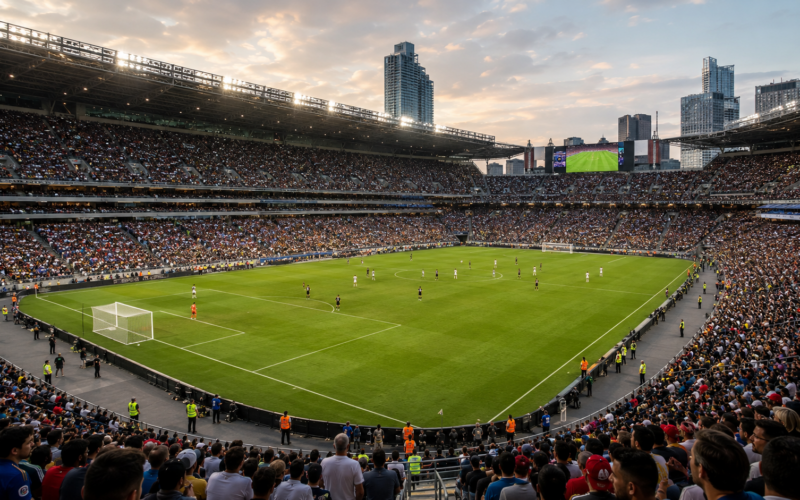
Paraguay produced the biggest upset of the FIFA World Cup 2026 knockout stage by eliminating Germany 4-3 on penalties after a 1-1 draw at Boston Stadium in Foxborough, Massachusetts, on Monday, June 29, 2026. Goalkeeper Orlando Gill saved spot kicks from Kai Havertz and Nick Woltemade before José Canale converted the decisive sixth-round penalty.
Julio Enciso gave Paraguay the lead in the 42nd minute, heading Matías Galarza’s cross past Manuel Neuer after Germany had controlled almost four-fifths of the first-half possession without registering a shot on target. Kai Havertz equalised nine minutes after half-time from Florian Wirtz’s delivery.
Germany thought they had completed the turnaround in the 102nd minute when Jonathan Tah headed a corner into the net. The goal was cancelled following a VAR review after referee Jalal Jayed ruled that Waldemar Anton had obstructed Gill as the goalkeeper attempted to reach the ball.
Neither side scored during the remainder of extra time, sending the tie to a shootout in which Germany missed three of six penalties. Paraguay advanced to face France in the Round of 16 in Philadelphia on July 4, while the four-time champions suffered their first FIFA World Cup shootout defeat and another damaging early elimination.
FIFA World Cup 2026 Germany 1-1 Paraguay full scorecard and penalty shootout
How did the Germany vs Paraguay penalty shootout unfold kick by kick?
Why did Germany’s overwhelming first-half possession produce no shots on target?
Germany completed 244 passes before Paraguay had reached 32, yet the possession rarely disrupted the South American defensive structure. Paraguay kept five midfielders close to the back four and allowed Germany to circulate the ball in areas that carried little immediate danger.
Florian Wirtz and Felix Nmecha repeatedly received with defenders positioned behind them. Leroy Sané remained wide on the right, but Paraguay shifted across quickly enough to prevent him from entering the penalty area with control.
Deniz Undav was handed his first start of the tournament after contributing three goals and two assists during the group stage. He curled an early attempt wide but struggled to find space between Gustavo Gómez and José Canale.
Kai Havertz also moved away from the penalty area in an attempt to connect midfield and attack. That movement created additional possession options but left Germany without a consistent target whenever Kimmich or Nathaniel Brown reached crossing positions.
Germany completed the opening half with approximately 78% possession but no attempt on target. Paraguay’s plan did not require them to compete for the ball. It required them to protect the areas from which Germany could create high-value chances.
How did Julio Enciso turn Paraguay’s limited possession into the opening goal?
Paraguay had spent most of the first half defending but remained prepared to attack immediately after recovering the ball. Miguel Almirón and Galarza were responsible for carrying the transition forward before Germany could reorganise.
The decisive move developed down the right in the 42nd minute. Galarza found space to deliver into the penalty area while Germany’s defenders were moving towards their own goal.
Enciso attacked the cross aggressively and powered a header beyond Neuer. The goal was Paraguay’s first in a FIFA World Cup knockout match.
The finish carried additional significance because Enciso is not a conventional aerial striker. His timing and commitment allowed him to win the duel against physically stronger German defenders.
Paraguay had converted one of their few meaningful attacks, while Germany entered half-time behind despite completing 253 more passes than their opponents. The contrast exposed the difference between controlling possession and controlling the decisive moments.
Why did Leon Goretzka’s introduction give Germany greater second-half urgency?
Nagelsmann replaced Nmecha with Leon Goretzka at half-time. The change gave Germany a midfielder more willing to make direct runs beyond Paraguay’s defensive line.
Goretzka occupied defenders and created additional room for Wirtz to receive between midfield and defence. Germany’s passing also became quicker, reducing the time Paraguay had to shift its block from one side to the other.
The adjustment nearly came with an immediate warning at the opposite end. Kimmich’s underhit backpass released Enciso, forcing Neuer to leave his goal and prevent Paraguay from doubling the lead.
Germany survived and equalised four minutes later. Wirtz moved into space on the left and delivered towards Havertz, who directed a glancing header beyond Gill.
The goal showed what had been absent during the first half. Germany moved the ball earlier, attacked the penalty area with more than one player and forced Paraguay’s defenders to make decisions while facing their own goal.
How did Orlando Gill survive Germany’s 55 crosses and 16 corner kicks?
Germany attempted 55 crosses during the 120 minutes but completed only nine. Paraguay’s centre-backs repeatedly won the first contact, while Cubas and Galarza protected the second-ball areas around the penalty box.
Gill was decisive whenever the defenders were beaten. He made six saves during open play and remained composed despite Germany placing several players close to him at corners.
Paraguay finished with 55 clearances, including 30 headed clearances. Those figures illustrated both the extent of Germany’s pressure and Paraguay’s willingness to defend its penalty area repeatedly.
Germany’s crossing volume eventually became predictable. Rather than finding different routes through Wirtz, Musiala or combination play, the European side increasingly delivered from wide positions against defenders comfortable contesting aerial balls.
Paraguay did not prevent every chance. Germany recorded 21 attempts and eight were blocked, but the average quality remained limited. The 1.49 expected-goals total from 21 shots reflected how effectively Paraguay forced their opponents into crowded or difficult positions.
Why did Julian Nagelsmann’s attacking substitutions fail to produce a winner?
Jamal Musiala replaced Undav in the 63rd minute, giving Germany another player capable of dribbling through tight spaces. Anton later replaced Aleksandar Pavlović, while Woltemade entered for Sané before the end of normal time.
Nagelsmann continued changing the structure during extra time. Amiri and Malick Thiaw replaced Wirtz and Antonio Rüdiger in the 110th minute.
The substitutions increased Germany’s presence around the penalty area but did not improve the quality of their final actions. Musiala carried the ball forward, yet Paraguay repeatedly surrounded him before he could shoot or release a teammate.
Woltemade provided additional height but entered a match already dominated by crosses. Paraguay were prepared for that threat and continued protecting Gill through numbers.
Germany’s late changes also removed Wirtz, their most consistent creative player, before the shootout. The replacements delivered effort and physical presence, but not the clear chance required to settle the contest.
Why was Jonathan Tah’s extra-time goal disallowed after the VAR intervention?
Germany won another corner during the first half of extra time and crowded the six-yard area. The delivery travelled towards the far post, where Tah headed powerfully into the net.
The initial decision awarded the goal. Paraguay’s players immediately protested that Gill had been prevented from moving towards the ball.
VAR reviewed the actions occurring around the goalkeeper rather than Tah’s finish. Replays showed Anton making contact with Gill and occupying his movement path as the cross travelled into the area.
Referee Jalal Jayed reviewed the incident and ruled that Anton had obstructed the goalkeeper. The goal was cancelled, returning the score to 1-1.
The decision was heavily disputed because the contact appeared limited and similar physical contests occur regularly at corner kicks. FIFA’s refereeing leadership later defended the ruling on the basis that teams had been warned that deliberate obstruction of goalkeepers would be penalised.
Germany had statistical dominance throughout the match, but Tah’s cancelled header became their only apparent extra-time breakthrough. The controversy will remain part of the discussion, although Kimmich acknowledged that Germany should not have required the decision to defeat Paraguay.
How did Paraguay maintain concentration as the match entered its final stages?
Alfaro gradually replaced his attacking players and reinforced the defensive structure. Gabriel Caballero entered for Gabriel Ávalos, while Mauricio Magalhães Prado replaced Enciso after the scorer could no longer continue.
Víctor Velázquez replaced Almirón at the end of normal time. Sanabria and Braian Ojeda entered during extra time, allowing Paraguay to maintain physical pressure around the midfield and defensive lines.
The final change was specifically designed for the shootout. Balbuena replaced Junior Alonso in the second minute of added time at the end of extra time.
Paraguay had spent more than two hours defending, yet the distances between the players remained disciplined. Germany completed 725 passes and touched the ball 43 times inside the opposition penalty area, but never established sustained control of the six-yard box.
Alfaro’s plan demanded patience, physical commitment and trust in Gill. Paraguay delivered all three.
How did Orlando Gill reverse Germany’s historic advantage in penalty shootouts?
Germany entered the shootout having won all four of their previous FIFA World Cup shootouts. They had also won six consecutive shootouts across the World Cup and European Championship since losing the Euro 1976 final.
The psychological balance changed immediately. Gill moved sharply to his left and saved Germany’s opening penalty from Havertz.
Mauricio Magalhães Prado, Gómez and Galarza then converted Paraguay’s first three kicks. Kimmich and Musiala scored for Germany, but Gill denied Woltemade to create a two-goal advantage.
Paraguay were given two opportunities to finish the contest and failed to take either. Sanabria dragged his attempt wide before Neuer saved Balbuena’s fifth penalty.
Amiri’s conversion moved the shootout into sudden death, but Tah sent Germany’s sixth attempt over the crossbar. Canale then drove Paraguay’s winning penalty into the top corner.
Gill saved two of Germany’s three missed kicks and correctly shifted the emotional pressure onto the favourites. Germany’s reputation could not protect them once the shootout became a test of execution rather than history.
What does another early elimination mean for Germany and Julian Nagelsmann?
Germany had failed to progress from the group stage in 2018 and 2022. Reaching the expanded Round of 32 represented an improvement, but elimination by Paraguay fell far below the stated objective of challenging for the title.
The team began FIFA World Cup 2026 by defeating Curaçao 7-1 and Ivory Coast 2-1 before losing to Ecuador. The Paraguay defeat reinforced concerns that Germany can dominate weaker opponents without controlling high-pressure knockout matches.
Nagelsmann selected an attacking lineup and made several proactive changes. The central problem was not a lack of forwards but the absence of speed and clarity when Germany encountered a compact defensive block.
Germany delivered 55 crosses and attempted 21 shots but created only two recognised major chances. Their passing became an end rather than a mechanism for opening Paraguay’s defence.
Nagelsmann said he wanted to remain in the position, while the players accepted responsibility for the result. The German Football Association must now determine whether continuity can solve structural problems that have persisted across three consecutive FIFA World Cups.
Why could Paraguay’s defensive approach create problems for France in Philadelphia?
France will represent a significantly stronger attacking challenge. Kylian Mbappé scored twice against Sweden, while Bradley Barcola added the other goal during a controlled 3-0 victory.
Paraguay cannot expect France to rely as heavily on slow possession and repeated crosses. Mbappé, Barcola and Ousmane Dembélé can attack the spaces beside and behind a narrow defensive line.
Alfaro will nevertheless see opportunities in Germany’s failure. Paraguay’s defenders have demonstrated that they can sustain pressure, protect their goalkeeper and remain emotionally composed during knockout football.
France will control more of the ball, but Paraguay are comfortable operating without possession. Enciso and Almirón also provide enough speed to punish defenders who advance too early.
Paraguay must recover physically after completing 120 minutes and a shootout. France played only 90 minutes against Sweden and secured the result without requiring the same defensive workload.
The European side will be favoured, but Germany entered the Round of 32 with a similar expectation. Paraguay’s victory has already shown that reputation offers no protection once their defensive structure and competitive intensity take control of a match.
How does Paraguay’s victory reshape the FIFA World Cup 2026 knockout bracket?
Paraguay reached the Round of 16 for the first time since 2010, when they advanced to the quarter-finals before losing narrowly to eventual champions Spain.
Victory over France would equal the country’s best FIFA World Cup finish. The winner of France vs Paraguay will face Canada or Morocco in the quarter-final.
Germany were eliminated before the last 16 for a third consecutive FIFA World Cup. Their departure removed one of the tournament’s traditional powers from the side of the bracket containing France, Spain and Portugal.
Key takeaways from Germany vs Paraguay at FIFA World Cup 2026
- Paraguay eliminated Germany 4-3 on penalties after a 1-1 draw following extra time.
- Julio Enciso headed Matías Galarza’s cross into the net in the 42nd minute.
- Germany held approximately 78% first-half possession but failed to register a shot on target.
- Kai Havertz equalised from Florian Wirtz’s cross nine minutes after half-time.
- Paraguay defended 16 German corners and made 55 clearances across 120 minutes.
- Jonathan Tah’s extra-time header was disallowed after VAR identified Waldemar Anton’s obstruction of Orlando Gill.
- Gill saved penalties from Havertz and Nick Woltemade.
- Antonio Sanabria missed wide before Manuel Neuer saved Fabián Balbuena’s penalty.
- Tah fired Germany’s sudden-death penalty over the crossbar before José Canale scored the winner.
- Paraguay will face France in the Round of 16, while Germany suffered their first FIFA World Cup shootout defeat.
Share this:
Discover more from Business-News-Today.com
Subscribe to get the latest posts sent to your email.