



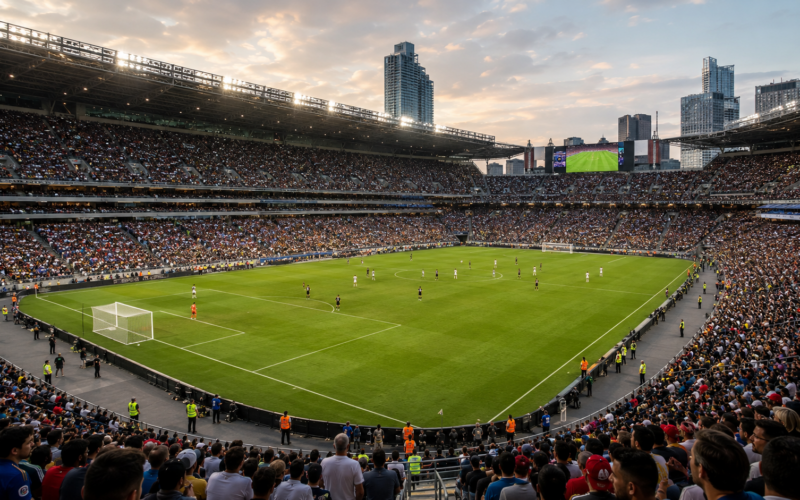
Belgium were held to a 0-0 draw by Iran at Los Angeles Stadium in Inglewood, California, on June 21, 2026 local time, with the match concluding early on June 22 in India. Iran goalkeeper Alireza Beiranvand produced seven saves as Belgium failed to convert 23 attempts and were forced to complete the final quarter of the match with ten players.
Nathan Ngoy received a straight red card in the 66th minute after misdirecting a pass toward his own goal and bringing down Mehdi Taremi as the Iran forward moved into a clear scoring position. Iran could not exploit the numerical advantage, while Belgium continued to create the better late opportunities despite playing with one fewer defender.
Taremi had earlier placed the ball past Thibaut Courtois following a cleverly worked free-kick, but a video review confirmed that the striker had moved marginally offside. Belgium’s best opportunity fell to Maxim De Cuyper, whose point-blank effort was stopped by a remarkable reaction save from Beiranvand.
The result left Belgium and Iran on two points from two FIFA World Cup 2026 Group G matches. Both teams remain without a victory and now face decisive final fixtures, with Belgium meeting New Zealand and Iran playing Egypt.
Belgium vs Iran FIFA World Cup 2026 match scorecard
How did Alireza Beiranvand prevent Belgium from converting sustained pressure into victory?
Belgium controlled more than 70 percent of possession and spent long periods circulating the ball around Iran’s defensive block. Beiranvand nevertheless ensured that territorial dominance did not become a winning goal.
His most important save arrived as Belgium approached the hour mark. Kevin De Bruyne controlled a difficult pass near the byline and rolled the ball across Iran’s six-yard area, where De Cuyper appeared certain to score.
Beiranvand had initially moved toward the opposite side of the goal and appeared to have been removed from the play. While scrambling across the ground, he extended his left arm and blocked De Cuyper’s close-range effort before securing the loose ball.
The intervention carried the value of a goal. Belgium had gradually increased the pressure and finally created an opportunity that removed almost every Iranian defender from the equation.
Beiranvand remained decisive later in the match. He denied De Cuyper again as Belgium continued searching for a winner despite Ngoy’s dismissal and dealt confidently with deliveries directed toward Romelu Lukaku and the replacement attackers.
The goalkeeper made all seven of his saves from attempts originating inside the penalty area. That statistic reflected both Belgium’s ability to enter dangerous positions and Beiranvand’s exceptional positioning once the attacks reached him.
His performance also allowed Iran to maintain tactical discipline. Defenders could remain compact and protect central passing lanes because they trusted the goalkeeper to respond when Belgium created an opening.
Iran coach Amir Ghalenoei described Beiranvand as one of the greatest goalkeepers in the country’s history. The point secured in Los Angeles strengthened that reputation and preserved Iran’s opportunity to reach the World Cup knockout phase for the first time.
Why did Belgium dominate possession but fail to score from 23 attempts?
Belgium’s possession was extensive, but their final actions lacked the accuracy and speed required to break down Iran’s low defensive block.
Rudi Garcia selected Lukaku for his first start for club or country in more than a year. The striker gave Belgium a central reference point, but Iran surrounded him with several defenders and prevented him from receiving the ball in positions where he could turn.
Lukaku completed 73 minutes and recorded only one attempt. His limited influence forced Belgium to search for chances through De Bruyne, Leandro Trossard, Alexis Saelemaekers and the advancing De Cuyper.
De Bruyne produced several moments of individual quality, particularly when he controlled Trossard’s pass near the byline before creating the opportunity for De Cuyper. Belgium could not consistently reproduce that precision.
Jérémy Doku’s absence through illness also reduced Belgium’s ability to beat defenders in one-on-one situations. Without his acceleration on the wing, the team relied more heavily on combinations and crosses against an Iran defence already concentrated around the penalty area.
Belgium attempted seven shots on target, but many were directed close enough to Beiranvand for the goalkeeper to intervene. Others were blocked by defenders who protected the six-yard area with discipline.
The statistics therefore reveal a team that created pressure without displaying sufficient ruthlessness. Belgium had 23 attempts, but Iran still produced several of the match’s clearest transitional opportunities.
Garcia argued that Belgium executed the tactical plan but lacked efficiency. That assessment is partly correct, although repeated failure to convert possession into clear finishes suggests the problem extends beyond finishing alone.
Belgium have now taken two points from two matches and have not scored a goal through one of their own players. Their only goal of the tournament came from an Egyptian own goal in the opening 1-1 draw.
How did Mehdi Taremi’s disallowed goal expose Belgium’s defensive risks?
Iran entered the match expecting to defend for extended periods and attack through set pieces, long throws and rapid transitions.
Their best first-half moment came from a rehearsed free-kick near the edge of Belgium’s penalty area. Ehsan Hajsafi appeared ready to shoot or cross but instead played a disguised pass toward Taremi.
The striker received the ball, turned and placed a controlled finish beyond Courtois. Iran’s celebrations were halted when the video assistant referee confirmed that Taremi had moved marginally ahead of the defensive line.
Although the goal did not count, the sequence revealed Belgium’s vulnerability. Several defenders followed the expected delivery rather than tracking Taremi’s movement, allowing Iran to execute the routine almost perfectly.
Courtois was also required to make important saves from Hossein Kanaanizadegan and Taremi. Iran’s seven attempts were considerably fewer than Belgium’s total, but several carried genuine danger.
The disallowed goal demonstrated why Belgium could not attack without caution. Iran possessed experienced forwards capable of punishing a single positioning error, particularly when Belgium’s full-backs moved high up the pitch.
Taremi remained central to that threat throughout the match. He linked counterattacks, competed for direct passes and eventually forced the defensive mistake that led to Ngoy’s dismissal.
Iran’s final frustration was that they did not exploit the period after the red card more effectively. Their tactical plan created the necessary moments, but the final pass and finish remained inconsistent.
Why was Nathan Ngoy shown a straight red card in the 66th minute?
The match changed when Ngoy attempted to play the ball backward toward Courtois but failed to make clean contact.
Taremi anticipated the error and moved beyond the defender with a clear route toward goal. Ngoy pulled the Iran striker down before he could confront Courtois.
The referee immediately produced a straight red card because Ngoy had denied an obvious goalscoring opportunity. There was no covering Belgium defender positioned to prevent Taremi from advancing into the penalty area.
The dismissal represented a damaging individual mistake but also reflected the pressure Iran’s counterattacking structure created. Belgium had pushed players forward, leaving Ngoy exposed when the attempted pass failed.
Garcia defended the young centre-back after the match and described the incident as an understandable error. The wider concern is that Belgium’s possession structure did not offer sufficient protection when the ball was lost.
Iran responded to the red card by moving farther forward and attempting to establish possession in Belgium’s half. Substitutions brought additional energy, but the numerical advantage did not produce a decisive shot.
Belgium reorganised with Arthur Theate replacing Lukaku and continued attacking when opportunities appeared. De Bruyne and De Cuyper remained influential, while Courtois dealt confidently with Iran’s limited efforts.
The final phase therefore created an unusual contrast. Iran had the extra player, but Belgium continued producing the stronger chances.
Ngoy’s suspension will now remove another defensive option before the decisive match against New Zealand. Belgium must also assess whether the same aggressive structure can be used without leaving the remaining defenders exposed.
How did Iran’s defensive block restrict Kevin De Bruyne and Romelu Lukaku?
Iran defended in a compact shape that prioritised the space directly in front of Beiranvand’s goal.
The midfield line remained close to the defenders, reducing the areas in which De Bruyne normally receives possession and turns toward goal. When he moved wide, Iran allowed him to cross rather than opening a direct central passing lane.
Lukaku was surrounded whenever Belgium attempted to find him inside the area. Iran’s defenders contested the first ball and positioned midfielders nearby to collect rebounds or block the next attempt.
The strategy accepted that Belgium would control possession. Iran were more concerned with the location of Belgium’s touches than the overall amount of time the European side held the ball.
Trossard and Saelemaekers occasionally moved into central positions, but Iran’s structure forced them to receive with several opponents nearby. Belgium could not consistently isolate an attacker against one defender.
The absence of Doku made the approach more effective. Belgium lacked a winger capable of repeatedly carrying the ball through the first defensive line and forcing Iran to abandon its compact spacing.
Iran’s organisation was not perfect. Beiranvand still required seven saves, and Belgium created enough opportunities to win. However, the defensive block ensured most attacks required several accurate actions before a clear chance appeared.
That tactical discipline gave Iran a second consecutive draw after their 2-2 opening result against New Zealand. It also demonstrated that the team can remain competitive against a technically stronger opponent.
Why could Iran not take advantage after Belgium were reduced to ten players?
Iran’s inability to score after the dismissal prevented the draw from becoming a historic victory.
The team initially moved its defensive line forward and attempted to retain possession in Belgium’s half. Belgium responded by becoming more compact and removing Lukaku for Theate, restoring the defensive structure.
Iran then faced a different tactical problem. Before the red card, space had appeared when Belgium attacked with several players. After the dismissal, Belgium protected those spaces more carefully and allowed Iran to hold the ball in less dangerous areas.
Saeid Ezatolahi received an opportunity after De Bruyne lost possession deep inside the Belgium half, but Courtois reacted effectively to the resulting shot.
Iran also lacked the speed and width required to stretch Belgium’s revised shape. Crosses were often delivered from positions that allowed Courtois and the central defenders to anticipate the danger.
Ghalenoei introduced fresh players, but the changes did not produce the decisive combination around the penalty area. Taremi remained the main focal point, allowing Belgium to direct additional defensive attention toward him.
The failure should not erase Iran’s achievement. They remained unbeaten after facing Belgium and created enough danger to force a red card and a disallowed goal.
However, qualification margins are narrow. The opportunity to defeat ten-man Belgium may become significant if Iran fail to overcome Egypt in the final match.
What does the draw mean for the FIFA World Cup 2026 Group G qualification race?
Iran and Belgium moved to two points after recording draws in each of their opening two matches. Iran sit above Belgium because they have scored more goals.
New Zealand and Egypt had one point each from their opening match when Belgium vs Iran concluded. Their second group fixture was still to be completed.
FIFA World Cup 2026 Group G points table after Belgium vs Iran
| Team | P | W | D | L | GF | GA | GD | Pts |
|---|---|---|---|---|---|---|---|---|
| Iran | 2 | 0 | 2 | 0 | 2 | 2 | 0 | 2 |
| Belgium | 2 | 0 | 2 | 0 | 1 | 1 | 0 | 2 |
| New Zealand | 1 | 0 | 1 | 0 | 2 | 2 | 0 | 1 |
| Egypt | 1 | 0 | 1 | 0 | 1 | 1 | 0 | 1 |
Belgium’s final match against New Zealand has become a direct test of their ability to handle tournament pressure. Victory would take the Red Devils to five points and secure progression.
A draw would leave Belgium on three points and potentially dependent on the Egypt vs Iran result and the rankings of third-placed teams. Defeat could produce another group-stage elimination after their early exit in 2022.
Iran will reach five points by defeating Egypt, which would guarantee a historic place in the Round of 32. A third draw could still be sufficient, although qualification would then depend on the other result and tournament-wide comparisons.
The group remains unusually open because no team had recorded a victory after the Belgium vs Iran match. Every side retained a route into the knockout phase.
Why does another draw increase the pressure on Belgium’s experienced generation?
Belgium entered the tournament as Group G favourites but have yet to produce a performance matching that status.
De Bruyne, Lukaku and Courtois remain central figures, while the team also contains experienced players from several major European leagues. That individual quality has produced control without decisive results.
The 0-0 draw continued a troubling World Cup attacking sequence. Belgium have recorded 38 attempts across their first two matches without one of their own players scoring.
Their only tournament goal came through Egypt defender Mohamed Hany. Belgium must therefore solve the finishing problem before facing New Zealand rather than assuming possession will eventually produce a breakthrough.
The red card complicates Garcia’s preparations, but the larger issue remains attacking efficiency. Belgium created enough against Iran to win, yet required too many chances to threaten the scoreboard.
Iran leave Los Angeles with a different emotional position. Their unbeaten start, disciplined defending and historic opportunity against Egypt provide a clear sense of progress.
The next round will determine whether Belgium recover in time or whether Iran convert resilience into their first World Cup knockout appearance.
Key takeaways from Belgium vs Iran at FIFA World Cup 2026
- Belgium and Iran drew 0-0 at Los Angeles Stadium on June 21, 2026 local time.
- Iran goalkeeper Alireza Beiranvand made seven saves and produced a remarkable point-blank stop from Maxim De Cuyper.
- Belgium controlled 70.3 percent possession and registered 23 attempts but failed to score.
- Mehdi Taremi had a first-half goal disallowed after VAR confirmed an offside position.
- Nathan Ngoy received a straight red card in the 66th minute after bringing down Taremi during a clear breakaway.
- Iran could not take advantage of playing against ten men, while Belgium continued creating the stronger late chances.
- Romelu Lukaku made his first start for club or country in more than a year but recorded only one attempt.
- Belgium and Iran both have two points after two Group G matches.
- Belgium must now face New Zealand, while Iran meet Egypt in their decisive final fixture.
- Iran remain in contention to reach the men’s World Cup knockout stage for the first time.
Discover more from Business-News-Today.com
Subscribe to get the latest posts sent to your email.
