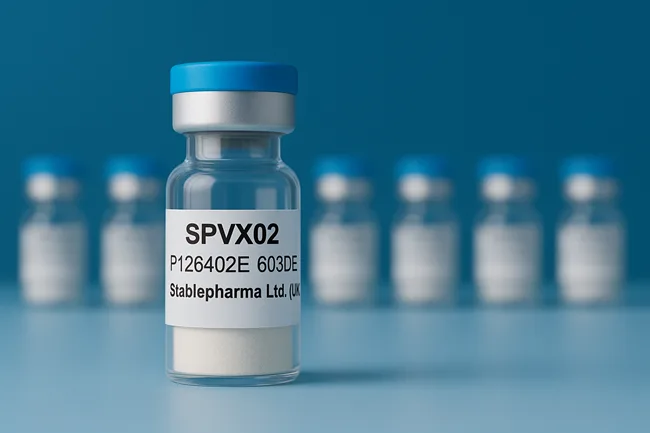


The U.S. Food and Drug Administration (FDA) has reaffirmed its confidence in Palvella Therapeutics by awarding the second-year installment of its Orphan Products Grant to support the ongoing Phase 3 SELVA trial evaluating QTORIN 3.9% rapamycin gel in patients with microcystic lymphatic malformations (MLMs). The non-dilutive grant, worth up to $2.6 million over four years, recognizes measurable progress in patient enrollment and trial execution, both of which have surpassed initial expectations. Palvella’s announcement marks a rare instance in which the agency doubles down on a single rare-disease program through consecutive-year funding—an endorsement that may accelerate the company’s regulatory and clinical momentum as it approaches its first pivotal data readout.
Why the FDA’s orphan grant renewal for QTORIN rapamycin underscores growing institutional focus on rare-disease translational programs
The FDA’s Office of Orphan Products Development (OOPD) administers one of the agency’s most selective grant programs aimed at supporting clinical studies for therapies addressing conditions that affect fewer than 200,000 patients in the U.S. In fiscal 2024, only seven new clinical trials received orphan grant awards, and Palvella’s SELVA trial stood out as the sole Phase 3 program among them. The renewal of funding for the second year, after OOPD’s review of Palvella’s progress report, effectively serves as a public vote of confidence in the company’s adherence to its clinical protocol and in the potential of QTORIN rapamycin to deliver measurable benefit in a disease area with no FDA-approved therapy.
Microcystic lymphatic malformations are chronic, disfiguring vascular anomalies characterized by clusters of microcysts that cause swelling, pain, and recurring infections. Current interventions—such as surgical debulking or sclerotherapy—offer limited, temporary relief. Rapamycin, an mTOR inhibitor, has shown promise in targeting the molecular pathways that drive these lesions. However, systemic formulations have historically carried toxicity and pharmacokinetic challenges.
QTORIN rapamycin seeks to address these issues through a proprietary topical delivery platform engineered for sustained dermal absorption and localized mTOR inhibition. By maintaining therapeutic concentrations at the lesion site while minimizing systemic exposure, Palvella aims to achieve durable symptomatic relief without the immunosuppressive risks associated with oral rapamycin.
How the Phase 3 SELVA trial design and execution signal a pivotal transition in the QTORIN development timeline
The SELVA trial (NCT 06239480) is a single-arm, baseline-controlled Phase 3 study evaluating once-daily topical QTORIN 3.9% rapamycin gel applied over a 24-week treatment period following an 8-week baseline observation. The trial initially targeted 40 participants across leading U.S. vascular anomaly centers but has now exceeded its recruitment goal, enrolling 51 patients—a milestone Palvella highlighted as a demonstration of both clinician interest and patient demand for viable therapeutic alternatives.
In rare-disease research, over-enrollment is uncommon; trials often struggle to recruit within target windows. Surpassing that threshold suggests that Palvella has effectively leveraged its clinical-site network and patient advocacy collaborations. The company’s chief clinical operations team has emphasized that all enrolled participants are now either in the active treatment or follow-up phase, positioning the study on track for top-line data in the first quarter of 2026.
The study’s endpoints focus on clinician- and patient-reported outcomes—specifically lesion volume reduction, pain, and quality-of-life improvement—as well as safety metrics tied to systemic rapamycin exposure. Upon successful completion, Palvella intends to submit a New Drug Application (NDA) to the FDA in the second half of 2026.
QTORIN rapamycin has already secured Breakthrough Therapy, Fast Track, and Orphan Drug designations from the FDA, collectively streamlining its regulatory path. If the Phase 3 data demonstrate statistically significant and clinically meaningful improvement, the therapy could qualify for priority review and up to seven years of market exclusivity under U.S. orphan-drug law.
What this renewed FDA grant indicates about the evolving regulatory landscape for late-stage dermatologic and vascular anomaly therapies
The FDA’s continued financial support not only strengthens Palvella’s liquidity position but also sends a broader signal about the agency’s commitment to advancing non-systemic formulations in rare-disease dermatology. Historically, OOPD funding has gravitated toward early-stage mechanistic research or academic investigator-initiated studies. Awarding and maintaining funding for an industry-sponsored Phase 3 program implies a shift in how regulators perceive translational maturity within certain rare-disease pipelines.
For Palvella, this validation carries practical implications. Orphan grant renewals are contingent on the achievement of prespecified milestones, such as patient accrual, data-quality audits, and adherence to Good Clinical Practice standards. Receiving a year-two installment suggests that the SELVA trial cleared each operational and compliance benchmark. The agency’s endorsement also lends downstream credibility when the company interfaces with potential commercialization partners or applies for additional non-dilutive funding mechanisms such as SBIR Phase II supplements or state-level rare-disease research grants.
Clinically, the SELVA study represents the first large-scale attempt to standardize topical rapamycin therapy for MLMs. Should efficacy be confirmed, it could also catalyze new indications targeting other mTOR-driven vascular or dermatologic pathologies, including certain capillary malformations or tuberous sclerosis–related lesions.
How Palvella’s clinical progress intersects with investor sentiment toward late-stage rare-disease biotech assets
While Palvella remains privately held, investor sentiment around late-stage orphan-drug developers has been notably positive through 2025. Venture and crossover funds have increasingly targeted companies in the 18- to 24-month window preceding potential regulatory submissions, viewing them as high-conviction, event-driven opportunities.
The FDA’s grant renewal could therefore enhance Palvella’s visibility among institutional backers seeking de-risked rare-disease assets. Recent comparables—such as BridgeBio Pharma’s Orphan Drug successes or Krystal Biotech’s VYJUVEK commercialization trajectory—illustrate how regulatory alignment and early validation from the agency often correlate with favorable late-stage financing outcomes.
Non-dilutive capital infusions like the OOPD grant reduce immediate financing pressure, enabling Palvella to extend its operational runway into 2026 without near-term equity issuance. However, commercial-scale readiness will eventually demand significant capital. Market analysts expect that successful Phase 3 data could trigger either a private-round upsize or an eventual IPO to fund manufacturing and marketing infrastructure.
In the broader biotech equity landscape, orphan-drug programs have consistently outperformed the sector’s average return profile due to smaller trial sizes, faster timelines, and higher regulatory success rates. As such, Palvella’s trajectory will likely be tracked closely by investors specializing in rare dermatology and precision-medicine portfolios.
How the SELVA readout could redefine therapeutic standards in microcystic lymphatic malformations and expand QTORIN’s platform potential
If the SELVA trial confirms QTORIN’s efficacy and safety, the therapy could become the first FDA-approved treatment for microcystic lymphatic malformations. Beyond addressing an urgent medical need, such an approval would introduce a new pharmacologic class into a therapeutic space dominated by procedural interventions.
The implications could extend beyond MLMs. Palvella has previously indicated its interest in evaluating QTORIN’s platform technology in other localized genetic or vascular conditions where targeted mTOR inhibition may offer clinical benefit. With regulatory momentum already in motion, the company may explore parallel studies in related dermatologic indications or post-marketing investigator-initiated trials, leveraging the same delivery scaffold.
From a regulatory science perspective, the SELVA trial also represents an important precedent for designing future rare-disease studies that rely on intra-patient baseline control rather than randomized placebo arms—an increasingly accepted approach for ultra-rare pathologies where patient numbers are limited.
How the FDA’s grant renewal underscores the importance of patient-centric and data-driven rare-disease trials
The FDA’s decision to maintain grant support through Year Two reflects more than administrative continuity—it highlights the agency’s satisfaction with Palvella’s adherence to rigorous data-collection and safety-monitoring protocols. In a period when rare-disease trials are scrutinized for endpoints, statistical validity, and patient diversity, SELVA appears to have met or exceeded expectations.
This renewal also resonates with the FDA’s broader “rare-disease acceleration” policy framework, which emphasizes translational collaboration between industry sponsors, patient groups, and academic networks. Palvella’s trial recruitment success demonstrates that patient-centric communication and real-world feasibility can coexist within stringent clinical and regulatory boundaries.
As the company moves toward data analysis in 2026, its ability to maintain transparency in updates and alignment with FDA guidance will likely determine the pace of subsequent review steps.
Why the FDA’s renewed grant positions Palvella’s SELVA trial as a pivotal case in rare-disease drug development
By securing the FDA’s Year-Two Orphan Products Grant funding, Palvella Therapeutics has crossed an inflection point that blends scientific validation with regulatory endorsement. The SELVA trial’s over-enrollment, adherence to milestones, and sustained agency backing position the QTORIN rapamycin program among the most closely watched late-stage rare-disease studies in the dermatologic field.
While the upcoming data readout remains the ultimate determinant of success, Palvella’s trajectory reflects the type of disciplined, clinically grounded progress regulators and investors increasingly reward. If efficacy signals remain consistent, QTORIN could soon become both a therapeutic milestone for patients with microcystic lymphatic malformations and a benchmark case study in how targeted topical delivery reshapes the rare-disease development model.
Discover more from Business-News-Today.com
Subscribe to get the latest posts sent to your email.