


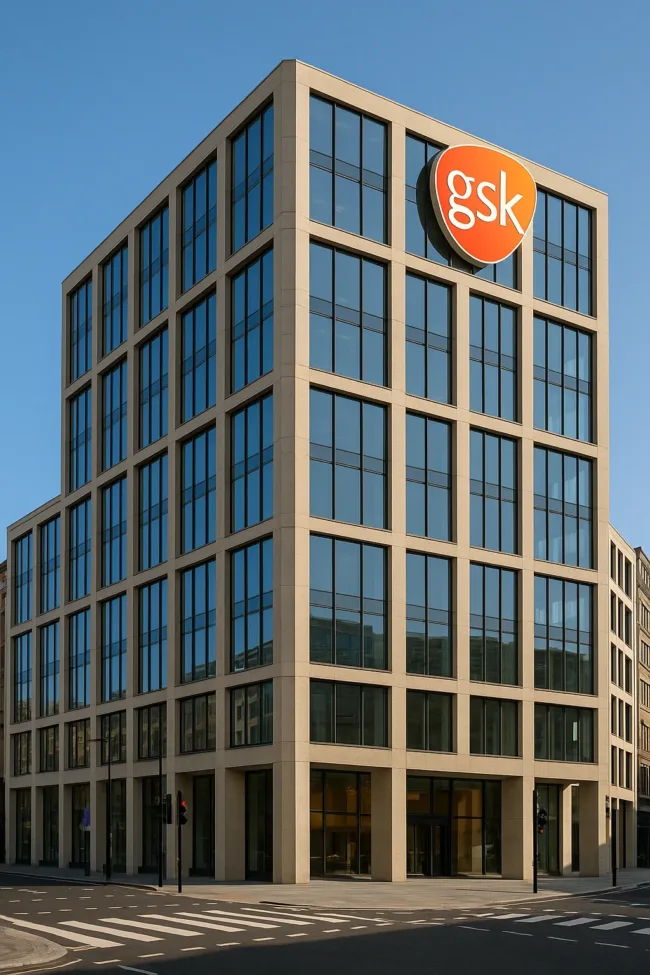
GSK plc has received approval from the United States Food and Drug Administration for Blenrep (belantamab mafodotin-blmf) in combination with bortezomib and dexamethasone for adult patients with relapsed or refractory multiple myeloma. The regulatory green light is for patients who have received at least two prior lines of therapy, including a proteasome inhibitor and an immunomodulatory agent. The development represents a critical inflection point for the British pharmaceutical firm’s oncology pipeline and introduces an anti-BCMA treatment option that is accessible to the broader community care setting.
Blenrep’s approval is based on results from the Phase III DREAMM-7 trial, which demonstrated a 51 percent reduction in the risk of death and tripled progression-free survival compared to a standard daratumumab-based regimen. The therapy, now offered with a newly streamlined Risk Evaluation and Mitigation Strategy, is the only anti-BCMA agent that can be administered in outpatient community centers. That distinction is expected to expand access in the United States, where around 70 percent of multiple myeloma patients receive care in non-academic facilities.
What trial outcomes helped GSK secure regulatory approval for Blenrep in the United States?
The FDA’s decision followed robust data from DREAMM-7, a multicenter, randomized, open-label Phase III trial evaluating belantamab mafodotin in combination with bortezomib and dexamethasone versus daratumumab with bortezomib and dexamethasone. Among patients with two or more prior lines of therapy, Blenrep demonstrated a statistically significant improvement in both progression-free and overall survival. Specifically, the median progression-free survival was 31.3 months for the Blenrep arm compared to 10.4 months for the daratumumab-based regimen. The hazard ratio for progression-free survival stood at 0.31, indicating a 69 percent reduction in the risk of disease progression. Similarly, the risk of death was reduced by 51 percent with a hazard ratio of 0.49.
The trial enrolled 494 participants, with patients randomized one-to-one to receive either the Blenrep or daratumumab combination. In the Blenrep arm, the monoclonal antibody was administered intravenously every three weeks during the first eight cycles and then continued as a monotherapy. Secondary endpoints included overall survival, duration of response, minimal residual disease negativity, and patient-reported outcomes.
Importantly, the safety and tolerability profile of the Blenrep combination was consistent with the known effects of each individual agent. The most notable adverse event in earlier Blenrep trials was ocular toxicity, which contributed to its earlier withdrawal from the U.S. market. GSK addressed this concern by redesigning the REMS programme to simplify documentation, streamline communication between oncologists and eye care professionals, and eliminate redundant safety forms.
How have oncologists and advocacy organizations responded to Blenrep’s FDA approval?
Medical experts and advocacy groups have welcomed the approval, describing it as a critical addition to the treatment arsenal for patients with relapsed or refractory multiple myeloma. Dr. Sagar Lonial, Chief Medical Officer of the Winship Cancer Institute at Emory University and Chair of Hematology and Medical Oncology, said the availability of a BCMA-targeting therapy in a community-accessible format was a significant development for the United States healthcare landscape.
Michael Andreini, President and Chief Executive Officer of the Multiple Myeloma Research Foundation, also expressed support for the approval. He noted that most patients with multiple myeloma face repeated cycles of remission and relapse, often becoming refractory to multiple lines of treatment. Andreini emphasized that patients urgently need more effective therapies that can extend quality time with loved ones, and the approval of Blenrep in combination could help achieve that outcome.
What makes Blenrep unique among other anti-BCMA therapies currently in use?
Unlike cell therapy options such as idecabtagene vicleucel and ciltacabtagene autoleucel, which require inpatient care and extensive logistical preparation, Blenrep is the only BCMA-targeting therapy that can be delivered across a range of healthcare settings. GSK’s redesigned REMS programme has been a key differentiator, as it allows oncologists in community centers to prescribe and monitor treatment without the bureaucratic overhead that previously hindered the drug’s scalability.
The patient support programme “Together with GSK” is also expected to improve therapy adherence and continuity of care. Through this initiative, U.S. patients will have access to optional assistance with financial, educational, and logistical needs related to Blenrep treatment.
What is GSK’s broader strategy for Blenrep and how is the company planning to expand its use?
GSK has outlined a long-term development strategy to bring Blenrep into earlier lines of therapy. The ongoing DREAMM clinical trial program includes DREAMM-8, which is evaluating the drug in different combination settings, and DREAMM-10, a pivotal Phase III trial involving newly diagnosed, transplant-ineligible patients. This population makes up more than 70 percent of new myeloma treatment starts, offering GSK an opportunity to move upstream in the treatment algorithm.
DREAMM-10 is evaluating Blenrep in combination with lenalidomide and dexamethasone against daratumumab-based regimens. Interim data on safety and efficacy are expected by early 2028. GSK has also expanded enrollment in the United States to increase representation of American patients in global datasets. Data from both DREAMM-7 and DREAMM-8 will continue to be collected for overall survival, with updates anticipated in the same timeframe.
Submissions to the National Comprehensive Cancer Network for guideline inclusion are expected this year, and GSK is optimistic about Blenrep’s positioning as a standard of care across multiple myeloma treatment stages.
How is Blenrep being rolled out internationally and what is its regulatory status in other markets?
Beyond the United States, Blenrep combinations have been approved in the European Union, United Kingdom, Japan, Canada, Switzerland, and Brazil for relapsed or refractory multiple myeloma. Regulatory submissions are currently under review in additional markets including China, where Blenrep has received Breakthrough Therapy Designation and Priority Review status. These global approvals are based primarily on DREAMM-7 results and real-world data from the broader clinical programme.
With an increasingly competitive BCMA-targeting therapy landscape, GSK’s global commercialization strategy hinges on positioning Blenrep as a scalable, community-deliverable therapy with differentiated safety monitoring.
What mechanism makes Blenrep effective and how is the drug manufactured?
Blenrep is an antibody-drug conjugate composed of a humanised monoclonal antibody that targets B-cell maturation antigen, or BCMA. It is conjugated to auristatin F, a cytotoxic agent, via a non-cleavable linker. The drug-linker technology is licensed from Seagen Inc., and the antibody is manufactured using POTELLIGENT Technology licensed from BioWa Inc., a Kyowa Kirin Group company. This targeted delivery mechanism enables selective cytotoxicity against BCMA-expressing cells, allowing Blenrep to kill cancerous plasma cells while minimizing damage to healthy tissues.
This approach places Blenrep within a broader trend in oncology focused on antibody-drug conjugates, a class of therapies that combine precision targeting with powerful chemotherapy agents.
What does Blenrep’s FDA approval mean for GSK’s broader oncology ambitions and stock sentiment?
The approval of Blenrep marks a critical validation of GSK’s ambitions to rebuild its oncology franchise following a multi-year restructuring. While the company has long been a major player in vaccines and infectious disease, it is now accelerating its footprint in cancer, with a pipeline focused on hematologic and solid tumors. GSK’s current research priorities include additional antibody-drug conjugates targeting B7-H3 and B7-H4, as well as IDRX-42, a highly selective tyrosine kinase inhibitor targeting KIT.
Investor sentiment around GSK plc has reflected cautious optimism. The company’s shares saw modest gains after the FDA approval was announced, suggesting that institutional investors see upside potential from Blenrep’s return to the U.S. market. Analysts believe successful commercialization in the relapsed setting, followed by progression into first-line use, could materially impact GSK’s revenue trajectory in oncology. However, long-term market performance will depend on uptake in community settings and the durability of survival outcomes in ongoing trials.
What are the key takeaways from GSK’s FDA approval of Blenrep for relapsed multiple myeloma in 2025?
- GSK plc has received FDA approval for Blenrep (belantamab mafodotin-blmf) in combination with bortezomib and dexamethasone for adult patients with relapsed or refractory multiple myeloma who have received at least two prior lines of therapy, including a proteasome inhibitor and an immunomodulatory agent.
- The approval is supported by data from the Phase III DREAMM-7 trial, which showed that the Blenrep combination reduced the risk of death by 51 percent and tripled median progression-free survival to 31.3 months versus 10.4 months for a daratumumab-based comparator.
- Blenrep is now the only anti-BCMA therapy approved for delivery in U.S. community care settings, where 70 percent of multiple myeloma patients are treated, supported by a simplified Risk Evaluation and Mitigation Strategy programme to manage ocular toxicity and streamline monitoring.
- Oncologists and advocacy groups have welcomed the approval, citing its potential to improve survival and expand access in underserved non-academic settings, while GSK has launched the “Together with GSK” support programme to assist with access and adherence.
- GSK is also progressing the broader DREAMM clinical programme, including DREAMM-10 in newly diagnosed transplant-ineligible patients, with interim data expected in early 2028 and further overall survival updates from DREAMM-7 and DREAMM-8.
- Internationally, Blenrep has already received approval in the European Union, United Kingdom, Japan, Canada, Switzerland, and Brazil, with submissions under review in China and other global markets based on the DREAMM-7 results.
- Blenrep’s antibody-drug conjugate mechanism uses targeted delivery of a cytotoxic payload to BCMA-expressing cells and is part of GSK’s growing oncology focus that includes investigational ADCs targeting B7-H3 and B7-H4 and selective kinase inhibitors like IDRX-42.
- Investor sentiment toward GSK improved modestly following the announcement, with institutional interest focused on Blenrep’s commercial uptake in the United States and the potential for label expansion into first-line treatment settings.
Discover more from Business-News-Today.com
Subscribe to get the latest posts sent to your email.