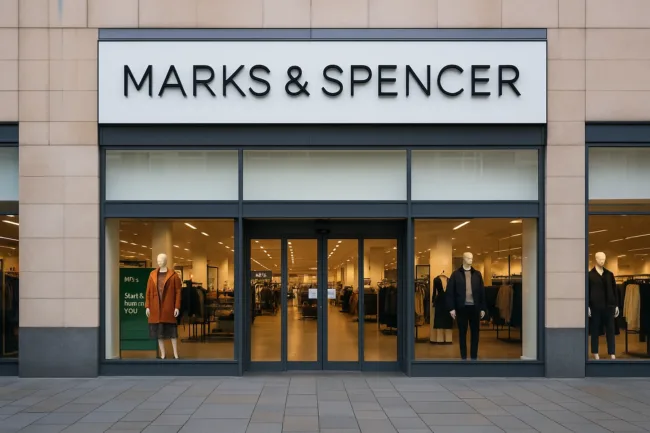



Fairfax Financial Holdings Limited (TSX: FFH; FFH.U) has agreed to partner with Wittington Investments, Limited to acquire Boots in a transaction carrying a total purchase price of approximately US$8.9 billion including assumed debt. Fairfax has committed to provide, or arrange through an affiliate, up to approximately US$2.3 billion of equity and expects to own 50% of Boots after closing, while Wittington will have operational control and Galen Weston is expected to serve as chair. The transaction covers Boots’ retail operations in the United Kingdom and Ireland, Boots Opticians, No7 Beauty Company, Thailand operations and franchised businesses, while several other assets owned by the seller are excluded. Completion is targeted for the first quarter of 2027 subject to customary conditions, creating a large new non-insurance investment for Fairfax without requiring the company to manage Boots directly.
Fairfax enters the transaction from a position of substantial earnings generation. The Canadian insurance and investment group reported second-quarter 2026 net earnings of approximately US$1.39 billion and book value per basic share of US$1,304.39 at June 30. Fairfax shares were around C$2,200 following the Boots announcement, with the stock trading below its earlier 2026 highs but showing only a modest immediate reaction to the transaction.
Why is Fairfax Financial willing to commit US$2.3bn to Boots without taking operating control?
Fairfax Financial has built its investment model around deploying insurance-generated capital into businesses that management expects to hold over long periods. Boots fits that broader approach better as a substantial established operating company than as a short-duration financial trade, but Fairfax is pairing capital with a partner that brings more direct retail and pharmacy experience.
Wittington Investments is the Weston family holding company and controls George Weston Limited, which in turn controls Loblaw Companies Limited and Choice Properties. Loblaw owns Shoppers Drug Mart, giving the Weston ecosystem extensive experience in pharmacy, health, beauty, grocery and retail property.
The ownership structure therefore separates economic participation from day-to-day control. Fairfax expects to hold half the equity, while Wittington will direct operations and Galen Weston will chair the business. Fairfax still bears substantial economic risk as a 50% owner, but the structure means operating execution will sit primarily with a partner whose existing businesses overlap closely with Boots’ core sectors.
That division of roles may be particularly valuable in a transaction this large. Boots operates a complex retail, pharmacy, opticians and beauty platform across multiple jurisdictions, so managing integration, store economics, digital channels, procurement and healthcare relationships requires specialised operational expertise.
How significant is Fairfax Financial’s US$2.3bn commitment relative to its earnings and investment capacity?
Fairfax reported second-quarter 2026 net earnings of approximately US$1.39 billion, meaning the maximum US$2.3 billion equity commitment represents more than a single quarter of group earnings but remains within the scale of capital allocation possible for a company with a global insurance and investment portfolio.
The US$8.9 billion headline transaction value should not be confused with Fairfax’s direct cash contribution. That amount includes assumed debt and covers the entire Boots acquisition, while Fairfax has committed up to approximately US$2.3 billion and expects to own 50% of the equity. The difference indicates that the acquisition structure includes financing and Wittington’s own contribution rather than requiring Fairfax to fund half of the gross purchase price in cash.
That distinction is important when assessing balance-sheet impact. Fairfax is making a major investment, but the capital requirement is substantially smaller than the headline enterprise-level transaction value.
The company’s second-quarter results also show strong operating earnings generation from its insurance and reinsurance businesses. Adjusted operating income from property and casualty insurance and reinsurance operations was approximately US$1.11 billion in the quarter. Continued underwriting profitability and investment income provide internal capital generation that can support large non-insurance investments without making the Boots transaction the sole determinant of Fairfax’s financial position.
What strategic advantage does the Weston family bring to Boots compared with a conventional private-equity buyer?
The Weston family has decades of operating experience across grocery, pharmacy and necessity-based retail in Canada. Loblaw operates more than 2,800 locations and owns Shoppers Drug Mart, one of Canada’s largest pharmacy, health and beauty businesses. That background creates direct overlap with Boots’ pharmacy and beauty categories.
A long-term strategic owner can approach Boots differently from a financial sponsor focused on a defined exit timetable. Investment in stores, digital channels, pharmacy services, product development and the No7 beauty franchise may produce returns over periods that do not fit comfortably within a conventional private-equity holding cycle.
Operational control by Wittington also reduces the risk that Boots becomes a passive Fairfax investment lacking a specialised owner. The structure gives Boots a controlling shareholder familiar with high-frequency consumer retail while Fairfax contributes capital and a long-term investment orientation.
The central challenge is that experience does not automatically transfer across markets. The United Kingdom has different pharmacy reimbursement structures, competitive dynamics, consumer behaviour and labour costs from Canada. Wittington will therefore need to adapt its operating expertise rather than simply replicate the Shoppers Drug Mart model.
Why does the Boots acquisition matter beyond Fairfax Financial’s insurance portfolio?
Boots gives Fairfax significant exposure to consumer healthcare, pharmacy and beauty at a time when those categories are being reshaped by ageing populations, digital prescriptions, online retail and changing healthcare delivery models. The business also owns No7 Beauty Company, adding branded consumer products alongside store-based pharmacy operations.
That diversification can create earnings streams with different drivers from insurance underwriting and financial markets. Pharmacy demand tends to be less cyclical than many discretionary retail categories, while beauty can provide higher-margin brand economics when products retain consumer relevance.
Diversification does not make the investment low risk. Traditional retail faces wage inflation, store-occupancy costs and online competition, while pharmacy economics can be heavily influenced by government reimbursement and regulatory rules. Fairfax is therefore acquiring exposure to a defensive consumer category but not a business immune from operating pressure.
The investment also increases the importance of Fairfax’s non-insurance portfolio. As more capital is allocated to large operating companies, shareholders need to assess not only underwriting results and investment returns but the operating quality and cash-generation ability of businesses sitting outside the insurance subsidiaries.
What does Fairfax Financial’s muted share-price reaction suggest about the Boots transaction?
Fairfax shares traded around C$2,200 immediately after the transaction announcement, with only a modest decline on October 7. That reaction indicates the acquisition did not materially disrupt the market’s near-term assessment of Fairfax, although one trading session cannot establish whether investors ultimately view the transaction as value creating.
The measured response may partly reflect the structure. Fairfax is committing up to US$2.3 billion rather than funding the US$8.9 billion purchase price itself, and Wittington will provide operational control. That limits the amount of capital directly at risk relative to the scale implied by the headline transaction value.
Fairfax shares were still trading below their 2026 peak, leaving the Boots deal to compete with broader questions around insurance pricing, investment returns and book-value growth in the valuation.
A stronger positive rerating would likely require evidence that Boots generates attractive cash returns on Fairfax’s invested equity. The transaction is expected to close only in the first quarter of 2027, so meaningful financial evidence will arrive well after completion.
What will determine whether Fairfax Financial’s investment in Boots creates long-term shareholder value?
The first test is transaction completion. Regulatory approvals and customary conditions remain outstanding, and Fairfax has described first-quarter 2027 as the expected closing period rather than a guaranteed date.
Operating performance becomes the second test. Store productivity, pharmacy volumes, digital growth, margin performance and the No7 franchise will determine whether Wittington can improve returns without weakening Boots’ established consumer position.
Capital allocation provides the third measure. Fairfax needs the economic return on its US$2.3 billion commitment to exceed the opportunity cost of using that capital elsewhere across insurance, public securities, private businesses or share repurchases.
The structure gives Fairfax a substantial ownership position without requiring it to run Boots itself, while Wittington gains operational control of a business closely aligned with its retail and pharmacy experience. The deal will ultimately be judged less by the US$8.9 billion headline value than by the cash returns produced on Fairfax’s much more specific US$2.3 billion equity commitment.
What are the key takeaways from Fairfax Financial’s US$8.9bn Boots partnership?
- Fairfax Financial and Wittington Investments have agreed to acquire Boots for approximately US$8.9 billion including assumed debt.
- Fairfax has committed up to approximately US$2.3 billion toward the purchase.
- Fairfax expects to own 50% of Boots after closing.
- Wittington will hold operational control, with Galen Weston expected to serve as chair.
- The acquired assets include Boots UK and Ireland, Boots Opticians and No7 Beauty Company.
- The deal is expected to close in the first quarter of 2027 subject to customary conditions.
- Wittington brings pharmacy and retail experience through its links to Loblaw Companies and Shoppers Drug Mart.
- Fairfax reported approximately US$1.39 billion of second-quarter 2026 net earnings.
- Long-term value will depend on Boots’ operating cash returns rather than the transaction’s headline enterprise value.
Discover more from Business-News-Today.com
Subscribe to get the latest posts sent to your email.