


European Energy A/S has won support of up to €228m under Germany’s hydrogen auction framework linked to the European Hydrogen Bank, giving the Danish renewable energy developer a major public-funding boost for hydrogen production tied to the Kassø Power-to-X site in Denmark. The award will support plans for an additional 150MW of hydrogen production capacity, strengthening the company’s role in the emerging Denmark-to-Germany renewable hydrogen corridor. The decision matters because Germany is effectively using public funding to accelerate hydrogen supply outside its own borders, while Denmark is being asked to prove that its wind-rich geography can become exportable industrial energy. The funding is significant, but the harder commercial question is whether production support, German demand mandates and cross-border pipeline infrastructure can arrive in the right sequence.
Why does European Energy’s German hydrogen funding matter for Denmark’s Power-to-X strategy?
European Energy A/S’s award matters because it gives Denmark’s Power-to-X sector a concrete demand signal from Germany, not just another policy speech with a hydrogen molecule attached. The Danish hydrogen industry has spent several years arguing that renewable electricity, offshore wind potential and industrial know-how can make Denmark a supplier of green fuels to northern Europe. Germany’s funding now turns that thesis into a more investable proposition by attaching state-backed support to specific Danish production capacity.
The strategic point is that this is not only a European Energy A/S story. It is a test of whether Denmark can move from project pipeline to export platform. Hydrogen developers often struggle because they must solve three problems at once: production costs are high, offtake demand is still developing, and infrastructure is not always ready. Germany’s auction framework helps with the first two issues by providing financial support and signalling demand from German buyers, but it cannot by itself solve the infrastructure gap.
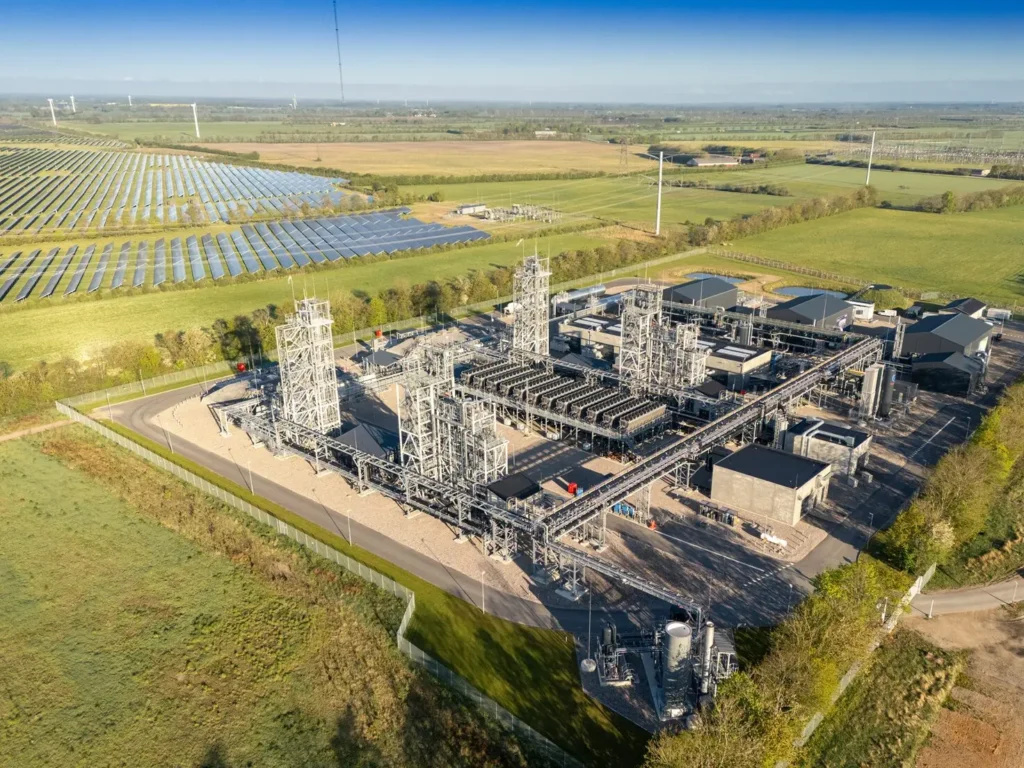
For European Energy A/S, the award strengthens the company’s position around Kassø, where it already has Power-to-X activity linked to green hydrogen and e-methanol production. The additional 150MW of hydrogen capacity could deepen the commercial logic of the site and give European Energy A/S a stronger role in the wider Danish hydrogen backbone. However, the award also raises expectations. Once public support is secured, investors, policymakers and industrial customers will expect delivery rather than another neat rendering of electrolyser stacks under blue skies.
How does Germany’s hydrogen auction framework change the economics of Danish green hydrogen?
Germany’s auction framework changes the economics because it narrows the gap between the cost of producing renewable hydrogen and what buyers are currently willing or able to pay. Green hydrogen is expensive because electrolyser systems, renewable electricity sourcing, grid connections, compression, storage and transport all add cost before the molecule reaches an industrial user. Competitive subsidies paid on a production-linked basis are designed to make early projects bankable while the market is still immature.
The German support programme is linked to the European Hydrogen Bank’s Auction-as-a-Service model, which allows member states to use a common EU auction mechanism while adding national funding for projects aligned with their own demand needs. That is important because Germany has a large industrial base and limited domestic renewable hydrogen potential relative to likely demand. Denmark, by contrast, has stronger renewable generation potential but needs export demand and infrastructure to justify large-scale hydrogen production.
The result is a cross-border bargain. Germany helps underwrite hydrogen production in Denmark because German transport, industrial and fuel sectors need future supplies of renewable fuels of non-biological origin. Denmark gets a demand anchor for projects that might otherwise struggle to reach financial close. It is a sensible division of labour, though not a risk-free one. The economics still depend on electricity prices, electrolyser utilisation, pipeline tariffs, offtake contracts and regulatory stability.
Why is the planned Denmark-Germany hydrogen pipeline central to the investment case?
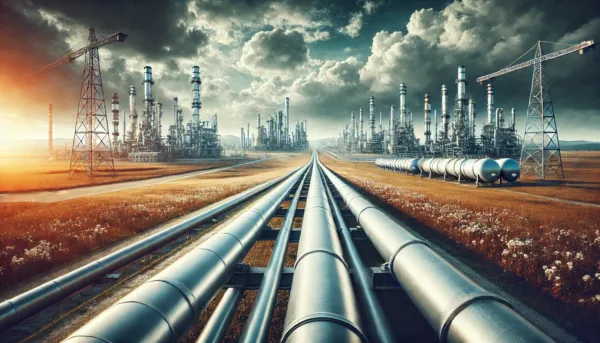
The planned Denmark-Germany hydrogen pipeline is central because hydrogen production only becomes commercially meaningful when it has a reliable route to customers. Denmark has approved movement toward construction of the Syvtallet pipeline, a route from Esbjerg via Egtved to Frøslev at the German border, with a planned export capacity of around 3GW and an expected 2030 readiness timeline. The project is intended to connect Danish producers with Germany’s hydrogen market, but its development still depends on capacity bookings, financing structures and coordinated infrastructure on the German side.
For European Energy A/S, the pipeline is not a background detail. It is the commercial bridge between Danish renewable electricity and German industrial demand. Without pipeline access, hydrogen producers face a narrower set of options, including local use, conversion into e-methanol or ammonia, or more costly transport solutions. With pipeline access, production sites in western Denmark can potentially sell into a much deeper market.
The risk is timing. Hydrogen projects need visibility on transport infrastructure before they can fully de-risk investment decisions, while pipeline developers need committed users before they can justify construction. That chicken-and-egg problem has slowed hydrogen infrastructure across Europe. Germany’s funding reduces the uncertainty by giving Danish producers stronger reason to book capacity, but it does not remove the need for firm infrastructure commitments. The hydrogen economy is learning that molecules do not move on PowerPoint enthusiasm alone.
What does the funding signal about Germany’s industrial decarbonisation strategy?
Germany’s decision to fund Danish hydrogen production signals that Berlin is increasingly realistic about the scale of its decarbonisation challenge. Heavy industry, refining, chemicals, aviation, shipping and some transport fuel markets will need low-carbon molecules where direct electrification is difficult. Germany cannot meet that demand only through domestic renewable hydrogen production, especially given land constraints, grid bottlenecks and competition for renewable electricity.
The funding also reflects the way Germany is using regulation to create demand. Germany’s renewable fuel requirements for transport are expected to increase the role of RFNBO-compliant fuels over time, creating a market pull for hydrogen-derived products such as e-methanol and other green fuels. That matters because hydrogen projects often fail when producers build capacity before buyers are legally or economically compelled to pay a green premium.
By supporting Danish production, Germany is effectively building a regional import strategy within Europe. That reduces some of the geopolitical and shipping risks associated with importing hydrogen derivatives from more distant regions. It also helps Germany support EU industrial policy by anchoring supply within the bloc. The trade-off is that Europe must now prove that its regulatory model can produce competitive hydrogen without creating a permanent subsidy dependency.
How does European Energy’s Kassø expansion fit into the wider green fuels market?
European Energy A/S’s Kassø-linked expansion fits into a market where green hydrogen is increasingly being evaluated through the lens of end-use demand. Hydrogen by itself is not the final prize. The more valuable question is whether it can be turned into e-methanol, sustainable transport fuels, industrial feedstocks or other products that customers are required to buy under tightening regulation.
The Kassø site is strategically useful because it already sits within European Energy A/S’s broader Power-to-X portfolio and is connected to e-methanol production ambitions. E-methanol has become one of the more visible hydrogen-derived fuels because shipping companies, fuel suppliers and industrial users are looking for lower-carbon alternatives in sectors where batteries are not always practical. If European Energy A/S can link additional hydrogen capacity with reliable offtake, Kassø could become more than a demonstration asset.
The competitive implication is that hydrogen developers with integrated renewable power, conversion assets and route-to-market access may have an advantage over stand-alone electrolyser projects. Investors are increasingly sceptical of hydrogen announcements that lack a clear buyer or infrastructure pathway. European Energy A/S now has stronger policy support, but the market will still judge the project on whether it can lock in commercial demand and operate at scale.
Why are Denmark and Germany becoming a test case for Europe’s hydrogen market design?
Denmark and Germany are becoming a test case because their roles are complementary. Denmark has strong renewable energy resources, particularly offshore wind potential, and a political ambition to build 4GW to 6GW of electrolysis capacity by 2030. Germany has larger industrial demand and policy pressure to decarbonise sectors that cannot simply plug into renewable electricity. The planned hydrogen corridor is therefore a practical attempt to match supply geography with demand geography.
This matters for the rest of Europe because many hydrogen strategies remain trapped between ambition and implementation. Spain, Portugal, the Netherlands, Norway and the Nordic countries all see hydrogen export or transit opportunities, while Germany, Belgium and parts of central Europe see major demand potential. The Denmark-Germany corridor could show whether cross-border hydrogen markets can work before Europe builds a much larger network.
The risks are equally instructive. If the corridor faces delays, weak capacity bookings or cost overruns, it will reinforce investor doubts about hydrogen infrastructure. If it succeeds, it could provide a blueprint for regional hydrogen corridors where public support, offtake demand and pipeline development are sequenced more effectively. That is why European Energy A/S’s funding win is bigger than one company’s project. It is one tile in Europe’s much messier hydrogen mosaic.
What risks could still slow European Energy’s hydrogen expansion in Denmark?
The biggest risk is infrastructure timing. European Energy A/S can win funding and plan new hydrogen capacity, but the value of that capacity depends heavily on the availability of pipeline transport or alternative conversion pathways. If the Danish-German pipeline is delayed or capacity booking proves weaker than expected, project economics could become more complicated.
The second risk is cost inflation. Hydrogen projects remain exposed to electricity price volatility, electrolyser equipment costs, grid connection delays and financing conditions. Public funding improves the economics, but it does not guarantee a smooth build-out. Developers must also manage operational risk once production begins because electrolyser utilisation rates can make or break unit economics.
The third risk is demand durability. Germany’s policy framework creates a stronger market for renewable fuels, but customers will still resist high premiums where cheaper alternatives exist or where regulations change slowly. Hydrogen developers need long-term offtake agreements that survive political cycles, commodity price swings and technology competition from electrification, biofuels and carbon capture. In other words, the funding is a strong signal, but it is not a magic wand. Hydrogen has enough wands already. It now needs pipes, contracts and invoices.
Can German funding make Danish green hydrogen commercially bankable?
German funding can make Danish green hydrogen more bankable, but only if it is combined with firm infrastructure commitments, credible offtake and disciplined project execution. European Energy A/S has gained a meaningful advantage by securing up to €228m of support for additional hydrogen production capacity. That lowers risk and gives the company a stronger commercial platform around Kassø.
However, the project’s long-term significance depends on whether Denmark and Germany can complete the full value chain. Production capacity alone is not enough. The market needs renewable electricity supply, electrolyser performance, pipeline availability, certification systems, German buyers and transport-fuel demand all working together. That is a lot of moving parts, and hydrogen’s track record so far suggests the parts do not always move politely.
A neutral reading suggests that European Energy A/S has secured one of the more credible hydrogen development signals in Europe because the award is tied to German demand rather than just national ambition. The next test is whether the infrastructure catches up. If the Danish-German corridor works, this could help turn Denmark into a renewable hydrogen exporter. If it stalls, the award will show once again that Europe can fund hydrogen faster than it can move it.
Key takeaways on European Energy’s German hydrogen funding and Denmark’s export opportunity
- European Energy A/S has won up to €228m in German-backed support for an additional 150MW of hydrogen production capacity connected to its Danish Power-to-X strategy.
- The award strengthens the commercial case for Denmark as a renewable hydrogen supplier to Germany, especially where German industrial and transport-sector demand is expected to rise.
- Germany’s Auction-as-a-Service model linked to the European Hydrogen Bank is becoming an important tool for matching renewable hydrogen supply in one EU country with demand in another.
- The funding reduces project risk, but the planned Denmark-Germany hydrogen pipeline remains the central infrastructure test for the whole corridor.
- Denmark’s Syvtallet pipeline could create around 3GW of export capacity, but capacity bookings and coordinated German-side infrastructure are still crucial.
- European Energy A/S’s Kassø-linked expansion may benefit from existing Power-to-X activity and rising demand for e-methanol and other hydrogen-derived fuels.
- The deal signals that Germany is willing to use public support to import renewable hydrogen from nearby European partners rather than rely only on domestic production.
- The main risks are pipeline timing, electricity costs, electrolyser execution, offtake durability and the danger that hydrogen demand develops more slowly than policy models assume.
- The Denmark-Germany corridor could become a template for European hydrogen market design if production, regulation and infrastructure align.
- For investors and policymakers, the key lesson is that hydrogen projects are becoming more credible when public funding is tied to real offtake markets and transport routes.
Discover more from Business-News-Today.com
Subscribe to get the latest posts sent to your email.